








☝🏻 Quick Start: 7 Phases of an Affair
In long-term relationships, it's common for at least one partner to develop a strong attraction to someone else and be unable to resist it in the long run. Eventually, this leads to infidelity and an affair.
Even though every affair is different, most affairs follow a similar pattern and specific phases of infidelity. From the (usually) innocent initial meeting, through the (almost always) growing fascination, the (generally) elaborate logistics of maintaining secrecy, to the (often) dramatic exposure of the extramarital relationship.
In such a situation, everyone involved is usually in a state of emotional turmoil and has many unanswered questions: "What happens now?!", "How much longer can I endure this?", "What kind of crazy phase are we actually going through?", "Can we even get out of this crazy rollercoaster ride relatively unscathed?", etc., etc. Women often develop deeper feelings in such situations and face inner conflicts and challenges in their existing relationships.
In recent decades, our couples therapy practice has allowed us to support hundreds of people in triangular relationships: cheaters, cheated-on partners, "third parties", family members…
To bring some clarity to the inner chaos, we have divided the 'classic' course of an affair into 7 typical phases in this article. Of course, the course and development of a love triangle can vary considerably from case to case. Individual phases can be shortened, skipped, or added. For many couples, sexuality and erotic attraction are paramount, while for others, there is no physical infidelity, but rather an intense emotional affair with an outside partner develops . A distinction is often made here between an emotional affair and a sexual affair.
Nevertheless, these “7 phases of an affair” outline a multitude of the constellations that we have increasingly encountered over the years: the phases of an emotional affair, the phases of a predominantly sexual affair, and – most frequently – the phases of an affair that is both erotic and emotionally stirring .
Are you unsure whether your partner is cheating on you? In our article "Typical Behavior After Infidelity" you can read about how an affair can manifest itself in your partner.
What is an affair?
An affair is a relationship that takes place outside of an existing relationship or marriage. It can include both sexual and emotional aspects and is often kept secret. Affairs can take various forms: from purely sexual affairs to emotional love affairs to complex extramarital relationships. In many cases, an affair begins innocently but develops over time into an intense connection that can put a significant strain on the existing partnership. The secrecy and the resulting tension often lend the affair a special allure, making it even more tempting for those involved.
In love despite being in a relationship? Read this article to find out what you should do now and what you should absolutely avoid.
🚀 Already 65,511 people have gained clarity through the test.
Phase 1: The innocent beginning

Whether it's the attractive colleague at the office or the close childhood friend: many affairs begin as harmless, platonic contact. Two people find each other appealing and start talking.
Without initially giving it much thought, they discover they get along quite well. Both enjoy each other's company, often without consciously flirting. This phase can last for years (especially in a friendship) – but in other cases it can be skipped or transition to phase 2 after a short time.
Phase 2: The Spark
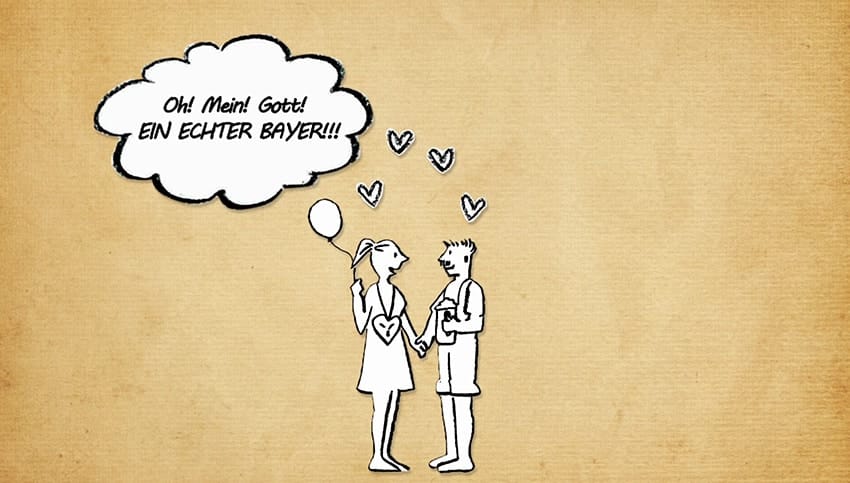
At least one of them realizes there's more than just liking it. Encounters with this particular person are clearly enjoyed more than with others. The flirting might still be very subtle: a slightly longer period of eye contact, an "accidental" touch in passing, or playful teasing.
Eventually, both realize that after a personal encounter, their thoughts linger on the other person. These thoughts may not be particularly concrete, but something stirs within them. They increasingly look forward to the next contact (even if it's only fleeting at first).
At this point, someone in a committed relationship may already begin to feel guilty. And yet, there is little they can do about this small "spark".
Phase 3: The Approach
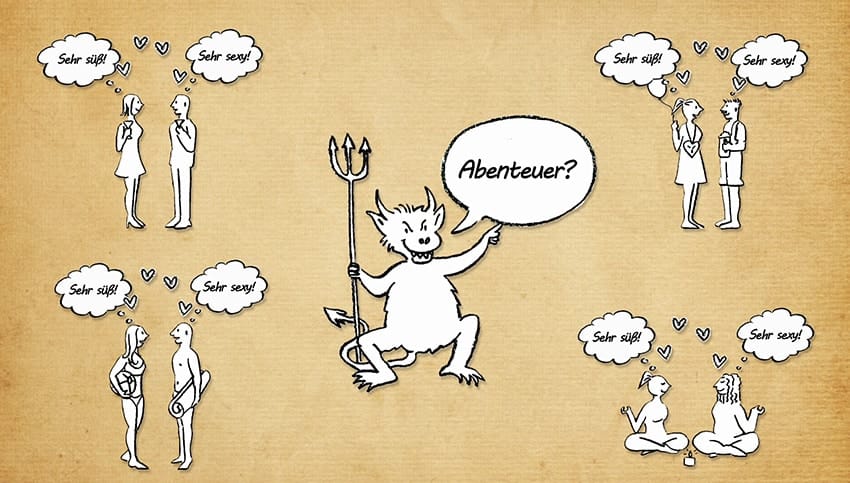
Despite one's own relationship and initial feelings of guilt, one grows closer to the other person. Usually, this happens so subtly at first that one can still justify it to oneself and others as "I just have fun with my colleagues" or "That's just how we are in our circle of friends."
A handshake as a greeting turns into a short hug, a short hug into a longer hug, a longer hug into a hug with kisses... If this hasn't already happened, the two often exchange phone numbers at this point under some pretext.
You might start sending each other occasional WhatsApp messages, which gradually become more and more frequent. Suddenly, you're reluctant to entrust your phone to your partner and find yourself regularly checking for new messages in the bathroom.
Communication with the other person becomes increasingly intense. Step by step, it escalates from harmless conversation to increasingly obvious flirting. Both fantasize about what it would be like to kiss or sleep with each other.
At the same time, a growing bond develops between them. The hidden flirtations and the forbidden situation they find themselves in make them both feel like they're inseparable. Neither can get enough of the other's displays of affection and compliments.
You might feel, in some ways, more understood by this person than by your current partner. The question arises in the back of your mind whether this new man/woman might even be a better match than your current partner.
Although a 'classic' affair hasn't yet occurred at this point, the contact is usually kept secret from the partner. This, in turn, increases the distance to one's own partner and strengthens the bond with the potential affair partner.
This phase of an affair can last days, weeks, or months (in exceptional cases, even years). Many emotional affairs also end at this point, for example, when the person in a committed relationship pulls the plug before the infidelity escalates to physical infidelity.
Phase 4: The red line
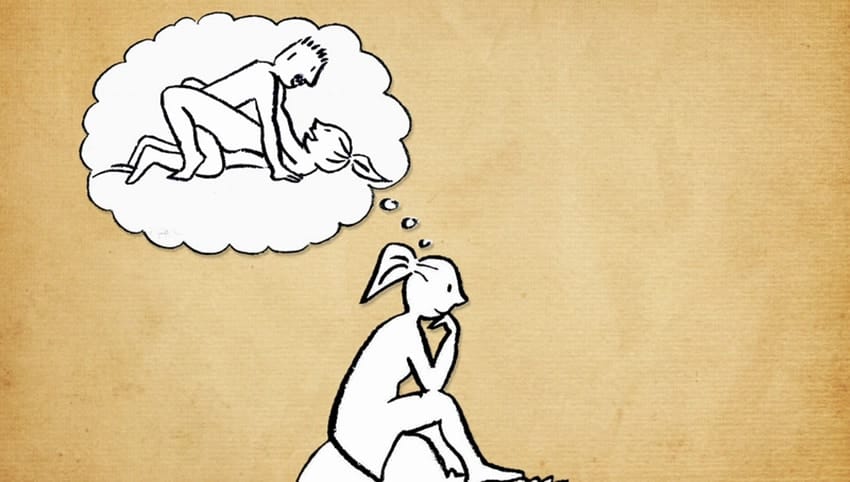
Then one day it happens. Be it a weak moment in an emotional crisis, acute frustration with one's own relationship, or simply an unconquerable desire:
The red line is crossed. An affair occurs: an erotic touch, a passionate kiss, and in most cases, sooner or later, sex. Those involved no longer actively said "No! This far and no further!" but allowed themselves to be swept away by the whirlwind of desire and curiosity.
After this taboo is broken, feelings of fascination, excitement, guilt, and fear mix into an explosive emotional cocktail. The intimacy and sex with the new person are usually perceived as much more intense than under 'normal' circumstances.
As is human nature, the forbidden holds a special allure for us. However, this effect is usually associated with the other person in the emotional affair.
While desire and passion skyrocket, most people at this point feel strong guilt towards their partner.
Phase 5: Secrecy
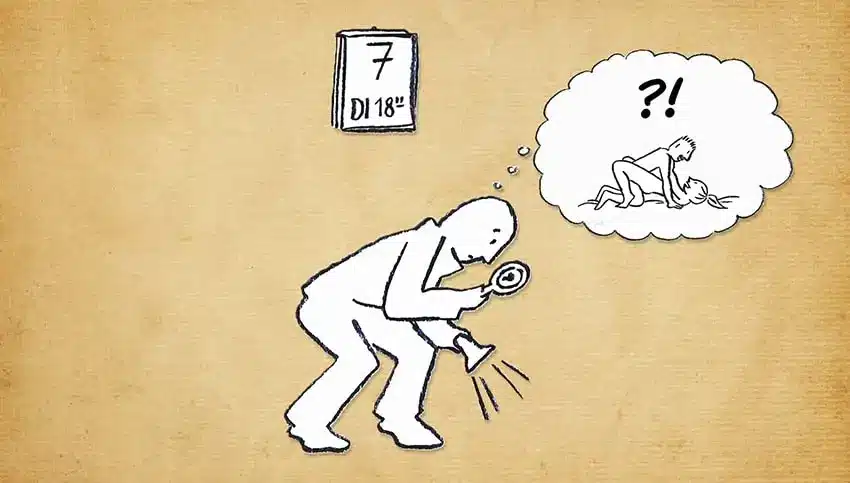
Once infidelity has occurred, the cheating partner in a committed relationship almost always tries to keep everything a secret at first. However, some people eventually pull the plug, for example, when they become too afraid of losing their established relationship because of their actions.
Often, however, encounters with the affair partner increase in both frequency and intensity. Increasing efforts are made to keep the affair a secret from the partner. For weeks, months, sometimes even years, the person leads a kind of double life: towards their partner, who must remain unaware; sometimes also towards the affair partner, who may be completely unaware of the other person's existing relationship; or attempts are made to create the impression of monogamy and exclusive love in both directions.
In reality, the affair is taking up an increasingly large part of life.
The time for secret meetings is justified with overtime, business trips, new hobbies, or appointments with friends. Typical behaviors following infidelity become more frequent in the partner. Time and emotional availability in the original relationship decreases. Questions are usually avoided, and sometimes the person questioned reacts with annoyance or even aggression. The cell phone is increasingly guarded from the partner, trips to the bathroom become more frequent and longer (always with the phone in tow), and the partner often leaves the house to make calls.
Phase 6: The Exposure

It's almost always only a matter of time before the complex web of lies collapses. While a one-night stand might be kept secret indefinitely, this is almost never possible with a long-lasting emotional affair.
Especially in a relationship where the partners live together, it's almost impossible for the 'strange', changed behavior to go unnoticed at some point. There are simply too many situations where secrecy can fail, such as:
A push notification pops up on the phone.
During a car ride together, a call from the mistress suddenly appears on the display.
The partner smells of an unknown male/female perfume.
There are hairs from the other person stuck to the clothes.
An alibi is exposed ("I called you at work. Your colleagues said you had already gone home.")
The answers to follow-up questions are contradictory.
The partner returns unexpectedly from a trip.
etc.
Even though everyone may think of themselves as clever and forward-thinking: Most people are not professional secret agents who can maintain a perfect cover at all times.
When an affair is discovered, the betrayed partner is usually deeply hurt and often reacts with intense emotions. Sometimes, separation is declared at this point. However, in many cases – thankfully, from our perspective as couples therapists – this is not the end of the story.
Phase 7: The Decision

If the betrayed partner hasn't immediately initiated separation or divorce after the affair was discovered, the decision-making phase is almost inevitable. The person who had the affair is usually faced with an ultimatum from at least one side: the affair partner, to finally end the relationship; or the partner, to end the affair as quickly as possible.
In some relationships, this decision is surprisingly easy. The cheater is relieved that the exhausting game of hide-and-seek is finally over. Perhaps they've secretly felt for some time that they're much more attracted to one of the two people than the other. Either to the "affair partner" because, over time, it's become clear that not only is the sex more exciting, but that the mutual interest, support, and concern are also genuine. Or the cheater desires nothing more than reconciliation and exclusivity with their existing partner, for example, because the initial excitement of the affair has faded. Or because personal differences have come to light that haven't sparked any desire for more—but they haven't yet managed to break free.
More often, however, the cheating person feels a strong attachment to both people and doesn't want to lose either of them. What then?
"Do I stay with my trusted partner or do I embark on a 'real' relationship attempt with my affair partner?" It is not uncommon for people to experience an emotional yo-yo effect here: no sooner have they internally made a decision than the painful feelings pull them back to the other person.
The bitter realization sets in now, if it hasn't already: there is no "good solution" (anymore). Once the infidelity has been exposed, at least one of the loved ones will be hurt further – regardless of the decision made.
Does my relationship deserve a second chance? Read on to find out when a second chance makes sense and when a breakup is the right thing to do.
Frequently asked questions about affairs
Below we would like to answer some of the most frequently asked questions about affairs.
What is the difference between an emotional affair and a sexual affair?
Clara and Anna both had affairs, but their experiences differed fundamentally. Clara, in a long-term relationship, felt emotionally unfulfilled. She found solace in a friendship with a colleague, with whom she had deep conversations and developed an intense emotional bond. Although there was no physical intimacy, she spent more time with him and shared thoughts she kept from her partner. This emotional affair undermined the trust in her relationship.
Anna, on the other hand, sought physical excitement outside her partnership. She began a sexual affair based on physical attraction, without any deeper emotional connection. For her, the physical experience was paramount, while emotional aspects remained untouched.
The difference between their experiences illustrates the different forms of infidelity:
Emotional affair
An emotional affair involves a deep emotional connection with a third person, often without physical intimacy. This form can be particularly damaging, as it undermines the emotional foundation of the primary relationship.
Sexual affair
The sexual affair is based primarily on physical attraction and intimacy, without necessarily an emotional bond. Although it violates trust, the emotional connection to the primary partner often remains.
Can an affair be forgiven?
The short answer is: Yes. But it's a huge challenge. When an affair comes to light, it shakes a relationship more fundamentally than almost anything else. Trust is quickly destroyed, but only slowly rebuilt.
How to save your established relationship is explained in our most-clicked article: Forgiving an affair: Our relationship experts will help you out of the crisis .
Is my partner having an affair?
Few things drive us more crazy than the fear of being cheated on. Signs of infidelity can include a drastically changed use of one's mobile phone, aggressive reactions to seemingly harmless inquiries, or strange excuses for absences. Learn how to uncover an affair and best cope with your own emotional turmoil in our article: Recognizing Infidelity: The Best Tips from Our Couples Therapists
How long does an affair last?
There's no single answer to that. Everything happens, from a one-night stand at a party to a decades-long, secret affair with a colleague.
However, it is rather rare for an affair to last for several years without the partner noticing or the third party eventually making demands or pulling the plug and ending the relationship.
How common are affairs?
Depending on the survey, the figures vary widely. Even in an anonymized study, many people are unwilling to reveal their dark secret. On average, it can be assumed that about one in three people has cheated on their partner at least once in their lifetime.
Who do people have affairs with?
According to surveys, the most common groups of people with whom affairs are entered into are:
work colleagues
Ex-Partner
Close friends
Daily contact with colleagues and emotional ties to ex-partners and friends seem to facilitate affairs. Stereotypes like babysitter or fitness trainer, on the other hand, are rather rare.
We have also addressed the topics of "affairs" and "falling in love with someone else" in other articles. If you would like more detailed information, you can find it here:
Forgiving an affair: Our relationship experts will help you out of the crisis.
Recognizing infidelity: The best tips from our couples therapists
Taboo topic: affairs – this research knowledge can save your relationship!
The right support
If you are currently overwhelmed by emotional turmoil, we recommend seeking external professional support as a guide and source of orientation.
In our couples therapy practice, we have successfully guided hundreds of people through the crisis following the discovery of an affair. This extensive practical experience and the important insights gained from 50 years of research on couples have been incorporated into the audio program "Taboo Topic: Affairs".
There, my colleague Dr. Judith Gastner and I answer the most pressing questions, present a touching case study (including an interview with the person affected) and show you step by step and with very concrete tips the way out of the emotional mess.
Important note:
The audio program "Taboo Topic: Affair" is primarily aimed at the betrayed partner and offers a kind of emergency kit for the initial period after the affair becomes known.
Take back control of your life!

We wish you strength and keep our fingers crossed that things develop in the direction you want.
Warm greetings from
Prof. Dr. Ludwig Schindler & the PaarBalance team
☝🏻 Related to the topic: 7 phases of an affair
Frequently Asked Questions
Is there a "classic course" to an affair?
Although every affair is different, couples therapy experience shows that most affairs follow a typical pattern of successive phases. This applies to emotional affairs as well as predominantly sexual affairs, and also to those that have both emotional and erotic components.
How does an affair begin?
Many affairs begin with "The Innocent Beginning" (Phase 1): harmless attraction without any conscious flirting. Over time, however, "The Spark" ignites (Phase 2): both partners increasingly enjoy their time together, and their thoughts revolve more and more around each other. Phase 3 is "The Approach." Physical contact becomes closer, phone numbers are exchanged, and communication intensifies. In the forbidden situation, a feeling of connection develops. Meanwhile, the distance between the partner and their own grows.
How does a flirtation turn into an affair?
When people in committed relationships no longer actively say "No!" but instead allow themselves to be swept away by curiosity and desire, "The Red Line" is crossed (Phase 4): An affair occurs. Afterwards, an explosive cocktail of emotions arises, a mix of fascination and fear of discovery, which makes physical contact or sex with the new person seem particularly intense. Phase 5 begins: "Secrecy."
What happens when an affair is exposed?
Often, it's only a matter of time before phase 6 occurs: "The Exposure." The changed behavior doesn't go unnoticed. The betrayed partner is usually deeply hurt and reacts with intense emotion. Phase 7, "The Decision," almost inevitably follows. If the cheater feels a connection to both parties, there is no longer a "good solution," because at least one loved one will be hurt in any case.
What does a "typical affair" look like?
There's no single definition of what a typical affair looks like. Everything from a one-night stand to a long-secret romance is possible. Affairs rarely remain undetected for several years. According to surveys, colleagues, ex-partners, and close friends are the most common affair partners.