


☝🏻 Quick start: In love despite being in a relationship
Suddenly your emotional world is turned upside down. You no longer know what to feel or think. Butterflies in your stomach AND a lump in your throat – what a strange combination!
Excitement and guilt alternate.
On the one hand: your long-term relationship – your partner, with whom you have already experienced and shared so much and who is so familiar to you. And on the other hand: HE/SHE.
The third person, catapulted into your life by chance? by fate?, has plunged you headlong into a new emotional world and awakened long-buried (or never-before-known) chords within you - and suddenly makes you question everything that is and that was.
"What's happening to me?" "How is it possible that I'm so completely thrown off balance and in a whirlwind of emotions?"
Here you'll find tips and answers to many confusing questions.
🚀 Already 65,511 people have gained clarity through the test.
Is it possible to fall in love while in a relationship?
Over the course of years and decades of living together, it must be taken into account that there are not only phases in which one feels very close to one's partner, but also phases in which – for very different reasons – more distance arises and one sees him or her in a different light.
Many people reach a point of great uncertainty during a long-term relationship and ask themselves: "Should I continue to hold on to my partnership - or is there an alternative that could make me (even) happier?"
With today's life expectancy, a relationship can last half a century or more. During such a long period, it's almost inevitable that at some point, one partner won't feel some attraction outside the existing relationship – be it through…
- a rekindled childhood love , awakening earlier feelings of infatuation.
- The encounter with a fascinating person who awakens in us a long-forgotten or previously never experienced cocktail of emotions: excitement, infatuation, and desire.
- a good friend (a good female friend ) or even your best friend ( a best female friend), who gives you a kind of attention and goodwill that you no longer experience in your relationship.
If such an attraction occurs at a time when one does not feel particularly close to their long-term partner, it is understandably associated with even greater inner turmoil, fear and strong insecurity.
In such or similar situations, it can quickly happen that one falls head over heels in love with someone else and is swept away almost uncontrollably by the allure of the new and exciting – even if the committed relationship or marriage is perceived as generally stable and 'good'.
Suddenly, one finds oneself surreptitiously glancing at one's phone every few minutes – longing for a message from the object of one's desire. This yearning and excitement almost drive one to madness.
Interest in another woman despite being in a relationship: What do these feelings mean for the relationship?
It's not unusual to feel interested in other women even while in a committed relationship. This feeling, often described as a crush, "newly infatuated," or "newly in love," triggers emotional turmoil for many. Whether it's a harmless infatuation or a genuine longing can sometimes be difficult to discern at first.
Such feelings of infatuation – despite a committed relationship – can have various causes, such as…
- the need for more emotional closeness or more passion
- the desire to be seen and appreciated
- the longing for new experiences and variety
- the feeling of a very special harmony and “soul kinship”
It is important to consciously perceive and reflect on one's feelings without acting rashly. Open communication with one's partner about one's own needs and desires can help to avoid estrangement and to improve and deepen the relationship.
Furthermore, one should be aware of the consequences for the existing partnership if current feelings of infatuation with someone else are acted upon…
My wife has feelings for another man: causes and solutions
Witnessing one's wife develop feelings for another man is, for most people affected, initially extremely distressing and frightening. "Love wants to possess." Despite polyamory and open relationship models, a large proportion of those in committed relationships find it difficult to imagine sharing their loved one with another (sexual) partner.
That makes it all the more important to communicate with each other as carefully and honestly as possible in order to understand the causes and find solutions together.
Several couples report that through such an emotionally stirring and intense period and the resulting intense conversations about their feelings, wishes and needs, they were able to reawaken their previously somewhat “dormant” relationship from its slumber and ultimately strengthen it.
During such emotionally turbulent times, it can be helpful to seek professional support in the form of couples therapy. A professionally trained, neutral third party can help overcome communication barriers and develop new perspectives.
Ultimately, it requires patience, understanding, and the willingness of both partners to hold on to the relationship, grow together, and find a shared path that benefits both.
In love despite being in a relationship - the romantic fantasy of a fresh start
You're probably feeling extremely agitated right now and having confusing daydreams about what it would be like to leave your long-standing relationship behind and start your life completely anew – alongside this incredibly exciting person, in whose presence everything might be so much more beautiful and thrilling. In this phase of confusion and chaos, it can be difficult to clearly see your love for your partner with your own eyes.
But even if this fantasy may be tempting:
Such a fresh start requires careful consideration. Anyone who wants to embark on a new love after leaving a relationship starts with a significant burden: they must first deal with a painful breakup.
Underestimated bonding = rude awakening
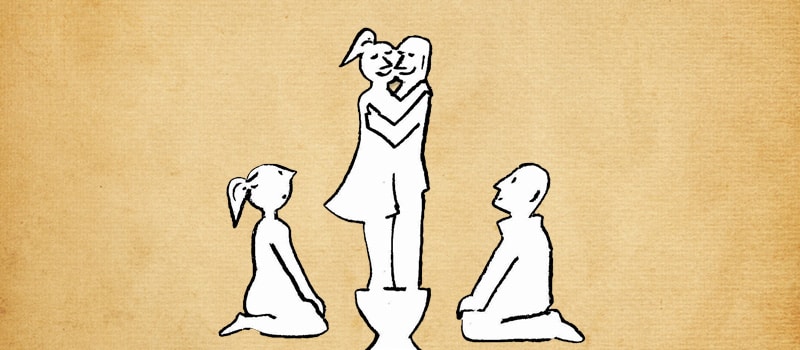
Between people who have been together for a long time, something we call 'bond' develops. We humans are not only social beings, but also, and especially, bonding beings. Bonding is, so to speak, part of our very being and cannot simply be shed. Our partner becomes a part of our life story, of our own self – even if the relationship wasn't always experienced as passionate and loving.
The vital importance of bonding is explained in psychology by the fact that it is an evolutionary achievement intended to ensure the safe upbringing of offspring and, later, the cohesion of a pair to facilitate the raising of the next generation. This existential significance explains why the associated feelings are so powerful.
Love creates bonds, and bonds sustain love. The longer a relationship lasts, the stronger the forces of connection become. However, it's often believed that passionate love inevitably evolves into companionship over the years. Scientific studies show that this isn't always the case. Lifelong relationships tend to follow phases. Depending on the personal development of each partner and how they nurture the relationship, there will be periods of greater and lesser passion and intimacy. A waning of romantic love is not inevitable. Even if it diminishes temporarily, whether or not greater closeness and feelings of love will return depends on how the relationship continues to develop.
So far, so good. But why do people fall in love despite being in a relationship?
On the one hand, we humans are creatures of habit – valuing reliability, familiarity, and predictability – and on the other hand, we are constantly searching for new, intense, and exciting experiences and emotional states.
The constant, familiar emotions often fade in our perception and become a kind of background noise. New, unusual, and unpredictable things capture our attention. This can then lead us, during a period of lacking intimacy, to massively underestimate
the deep bond we've built with our long-term partner and overestimate the quality (and future viability) of a new attraction .
When a breakup finally occurs, there is often a rude awakening.
The old cliché of "I didn't appreciate it until I lost it" becomes a bitter reality.
Should I tell my partner that I'm in love with someone else?
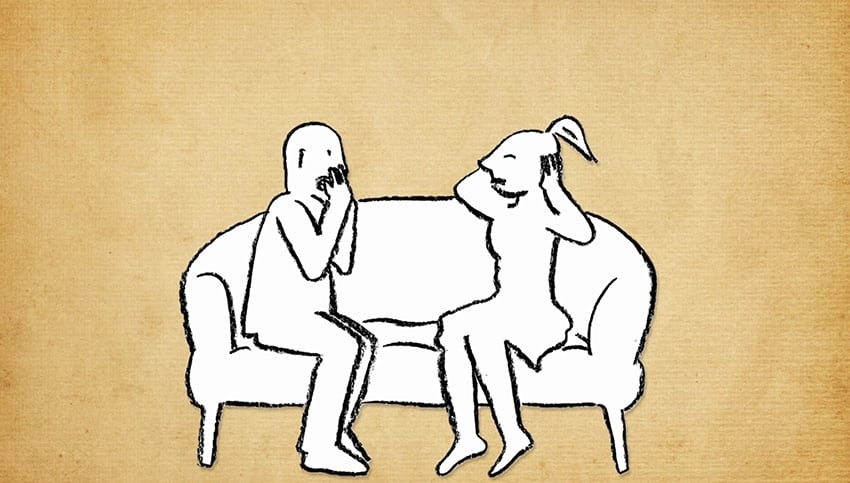
The answer is almost always: No!
As a rule, it is better to first bring order to your own emotional world.
It's advisable to think things through before confronting your partner with your own jumbled feelings. If you thoughtlessly confront your partner with your own emotional turmoil, you might ruin your chances of a future together.
Be aware: The news of your sudden infatuation will most likely deeply unsettle and hurt your partner. He may no longer reciprocate the same trusting love and affection as before, at least for an extended period. Infatuation with someone else or infidelity is often accompanied by profound emotional wounds. The atmosphere between you could initially be characterized by mistrust, making it even more difficult for you to calmly assess your own feelings and decide on the next steps.
Therefore, for the sake of everyone involved, take the time to gain as much clarity as possible about your own emotions before making a far-reaching—and potentially irreversible—decision or even mistakes. You can also seek advice from professional therapists or trusted friends to gain a clearer perspective.
Breakup or not? Questions you absolutely should be asking yourself now.

Before you embark on an affair or second relationship (or continue to hold onto one) or even consider separating from your partner and thinking about a serious attempt at a relationship with the other person, you should answer the following questions:
- Would I really be ready to leave my existing relationship and my life as I know it behind?
- Have I (or have we) already tried everything to breathe more life back into our relationship?
- Am I convinced that a sustainable love relationship can develop from my current infatuation?
- Could I live with the consequences if I were to lose my steady partner – if my current crush and I didn't become a couple and our current relationship could potentially be damaged?
- Do I take enough care – even outside of our relationship – to ensure that I am well and that my life is fulfilling?
Only if you have answered all questions with a (at least relatively) clear "yes" does it make sense at this point to think more concretely about separating from your partner and attempting a relationship with the 'third person'.
Otherwise, you should take as much time as possible to sort things out internally. There is no acute emergency that would force you to make a hasty decision.
You can find more blog posts on the topic of "separation" here .
Take action!
To remain consistent with one's own biography in the long term, it is important to be able to say to oneself later on – regardless of what the future ultimately brings:
- I didn't throw away our established relationship lightly.
- I gave our relationship a real chance when I was having doubts.
- I did everything I could to try and re-establish closer ties.
Many studies show that the atmosphere and sense of togetherness in a relationship can change for the better within weeks. Take action! Give yourself and your partner another fair chance and calmly examine your feelings for the 'third person' as well as your willingness to completely turn your life upside down again – with all the consequences.
Such a phase of reflection and taking time is important in any case: If it ultimately comes to a separation from your partner and a fresh start with the person you have (newly or again) fallen in love with, you will start with a much greater chance that this new relationship will also be successful.
Consider the beginnings of your growing partnership!
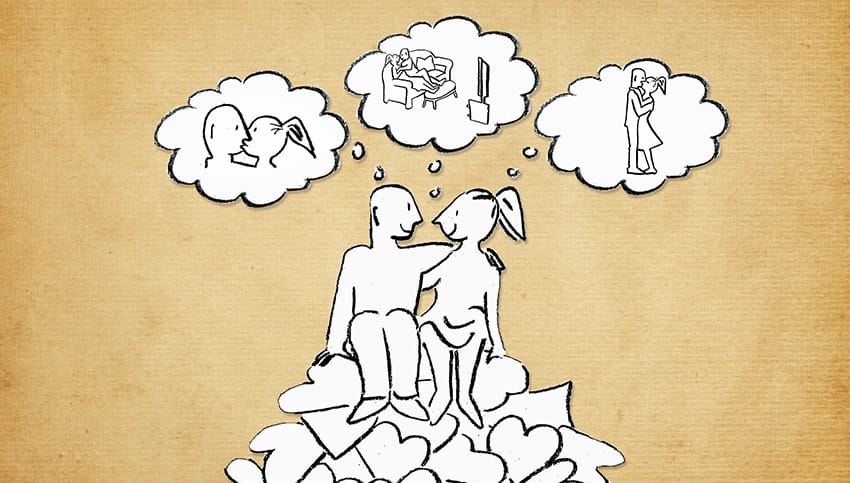
In a period of great uncertainty, it is all the more important to pause and look at one's past relationship history with as calm a perspective as possible:
- What were we like when we met and fell in love?
- How did we treat each other?
- What was special about us? What made us who we were?
And then: What happened next?
- Have we continued to treat each other with the same respect and attention throughout our relationship as we did at the beginning?
- Have we held each other tightly lately? Kissed each other for longer than a fleeting moment? Greeted and said goodbye to each other affectionately?
- Did we support each other (in which areas was it easier for us, in which more difficult)?
- Were we interested in how the other person was doing? Did we feel seen and heard?
Ask yourself: What do you see when you focus the spotlight on the positive aspects of your partnership?
- What were (and are) our strengths as a couple?
- What did we accomplish well together? What can we be proud of? Why did we succeed?
- What wonderful experiences did we share? What do I fondly remember?
- What have I liked and appreciated about my partner so far?
What images come to mind when you think about a future together with your current crush?
- What will likely remain after the initial infatuation has faded?
- Will I still like about him (her) later what I find particularly fascinating now?
- Do we have what it takes to become a strong team in the long term?
- How could I fit into his (her) life?
- To what extent could he (she) 'fit' into my life so far (circle of friends, family, children, job, interests)?
- Will I still look at him (her) with those head-over-heels eyes in the future?
Test: How is your relationship really doing?
To help you make your decision, you can take our scientifically developed CoupleBalance relationship test (free of charge).
Take a moment to step away from the current emotional turmoil and examine your existing partnership or marriage from a bird's-eye view:
- How am I experiencing my relationship right now?
- How am I currently shaping my partnership?
The test is free of charge. It takes about 10 minutes.
Immediately afterwards, you will receive (free of charge) detailed feedback on the various areas of your relationship. Using a traffic light system, you will quickly recognize where potential problems lie and in which aspects you as a couple might be significantly stronger than you thought.
Using this personal relationship profile, you can probably assess the current situation much more objectively and are more likely to make a well-founded decision about what the next steps should be.
Take your relationship test now! (free)
How is your relationship?
What are your strengths and weaknesses?
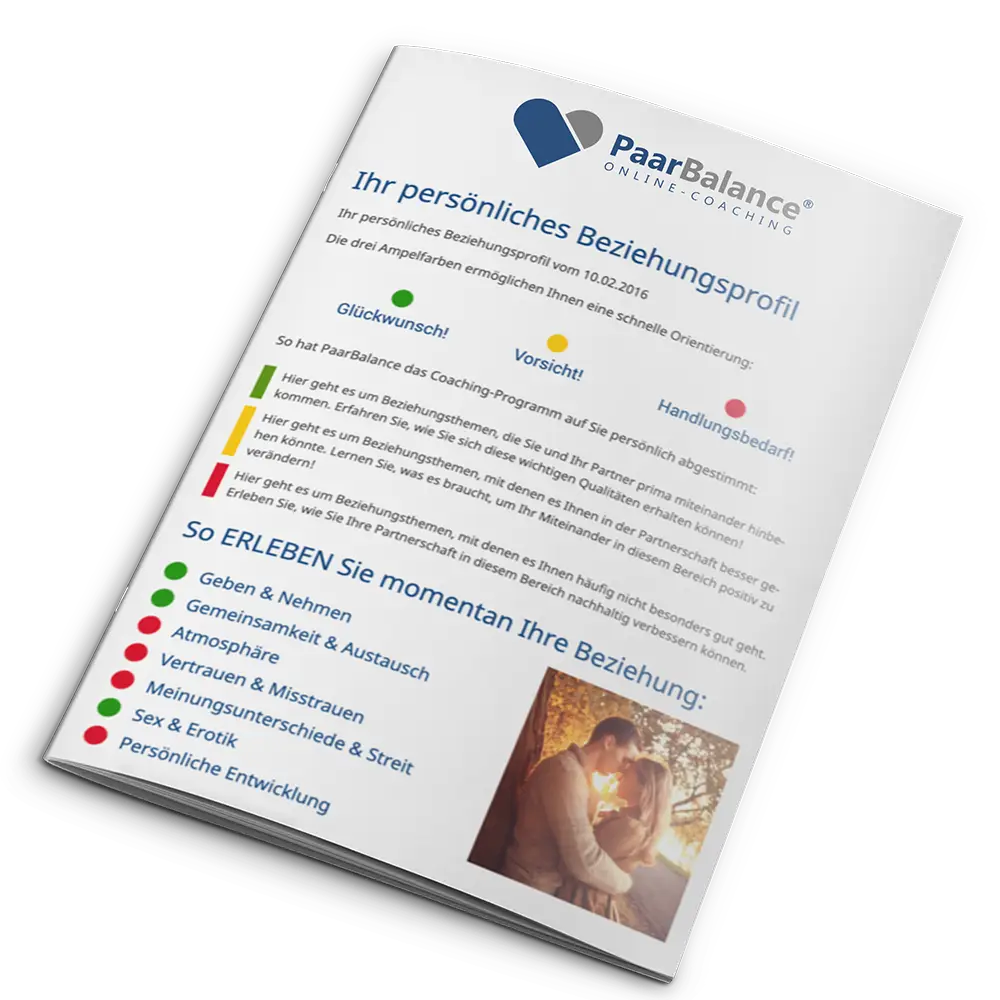
You will find out immediately afterwards in your personal PaarBalance relationship profile (free).
Start your relationship test now!
✓ Scientifically sound
✓ Includes detailed analysis
✓ Your data will not be shared
✓ 100% free & non-binding
100% secure. We comply with data protection regulations. Registration for the relationship test is free .
Please read this important information beforehand:
Data Protection ᐧ Terms and Conditions ᐧ General Information Agreement Terms and Conditions . Transparency Statement
We sincerely hope that you will be able to make a decision that suits you and that will make you happy and feel right in the long term.
All the best to you and warmest regards!
Yours sincerely, Dr. Judith Gastner
☝🏻 Related articles on the topic of being in love despite being in a relationship
Frequently Asked Questions
Why do people fall in love with someone else despite being in a relationship?
Although we humans are creatures of habit who value reliability and predictability, we also seek new and exciting experiences. If feelings in a long-term partnership become too commonplace, another person can quickly be perceived as exciting, and one might even fall head over heels in love with him or her – especially during a more distant phase of the relationship.
Does love automatically fade in a long-term relationship?
According to scientific studies, love doesn't automatically diminish in long-term relationships. However, long-term relationships do go through phases. It's important to realize that feelings change over the years. For many couples, infatuation develops into deep connection and love. However, the butterflies in the stomach rarely flutter anymore.
Should you talk to your partner about being in love with someone else?
Experience in couples therapy shows: Don't have this conversation until your own feelings and thoughts are somewhat sorted out. After all, this conversation would very likely make your partner feel extremely insecure and damage their trust. This makes it all the more difficult to sort out the current emotional turmoil and could potentially destroy any chance of a future together.
Should you break up with your partner if you're in love with someone else?
A hasty breakup, even if you still love each other, is not advisable. Have you truly invested enough heart and soul into the current relationship? Are you prepared to permanently leave behind this established partnership – with all the consequences, even if no new relationship develops? Don't do anything rash that can't be undone.
In love despite being in a relationship. What happens now?
Before deciding to end a relationship and rushing into a new one, you should give the old one a fair chance. Think back to how it all began. How did the relationship develop? Are there still loving gestures and support between you? What would happen with the other person after the initial infatuation faded? Would your life plans even be compatible?
How long does infatuation with someone else last?
The duration of infatuation with someone else varies greatly. It depends on the intensity of the feelings, satisfaction (or dissatisfaction) in the existing relationship, and individual life circumstances. Some people experience intense infatuation with someone else only for a short time and can move on relatively quickly. For others, infatuation with someone else can last for several weeks or even months. Almost always, the crucial factor is how one deals with their own emotions and whether those affected consciously take steps to gain more clarity regarding their needs and desires in their committed relationship.