







☝🏻 Quick start: Typical behavior after infidelity
How does someone typically behave after an affair?
Diese Frage treibt verständlicherweise alle um, die plötzlich Zweifel an der Aufrichtigkeit ihres Partners oder ihrer Partnerin spüren und sich nicht mehr sicher sind, ob sie ihm bzw. ihr noch vertrauen können.
"Entlarven" an dieser Stelle klingt natürlich sehr nach "Hinterherschnüffeln" und "Spionageaktionen". Das ist so nicht gemeint.
Doch wenn der Verdacht - "Vielleicht werde ich betrogen? Vielleicht ist das der Grund dafür, dass sich nichts mehr so wie früher anfühlt?" - erst einmal im Raum steht, kann (und sollte) er auch nicht mehr einfach beiseite geschoben werden. Dann braucht es Klarheit. Und oft auch eine große Portion Mut.
Denn wer die Erfahrung macht, sich mit einer für ihn maximal unangenehmen Realität zu konfrontieren, für den gibt es oft ein "Vorher" und "Nachher". Und das ist in seiner Radikalität vergleichbar mit einem "Ent-Larven".
Was sind typische Anzeichen, an denen man erkennen kann, ob ein Partner fremdgeht? Das erfahren Sie im Artikel Fremdgehen erkennen↓
Ist die Larve erst einmal geschlüpft, gibt es keinen Weg mehr zurück in den früheren Kokon. Der bisherige Schutzraum wurde ein für allemal verlassen. Und den wird es so nie mehr geben.
In unserer Münchner Praxis haben wir oft mit Klienten zu tun, deren Partner eine Affäre oder "Zweitbeziehung" hatte (oder noch hat).
Meist beschreibt der Betrogene aus der Rückschau, dass er bereits seit geraumer Zeit "ein komisches Gefühl" gehabt habe. Die Atmosphäre sei verändert gewesen, irgendetwas sei "in der Luft gehangen". Allerdings habe er zunächst überhaupt nicht einordnen können, was der Grund für die veränderte Stimmung sein könnte. Denn "Mein/e Partner/in geht fremd" habe er als mögliche Ursache absolut nicht auf dem Radar gehabt.
Betrogen zu werden, passiert aber leider nicht nur "den anderen".
In sehr vielen Langzeitbeziehungen kommt es vor, dass einer von beiden - zumindest zeitweilig - das bisherige Treue-Commitment verlässt und quasi "ausschert", ohne dass das vorher angekündigt oder miteinander offen besprochen worden wäre.
Und genau das erlebt der betrogene Partner als tief verletzende "Ungeheuerlichkeit":
- dass nicht offen kommuniziert worden war, was den anderen umtreibt.
- dass es für einen selbst keine Entscheidungsoption gegeben hat (im Sinne von: Wollen wir beide einen Versuch wagen, uns sexuell auszuprobieren? Wollen wir unsere bisher monogame Beziehung versuchsweise öffnen? Wäre ich da mit im Boot oder nicht?).
- that he was left completely alone with his feeling "something isn't right anymore" and that his previously trusted partner did not prevent him from deeply doubting his own ability to perceive things .
Our article summarizes the most common behavioral changes of unfaithful partners and can provide initial guidance on whether the reason for a changed atmosphere might be the partner's infidelity.
We examine emotional changes, 'typical' communication patterns, and several other indicators commonly associated with 'typical post-infidelity behavior'.
🚀 Already 65,511 people have gained clarity through the test.
The most important information at a glance
- Infidelity often manifests itself through noticeable changes in the partner, such as significantly improved personal hygiene , secretive mobile phone behavior , or emotional distancing in everyday life .
- Guilt and the fear of being discovered can lead to significantly altered communication behavior , increased secrecy, irritability , and more frequent conflicts in unfaithful partners .
- Confronting suspicions of infidelity requires a very careful and constructive approach to communication . However, this is extremely difficult for people who are emotionally distraught (understandably!).
- Couple therapy or couple counseling can be a possible option for restoring trust.
Women and men - typical behavior after infidelity

The dynamics of infidelity and the resulting behavioral changes can differ between women and men. In this section, we examine the specific patterns and reactions that can occur in both genders after an affair.
Here again , it's important to be aware that such behaviors don't occur in every cheater and cannot be considered definitive proof of infidelity. However, they can help to recognize and interpret a change in the dynamics of the relationship.
Typical behavior after a woman has cheated
Many of the behavioral changes observed after infidelity are similar in both sexes. However, there are a few specific behavioral patterns that occur somewhat more frequently in women after (or during) an affair than in men. Typical post-infidelity behavior in women is often accompanied by the following changes:
Changed priorities : After an affair, a woman suddenly sets new priorities that result in her being less involved than before in shared activities and obligations in her partnership or family.
Emotional withdrawal : Emotional withdrawal and a sudden decrease in willingness to talk about feelings can indicate an affair.
Overcompensation : Some women react to their own feelings of guilt with signs of excessive affection and special attention towards the betrayed partner.
Changes in routine : Irregularities in the daily routine, such as "late working hours" or "unexpected obligations", can be signs of infidelity.
However, as already emphasized, one should never jump to conclusions. Everyone is different, and not every change in behavior necessarily indicates infidelity . Open communication without accusations and recriminations is key to addressing and better understanding this complex situation.
How does a man who is cheating behave?
Men who cheat increasingly exhibit the following behavioral changes:
- Increased secrecy: Sudden changes in the handling of personal information, such as hiding smartphones, changing passwords, etc.
- Changed communication behavior: Less exchange, conversations that were previously taken for granted are avoided.
- Unexplained absences: Frequent "overtime" or spontaneous "obligations" without any plausible explanation. Evasive answers to questions concerning these absences.
- New interest in one's own appearance: A sudden interest in fitness, new clothes, or a focus on special personal care as a possible indication that one is trying to be attractive to someone else.
- Changes in sexual behavior: A decrease in sexual intimacy or - on the contrary - new sexual fantasies or the suggestion to try unfamiliar sexual practices.
These behavioral changes can also have other causes, such as stress, personal crises, or new priorities. Therefore, as mentioned, it is crucial not to jump to conclusions, but to seek open communication to avoid misunderstandings and escalation, and to create clarity.
The psychology behind infidelity

To understand the behavior of an unfaithful partner, the psychology behind infidelity should be examined more closely.
Cheating can be symptomatic of underlying relationship problems , such as persistent dissatisfaction, lack of emotional closeness , or unresolved conflicts.
But even a relationship perceived as loving and happy overall is not a 100% guarantee that infidelity will never occur. Due to personal crises of self-discovery , the urge for variety , a temporary feeling of a lack of attention , or other developments, it can happen that a partner in a committed relationship is no longer able to actively say "no!" when tempted – for example, because they feel particularly flattered or are swept away by a special mood.
Situational circumstances (a company outing, a celebration), specific dissatisfactions (e.g., that one's own requests and wishes have not been addressed for a longer period of time), and a person's personality (e.g., strongly pronounced rationalizations of one's own actions) can promote infidelity and the associated so-called "cheating behavior".
You can find out more about the exact reasons and consequences of an affair in our article "Cheating" .
Guilt and its effects
Guilt usually plays a major role for the unfaithful partner. After an affair, almost all cheaters feel guilty because they have violated their own ethical standards . This can lead to self-punishment or attempts to make amends. The guilt is often massively intensified by the fear of jeopardizing and possibly losing the established relationship.
Guilt can manifest in various behaviors. Arguments between partners often become more frequent and personal. This can be especially true when the unfaithful partner projects their own guilt onto the other . Increased irritability , fear of discovery, and inner conflict can also be signs of guilt.
However, in response to feelings of guilt, the cheater may also behave much more lovingly than before , i.e., suddenly invest more time and energy in the relationship, give gifts, or organize romantic dates.
Fear of being discovered
The fear of being discovered almost always strongly influences the behavior of an unfaithful partner. Constantly worrying that their infidelity might be exposed, the cheating partner may resort to a "preemptive strike." They might angrily accuse the other partner of insulting them, misunderstanding them, and so on. Such accusations are then used as a pretext to leave home—perhaps to meet the other person during this time.
When confronted with suspicions of infidelity, unfaithful partners often lie and try to justify their actions.
Signs in the social environment

Signs of infidelity are not only found in the direct relationship between the partners themselves. They can also manifest in their social environment. A partner who is having an affair often withdraws increasingly from their shared circle of friends.
Secrecy and stubbornness towards family members, perceived as strange, can also be a sign that the partner is unfaithful and wants to keep things under wraps.
Withdrawal from shared circles of friends
The changed behavior of an unfaithful partner can extend to their relationships with friends. People who want to keep an affair secret may withdraw from mutual friends to reduce the risk of being discovered and to keep the two "relationships" separate. This feeling of being left out can therefore not only confuse and hurt the betrayed partner, but also be painful for friends.
It is therefore important to take such tendencies in interactions with mutual friends seriously. If you notice that your partner is suddenly and inexplicably withdrawing from their circle of friends, you should initiate a conversation and openly discuss your observations.
Unusual silence towards the family
Even with their immediate family, an unfaithful partner may become unusually quiet. A sudden and unexplained decrease in communication with family members can have many causes – but it can also be a sign that an affair is being concealed. The cheating person avoids sharing details about their daily life and withdraws from conversations.
A noticeable absence from family gatherings or a lack of participation in previously regular and enjoyable activities can indicate a desire to avoid questions about one's absence or changed behavior. Excuses and evasiveness when directly questioned by family may suggest that the person has something to hide and is understandably anxious about the affair being discovered.
Unexplained lifestyle changes

As already mentioned: Unusual changes in lifestyle and appearance (such as new clothes, new hairstyle, new aftershave, new makeup style, a new styling and fitness plan...) may also be signs of "typical behavior after infidelity".
New interest in fitness and body care
A previously unknown interest in personal grooming, appearance, or fitness activities was also identified as a potential indicator that a partner may have been looking elsewhere and wants to be attractive to someone else – and is betraying their (long-term, committed) partner.
Conspicuous spending and gifts
A sudden preference for cash withdrawals instead of the usual card payments can also be an attempt to cover up the financial traces of an affair. Financial activities that fall outside the scope of normal household management could indicate a secret commitment in an extramarital relationship.
Unusually generous gifts or financial expenditures that don't align with the partner's previous behavior can reflect a guilty conscience and may represent an overcompensation for feelings of guilt after an affair. Unexpected gifts or sudden, generous gestures can therefore—unfortunately—be a sign of infidelity in this context.
New hobbies and interests
New hobbies and interests that deviate completely from the usual behavioral repertoire and are pursued with an unprecedented intensity can—if they occur in conjunction with other inconsistencies—also indicate infidelity. Frequent outings "alone" or changes in eating habits can also be signs that the partner has become involved with someone else.
However, it is always important to emphasize that there may also be completely "innocent" reasons for all these behavioral changes, such as improved health awareness or the desire to find a new hobby as a way to unwind during a stressful period at work.
Communication breakdown in the partnership
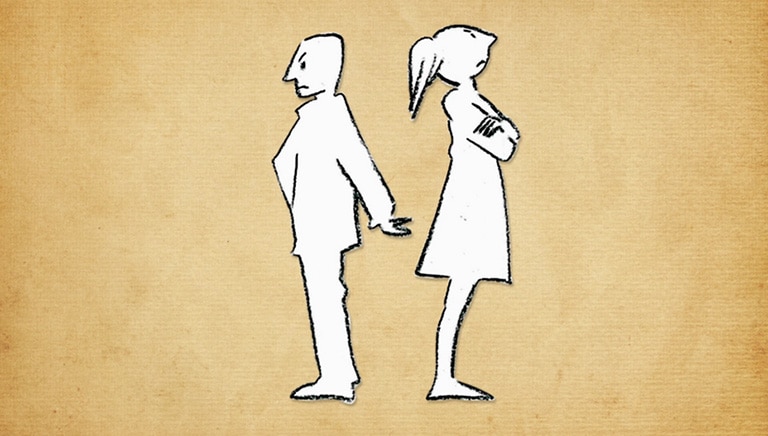
Feelings of guilt and fear of discovery can lead to a kind of "communication breakdown" in the partnership, which feels like a nightmare for the betrayed partner.
Suddenly, all traces of the former openness vanish. The feeling of intimacy and closeness disappear rapidly, deep conversations cease, and the partner seems completely unwilling to communicate.
An unfaithful partner may become more irritable towards the other and reject all attempts to re-establish closeness. This can be very hurtful for the betrayed partner and create even more doubt and insecurity.
You can find more articles about communication in relationships under "Communication: How to talk to each other better as a couple" .
Less openness and trust
Those who build emotional walls cause openness and trust to steadily decline. A vicious cycle begins: As trust diminishes, emotional security is felt less and less, which in turn contributes to a further reduction in openness and intimacy.
Avoidance of deep conversations
As mentioned, avoiding intimate and deep conversations can also be categorized as "typical behavior after infidelity." A relationship can lose depth and be reduced to mere habit if there is no longer any open communication. If conversations are limited to organizational matters, this may indicate that the partner is already experiencing closeness and intimacy elsewhere.
Dealing with suspicion and uncertainty
What can you do if your suspicion of being cheated is confirmed?
- Try to remain relatively calm under all circumstances and avoid rash actions.
- Make every effort to create a calm and undisturbed conversation situation (no door-to-door interrogations!).
- Express your feelings openly and emphasize that you want to avoid speculation and investigations.
- Express your concerns honestly and convey that you want to understand the situation.
- If you are unable to have a calm conversation, suggest seeking professional support (e.g., in the form of a session at a couples counseling center or with a private couples therapist).
Preparing as thoroughly as possible for such a clarifying conversation is immensely important in order to enter the exchange as clearly and "well-prepared" as possible. The support of a trusted person can help one begin such a discussion with mental strength.
A respectful and calm approach is strongly recommended. Anything that could escalate the situation—accusations, blame, threats of consequences, etc.—should be strictly avoided, as it would rapidly worsen the situation.
Have constructive conversations – no prejudgment.
When dealing with such a sensitive topic as suspected infidelity, it is especially important to start the conversation carefully and cautiously. The partner should not feel judged too quickly or put on the spot.
It is therefore crucial to put one's own feelings into words and to address the perceived behavior of the partner without speculation, interpretations or accusations.
To rebuild a lasting foundation of trust, honesty with one another is essential. Couples therapy or coaching are recommended as effective methods for addressing relationship problems after an affair, improving overall communication, clarifying misunderstandings, and restoring a sense of togetherness.
Take your gut feeling seriously
Your gut feeling can be an important indicator of whether a partner has been unfaithful and should therefore never be ignored. Especially if infidelity has actually occurred, your gut feeling must still have a say: Can the infidelity be forgiven? Is there a future together?
This naturally depends on many different factors – but also on the gut feeling: Does it feel like both partners are genuinely interested in a shared future and are ready to do everything in their power to make it happen?
Summary
In this article, we have examined and discussed various signs of infidelity, including how these can manifest in behavioral changes, shifts in the social environment, and communication patterns. It cannot be stressed enough that these signs do not necessarily indicate an affair, as every person and every relationship is unique, and there can be many reasons for changes and dynamic developments.
An open dialogue about signals from the partner that are perceived as confusing is essential in any case to (re)develop more understanding for each other and to restore damaged trust.
☝🏻 Related articles on the topic of typical behavior after infidelity
Frequently Asked Questions
How can I recognize an unfaithful partner?
There are various signs that could indicate infidelity, such as sudden changes in appearance and previous interests, secretive phone use, or altered communication styles. However, it's important not to jump to conclusions and to talk to your partner.
How does a man who is cheating behave?
Men who are unfaithful can exhibit various behavioral changes. These often include increased secrecy regarding their daily routines, changes in communication patterns, sudden overtime work, or unexplained absences. A new interest in their appearance, such as buying new clothes or becoming more involved in fitness, is also common. However, it's important not to immediately interpret all behavioral changes as signs of infidelity, but rather to seek open communication.
What should I do if I suspect my partner is cheating?
It's important to talk openly with your partner about your concerns. Avoid accusations and try to have an honest exchange together. Couples therapy can be an option to rebuild lost trust, better understand the overall dynamics of the relationship, and strengthen your sense of togetherness.
How does infidelity affect a relationship?
Infidelity can profoundly shake the trust in a relationship and lead to severe emotional wounds. However, every relationship is different. Some couples even find ways to strengthen their relationship after an affair and discover a new form of intimacy and openness.
Can relationships survive an affair?
Yes, it is possible for relationships to survive an affair, namely when both partners want to save their love , are willing to invest in their relationship, want to recognize their own unconstructive patterns, have open conversations and, if necessary, seek professional help.
How can I rebuild trust after an affair?
Rebuilding trust usually requires a great deal of time, patience, and consistent effort from both partners. Honesty, transparency, a willingness to address the underlying problems in the relationship, and providing a sense of security are crucial for the healing process.