







☝🏻 Quick start: Saving your marriage - the 6 best tips from couples therapists
Chronic stress, stagnant feelings, alienation, or an affair... There are many different reasons why a once harmonious marriage can fall into a deep crisis.
Once it gets to that point, you can either bury your head in the sand (and continue to be unhappy...) or separate (and suppress the shared past...) or face the challenges and actively try to save your marriage (and give each other a fair chance...).
As you probably already guessed, we recommend – almost always! – version three. Therefore, we are very pleased that you have apparently chosen precisely this path.
In this article, we would like to provide you with the most important strategies that can help you save your love and connection – and thus your marriage – and emerge stronger as a couple from the current difficult time.
🚀 Already 65,511 people have gained clarity through the test.
Marital problems? Totally normal!
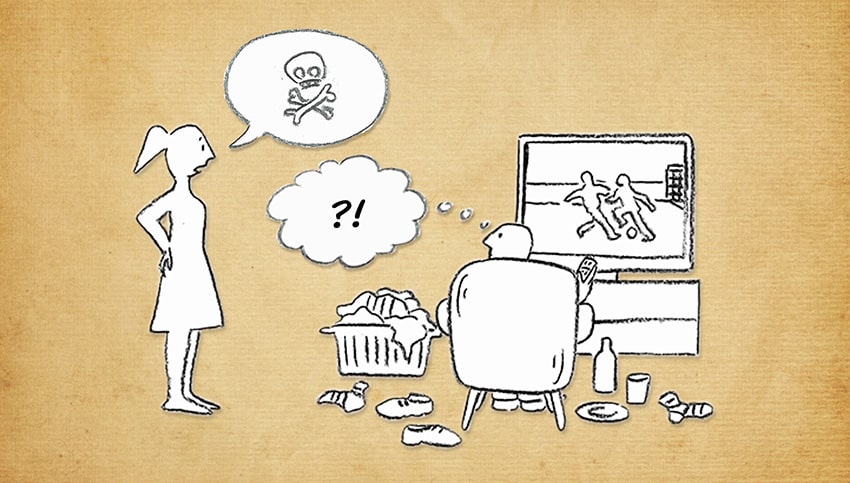
First of all: In virtually every long-term marriage, problems arise over time. Entering into a lifelong partnership with another person—no matter how much we love them—is always a challenge. This is because we all carry a very personal biographical baggage with us into a relationship. This baggage includes our past experiences, attitudes, hurts, sensitivities, needs, desires, strengths, weaknesses, and so on.
That's why, on our journey together as a couple or as a family with our loved one by our side, we will always experience surprises. Because (even if we've known each other for a very long time): He is different, he reacts differently, he does things differently than we do.
And that's certainly not always easy. It's therefore not unusual for personal differences to escalate from time to time and for couples to find themselves in a marital crisis one day. However stressful the situation may be, it's nothing to be ashamed of.
The fact that most relationships experience crises sooner or later doesn't mean one should passively accept them. On the contrary. If our experience as couples therapists has shown us anything, it's this: those who take their relationship happiness (back) into their own hands have nothing to gain.
Save the marriage or get a divorce?
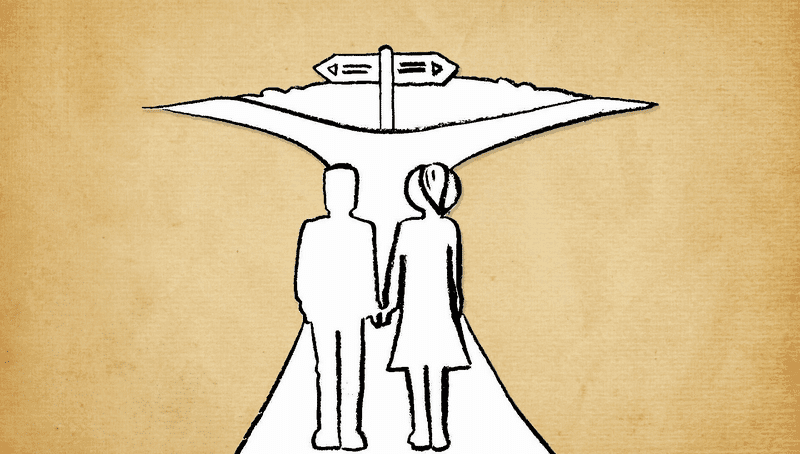
With a divorce rate of around 40%, it becomes clear how many spouses, under duress and stress, choose to separate – with all the organizational, financial, and above all, emotional consequences. The consequences of separation are particularly severe when there are children involved. Children often suffer even more than their parents.
For most people, a separation – especially a divorce – is one of the most painful events imaginable, and in our experience, it is only advisable for the majority of couples if all serious attempts to save the relationship have failed.
Therefore: Put any thoughts of divorce aside until you have fought for your relationship with all your energy once again.
Here you'll find helpful tips for a second chance in your relationship. ↗
Mirage: Everything will be better in a new relationship
The most common misconception held by people with relationship problems is that everything would be better with a different partner. The opposite is true: While the divorce rate for a first marriage is around 40%, it rises to 60% for a second, and even to 65% for a third!
Therefore, our motto is:
It's better to experience something new with your current partner than to repeat the same old patterns with a new one.
Free test: How endangered is your marriage right now?
Take your relationship test now! (free)
How is your relationship?
What are your strengths and weaknesses?
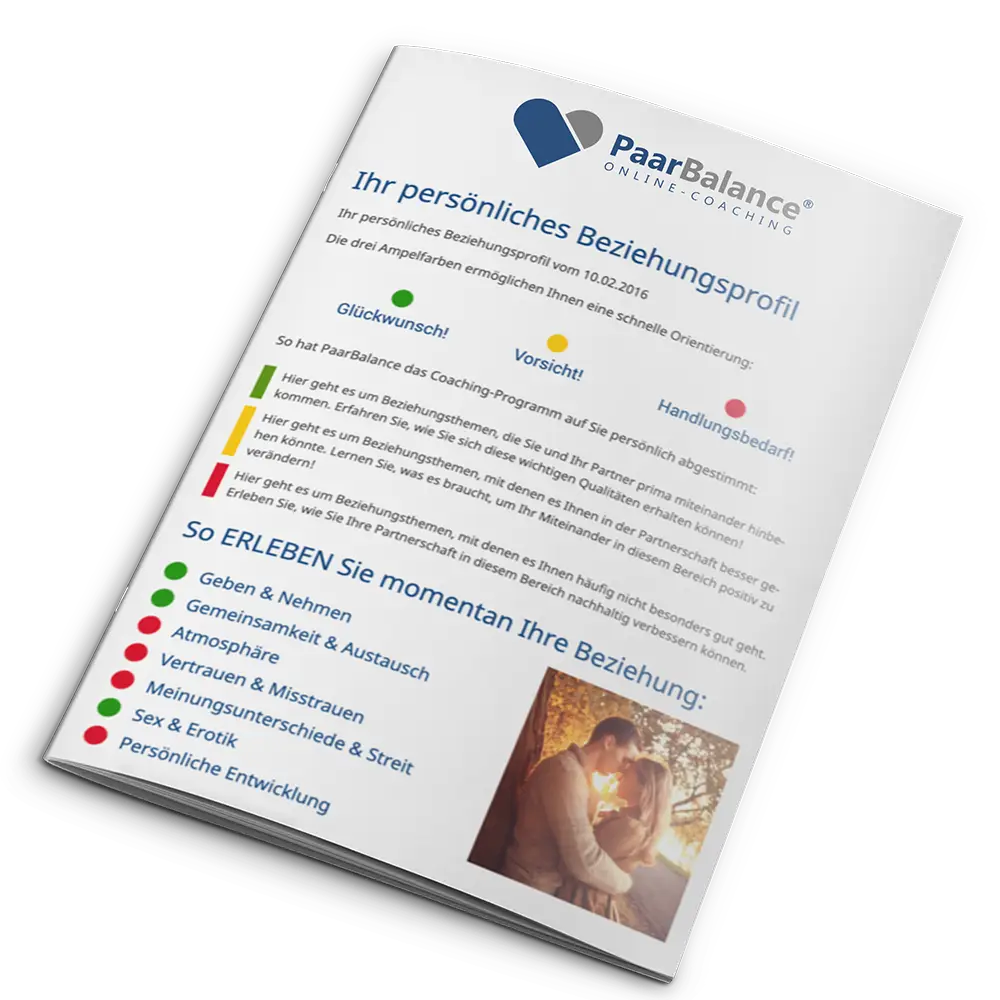
You will find out immediately afterwards in your personal PaarBalance relationship profile (free).
Start your relationship test now!
✓ Scientifically sound
✓ Includes detailed analysis
✓ Your data will not be shared
✓ 100% free & non-binding
100% secure. We comply with data protection regulations. Registration for the relationship test is free .
Please read this important information beforehand:
Data Protection ᐧ Terms and Conditions ᐧ General Information Agreement Terms and Conditions . Transparency Statement
Before we address the most common reasons for relationship problems, we would like to give you the opportunity to take a closer look at your marriage and analyze the individual areas of your life together.
For this purpose, we provide you with our scientifically based, comprehensive relationship test (completely free of charge).
For approximately 10 minutes, you will answer questions covering all important aspects of your relationship. Immediately afterward, you will receive a clear and concise written evaluation. Additionally, a traffic light system will intuitively help you understand which areas of your relationship are experiencing acute problems (red), what you should pay more attention to (yellow), and where you can draw strength from each other (green).
The 8 most common reasons for marital crisis
As already mentioned: There is not one single reason, but almost always various reasons and developments as to why a marriage one day runs into serious difficulties.
However, in our experience as a couples therapist, certain challenges occur frequently. Therefore, there are also proven strategies for successfully managing such 'relationship classics'.
Below are some of the most common reasons why couples in long-term relationships may one day feel unhappy. Each section includes links to further articles offering specific help for the respective challenge.
Reason #1: We've grown apart
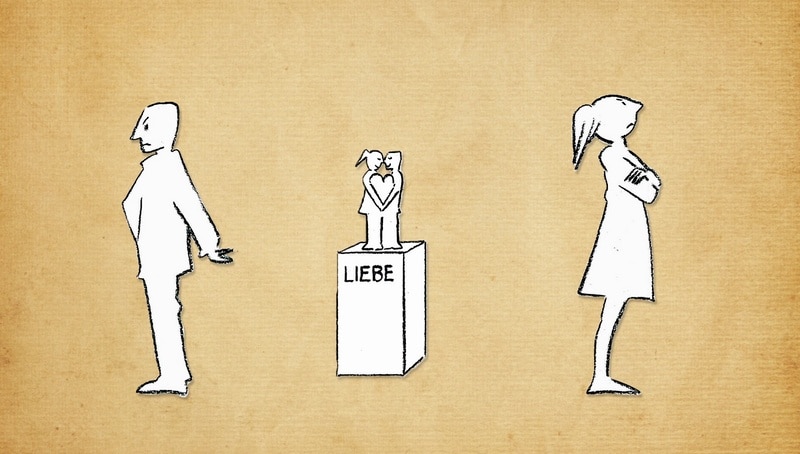
"Help! What has happened to us? We used to be so close. Everything was perfect. Our communication was vibrant, our life together was great. Now I feel like we're each just doing our own thing and we're not close at all anymore."
Many people report similar experiences of growing apart. The former closeness, intimacy, and love seem to have vanished. Gradually, or sometimes suddenly, a distance has developed between the partners.
And suddenly so much is called into question: What should stay, what shouldn't? What was the original reason for wanting to share life together? Under what circumstances does it make sense to stay together, and under what circumstances doesn't it? What were one's own criteria for a fulfilling life in the past? What are they today? Etc. etc.
In the article " Drifting Apart: 11 Typical Signs & Phases and Proven Tips for Love," we discuss in detail the signs and phases of a couple growing apart, as well as proven methods for saving a marriage if they no longer feel connected.
Reason #2: Constant arguments
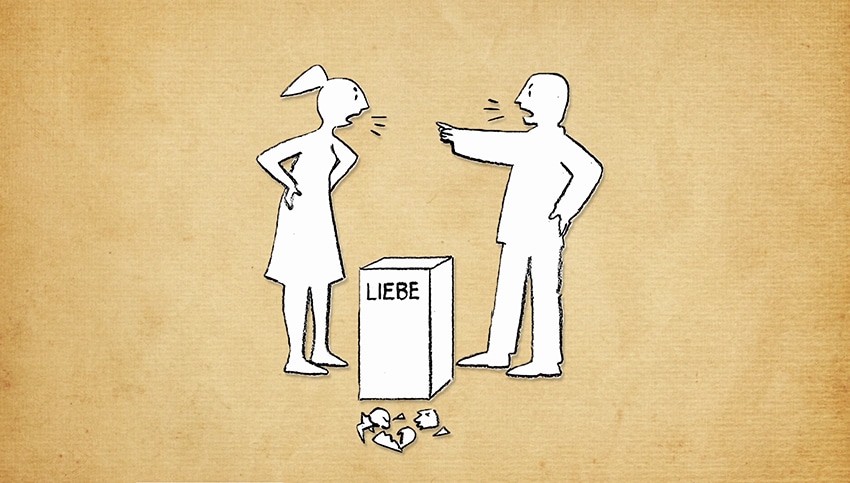
If you are in a relationship that is currently characterized primarily by stress and conflict, this is probably incredibly exhausting and stressful.
Perhaps your marriage also has its ups and downs – you might be doing quite well together for a while – and then suddenly feel as if your daily life is taking place on a minefield, with the constant threat of serious missteps. Disagreements can escalate in seconds, as if it were a matter of life or death. Harmless conversations end in arguments, and fair compromises are no longer sought.
Fortunately, there are ways to break these vicious cycles and steer the relationship back into calmer waters. In our blog article "Constant Arguments in Your Relationship? Here's What You Should Know!" you'll find helpful strategies for stopping this difficult pattern together.
Reason #3: Love that has faded
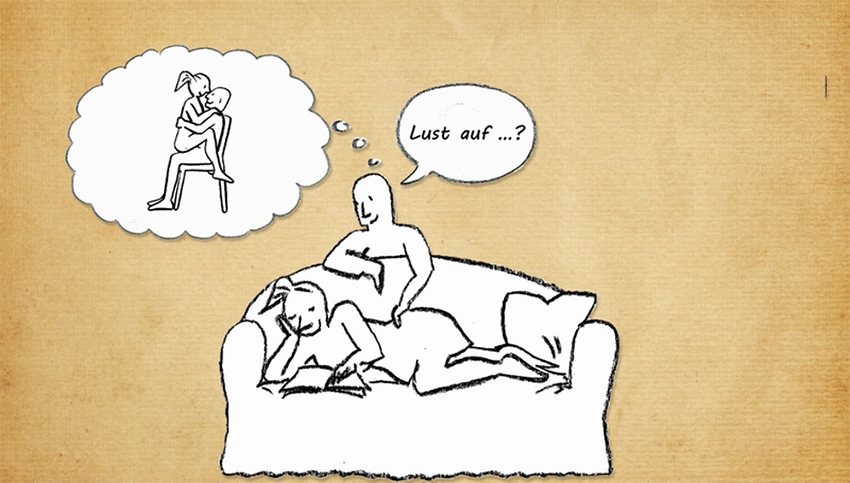
Somehow, the love has faded... This experience can be related to the feeling of "growing apart," but it's usually a bit different. In this case, you don't necessarily feel distance or estrangement—but the deep feelings have somehow disappeared.
Where once butterflies fluttered in your stomach, now there's... nothing. Passion and headlong love have vanished from the everyday life of your marriage. Both in and out of bed, there's a lull. There's simply no sex anymore . You don't have a clear answer to the question of whether your relationship is still based on love or has simply become a habit. Memories of happier times may fill you with melancholy. Perhaps each of you has even considered separation. You may function quite well as roommates – but you no longer feel like a loving couple.
If you recognize yourself in this description, there's good news. In most cases, it's actually possible to revive a stagnant marriage so that both partners feel happy and vibrant together again. In the blog post "Help! My relationship has gone stale," we explore what it takes to achieve this.
Reason #4: Too little time together
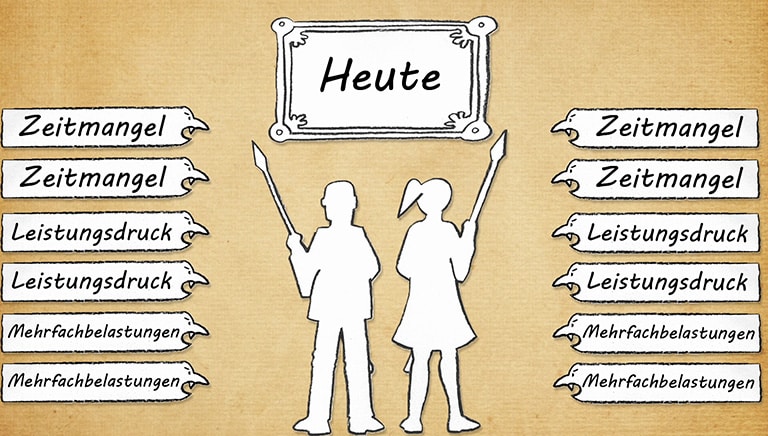
Another common problem in marriage is simply a lack of quality time together. Amidst the daily stress, there's often hardly any time left for shared activities as a couple. This, too, can put a significant strain on a marriage.
Perhaps your partner is very busy with work and has less and less time for you. Or perhaps you, too, find it difficult to find peace and quiet for togetherness amidst the daily grind. Or maybe you feel that your relationship isn't a priority enough, even though you actually have plenty of time. In either case, you often feel lonely.
In our article "Too little time in the relationship" we give you suggestions on how to solve this dilemma and create more space for togetherness.
Reason #5 ( especially for parents with children): Mental Load
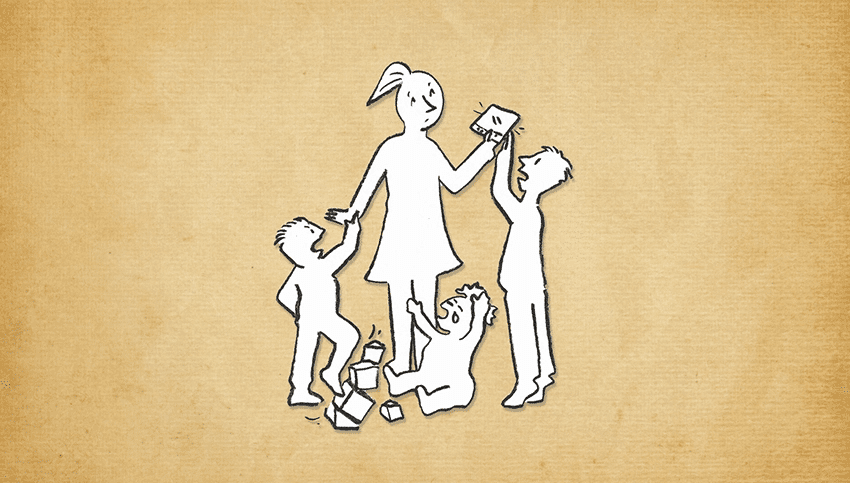
Childcare, household chores, and work present a complex combination for any relationship. Mastering the numerous small and large challenges of everyday life as parents can lead to conflict and dissatisfaction, especially when the division of tasks feels unfair to one partner.
In our blog article "No More Mental Load! How to Achieve a Fair Division of Labor in a Partnership" you will find concrete suggestions on how the countless to-dos of everyday life can be divided or changed so that the sense of togetherness and quality of life are not completely lost.
Reason #6: Emotional Dependence
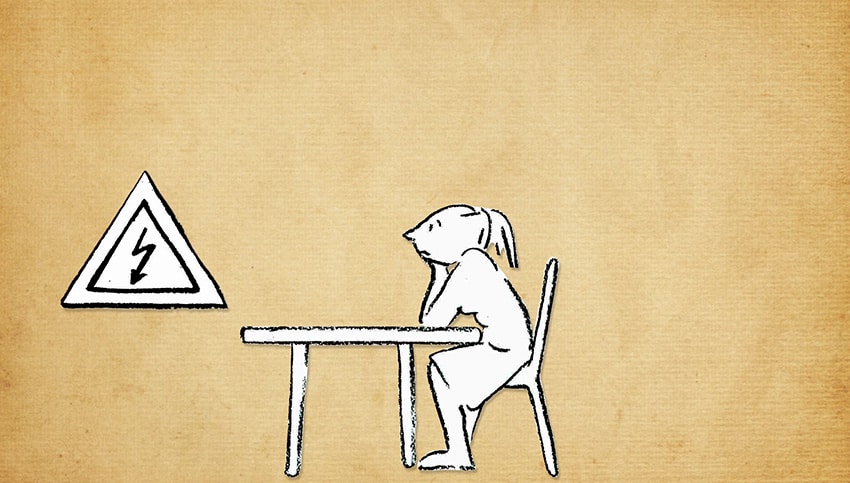
Emotional dependency can be an enormous burden for both partners. As long as they are newly in love, it's often not a major problem. One partner simply seeks a little more closeness than the other. However, it becomes difficult when problems arise and the patterns of dependency are revealed. Then it usually becomes apparent that those affected feel that only their partner can help or "save" them—and that they would be completely lost and unhappy without the other person.
Out of such insecurity and emotional turmoil, emotionally dependent people often behave in ways that restrict their partner or sabotage the happiness in the relationship. This increases the risk that the partner will actually withdraw or even end the relationship. In our article " Emotional Dependence in Relationships: What You Should Know ," you will learn what emotional dependence is and how to deal with it.
Reason #7: Excessive jealousy
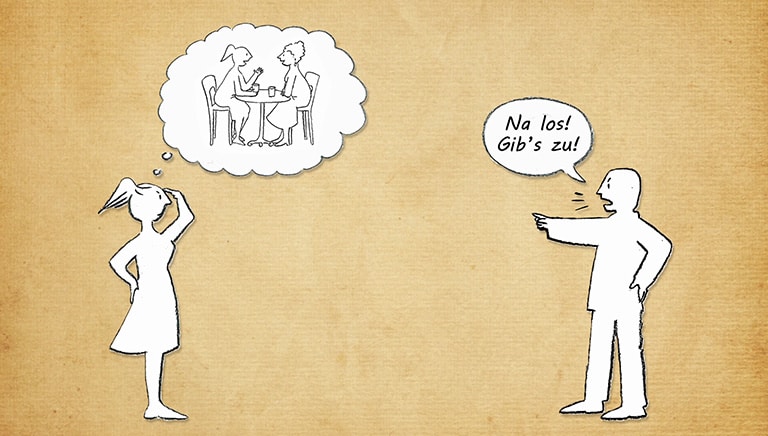
Excessive jealousy is another common reason why marriages fail. Jealousy can be a natural reaction to the potential threat of losing one's partner. However, if it arises without cause and is very intense, jealousy can put a massive strain on the relationship and severely damage the trust between the partners.
When one partner is constantly jealous, the other feels restricted and controlled. This usually leads to increasing dissatisfaction and conflict. Those who constantly worry that their partner might be unfaithful often have difficulty fully committing to the relationship and allowing themselves to be vulnerable.
To avoid such a development, it's important to communicate openly with each other. A healthy relationship should be based on freedom and trust, not control and mistrust. Anyone looking for tips and advice on how to better deal with jealousy in a relationship will find proven suggestions in our article " Combating Jealousy ".
Reason #8: Infidelity
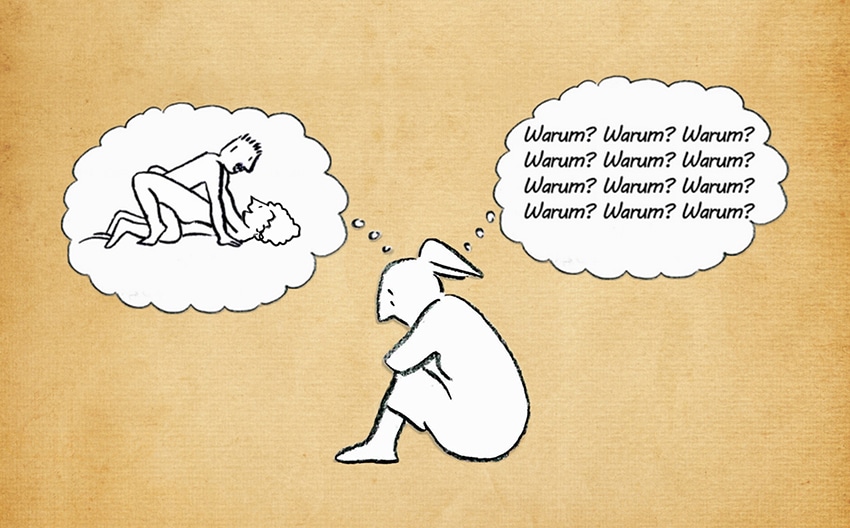
When an affair comes to light, it shakes a relationship more fundamentally than almost anything else - regardless of whether the ' cheating ' is a one-time affair, repeated transgressions or a longer affair.
The relationship is catapulted into a completely new dimension almost overnight. Nothing is the same anymore. And nothing will ever be the same again.
For initial guidance and concrete tips on how to proceed in the current exceptional situation and what is needed to save a marriage after such a relationship catastrophe, please see this detailed article: " Forgiving an Affair ".
The 6 best tips to save your marriage

Now we come to recommendations that can be helpful in almost all of the situations described above. There are proven interaction patterns for "relaxing the atmosphere" as well as tried-and-tested tips for "saving a marriage" that are useful in practically every situation described.
Tip #1: Problems can wait!
"Save the marriage!" – We automatically think that first and foremost, the whole package of problems and challenges needs to be solved, and that difficult, deep conversations are necessary before things can – hopefully – be good together again. It's like the saying: work before pleasure .
It's easy to fall into this trap. After all, this approach usually works quite well in everyday life. However, when it comes to "saving a marriage" and "feeling love," we should quickly reverse this principle: pleasure first, work later .
Why? Because it is much easier to address sensitive issues, give each other a chance, and show a willingness to compromise when there have been harmonious moments between the parties involved and goodwill is once again palpable.
Tip: Put all the hot-button issues and difficult topics completely aside for a while and instead focus on creating a relaxed and respectful atmosphere. Do things together that make you feel good.
Tip #2: Think about everything you like about your partner
Our brains tend to focus on negative aspects. To counteract this pattern, it is important to consciously direct our attention to the positive again and again.
Tip: Try writing down only the qualities you like and appreciate in your partner, as well as all the reasons why you became a couple. And then? Show your partner your notes. Let's see how they react (most people are known to appreciate compliments...). 🙂
Tip #3: The best way to argue? No arguing at all! (But rather, change course in time...)
Imagine your marriage is a precious porcelain vase. Every argument is like banging on that beautiful vase until it eventually cracks and there's a growing risk of it shattering completely. Research has shown that couples who discuss differing needs and opinions early and constructively (thus preventing arguments from arising in the first place) are significantly more satisfied and resilient. Together, you should consider how to recognize potential signs of escalation and counteract them quickly. For example, agree on a "safe word," change the subject by mutual consent, or make a humorous gesture to defuse the situation and postpone the conversation.
Tip #4: Become a good listener
Many people enjoy talking but rarely listen carefully to what the other person has to say. Anyone who wants to save their marriage should realize that it's essential to listen to each other regularly, empathetically, and openly. Signal to your spouse that you are genuinely interested in their well-being and want to do something nice for them.
Tip #5: Don't just talk - touch too!
As physical beings, we can best express feelings of intimacy and connection through tenderness. Even if it's difficult for you right now, try kissing and hugging your partner regularly—not just briefly, but for at least a few (preferably intimate) seconds. Small moments of physical closeness can easily be integrated into everyday life (e.g., during greetings and farewells).
Tip #6: Get the right support!
Saving a troubled marriage is a difficult undertaking to manage alone. Don't hesitate to seek professional help. This could be from marriage or couples counselors, or even close confidants with whom you can share your thoughts. However, keep in mind that close friends, out of loyalty, are often not entirely impartial or objective.
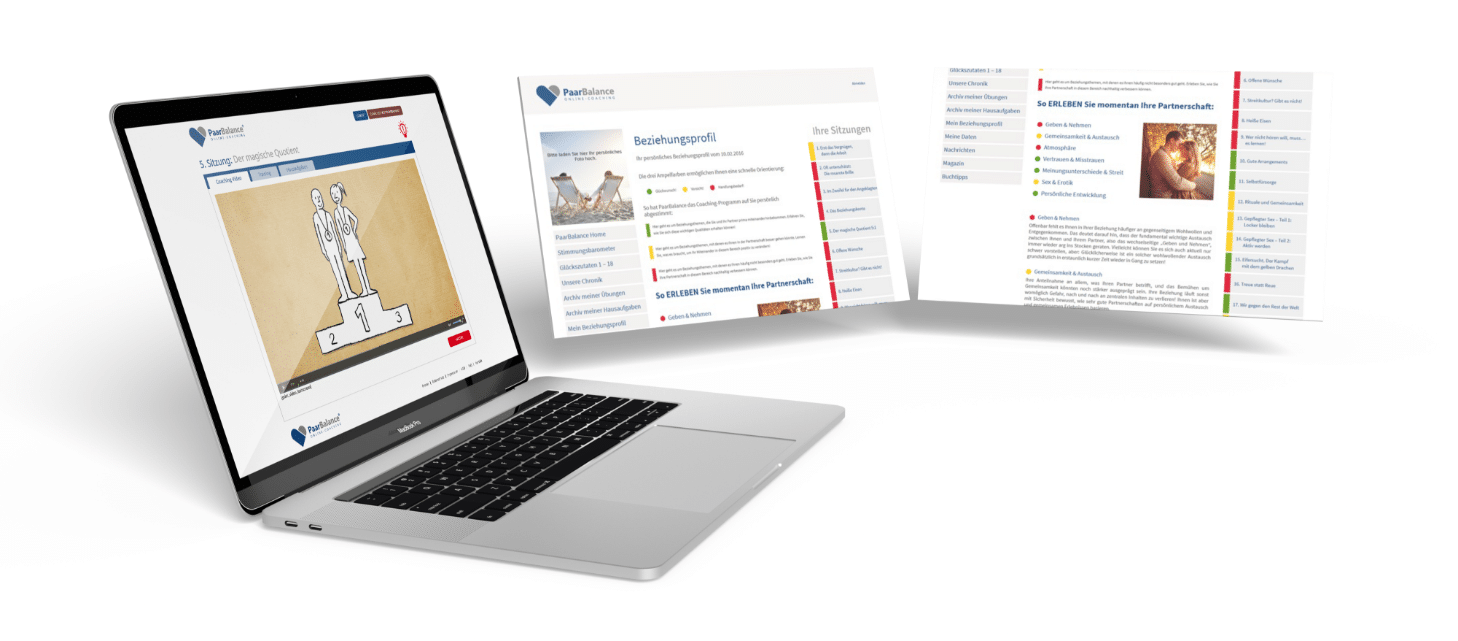
If you are looking for a clear roadmap to save your marriage, the scientifically based PaarBalance online coaching could be just what you need.
There, you'll be guided through entertaining video lessons, interactive exercises, and concrete tasks. Within just a few weeks, you'll become your own relationship expert and put your marriage back on a solid foundation.
These are the 6 obstacles you should expect!

If you want to save your marriage, you should also be prepared for some obstacles. As the saying goes, "Forewarned is forearmed."
Obstacle #1: Stigma
Often, attempts to "save a marriage" fail simply because one or more partners refuse to admit that there are serious problems in the relationship. However, as described above, most relationships experience one (if not several) crises over time.
Therefore, no perceived social stigma or sense of shame should prevent you from facing the facts and proactively working on your partnership.
Obstacle #2: Timing
Often, the success or failure of an effort is simply a matter of timing. For example, an attempt at rapprochement might be received very differently one time than the next. Much depends on the emotional state of both parties at that particular moment.
Obstacle #3: False Expectations
On the subject of timing: Don't expect every step you take to have an immediate effect. Remain patient if you want to give your marriage a real chance.
Obstacle #4: Lack of communication
Honest and respectful communication with your partner (this applies to both sides, of course!) is absolutely essential in the current situation. If you have difficulty talking to each other, it's no wonder that misunderstandings arise and conflicts develop.
Obstacle #5: Lack of willingness to change
If you want to save your marriage, one thing is clear: you can't simply continue as before. You have to change some behaviors and attitudes. If at least one of you isn't willing to change, the goal of "saving your marriage" will be difficult.
Obstacle #6: The Past
Perhaps you're doing everything right – and yet you still can't seem to improve your relationship. Not because of current misunderstandings, but because of past experiences. Previous breaches of trust or hurt feelings can be a lasting reason why it's so difficult to rebuild a stable foundation for your marriage.
Here too, the motto is: With communication, willingness to compromise and patience, it is possible to navigate out of dissatisfaction step by step, despite painful experiences.
Save your marriage with CoupleBalance
Take control of your relationship happiness! Don't leave the future of your marriage to chance any longer!
The best time to start is today with the Couple Balance coaching. There you will receive all the tools you need to save your marriage and create lasting harmony.
The PaarBalance coaching program was developed by Prof. Dr. Ludwig Schindler, Dr. Judith Gastner & team to summarize all the "ingredients for happy relationships" from 50 years of relationship research and couple therapy experience.
The special feature: It can be carried out by a single partner .
In 18 online sessions, which you can complete entirely on your own and independently of time and place, you will receive all the relationship knowledge you need to live a partnership characterized by joy, trust and ease.
Before the coaching begins, you can (free of charge) take the PaarBalance relationship test to receive well-founded feedback on the state of your current relationship situation.
Strengthen your relationship: with PaarBalance,
the online couples therapy for individuals.

Developed by couples therapists. No waiting lists. Self-determined. Affordable.
Trust your gut feeling: Nobody knows better than you what kind of support suits you best.
We wish you all the best!
Your Prof. Dr. Ludwig Schindler & the PaarBalance team
☝🏻 Related articles on the topic "Saving your marriage - how to do it!"