







☝🏻 Quick start: Emotional dependency - the 5 best tips
The phenomenon of 'emotional dependency' in relationships is more widespread than commonly believed. Emotional dependency is almost always accompanied by low self-esteem, fear of abandonment, and a high degree of self-sacrifice.
When it comes to "attachment," there's a continuum: Almost everyone longs to love and be loved, and to have a reliable person by their side who will stick with them through thick and thin. Humans are attachment beings and have a deep need for closeness and belonging.
However, if the desire for connection is so strong that individual interests are completely pushed into the background and all thoughts and activities revolve solely around the partnership and the loved one - even to the point of self-abandonment - then this is not 'healthy' in the long run and one becomes emotionally dependent.
This article explains how a relationship of equals differs from an emotionally entangled partnership, how to resolve emotional dependency, overcome fear of loss, and feel freer (again).
Self-test: Recognize emotional dependency (free)
How can you recognize emotional dependency in relationships? Which of the following twelve statements apply to you? - Take the self-test and answer as honestly and spontaneously as possible (Yes/No).
🚀 2,875 people have gained clarity through this free test.
How many times did you answer "yes"? More than once, twice, or three times?
The more statements you answered affirmatively, the more evidence suggests that you may have developed an emotional dependency.
What is 'emotional dependency'?
Addictions and dependencies are found in many areas of our daily lives. Alcohol and nicotine consumption, as well as sports, computer games, and many other things, can increasingly captivate us, making us addicted and dependent.
In the context of relationships, 'dependency' refers to an extreme and persistent fixation on another person.
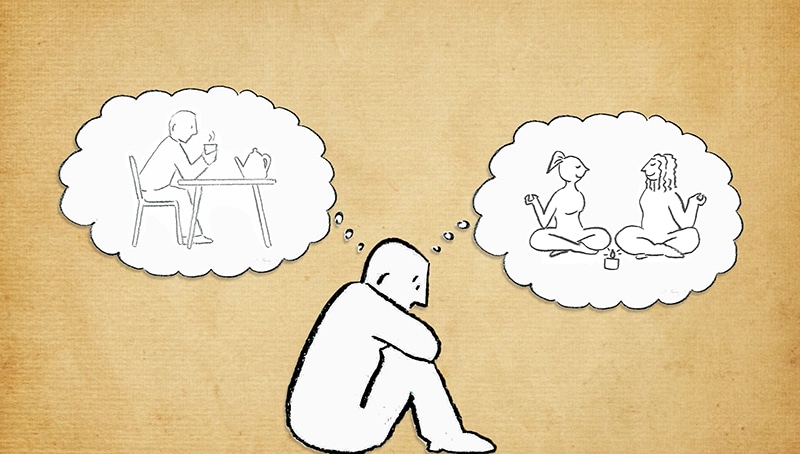
Emotional dependency describes a state in which a person's feelings and well-being are almost entirely tied to another person and their behavior. This can go so far that joy can only be felt in the presence of this other person. Things that were once enjoyable, or one's own needs, can almost completely lose their significance.
The dependent person essentially keeps themselves 'ready' to be available to the other person at any time (on demand).
Little time or inner capacity remains for one's own friends and hobbies; the personal focus is clearly on being as close as possible to one's partner. One wants to be with him/her as often and for as long as possible, thus becoming emotionally dependent in the relationship.
Your own mood can quickly plummet if the other person is in a bad mood or 'punishes' you in any way, e.g. by ignoring you, criticizing you or making themselves scarce.
It is not uncommon for the emotionally vulnerable person to try not to show their own hurt in such moments, but to do everything to win back the other person's favor.
Of course, nobody is automatically 'emotionally dependent' just because they miss their partner from time to time or want more closeness - as mentioned, it depends on the intensity of the fixation.
Emotional dependency and fear of commitment: Two extremes on the same scale?
One can imagine the principle of emotional connection/ability to bond on a kind of scale:
- One extreme is "emotional dependency".
- In the middle is a balanced mix of "independence & connection", where the partners meet each other on equal terms.
- The other extreme is fear of commitment ( or the fear of a relationship ).
A large portion of the described scale can be considered unproblematic. Fluctuations are also to be expected and normal. It depends on the degree of connection and the extent of perceived dependence.
The difference between love and emotional dependency
Love and emotional dependency are often confused, but they are fundamentally different. In a healthy love relationship, both partners meet as equals, respect each other's individual boundaries, and mutually support each other's personal growth.
In contrast, emotional dependency is characterized by an excessive need for validation and closeness from the partner. Those affected often neglect their own needs and interests to please their partner and experience intense fear of loss at the thought of separation.
The importance of individual self-esteem in relationships
While in a romantic relationship both partners possess healthy self-esteem and can be happy independently, in emotional dependency one's well-being is heavily reliant on the partner. Recognizing these differences is essential for consciously shaping and fulfilling relationships.
The consequences of emotional dependency
Emotional dependency puts a strain on both relationships and health. It often leads to unbalanced partnerships, as the affected partner constantly seeks reassurance and develops fears of abandonment. These can lead to manipulative behaviors or constant worry about the relationship, which can emotionally exhaust both partners.
Chronic stress caused by anxiety and insecurity can also trigger physical ailments such as headaches, stomach problems, or even depressive moods. This imbalance can lead to controlling behavior, jealousy, and a loss of self-esteem.
Bonding from the perspective of our ancestors
From an evolutionary perspective, our ancestors have always been dependent on others: to reproduce, to ensure the raising and care of their offspring, to share in food sources, and to offer the family as much protection and security as possible. This is also the source of our need for emotional security . Without a reliable member of our species by their side, the fight against hungry saber-toothed tigers would never have been won.
Belonging and the certainty of being able to rely on partners and packs were vital for survival.
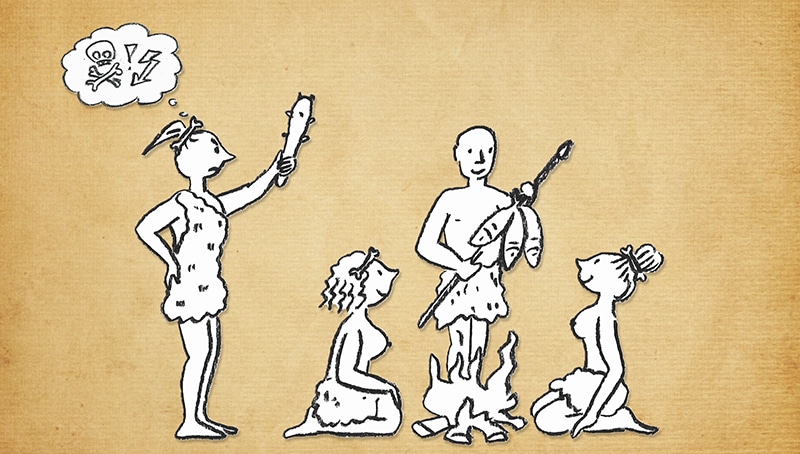
Even though there have long been no animal species dangerous to humans in our latitudes, the underlying fear of being defenseless and vulnerable if the relationship with that important person by your side breaks down can still pull the rug out from under you today.
One important insight: Am I emotionally dependent on my partner?
Admitting to yourself that you are emotionally dependent on your partner in an unhealthy way is not easy. It requires honest self-reflection and a good connection to your own gut feeling.
First of all, it makes sense to examine the dynamics of the couple's relationship.
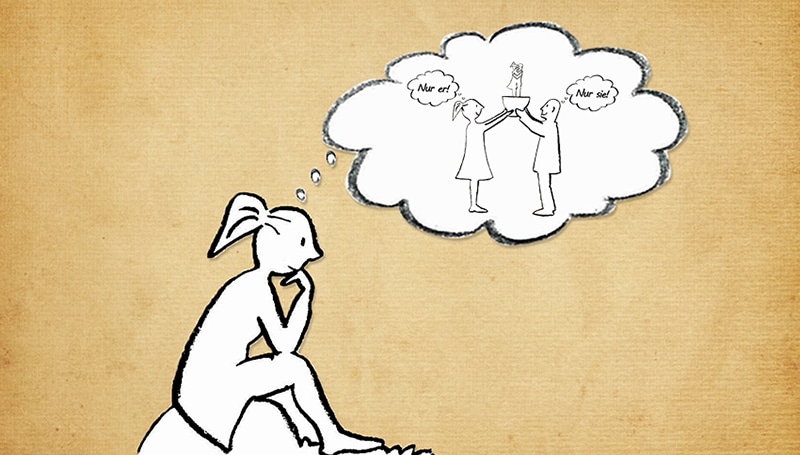
Emotionally dependent people sometimes only recognize their dependency relatively late or even only in retrospect. For this reason, we have compiled 5 characteristic signs of emotional dependency for you.
Is my partner emotionally dependent on me?
Emotional dependency in a partnership can significantly disrupt the balance of the relationship. Signs that a partner is emotionally dependent include a constant need for reassurance, difficulty making independent decisions without the partner, or the feeling of not being complete without the other person.
- Does my partner find it difficult to pursue their own hobbies or friendships independently of me?
- Do I get the impression that my partner is afraid of being alone and therefore constantly clings to me?
- Does my partner frequently sacrifice their own needs for mine, even when it's not necessary?
To overcome emotional dependency, it is important to strengthen one's self-esteem and cultivate independent interests. Professional support, such as therapy, can help develop healthy relationship dynamics and regain emotional independence.
5 typical characteristics and symptoms of emotional dependency
Sign 1: Latent fear of being abandoned
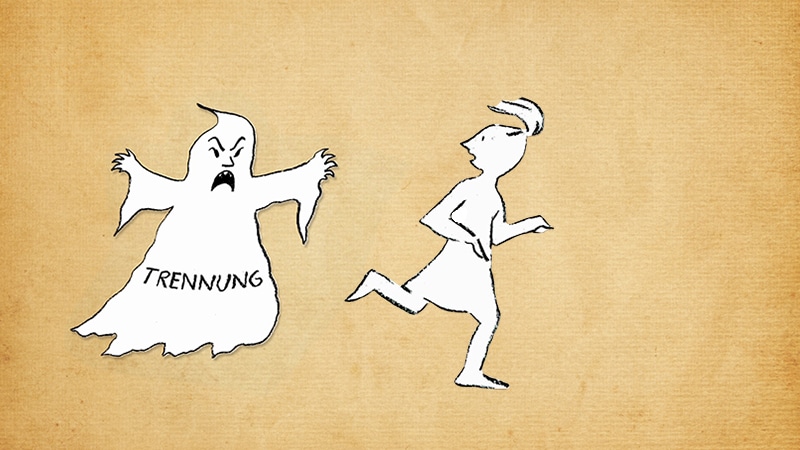
People in emotionally dependent relationships are sometimes barely able to enjoy the pleasant aspects of their relationship. The reason: Every happy moment is accompanied by the fear of being abandoned and possibly losing that happiness again soon.
Insecure people tend to overreact to the behavior, mood swings, and even isolated statements of their loved one. This creates a fundamental tension characterized by mistrust. Every disagreement or mood swing is immediately (mis)interpreted as a dramatic harbinger of a possible breakup.
To prevent the feared separation, the insecure person begins to cling to their loved one - and this is exactly what causes the loved one to try to free themselves from the clutches.
This in turn increases the panic about being abandoned, setting in motion a vicious cycle: the more clinging, the greater the desire for autonomy; the more clinging, the stronger the desire for freedom, etc.
Sign 2: Spying & Controlling
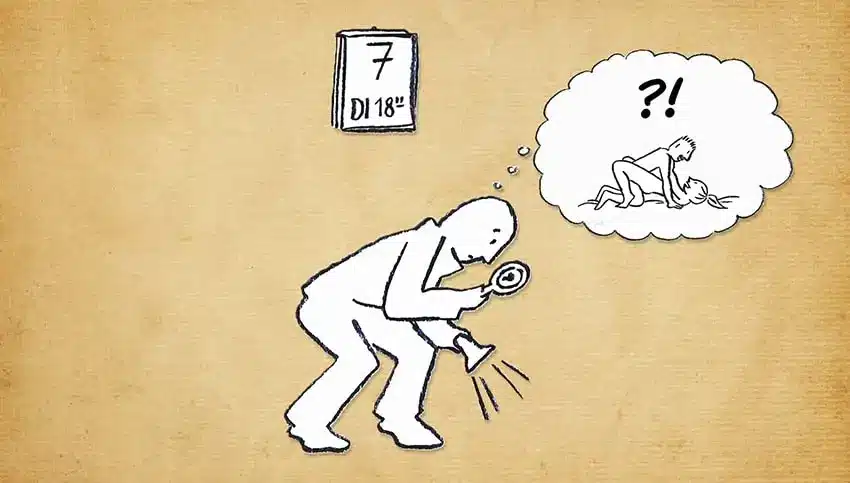
Since emotional dependency is based on the constant fear of losing the other person ( more on this under "Why am I emotionally dependent?" ), spying and control activities can be understood as a desperate attempt to keep one's own fear in check.
Any absence of a partner can trigger fears of abandonment. To cope with these fears, many affected individuals develop controlling behavioral patterns.
They would ideally like to be constantly informed about where (and with whom) their loved one is. Phone calls might be tapped, check-up calls made, and the partner's smartphone searched in a flash the moment they disappear into the shower.
Sign 3: Insatiable need for expressions of love
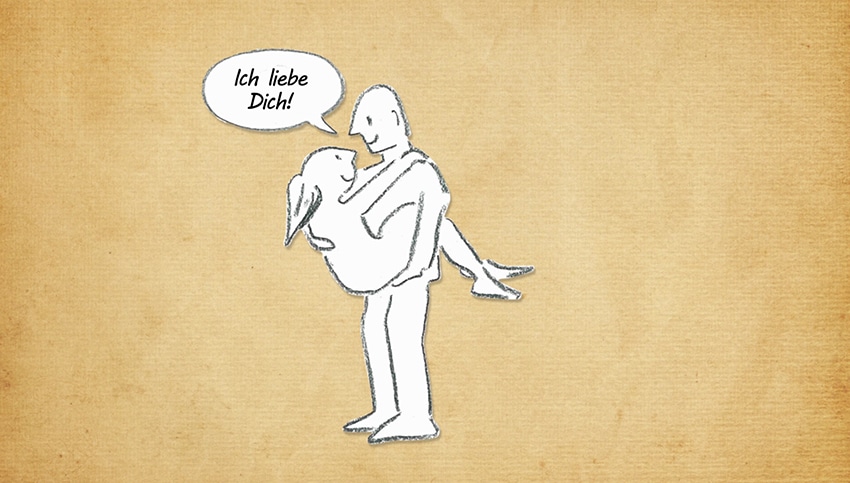
Those who feel emotionally dependent want to be reassured by their loved one as often as possible that everything is really okay in the relationship.
Those who feel insecure therefore persistently try to elicit declarations of love from the other person or contact them (far too) often when their partner is not nearby.
During activities with others or at events and celebrations, they would like a continuous display of togetherness (such as holding hands, hugging, sitting together, etc.), whereas their partner enjoys exchanging ideas with other people undisturbed.
Sign 4: Neglect of previous hobbies & friendships
Emotionally dependent people are often so fixated on the other person in their relationship that they completely lose sight of their previous life and their own needs.
Personal needs, hobbies, work, friendships, family, sports, interests - all of this is increasingly neglected and subordinated to the relationship.

Some people can only experience joy when another person is present. This situation can escalate: those who increasingly abandon their previous life and focus solely on one person will become less and less socially integrated, until – in the worst-case scenario – there is truly only this one person on whom their entire happiness depends.
Sign 5: Adaptability & Submissiveness
The fear of separation is usually coupled with low self-esteem and great insecurity. Against this backdrop, it is understandable that those affected constantly feel they are "not good enough" for their partner.
To minimize this "danger," everything is done to please the loved one. Personal desires are suppressed, sometimes even ignored. There is less and less disagreement; everything is largely "nodded along." In short, this leads to increasingly submissive behavior.

Why am I emotionally dependent on another person?
We would like to describe the two main causes of emotional dependency in more detail below: lack of self-esteem and fear of loss.
Lack of self-esteem
The basis on which emotional dependency can 'thrive' is an inner self-deprecation, which in most cases began long before the partnership - perhaps because one received less attention as a child than one would have liked, perhaps due to bullying experiences or injuries from previous relationships.
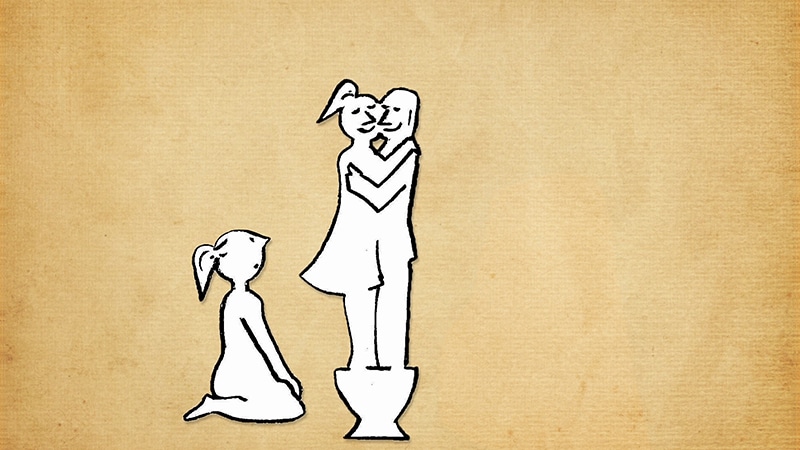
Such experiences create thought patterns like "I'm not good enough," "I'm not very important," or "I don't deserve it," which unconsciously control our behavior and make us emotionally dependent. Those who perceive themselves as having little value involuntarily place their partner on a pedestal. The insecure person submits, perceives themselves as inferior, and considers their own needs and interests far less important than the wishes of their beloved partner.
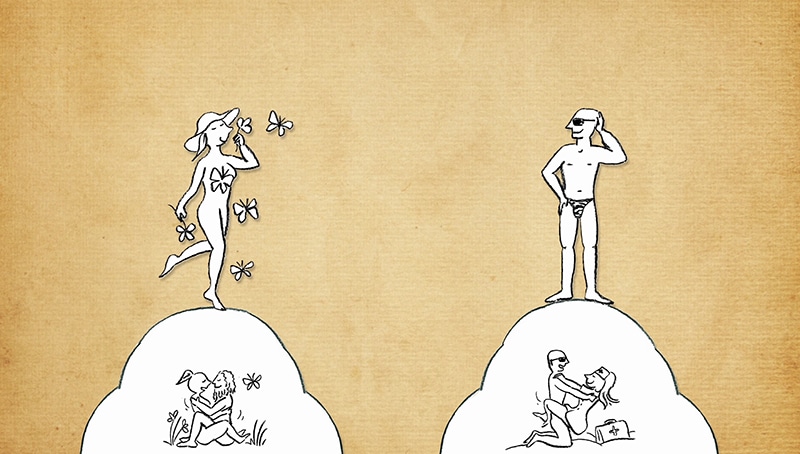
Those who have never been satisfied with themselves secretly hope that their partner can compensate for their lack of self-love through affection and recognition.
Without realizing it, an emotionally dependent person often demands an immense amount from their partner. They expect the other person to provide everything they are unable to give themselves: attention, appreciation, compassion.
Interesting questions in this context:
- Was the development of a stable and self-confident "self" fostered or rather inhibited in my childhood?
- Do I experience my self-esteem as largely stable? If not, what has led me to have the self-image – especially in my partnership – of being "less worthy"?
- Do I firmly believe that I fundamentally "don't deserve" a partnership on equal terms - and therefore have to invest a lot to "keep" my partner?
Fear of loss
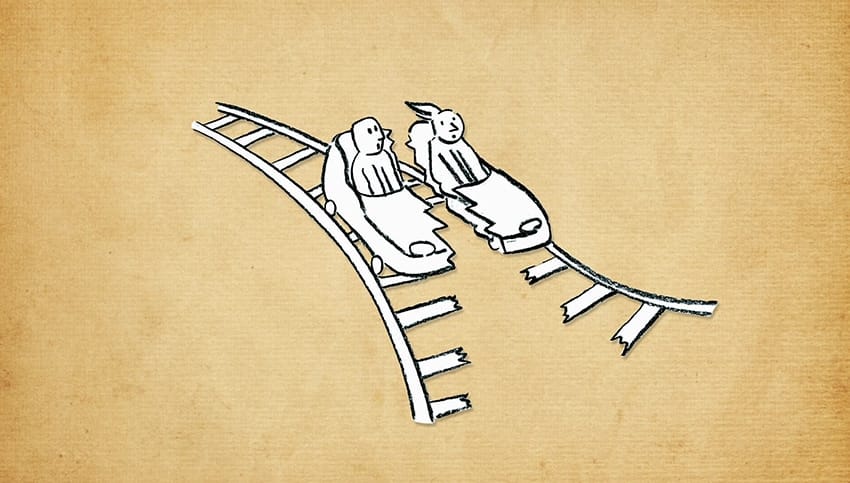
As previously described, emotional dependency is usually accompanied by a great fear of one day being alone again. Therefore, everything that one supposedly needs for survival is projected onto the partner.
Life without this loved one by your side seems unbearable. Even the mere thought of being separated from them for any length of time can trigger panic.
The fear of loss is often so intense that everything is done to maintain the relationship. Assumptions are made about what the other person might want. These are considered benchmarks that must be met to secure the other person's affection. Against this backdrop, people with emotional dependency exhibit a strong tendency toward self-abandonment.
Interesting questions in this context:
- Have I ever been abandoned by someone close to me in my life?
- Did I, as a child, have to experience my parents' separation, a major move, the death of a relative, or something similarly stressful?
- What beliefs, feelings, and behavioral patterns may have arisen in me as a result of the separation/loss?
Test yourself: Is it love or emotional dependency?

Questions like the following are often not easy for those affected to answer:
- Do I love my partner "of my own free will"?
- Am I emotionally dependent in the relationship?
- Do I define myself too much by his/her affection?
In contrast to love, which comes from an 'inner abundance' and primarily wants to 'give away', emotional dependency strives for 'enhancement' through affection from the outside.
A very important step is to distinguish:
- By becoming deeply involved in the relationship, have I (of course) also made myself somewhat emotionally dependent?
- "Am I entangled in an unhealthy emotional dependency due to an underlying, distressing feeling such as insecurity?"
For a partnership on equal terms, it is essential - in the long term - that 'giving and taking' are balanced overall.
Furthermore, the respective needs of both partners should be communicated and acknowledged equally so that compromises can be found that satisfy both sides.
Therefore, open communication is one of the most important prerequisites for mutual growth and a 'healthy' development in the couple relationship.
Self-love as the basis for 'real' love
Do you feel 'at home' within yourself? 'True' love can be found wherever there is enough self-love and is not subject to conditions.
However, it automatically triggers a chain reaction of positive emotions, thus strengthening and uplifting both parties.
It is often particularly sensitive people who make their own happiness dependent on the emotions of others, thereby becoming emotionally dependent. When one's life is built on external validation, this harbors great potential for problems. No one else can ever completely and sustainably compensate for and fill one's own emptiness.
How far can love go?
Is unconditional self-sacrifice truly love? It might feel that way at first, but love that knows no self-worth ultimately leads to illness. It not only harms those involved in their current relationship, but also negatively impacts any future relationships. This makes it particularly dangerous.
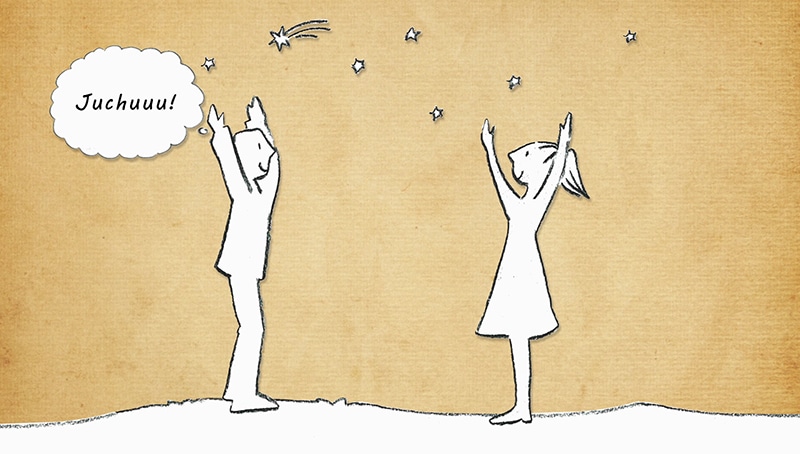
How far can love go? No question - it makes you happy, it's worth investing in, it's worth making compromises in, it's worth keeping not only the self, but always also the "we" in mind.
Simply put: Whoever loves always becomes emotionally dependent. Those who allow another person to get emotionally close and experience the relationship as fulfilling and enriching will not want to give it up.
But when does the need to love and be loved cease to be beneficial and instead become a compulsion?
Those who cling to an unbalanced and unhappy relationship at all costs – because the fear of being alone is unbearable – usually need external help and support, similar to what someone with another addiction would need (see also our article on toxic relationships ).
How does interaction proceed in an emotionally dependent relationship?
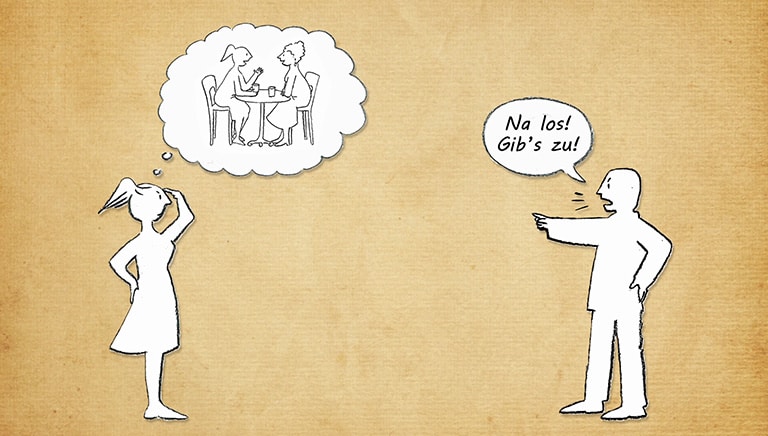
Interactions with an emotionally dependent partner are usually accompanied by many unspoken expectations. If these are not met, the dependent partner can quickly feel rejected.
Then certain reaction patterns can occur, which will be illustrated by an example:
Anna and Valentin are a couple who had been planning a romantic weekend getaway for some time. A few days before their departure, Anna developed a fever and has barely left her bed since. Valentin lovingly cared for her after work, and Anna is now feeling much better. However, going away still doesn't make sense, and they both decide to postpone their trip. When Valentin's friends find out that his romantic getaway has to be canceled, they ask him if he'd like to join them for a fishing weekend. Valentin is thrilled to be able to spontaneously go away with his friends as an alternative and enthusiastically agrees. When he tells Anna this, she is deeply hurt. She had hoped that, if the romantic trip had to be canceled, they could at least spend the entire time together at home.
Passive-withdrawal reaction
Anna swallows Valentin's message without much resistance, but secretly feels incredibly lonely and abandoned. She reacts with sadness and fear. However, she doesn't tell him what she feels or what she truly wishes for.
Erst viel später kommt das Thema als Vorwurf auf den Tisch. Daraufhin fühlt sich Valentin vor den Kopf gestoßen. War er doch davon ausgegangen, dass zwischen Ihnen alles harmonisch verlaufen wäre hinsichtlich der kurzfristigen Planänderung. Er war sich sicher gewesen, dass Anna (der es seiner Wahrnehmung nach schon deutlich besser ging und die nicht mehr auf seine 'Pflege' angewiesen war, sich aber dennoch ein paar Tage weiter schonen musste) für ihn gefreut hatte, dass er an dem geplanten Ausflugs-Wochenende nun doch noch spontan etwas Besonderes erleben konnte.
Aktiv-angreifende Reaktion
Einige Menschen, die mit emotionaler Abhängigkeit zu kämpfen haben, reagieren als erste (oder auch generelle) Reaktion nicht 'devot' und zurückhaltend, sondern genau gegensätzlich.
In diesem Fall fühlt sich Anna von Valentin direkt angegriffen. Sie macht ihm den Vorwurf, dass sie ihm offenbar egal sei und fragt ihn scharf, seit wann ihre Beziehung keinen besonderen Stellenwert mehr für ihn habe. Valentin reagiert daraufhin wütend, und es kommt zum Streit.
Diese Art von Konfrontation ist alles andere als zielführend, da nicht über Annas Kern-Emotion „Ich fühle mich allein gelassen“ und ihren konkreten Wunsch "Ich bitte Dich, mich am Wochenende noch zu unterstützen, weil ich mich noch etwas angezählt fühle und mir sehr wünschen würde, dass Du bei mir bist" gesprochen wird, sondern Anna durch alte Verletzungen ungewollt eine Bestätigung ihres dysfunktionalen Denkmusters „Ich bin dem anderen nichts wert“ auslöst.
Emotionale Abhängigkeit überwinden: Eine Anleitung.
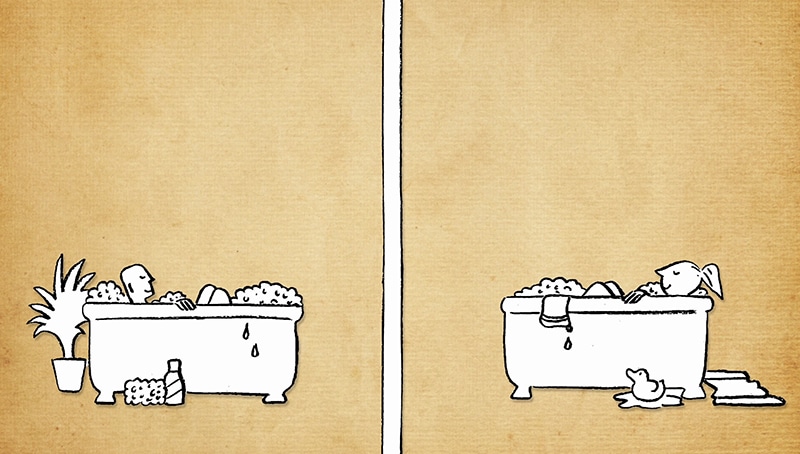
Der erste Schritt aus emotionaler Abhängigkeit ist Selbsterkenntnis: Machen Sie sich Ihre Gefühle bewusst und erkennen Sie eigene Verhaltensmuster. Stärken Sie Ihr Selbstwertgefühl durch Übungen, wie das Notieren Ihrer besten Eigenschaften oder positive Selbstgespräche. Lernen Sie, Zeit allein zu genießen, entdecken Sie neue Hobbys oder unternehmen Sie Aktivitäten nur für sich. Befreien Sie Ihre Beziehung von überhöhten Erwartungen und verteilen Sie emotionale Bedürfnisse auf Freundschaften oder Familie.
Fällt Ihnen dieser Weg schwer, kann eine Therapie helfen, alte Muster zu durchbrechen und ein unabhängiges, erfülltes Leben zu führen.
Der Königsweg, um emotional stark und eigenständig zu werden, ist, sich selbst die Bestätigung und Empathie zu geben, die man sich von seinem Gegenüber erhofft. Das bedeutet, dass Selbstwert und Selbstliebe eine gezielte "Stärkungs-Kur" benötigen. Wie kann das gelingen?
#1: Achtsamkeit & Selbst-Verständnis

For someone who wants to break free from an emotional dependency, the first important step is to acknowledge and examine this entangled situation:
- Do I feel dependent in certain aspects of my partnership (which I am not happy about and which are not good for me)?
- How do I react intuitively when my partner has no time for me: Does it make me angry, sad, or anxious?
- What experiences might be behind my most dominant feeling?
- What's the first thing I think of when I feel rejected?
Regardless of your individual reaction, try to simply observe at first – without judging . Otherwise, you risk condemning your own feelings and rejecting your intuitive response.
However, the more the perceived personal 'weakness' is pushed aside, the more violently this feeling will come back like a boomerang and the more space it will take up in life.
It would be far more helpful to ask yourself, with as much curiosity and goodwill as possible:
- "What are my emotions trying to tell me right now?"
- "What is happening to me inside?"
For example: You feel yourself getting angry. Now it gets interesting – because you need to find out what's causing the anger. Is it perhaps rooted in the experience that your personal boundaries have been – once again – disregarded by others? Are you perhaps annoyed that you yourself have – once again – crossed your own boundaries – and this 'sacrifice' wasn't even acknowledged by the other person?
Embark on a curious search for clues!
#2: Strengthen self-esteem
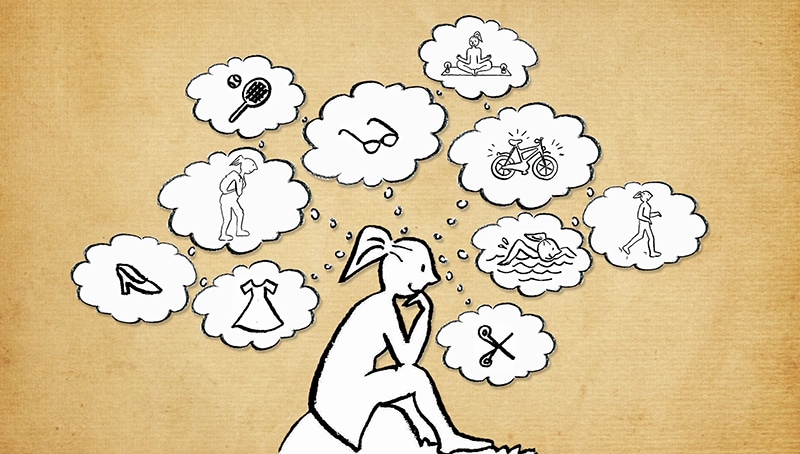
Try to accept everything that's troubling you internally as unconditionally as possible – without judging it. Adopt the same interested, benevolent, and friendly attitude towards yourself as you would have with a good friend.
Below, we offer four suggestions on how you can gradually shift your self-image into a warmer light. Try out the one that works best for you.
a) Mind map: Me & my strengths
Create a mind map with a photo of yourself or the word 'I' in the middle and then take your time to consider:
- What do I like – or accept – about myself?
- Overall, what am I satisfied with?
- What do others appreciate about me (character traits, attitudes, appearance, taste, etc.)?
- For which of my qualities have I received positive feedback?
Write down everything that comes to mind about this, directly around your picture.
Perhaps you, like many others, feel that making a list of disliked personal traits would be much faster. But – we need the exact opposite! 🙂
b) Writing exercise: My inner attitude from now on and today
Take a pen and a piece of paper, and divide the paper in half. On the left side, write a positive affirmation that you would like to internalize. Make sure the sentence begins with "I" so you can add your name after it, for example, "I, [ insert name ], love and accept myself with all my facets" or "I, [ insert name ], am a great person who can achieve wonderful things." Conjugate the chosen sentence once each with "I am...", "You are...", and "He/She is..." while focusing intently on yourself. It's best to look in a mirror while doing this and point at yourself or your reflection. 🙂
On the right half of the paper, jot down (spontaneously and honestly) what you are currently thinking and feeling. Repeat this exercise frequently to allow it to have its positive effect. It is helpful to note the date each time so that you can track changes in your thoughts and feelings.
c) Thought experiment: Changing perspectives
If you're feeling down about yourself (again), imagine you're at a friend's house and calmly explaining what happened. How would they react? They'd probably say something like, "Come on, that can happen to anyone." or "Personally, I don't think it's a big deal at all." instead of, "My goodness, you're doing everything wrong again!" or "Tell me, you clueless loser: Is there anything you can't do?"
Since supportive people are not always within reach when you need them, a part of yourself should become your inner friend and put yourself in the perspective of the benevolent loved one.
When you find yourself being harsh with yourself, ask yourself: "What would the person who likes me say right now?" And then say exactly that to yourself – and keep doing so until the message gets through to you.
d) Fantasy journey: Visualization of the child's self
Imagine yourself as a child. Close your eyes and mentally picture yourself in your childhood. What expression does your child self have on their face? How do they feel?
Now, imagine yourself as an adult, standing next to the child. Listen attentively to the child. Ask lovingly: "What do you need right now? Support? Love? Someone to defend you?"
Dann überschütten Sie das Kind in Ihrer Vorstellung mit all dem, was gerade gut tut: Liebe, Zuwendung, Unterstützung. Ergreifen Sie Partei für den kleinen Menschen - ganz gleich, was passiert ist.
Die genannten 4 'Übungen' können dabei helfen, Tendenzen der Selbstabwertung zu überwinden, den Selbstwert zu stärken und die Selbstwirksamkeit zu fördern, so dass Sie sich nach und nach in Ihrem Alltag selbstständiger und freier fühlen.
#3: „Wiederaufbau“ des eigenen Lebens
Sich aus einer unausgewogenen Verstrickung zu lösen und in seine Mitte zurückzufinden, ist gebührend schwierig. Haben Sie sich über viele Jahre für Ihren Partner verbogen und ständig Zugeständnisse gemacht, so ist der Wiederaufbau des eigenen Lebens nachvollziehbarerweise mit einem entsprechenden Kraftakt verbunden.
Finden Sie heraus, was Sie glücklich und zufrieden macht. Das geht nicht von heute auf morgen. Geben Sie der Gestaltung Ihres Lebens in den nächsten Wochen und Monaten Priorität Nummer 1, indem Sie Ihren Alltag möglichst lebendig und genussreich ausfüllen: Fragen Sie sich selbst: "Was brauchst Du, um innerlich ausgefüllt zu sein?". Probieren Sie möglichst offen aus, was Ihnen Freude bereiten könnte. Eigene Hobbys, die Pflege von Freundschaften & Familie, Sport, Reisen, eine neue "Aufgabe" (z.B. in einem Verein oder in der Familie bzw. Verwandtschaft) ...
Es lohnt sich immer, in die eigene Lebenszufriedenheit zu investieren. Positive Veränderungen sind nur möglich, wenn emotionale Abhängigkeiten erkannt und entsprechend transformiert werden.
#4: Alleinsein üben
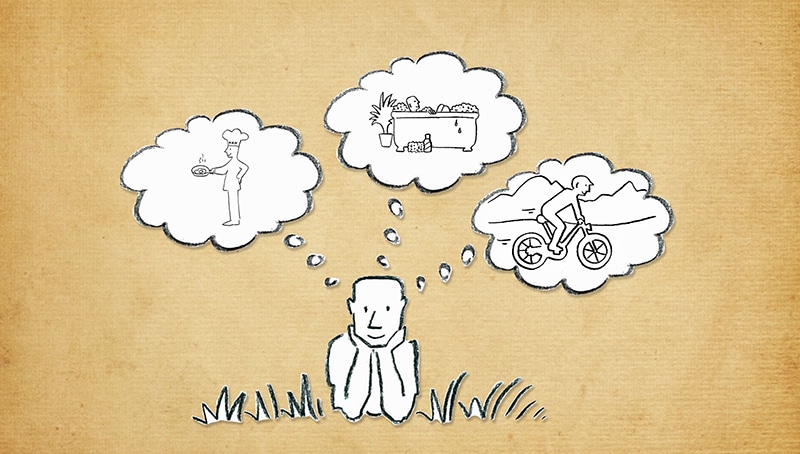
Nicht selten scheuen emotional abhängige Menschen den Schritt in die Selbstverantwortung. Die Panik vor dem Alleinsein ist riesengroß.
Alleinsein will daher trainiert und eingeübt werden. Fangen Sie mit überschaubaren Übungen an: Machen Sie eine kleine Radtour zu einem schönen Ort, hören Sie Ihre Lieblingsmusik, während Sie ein heißes Bad genießen, oder kochen Sie in aller Ruhe ein leckeres Essen für sich alleine.
Führen Sie sich immer wieder die Vorteile des vorübergehenden Alleinseins vor Augen: Sie können tun und lassen, was Sie möchten. Sie müssen sich nach niemandem richten. Ihre Wünsche und Ihr persönlicher Geschmack stehen im Vordergrund.
Das Gefühl des Alleinseins als wohltuend und inspirierend zu empfinden, kann ein längerer Weg sein - den zu gehen lohnt sich aber immer.
#5: Kontrollverhalten abgewöhnen

Many emotionally dependent people tend towards controlling behaviors that can quickly become a strain on the relationship. After all, you can't catch your partner like a butterfly. Pronounced controlling behavior ultimately destroys any good relationship that should be built on trust. Read our article here about the 11 biggest relationship myths and how relationships actually work .
Giving up controlling behavior can be incredibly difficult. Ultimately, however, it almost always brings great relief. Because those who no longer 'have to' control others suddenly have new capacities for things that can enrich their lives.
The realization that it is impossible to control the attitudes and thoughts of our fellow human beings may help us to 'let go' better and to concentrate more on experiencing joy and relaxation in everyday life - even independently of others.
The stronger the confidence in one's own strengths and advantages, the less the urge for control diminishes. Those who are aware of their own worth find it easier to trust.
Emotional dependency is accompanied by a form of emotional 'immaturity' and 'deficiency'. For those affected, this means learning not to seek validation solely from external sources, but rather to make peace with themselves and increase their frustration tolerance. Confronting past losses and unmet needs (and, in this context, their 'inner child') is usually a crucial step. Repressed pain often needs to be felt and relived before it can be transformed. This is often the key to a life of self-determination and emotional fulfillment.
If self-help measures prove ineffective, therapeutic support services should be used.
The goal: A partnership on equal terms

A respectful, loving partnership on equal footing? Sounds good! And almost everyone probably wants that... - So why does it so often fail to make it a reality?
Depending on their biographies, personal experiences, attitudes, and beliefs, two very different "worlds" often collide. Understandably, misunderstandings arise. Differing needs, preferences, and plans must be reconciled. Each person communicates in their own way, sometimes reacting with surprise or even outrage at not being understood or having their wishes rejected. Couples frequently find themselves unintentionally trapped in unhealthy cycles and role patterns, and then experience the relationship as increasingly exhausting and burdensome.
The good news
However different a couple (or each individual partner) may be: there are such things as universally valid "ingredients for lasting satisfaction in the partnership".
After 50 years of research on couples, well-founded statements can be made about how 'loving relationships on equal terms' differ from 'unbalanced relationships'.
From these findings, it was possible to deduce quite specifically which personal characteristics, attitudes and behaviors are particularly helpful for creating a stable and happy partnership - free from unhealthy emotional dependency - and which are most likely to have a destructive and harmful effect.
Take responsibility for your quality of life and your own needs. Free yourself from suspicion and insecurity, break free from emotional dependency, and finally have the relationship that truly makes you happy.
Start your self-test now
We wish you all the best!
Yours sincerely, Dr. Judith Gastner & the entire PaarBalance team
☝🏻 Related articles on the topic of "Recognizing emotional dependency"
Frequently Asked Questions
What is meant by emotional dependency?
Emotional dependency means that a person has developed an excessively strong emotional bond with another person. They are firmly convinced that they cannot function without the other person. Out of fear of being abandoned by their loved one, they are often willing to completely subordinate their own needs and desires.
What are the signs of emotional dependency?
Signs of emotional dependency include fear of rejection and abandonment, constant worry about the other person's opinion, low self-esteem, neglecting one's own interests and hobbies in favor of the needs of the loved one, and the fear of no longer being able to survive alone.
How can you recognize emotional dependency?
This difference is easy to "feel": Is the partnership a source of strength, confidence, and self-assurance? Do you experience yourselves as equals? Is the balance of giving and receiving even? Is mutual love equally strong? Or are you plagued by intense worry and fear of loss when the other person is less available?
How much closeness is needed in a relationship?
A healthy balance between independence and emotional closeness requires open communication, trust, a willingness to compromise, and mutual respect. Both partners should continue to cultivate their own interests, needs, and friendships, but at the same time regularly create space for shared experiences.
How can emotional dependency be overcome?
Overcoming emotional dependency requires strengthening self-esteem, developing personal interests, learning to set boundaries, and cultivating social connections. Therapeutic support is often necessary to identify the root causes of emotional dependency and to learn strategies for implementing helpful countermeasures in daily life.
How can I resolve emotional dependency without breaking up?
Emotional dependency can be overcome without ending the relationship. Reflect on your feelings and behavior patterns, strengthen your self-esteem through your own hobbies and interests, and communicate openly with your partner. Set clear boundaries to foster a healthy balance in the relationship. For deeper-seated patterns, professional support, such as therapy, can be helpful. These steps will enable you to have a fulfilling and independent partnership.