








☝🏻 Quick start: Constant arguments in the relationship
Frequent arguments are common in many relationships. At some point during their time together, both partners get the impression that there are more negative than positive moments in their relationship.
- Disagreements and misunderstandings are increasing.
- Arguments and dissatisfaction are increasing.
- Conflict issues escalate more quickly. Sometimes, a full-blown relationship crisis develops surprisingly fast (see article " Overcoming a Relationship Crisis ").
- At least one of the two partners feels they can no longer please the other .
- The wishes and requests of one person are perceived by the other as an accusation or attack.
- Each partner reacts more frequently with irritation , so that even a seemingly insignificant conversation quickly escalates.
- No one feels truly seen and valued anymore .
- Sex and passion are becoming increasingly rare (or even nonexistent - see article " Hardly any sex in the relationship! ").
- Former love and physical closeness have given way to suspicion and distance .
- Both partners feel that agreements (e.g. regarding the division of tasks, parenting, household chores, finances, dealing with relatives, work-life balance, etc.) are often no longer made fairly.
- etc.
This article will tell you how to break out of the negative spiral in escalated conflicts and what "dos and don'ts" you should definitely keep in mind.
🚀 Already 65,511 people have gained clarity through the test.
From our decades of work with countless couples, we can say one thing with certainty:
Both partners always suffer when conflicts escalate.

Both partners in committed relationships are not doing well in such a tense atmosphere. If asked, each would certainly emphasize that they are suffering because of the situation, that they don't want to argue constantly (and certainly not over trivial matters...), that they wish love and partnership were different, and that the mere thought of "Perhaps everything will stay as it is now and our relationship will continue to be characterized by constant accusations and conflicts" is often frightening... - in short:
They are acutely aware that things cannot continue as they are and that a solution is urgently needed. They absolutely must do something to prevent and avoid such a development.
However, if both partners – couples of all ages and women as well as men – no longer experience this kind of togetherness as enriching in the long run and actually do not want a trivial matter to escalate into a full-blown argument in no time:
Why do most couples still so often fail to break out of the negative spiral?

Why do couples repeatedly allow themselves to be drawn into a destructive spiral of accusation, attack, argument, defense, and hurt?
Why don't they do more to resolve conflicts (especially those caused by minor triggers) more quickly and not constantly allow them to escalate into full-blown arguments?
Why do these otherwise so clever, willing to compromise and proactive women and men watch more or less passively as their happiness is increasingly damaged - even though they came together voluntarily and out of love ?
Why is it so difficult for many couples to treat each other with lasting respect?
To answer this question, we should take a closer look at the following topics:
Why do arguments happen all the time ?
Why does the dynamic between partners change over the years in many once loving relationships?
What are the medium- and long-term effects of escalating conflicts on partnerships?
What are the most persistent myths surrounding the topics 'Is there a culture of argument and how to argue properly ?', 'Controversy - Conflict - Argument: It's all the same!' etc.
What is needed to prevent future escalations ? How could we react differently to provocations than we have in the past?
What can you consciously do to prevent an already volatile situation from escalating further? What is needed to stop a destructive spiral ?
How can you gain a clear view of your strengths and 'problem areas' as a couple, so that you can handle your personal 'hot topics' in a more careful way in the future and protect your love?
The constant stress of everyday life causes both partners' nerves to become frayed more quickly.
In the daily grind, many people feel they have to juggle (too) many things at once (job, children, household chores, supporting parents, health and financial challenges, etc.). They experience themselves as chronically stressed, insecure, and under constant pressure.

Both partners – especially in long-term relationships – are more sensitive than before. The initial infatuation has faded, sex and tender interactions have become less frequent. Both feel drained. Unlike in the past, they no longer recharge their batteries between times.
Everyone is trying to somehow overcome their own challenges and work through their own to-do lists.
Unfortunately, in such a 'functioning mode' much of what actually makes a couple's relationship so special and valuable falls by the wayside:
- To exchange regularly
- to truly take an interest in what is currently on the other person's mind
- to naturally think about how we can support each other and do good .
Only such mindful interaction ensures that couples feel connected and together , that they draw energy from their relationship, that they experience security in the relationship, and that they remain familiar with each other .
If the constant closeness between partners decreases more and more, the result is that everyone increasingly feels 'alone together'.
When couples rarely take the time to find out where the other person is at, how they are doing, and what's on their mind, they naturally talk less and less about positive moments and loving feelings. Neither of them feels seen and loved anymore.
Often, people then become more aware of what the other person has failed to do again - and this is then - often without warning and in passing - rather uncharmingly thrown in their partner's face.
Therefore, at least one of them eventually gets the impression of no longer being seen on the one hand, but on the other hand being under constant critical observation.
And those who feel they are constantly being judged are even more tense and stressed.
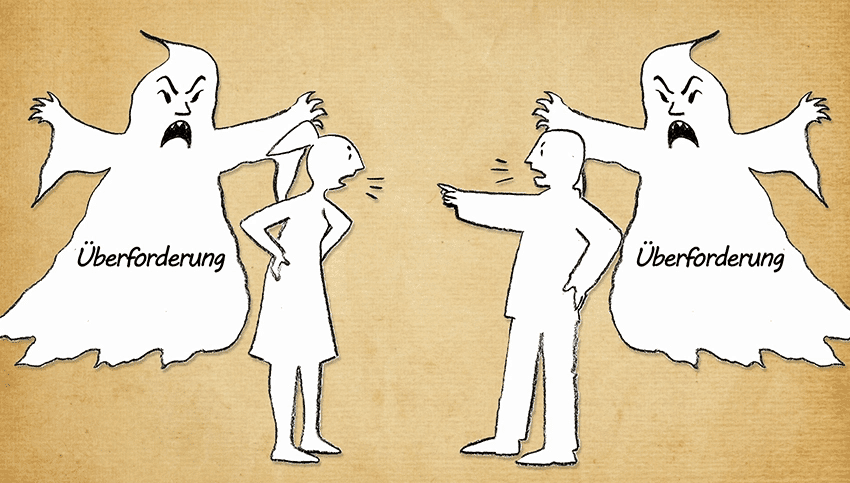
The causes of arguments in a relationship vary. However, they are often accompanied by a number of widespread misunderstandings.
Let's take a look at some of the most common misunderstandings that can lead to couples arguing more and more frequently and intensely:
"I'm only like this because you're..."
In couples who have been together for a long time, the tone of voice often changes in a matter of seconds.
What was once considered a charming quirk of the other person (he/she is sometimes just a bit scatterbrained/disorganized/chaotic/know-it-all/sensitive, etc.) becomes, after a while, a trigger for anger and arguments. Under certain circumstances, even the slightest provocation (a frown from the partner, a raised eyebrow, a sigh, etc.) can cause the other person to feel provoked or misunderstood, triggering a surge of anger and stress hormones, nipping any friendly exchange in the bud, and quickly escalating into an unpleasant argument.
What was the cause? What was the reaction? Both partners, if asked, would answer that they were simply reacting to the fact that the other person – unnecessarily – constantly does or says things (or knows better) that inevitably lead to conflict. He/she, on the other hand, absolutely did not want to argue again.
And now? Can there be a single, universally true answer to the question: "Which of us was to blame for the renewed argument this time ?"
No. It can't. There is no truth here . Therefore, it's pointless to look for justifications along the lines of " This time I was definitely right, because that's how it really was !"
We can only change our own behavior. We can't change someone else if they don't want to be changed themselves. While this may sound regrettable, it's also reassuring to realize that we can control how a situation develops – and aren't dependent on how the other person is behaving.
How to foster this mindful approach and find good compromises is explained in the article "Compromises in Relationships . " Here you will find six strategies to help you achieve the best compromises.
From now on, please adhere to the following "Do's & Don'ts"
Dont's
I will no longer be provoked.
I refrain from any form of accusations, taunts, charges, taking offense, or punishing silence.
I will no longer raise my voice or speak harshly.
Do's
I 'dive under it' when the other person (once again) doesn't react the way I would like, and remain calm, respectful, and composed.
If I am very emotionally upset, I briefly step away from the situation to 'calm down' (the other person doesn't even have to notice).
I will rephrase my request later in a friendly manner - regardless of how my partner reacts.
I am aware that I can actively break out of a vicious cycle of conflict at any time .
Constant arguments in the relationship
The perception of conflict is highly individual. What feels like constant fighting to one partner , the other might perceive as occasional differences . When conflict becomes the dominant theme in a relationship, re-establishing an open and respectful communication style is a challenge. Partners may blame each other or feel desperate: " We're always arguing! " is a common refrain. Constant conflict puts a significant strain on a relationship.
Note: Consider whether you are overly emotionally dependent on your partner. This can also create problems in the relationship.
Relationship myth: "Arguments are like a cleansing thunderstorm"
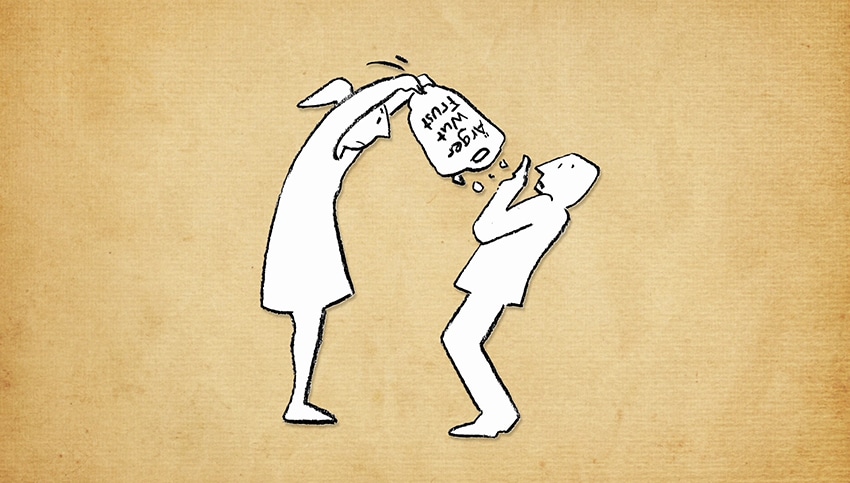
"Arguments are like a cleansing thunderstorm." - This is a widespread misconception that we as couples therapists regularly hear.
Perhaps in certain political or business relationships it might work for both parties to vigorously defend their positions until they finally reach an agreement after a tough struggle. But that certainly doesn't apply to a romantic partnership.
We also examine other major relationship myths for you in our article: " How relationships work - The biggest myths debunked ".
Relationships can quickly get down to brass tacks.
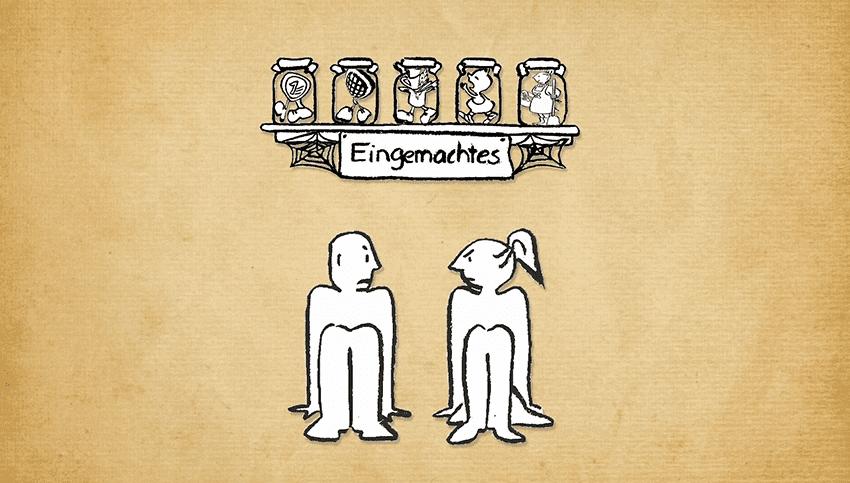
Most recurring conflicts in committed relationships are not about justifying and implementing a single, strategically sound, isolated measure.
Couples almost always argue about supposedly annoying personal behaviors or character traits of the other person. An insult hurled in a fit of anger—perhaps even below the belt—can cause lasting pain to the other person.
Furthermore, in a relationship we want to feel supported and secure. If our partner suddenly becomes an adversary, this crucial foundation of reliability and security is taken away from us.
Arguments in a relationship hurt.
The result: Arguments with your partner are almost always 'simply awful'. And stressful.
Arguments lead to mistrust and tension. With every argument, there is a risk of "fine cracks" appearing, which widen with each escalating conflict and can ultimately lead to the breakdown of a relationship after years – because in the heat of the moment, words are often spoken that cannot simply be forgotten.
Until at least one of them eventually asks themselves the question, " Should I break up? "...

The story of the vase
Imagine someone receives a large, heavy, precious vase as a gift. It's exactly the kind of vase they've wanted for a long time! So they look for a very special place in their home for their beautiful new vase.
At first, he's meticulously careful for quite a while not to accidentally bump into it – but then it happens for the first time: Angry and in a bad mood, he gives the precious gift a little nudge as he walks by. Just to let off steam.
"It's porcelain, yes," he thinks to himself afterwards, "but it's heavy. Good quality. It should be able to withstand that."
From now on, this will happen more and more frequently.
When he's in a bad mood, he hits the vase – no matter what he's holding in his hand.
Soon the vase he had been so delighted with developed its first, barely visible cracks; later, larger ones. Eventually, it broke into many pieces .
When the recipient notices what has happened, he is horrified and sad and tries his best to glue the gift back together – as best he can.
However, it is impossible to overlook the fact that the fine porcelain is damaged.
The vase will never be as beautiful as it once was.
Relationships are fragile.
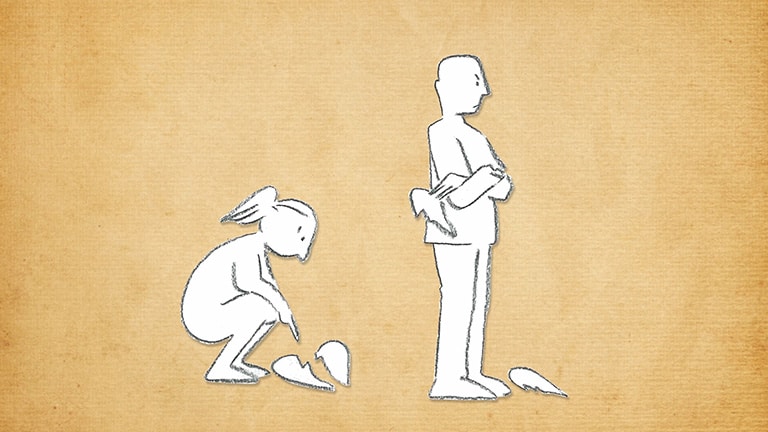
We're probably all thinking: "How careless to treat something precious like that! I would never do that. It's no secret that fragile items will break sooner or later with that kind of treatment. And then to be surprised that something that was deliberately destroyed can't be repaired properly?!"
It's all the more surprising, then, that we still find it so difficult not to snap at our partner when our mood is low or our stress level is high…
From today onwards, it is entirely up to us to take (even) better care of our 'vase'.
Tolerance instead of conflict
Personal differences require tolerance and a willingness to compromise. And if things get particularly "tight," other forms of conflict resolution besides arguing are needed.
These measures must be used as early as possible, and not only when the anger is already so great that conflict has become inevitable.
One of the most important insights: You can't argue alone!
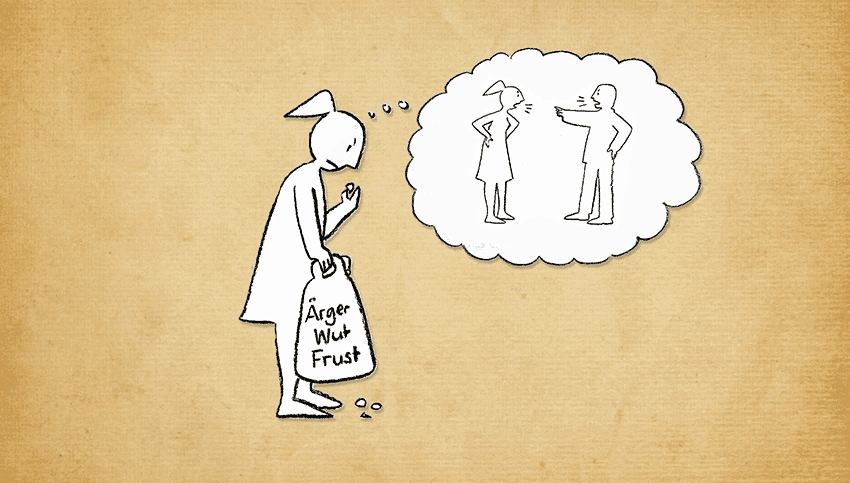
It always takes at least two people for an argument to start. Be the one who gets out of the cycle of conflict in time.
How can that work?
In a calm moment, consider suitable lifelines and emergency brakes that will help you defuse a conflict situation – so that an argument doesn't even arise in the first place.
Your lifelines
What could such a rescue operation be?
Make a yellow card and a red card that you can immediately pull out if things threaten to get heated.
Make a face like an offended 3-year-old , stick out your tongue and shout: “No! No! No! THAT! IS! MY! SHOVEL!”
Start dancing absurdly while singing "The cuckoo and the donkey had a fight..."
Get yourself a small figurine (like the know-it -all Brainy Smurf ) that you can grab when trouble is brewing and sneakily and quietly push off the edge of the table in front of your partner, or dunk headfirst into a glass of water. etc. etc.
There are virtually no limits to your creativity. And: a sense of humor never hurts... 😉

And if all of that fails to defuse the situation, leave the scene briefly, as mentioned before. Announcing that you're going to take a walk around the block, a cold shower, a few minutes of punching, or whatever else you need to do.
Coordinate with your partner.
Very important: Share all ideas that you consider promising with your partner when things are going well together and you are both relaxed – and perhaps even enjoying brainstorming further rescue plans for emergencies.
From now on, don't get involved in arguments anymore.
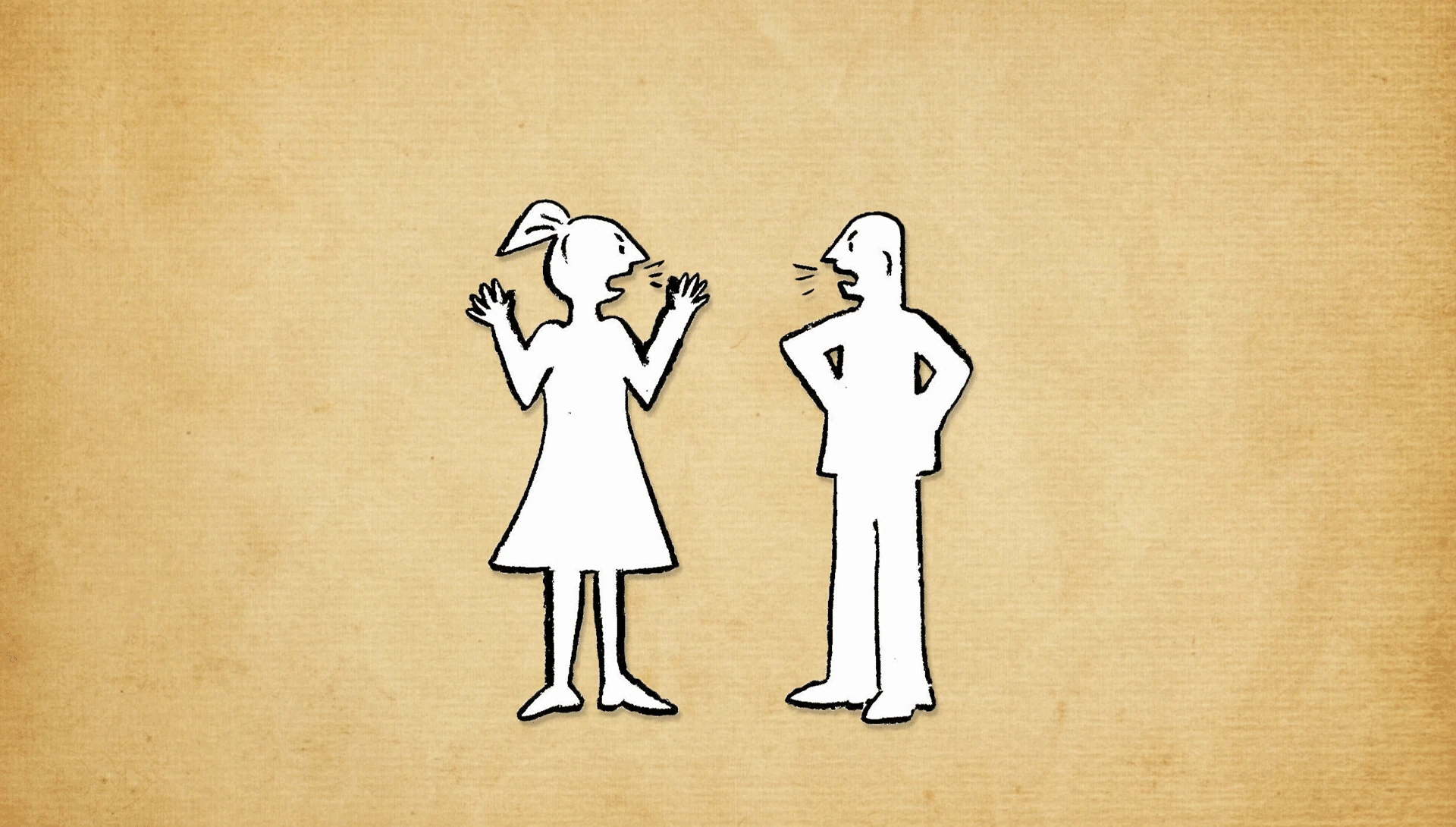
And if things do threaten to get heated next time? Then bathe in dragon's blood: Don't let yourself be provoked. Elegantly dive under all accusations and taunts. Take a few deep breaths. And then unleash your lifeline performance! 😉
Test: How critical is the situation in your relationship?

If you would like to know how to assess the current conflict and dispute situation in your relationship, use our scientifically developed partnership test (free of charge - at the top of this page).
Gain clarity now about the true strengths and weaknesses of your relationship. Take a step back and analyze your love from a bird's-eye view.
Once you have a concrete overview of how you experience your partnership and how you shape it yourself , you will gain a much sharper view of your shared resources and challenges.
It will take you about 10 minutes to fill out the questions.
Take your relationship test now! (free)
How is your relationship?
What are your strengths and weaknesses?
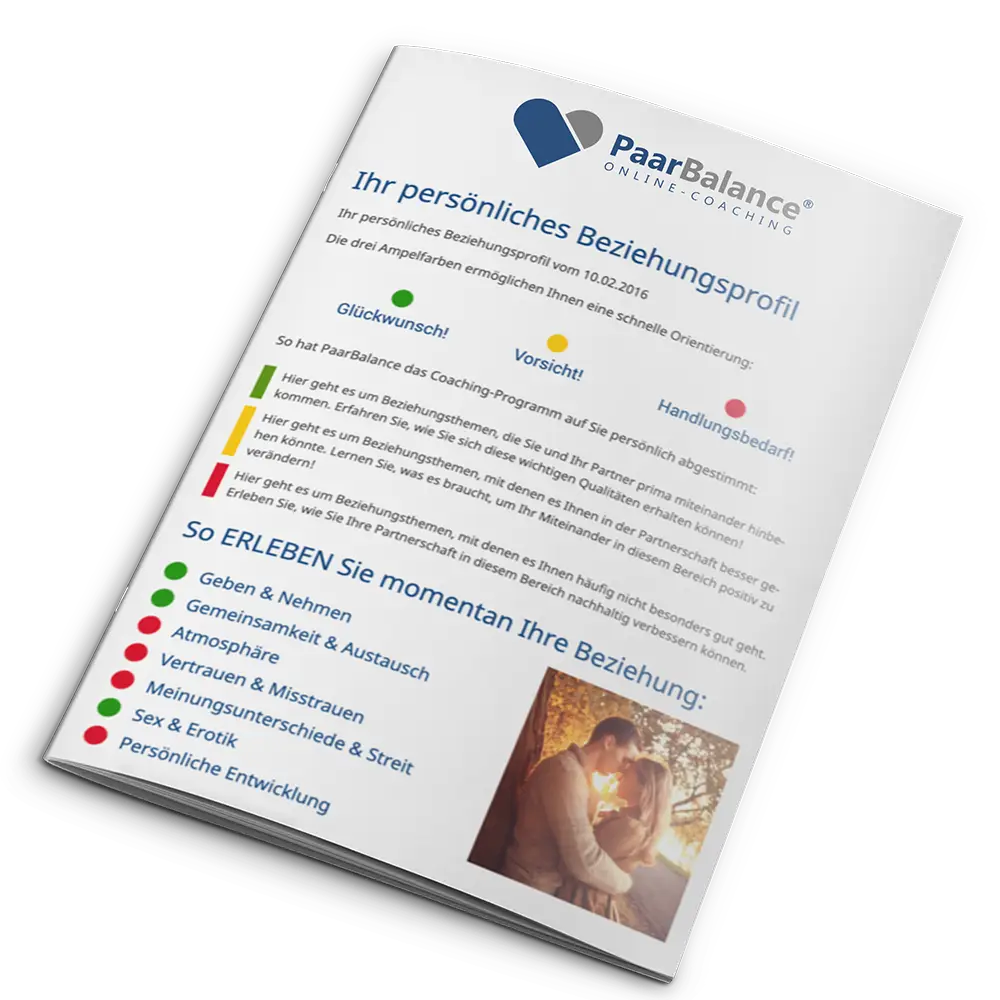
You will find out immediately afterwards in your personal PaarBalance relationship profile (free).
Start your relationship test now!
✓ Scientifically sound
✓ Includes detailed analysis
✓ Your data will not be shared
✓ 100% free & non-binding
100% secure. We comply with data protection regulations. Registration for the relationship test is free .
Please read this important information beforehand:
Data Protection ᐧ Terms and Conditions ᐧ General Information Agreement Terms and Conditions . Transparency Statement
We wish you many helpful insights and all the best for you and your relationship!
Yours sincerely, Dr. Judith Gastner
☝🏻 Related articles on the topic of "Constant arguments in a relationship"
Frequently Asked Questions
What are the reasons for constant arguments in a relationship?
If arguments are frequent in a relationship, it's usually due to personal differences or unrealistic expectations. Add stress or carelessness to the mix, and arguments are almost inevitable. Find out what the underlying causes are for both of you. Only then can constructive solutions be developed and arguments permanently reduced.
How can you end frequent arguments in a relationship?
Examine the causes of the conflict and distinguish between: Where can changes be made? Where is the issue a matter of accepting differing viewpoints? Before you focus on solutions for the areas that can be changed, take a break from the conflict! Create a positive and supportive atmosphere! This increases the likelihood of finding good, shared solutions.
What are the effects of constant arguing in a relationship?
Arguing is almost never a good way to change areas of conflict in a relationship in a positive direction. Arguments lead to further hurt, frustration, and alienation. More constructive ways are needed to express one's own needs and find fair compromises. Only then can a relaxed and respectful relationship develop.
What should you pay attention to in conflict situations?
Helpful communication techniques include active listening (physically turning towards the listener, eye contact, asking targeted questions), "I" messages (naming one's own feelings instead of making accusations), staying in the here and now (instead of repeatedly mentioning past mistakes), avoiding hasty judgments, and signaling a willingness to compromise.
How can constant arguments in a relationship be reduced?
To reduce arguments in a relationship, recurring triggers must be identified. Communicate openly about your personal desires, show interest in your partner's needs, avoid judging which of your views is 'better' or 'worse', but instead seek fair compromises.