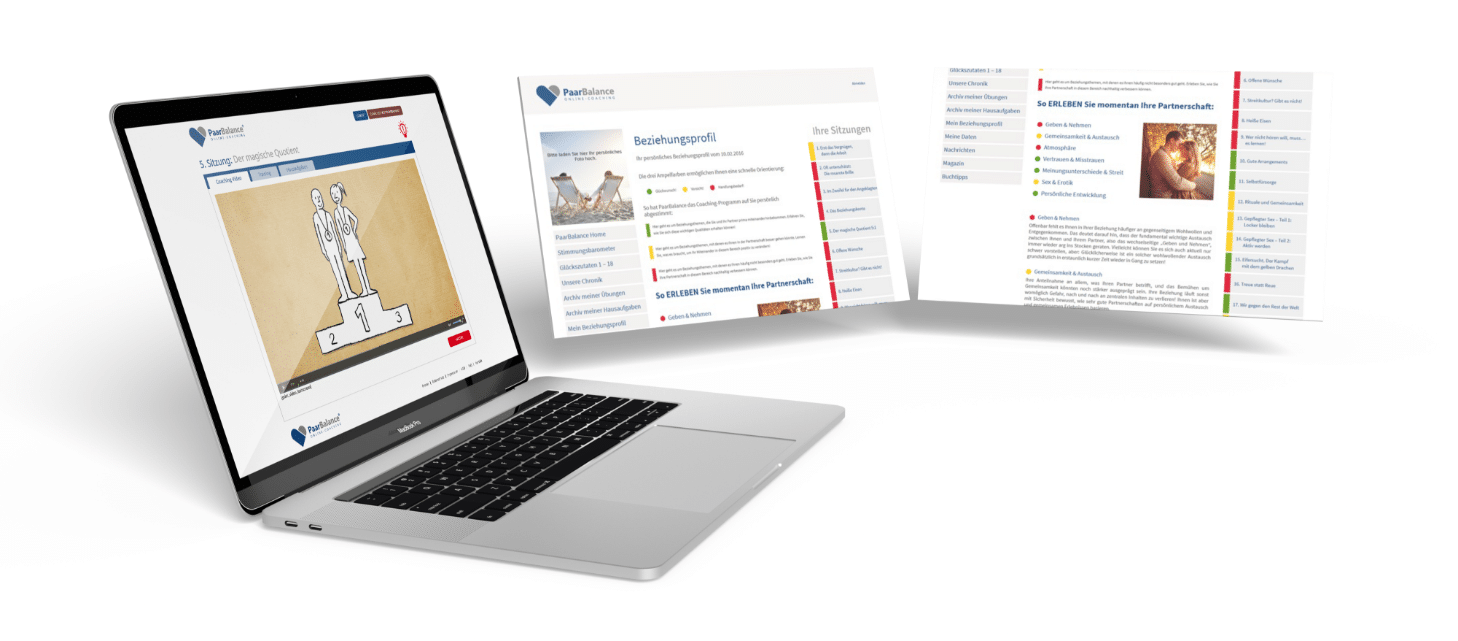








☝🏻 Quick start: No more mental load - fair work distribution
Oops, we're out of toilet paper ! And we only have one roll of kitchen paper left in the house.
The washed laundry has been damp in the drum since yesterday - it urgently needs to be hung up.
Another message in the football WhatsApp group! Jonas' (child 1) tournament has been moved forward to tomorrow at 8:00 a.m.?! Wow. That's early. And we're also responsible for driving ! Max and Lasse will need to be picked up around 7:15, otherwise we won't make it on time. I still need to let the other parents know .
Damn! Jonas was already complaining last week that his football boots were pinching . Not good at all for a 5-hour tournament. Who was it again whose older child recently quit playing football? I absolutely have to find out somehow. I'll ask about the boots there first, otherwise we'll have to buy new ones today .
Sophia's (child 2) fever still hasn't completely gone away. It would be a shame to drag her to the sports shop like this. Would it be possible to ask Mrs. Sabatin ( our neighbor ) to stay with her for an hour if necessary? I should probably check with her to make sure she even has time.
By the time Markus (the husband) gets home, it will be too late to go shopping . On the other hand, the fever has now lasted longer than three days. Perhaps we should try to get an appointment with Dr. Henrichs ( the pediatrician ) before the weekend ?
Oh – and what are we going to eat for dinner tonight? There's not enough time to cook . We'll at least have to quickly buy some bread.
Does this kind of mental merry-go-round sound familiar? 🙂
Then you've come to the right place!
🚀 Already 65,511 people have gained clarity through the test.
This, or something very similar, is what countless parents – especially almost every mother – experience in their minds, like the inner dialogues listed above.
The specific content of what needs to be done naturally varies from family to family and from day to day. However, almost everyone can attest to the fact that this invisible, internal to-do list is immensely long and often gets even longer as it's worked through (because the original plan doesn't work out, because something unexpected happens, etc.).
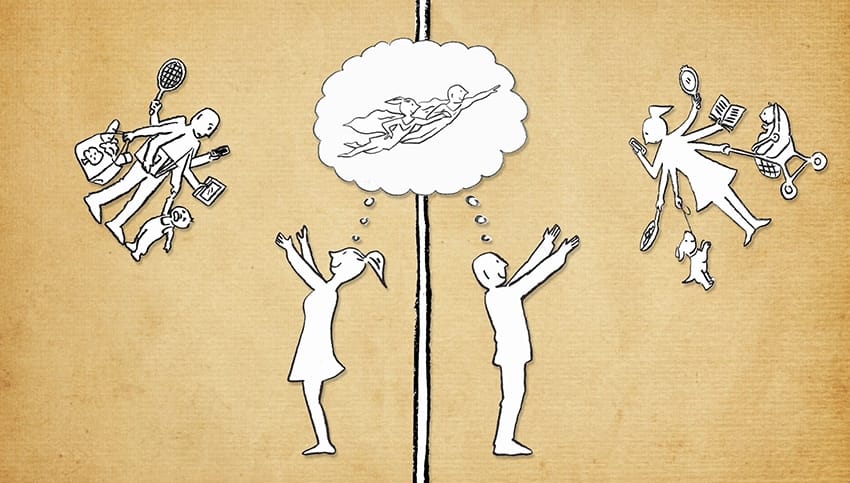
To make 'family life work' and to reconcile the numerous obligations, needs, interests and wishes of all family members, an incredible amount needs to be done :
There's so much to think about . So much to do .
And that's every single day .
Should we always make the numerous decisions that need to be made every day together ?
How can the burden of this extensive mental and practical work be fairly distributed between both partners (and, if there are older children, the whole family)? So that no one has to be more aware of everything than the others? So that no one person feels like they are solely responsible for everything?
What a beautiful ideal! 🙂
However, most couples feel that they fail time and time again precisely because of this.
It is not uncommon for persistent dissatisfaction to develop over time. As a result, tempers flare more quickly, arguments increase (see also our article " Constant Arguments in Your Relationship? Here's What You Should Know! ") and at least one partner increasingly suffers from the phenomenon often referred to today as "mental load".
What exactly does the term "mental load" mean?
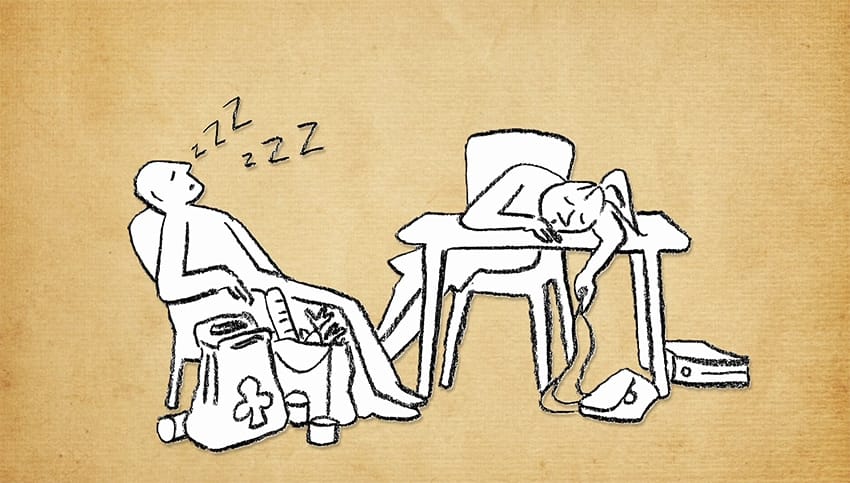
"Mental load" refers to the ongoing mental strain caused by the complex organization of numerous everyday tasks.
This includes in particular all those planning and coordination processes that are often overlooked by others - especially one's own partner - or dismissed as "trifles", but which are absolutely essential for everyday life in families to function reasonably smoothly.
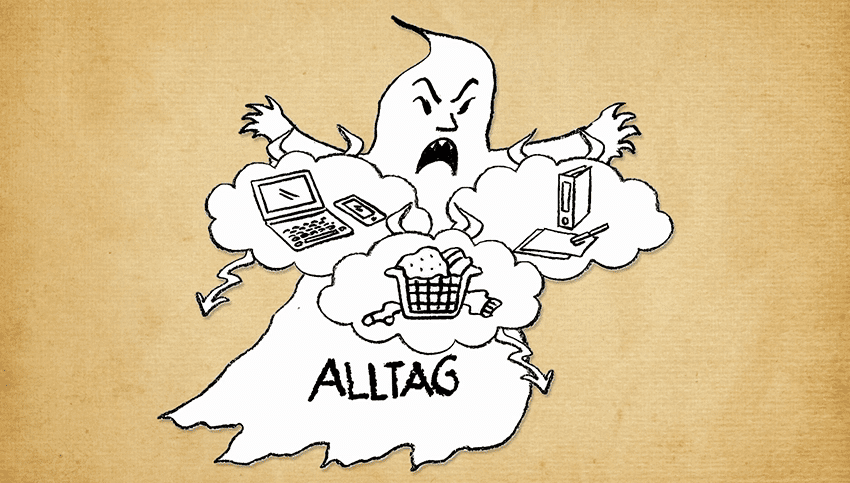
Keeping things running smoothly – for everyone involved (yourself, your partner, the children, possibly parents or in-laws, etc.) – requires an enormous amount of coordination. And there's no real break during which all the balls that need to be juggled simultaneously can simply be put down.
At least one of the partners (usually the women and mothers in the family system) has the impression that without their presence 'nothing would work anymore' and that they cannot allow themselves any time off - no matter how urgently such a break might be needed in between.
The biggest problem is this: when one's own extensive investments in time and emotion, made for the family system, are not seen and appreciated by the person who is most important to oneself, then – understandably – growing resentment arises.
Someone who already feels chronically stressed will have less and less desire to automatically take on and silently complete all the pending tasks. The ongoing mental burden increasingly transforms into stress, frustration, and anger.
Book recommendation: "Out of the Mental Load Trap: How to Achieve Fair Division of Labor" by Patricia Cammarata
As a working mother, the psychologist and author Patricia Cammarata was personally very familiar with the phenomenon of 'Mental Load' - she herself suffered from chronic 'Mental Load' long before she associated this term with her feeling of being constantly exhausted and running on fumes.
In her book "Out of the Mental Load Trap," the author therefore delves deeply into the topic of 'mental load' and true equality. Patricia Cammarata explains vividly and humorously which mechanisms and role stereotypes govern the dynamics in romantic relationships.
The bestselling author clearly describes what is needed for a truly fair division of labor and gives pragmatic yet nuanced tips on how couples can permanently escape the 'mental load trap'.
The ideal material for a mental load misunderstanding - An example

As a classic example of a typical mental load misunderstanding, which countless mothers and fathers have likely experienced many times in one form or another, the author Patricia Cammarata cites the invitation of one's own child to a children's birthday party.
An outsider (or often the partner) may not give such an event too much thought - they may simply be happy that the child is apparently popular and has been invited to a party again.
However, according to Patricia Cammarata, a great deal of mental thinking and implementation work must first be done in advance so that the child can actually accept the invitation:
The schoolbag needs to be checked regularly so that the parents even notice when an invitation card tumbles out of the pile of papers.
The family calendar needs to be checked to see if the child has time for the birthday party on that day.
It may be necessary to cancel the sports course or postpone another appointment that would have taken place or was planned for the same time.
Arrangements need to be made for how the child will get to the celebration and back home .
If the child is being picked up directly from kindergarten/school by the birthday child's parents, a power of attorney may need to be issued.
On the relevant day, this authorization must be placed in the schoolbag in such a way that the child remembers to hand it in .
A gift for the birthday child needs to be considered (making sure it is not the same gift as last year).
Ideally, you should coordinate your gift idea with other parents to avoid having multiple birthday guests bring the same present.
A decision needs to be made about where to buy the gift .
The gift must be purchased in good time .
Make sure there is enough wrapping paper at home .
The gift needs to be wrapped .
Depending on the type of birthday party, appropriate clothing (possibly a change of clothes) must be considered.
Patricia Cammarata knows: In the vast majority of families, it is the women and mothers who perform this invisible work day after day, quite naturally, for their children and thus for the whole family:
The topic of "children's birthday party invitations" is automatically added to the mother's already overflowing mental to-do list. From the invitation itself to the party day, everything necessary is kept in mind: the individual tasks are prepared, implemented, or delegated in a timely manner.
Taken individually, the individual things that need to be considered in this example are not particularly complex. Checking off each item usually only takes a few minutes. – And yet, the entire 'list' of preparations is relatively long – and it takes a lot of work (an hour? two hours? three hours?) until such a seemingly small additional 'agenda item' (for just one family member) actually runs smoothly in everyday family life.
So far, so good. But where exactly does the promised mental load misunderstanding lie ?
The author Patricia Cammarata sums it up as follows: "If the father is sent to get the gift, he believes he has taken care of the matter because he doesn't see the entire process. This can lead to arguments. He doesn't understand that the mother has already done much more behind the scenes than he has."
Who has what on their mind? What is needed for a fair division of labor?

At the latest when "two have become three", i.e., when a couple has become a family (and this applies to all family models - male-female, female-female and male constellations alike), it is important that mothers and fathers repeatedly and calmly address the topic of "responsibilities" and "danger of mental load" in the life of the new family system and find answers together to the most important questions:
Do we feel we are managing everyday life well as a couple/family? Are we able to balance work, household chores, caregiving, childcare, etc.?
Do we experience the division of labor in our family as (mostly) fair overall?
If not: Who feels overworked? By what? Since when?
Who is currently responsible for what?
What tasks do we encounter on 'normal' days in our 'everyday' life?
What additional tasks and preparations are required or eliminated on weekends or during holidays?
When something unexpected comes up: Are we able to quickly and fairly divide such new tasks among the family?
Does everyone see what the other person contributes (or only their own)?
Do both 'parties' (men <-> women, fathers <-> mothers, the one who spends more time at home <-> the one who spends more time away from home) know what else the other person has on their mind - besides their professional work - experiencing as an invisible burden, juggling things internally?
Are there tasks that are easier (or harder) for one family member than another? Is this (at least to some extent) taken into account in our family's division of labor?
Important: These questions about a fair distribution of all pending tasks cannot be answered 'once and for all'.
Depending on the age of the children, the respective individual challenges (at work, in the extended family, health-related, etc.), the perceived burden and the overall life situation, it is necessary to renegotiate at regular intervals who continues to do what or wants to 'pass on' and which division of labor in the family feels as fair as possible for all family members.
"Now finally take responsibility!"
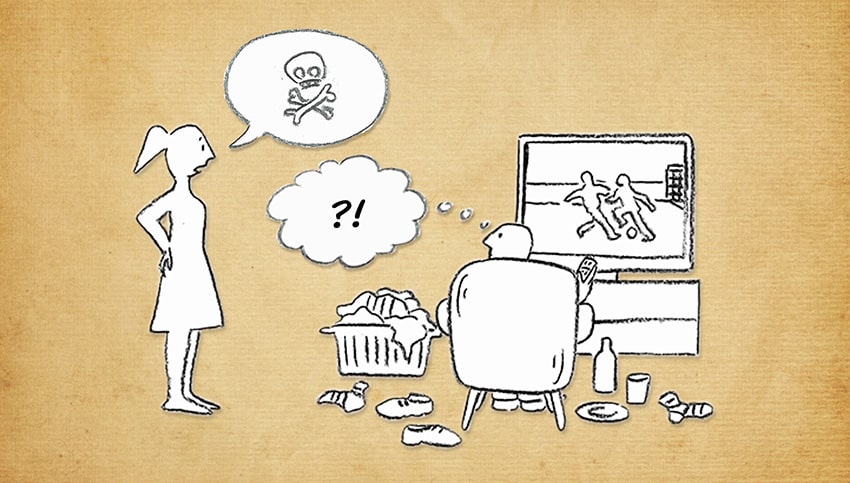
Responsibility can quickly become a trigger word in a partnership.
When someone is frustrated because their partner hasn't taken care of things like booking a trip, doing the dishes, scheduling the child's doctor's appointment, calling the property management company, or canceling the mother-in-law's visit as expected, the phrase "You never take responsibility!" is often heard.
This immediately puts the other person on the defensive.
Instead of taking the criticism or the underlying request to heart, he involuntarily argues against it and lists the kinds of responsibilities that already weigh heavily on his shoulders.
Discuss the division of tasks! Create a list together.
For family life to thrive and for everyone involved to feel comfortable in the long run, a jointly created overview of the most important areas of responsibility (type of work, duties, areas of accountability, etc.) is often very enlightening for many couples. Before getting into the details, it makes sense to first create a rough list for your own (family) life:
Home & Garden / Finances
Household chores (cleaning, washing, tidying up, etc.)
Care (animals; balcony / garden / plants)
Repairs / Organization of tradespeople
Property management / Landlord / Tenant
Purchases / Decluttering
Overview of Finances
Insurance
tax return
...
All about the next generation:
Catering / Supplies (shopping; meal preparation; lunch boxes; snacks)
Childcare / Leisure activities (afternoons / weekends / holidays)
Health / Personal Care Children
Errands / Purchases / Decluttering
Kindergarten and school
Birthdays and celebrations
Parent taxi
'Deals' / 'Negotiations'
...
Social contacts:
Cultivating friendships
Agreements with other parents
Contact with family members / neighborhood services
...
Even with such a brief list, it quickly becomes clear how many 'areas' there are that parents need to keep an eye on.
The respective main points can be gradually filled with more detailed content and – as in the example above "Child is invited to a birthday party" – broken down into very specific individual steps.
When analyzing multiple tasks in detail, symbols can make it easier to keep track, such as:
Traffic light colors (green-yellow-red):
"This takes little / medium / a lot of time"Arrows (up-side-down):
"This needs to be done very frequently / occasionally / rarely"Smileys (smiling-neutral-sad):
"I usually find this easy / medium / difficult"
In any case, it is important that all those involved realize that taking responsibility does not just mean carrying something out, but rather feeling ' responsible ' for it overall .
If only one person sees themselves as a manager who has to keep track of concerns and distribute tasks on time, then the mental work is still not fairly regulated.
The mental load trap: Why do arguments happen so often?
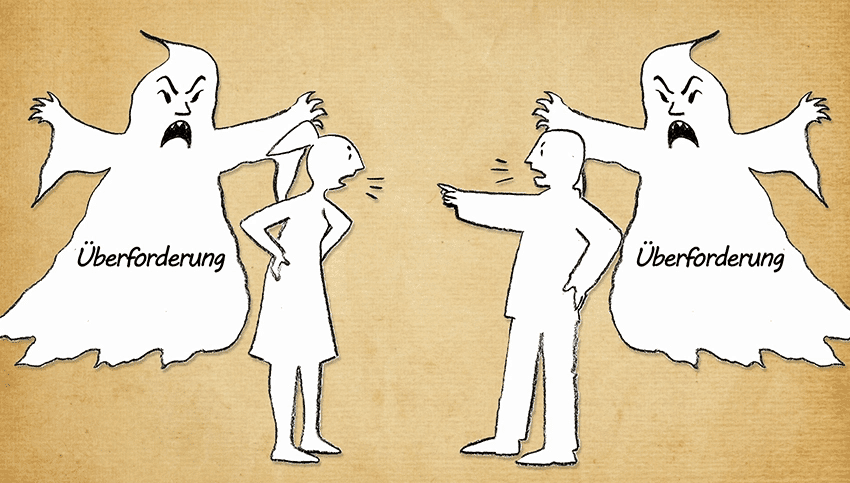
Everyday life, with its many challenges, has us all firmly in its grip. When there's hardly any time for rest and everyone feels chronically overworked, nerves can quickly become frayed.
However, we often forget that in a romantic relationship – despite all the soulmates – two very different people meet.
Everyone brings their own family history and personal background. Ideas about what constitutes order and chaos can vary greatly, as can assessments of what is best for the children. It's not enough to have only vaguely discussed such differences once.
(You might also like to read our article " How relationships work - The biggest myths debunked ".)
Clear agreements prevent conflicts.
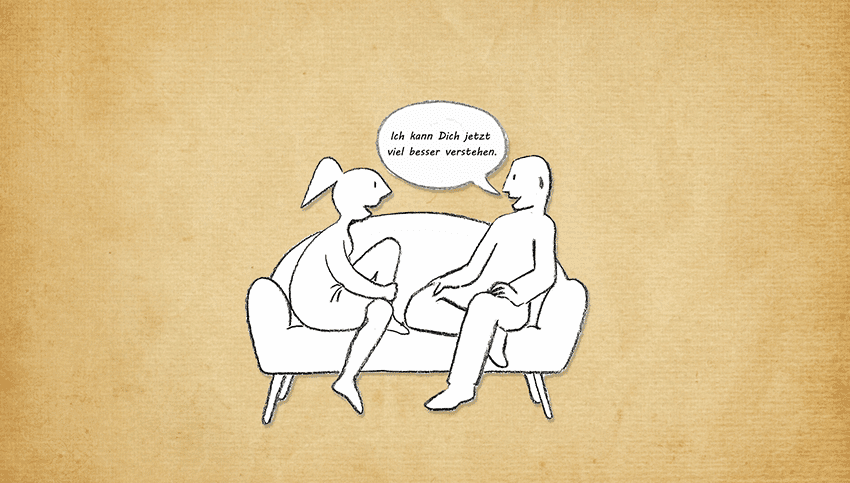
If you fail to make clear agreements in a timely manner, dissatisfaction quickly arises , for example, because your partner has once again not tidied the kitchen as you would have liked. The anger is swallowed time and again to avoid spoiling the mood – and so it happens that both partners repeatedly find themselves in awkward situations.
Then, when one day the refrigerator is empty and the trash can is full again, the situation suddenly boils over and unconstructive accusations are made, such as:
"Why do I always have to do everything ?"
"Why don't you ever take care of anything ?"
"Why is nobody doing the dirty work here except me ?"
How do I avoid the cycle of blame?
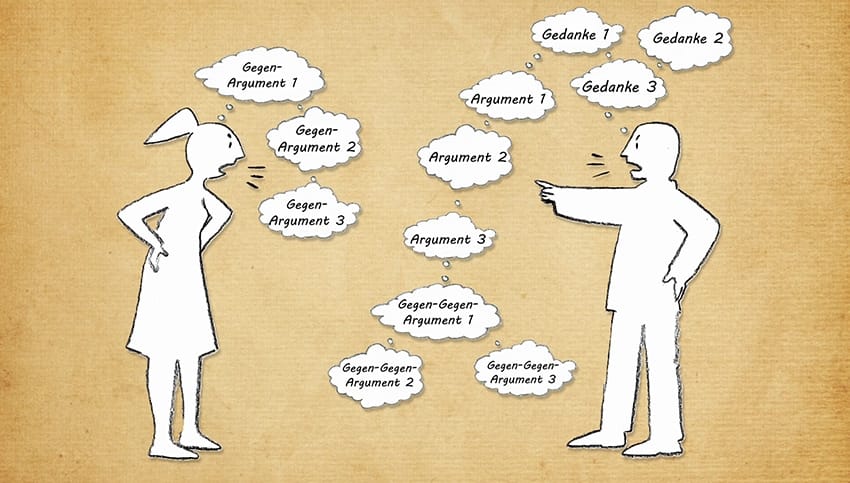
Therefore, you should tackle sensitive topics like 'division of tasks' and 'what do I need to feel (more) comfortable' regularly during relaxed times – over a cup of coffee or a walk. This takes some effort at first: We're having such a nice breakfast together, why spoil the mood with the thorny issue of cleaning and shopping?
But if you manage to talk about it in a positive way, Sunday can actually go very well. For example, if someone says, "I'd really appreciate it if you vacuumed once a week. That would be a huge help!", it sounds different than if they complain, "It looks awful in here again because you just don't give a damn whether we're suffocating in the dirt."
If I focus on myself and my needs, the likelihood that the other person will respond to them is much higher.
There is no good relationship without tolerance and compromise.
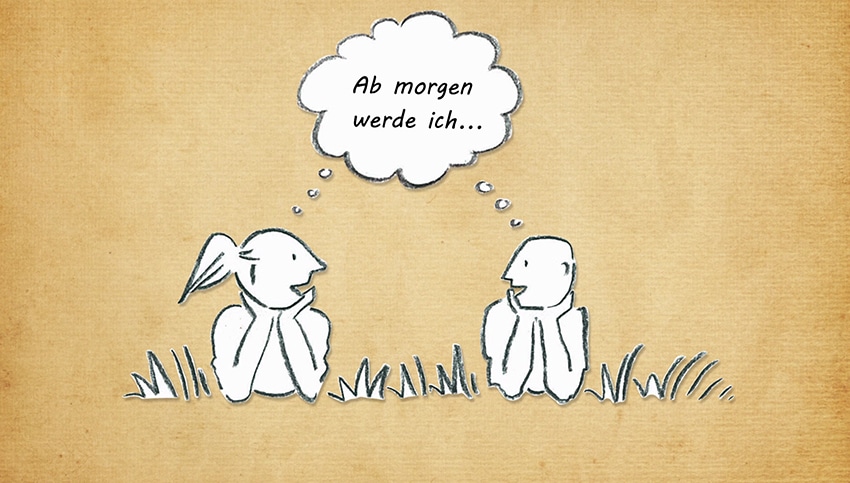
There is no good relationship without tolerance. Tolerance begins precisely where, for example, a moment of regret arises and I, looking into the dishwasher, think – once again – "Can't you just do it the same way (smartly and sensibly... ;-)) as I would?"
But – quite simply: The partner is different because he is different .
And: He only comes as a complete package .
If someone else doesn't arrange the cutlery as meticulously as I do, or if they haven't tidied up properly again , it doesn't mean they're trying to spite me or annoy me. They probably just have a very different internal standard for structure and order. Perhaps some things aren't as important to them personally – and that's why they keep forgetting to put away the newspaper or hang up the laundry.
The crucial point is that this should under no circumstances be considered mere negligence.
On the other hand, that doesn't mean the topic can't be brought up again: "I hope we can find a new solution. Maybe we could try some kind of shared living arrangement or consider whether we could afford a housekeeper every now and then. What do you think?"
Learn more in this article about how you can achieve the best compromises using 6 specific strategies .
"If you really loved me, then you would know (...)"
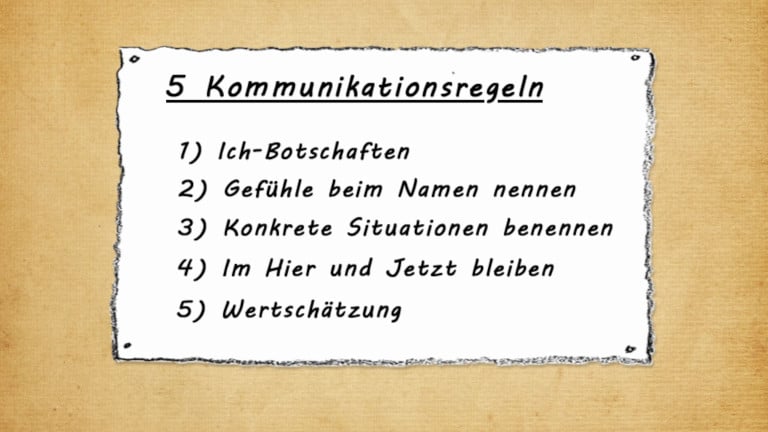
Sometimes the accusation is made: "If you really loved me, you would know how important this is to me, and then I wouldn't have to constantly remind you."
That's destructive communication. In this case, I'm implying a lack of love and willingness to help. If I want to avoid escalation, I should stay calm and choose a phrase like: " I don't think you've really grasped how incredibly good it makes me feel when our dining table is clear. I absolutely love having this 'oasis of order' at our house. Please try to remember to put the books and newspapers away every now and then."
(You might also like to read our article " Constant arguments in your relationship? Here's what you should know! ")
The most beautiful way we can positively influence people is by doing good things for them – whether it's our partner, a friend, or our daughter. This automatically increases their willingness to negotiate.
If I'm feeling frustrated that my partner isn't doing enough around the house, I could say something like, " You do such a great job organizing the kids' sports events and taking care of all our tax paperwork. That's a huge help. You know what else would be a massive help right now? If you could do the Saturday grocery shopping for the next few weeks. Then I wouldn't always start the weekend so stressed out ."
When our contributions are seen and appreciated, we are much more willing to fulfill the requests of others. If something positive has been said or done for us, we are very likely to feel the desire to give something back.
Do couples with children have more conflicts about responsibilities?
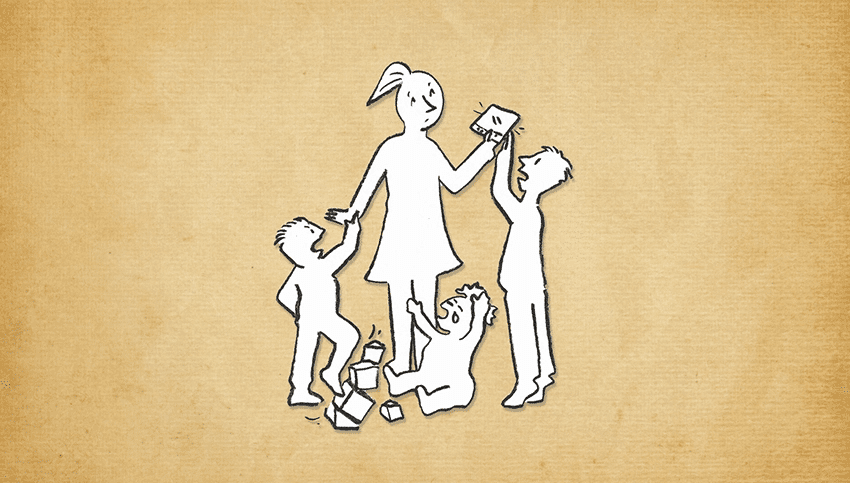
Every couple has disagreements about tasks and responsibilities. With children, the potential for conflict increases.
70 percent of couples experience turbulence when their first child is born, because then the cards are completely reshuffled.
It takes a lot of patience and clear agreements until the new life feels right.
Of course, arguing about childcare is much more emotional than arguing about vacuuming or buying a new coffee machine.
Each partner wants to give the children the best – but ideas about what is best will never completely agree.
Couples should agree early on what they want to pass on to their children .
- What is important to me?
- What do I consider sensible?
- How about you?
- How do we get together?
Prevent heated arguments

When strong emotions are involved, a conversation can quickly escalate.
If your pulse rises above one hundred, you should definitely stop talking. Too much inner turmoil destroys any constructive exchange.
Couples should agree on emergency exits (for example, a 'yellow' or 'red card' or other symbols). Or they could announce that, if necessary, they will leave the room to minimize the damage while postponing the conversation: Let's continue talking tomorrow.
Always having to be the one who has to keep track of everything? – One of the main causes of mental load.
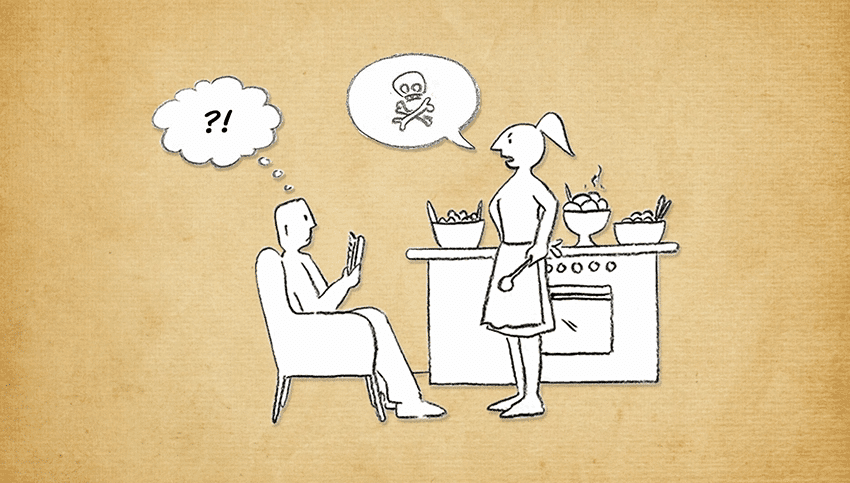
Many women complain that, unlike men, they bear the main burden for the daily structure of the entire family and have to keep track of all family appointments – and that their partner, even if he participates in the household or plays with the children, does not take any overall responsibility for this.
If this is (generally) the case: How can this dilemma be solved?
The division of responsibilities in this area has usually increased among couples with children. When a baby is born, the mother is generally still the most important caregiver. She goes to the first check-ups. She attends the playgroup. She takes care of the registration deadlines for suitable daycare centers. This creates a division of roles in the lives of many men and women that quickly becomes entrenched.
That's why it's good to keep talking – before things become too one-sided in the long run. Discussing the most important things in small chunks is much easier than prolonged silence, eventually exploding, and leaving your partner completely bewildered.
The illusion of objective justice
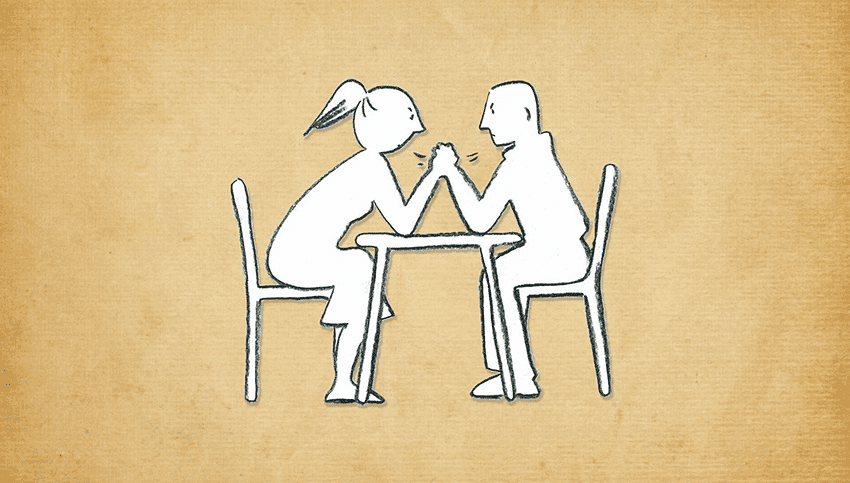
An objectively fair and permanent distribution of all tasks within a dynamic family system? - It will never exist!
However, one can regularly question the existing division of responsibilities and repeatedly try to assign newly arising tasks as fairly as possible according to the respective strengths, inclinations and the current subjective workload level of all those involved:
"I'm currently taking care of pretty much everything – doctor's appointments, daycare, and homework. I would be incredibly grateful if you could take care of the garden independently for a while and accompany the children to sports practice on weekends. Does that work for you?"
Many couples have found a family calendar on the refrigerator to be very useful. It has several columns side by side where all important dates, plans, and to-dos can be entered for each family member – there can also be a separate column for family time or for exclusive events for the couple.
This way everyone has a good overview of who is doing what and when, and whether there are also regular exciting projects that everyone can look forward to.
The crucial thing, as I said, is to keep the lines of communication open. Regularly review agreements that have been made. Change anything that no longer makes sense.
You can also ritualize these conversations, for example, by lingering a little longer at Sunday breakfast to discuss what's on the agenda for the coming week. Staying on top of things is important – and of course, a dose of humor, like: "Who's going to get the most awful to-do card for next week?" (like, for example, conducting the parent-teacher meeting with the math teacher who's totally fed up with our fidgety fifth-grader).
Test: How strong is your relationship?
If you would like to know how your partnership functions in terms of give and take, sense of togetherness and role distribution, feel free to use our scientifically developed partnership test (free of charge).
If you haven't taken the test yet and we haven't been able to create a (free) relationship profile for you: It takes about 10 minutes to take a step back and analyze your love life.
Gain a well-informed overview of your resources and challenges as a couple by answering the following questions:
Take your relationship test now! (free)
How is your relationship?
What are your strengths and weaknesses?
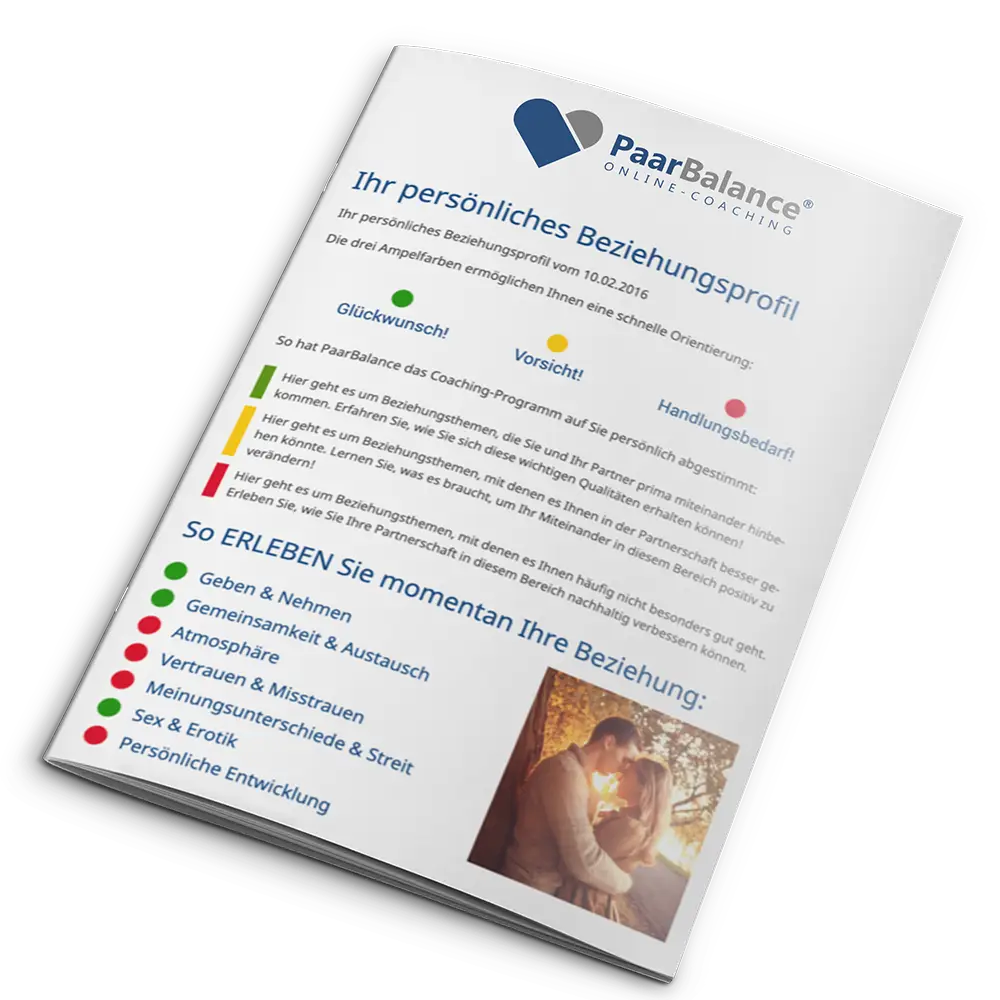
You will find out immediately afterwards in your personal PaarBalance relationship profile (free).
Start your relationship test now!
✓ Scientifically sound
✓ Includes detailed analysis
✓ Your data will not be shared
✓ 100% free & non-binding
100% secure. We comply with data protection regulations. Registration for the relationship test is free .
Please read this important information beforehand:
Data Protection ᐧ Terms and Conditions ᐧ General Information Agreement Terms and Conditions . Transparency Statement
Leave the mental load trap behind! This is how you become a strong team.
Immediately afterwards you will receive (free of charge) detailed feedback on the various aspects of your partnership.
Using traffic light colors, you can quickly see where potential dangers lurk and where you as a couple might be much stronger than you thought. 🙂
If you wish, you can start with the Couple Balance coaching immediately afterwards: www.paarbalance.de/online-coaching
PaarBalance can help you with this:
To make your partnership a source of joy again and to regain your former connection - despite the daily grind.
The CoupleBalance program can be optimally integrated into the turbulent everyday life and can be completed entirely independently by one partner.
We wish you much success and enjoyment and all the best for you and your relationship!
Yours sincerely, Dr. Judith Gastner & the entire PaarBalance team
☝🏻 Related articles on the topic of "No More Mental Load"