








☝🏻 Quick start: Grown apart - 11 typical signs & phases
"What has happened to us? We used to be inseparable and had such a wonderful time together - and now we often hardly know what the other person is doing or what's on their mind."
We humans are attachment beings. Therefore, it is very distressing for us when we feel an increasing distance from our most important caregivers.
If we fail to take targeted countermeasures, there is a risk that even relationships that were originally very stable and experienced as intimate will one day break down.
Most couples then separate in the hope of finding lasting closeness and connection with a new partner.
However, research on couple therapy has shown us that separation and divorce are among the most painful life events – and the divorce rate for second or third marriages is even higher than for first-time married couples.
Therefore, before one has calmly examined their relationship again, it makes no sense to make a decision about a potentially consequential separation.
Grown apart: Test
Do you feel that a greater distance has only recently become noticeable in your relationship, or that you've been growing apart for some time ? Do you sometimes feel closer to your partner, sometimes less so , or do you feel almost constantly like strangers ? Do you have the impression that a specific painful experience is driving a wedge between you? Or is this feeling of "growing apart" more diffuse ?
The following (free) short test on the topic "How much have we grown apart?" can help you to sort things out internally.
After answering 10 questions, you will receive feedback on the extent to which you and your partner have already grown apart, and you will receive specific tips on what you can do in your situation.
Click here to start the test:
🚀 2,995 people discovered new ways of being close through this free test.
11 typical signs that couples are growing apart

Below are some of the most common warning signs that you are in danger of growing apart or have already grown apart.
- They sometimes feel lonely, even when there are two of them.
- You often have the feeling that your partner doesn't really perceive you anymore.
- They are less and less able to talk calmly about what's on their minds.
- There is hardly any affection in your everyday life anymore.
- Their relationship has somehow "fallen asleep" (see also our article "Help! My relationship has fallen asleep" ).
- Their life as a couple is more of a "coexistence" than a "togetherness".
- Worries, problems, stress and everyday life leave little room for moments in which you feel intimacy and love.
- Passion, desire and sex have (almost) completely disappeared (see article "No more sex in the relationship" ).
- They doubt whether there are any real feelings left between them and fear that they are only together out of habit.
- Secretly, you sometimes ask yourself: "Can you really imagine continuing to live like this, and do you want to grow old in this situation?"
- You fantasize that you could experience more love and satisfaction with a different partner.
Did you find yourself nodding in agreement several times? Then you should take action as soon as possible!
But before we look at a solution to the problem of feeling grown apart, we would like to shine a spotlight on why even couples for whom their relationship was extremely important can grow apart.
Why do couples drift apart? How do relationships change over time?
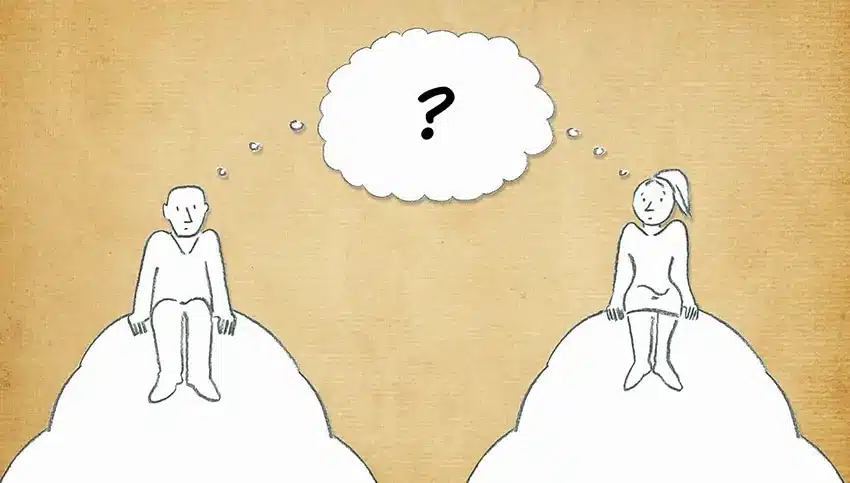
The hormonal cocktail that floods us in the initial phase naturally subsides over time, and life, with its many challenges, increasingly demands our attention again. This is perfectly normal.
Long-term relationships undergo natural changes and go through various phases, which we will briefly examine below:
The infatuation phase
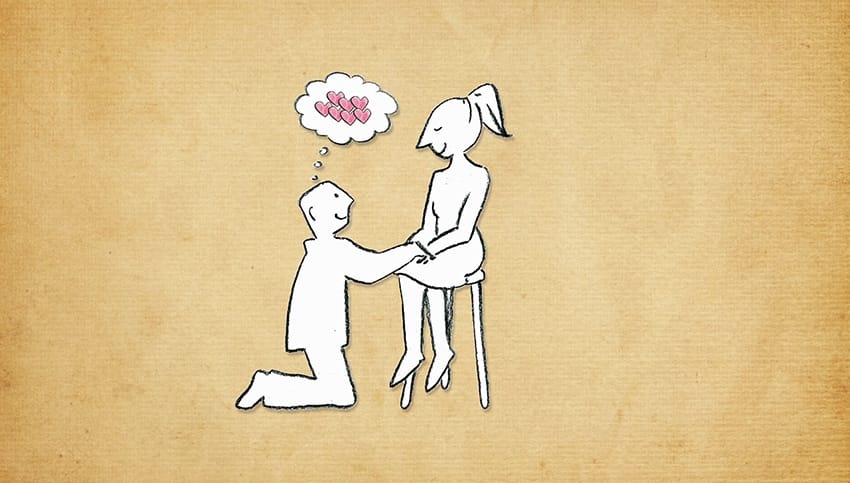
In the first few months (sometimes the first one or two years) of a new relationship, both partners want to spend as much time together as possible every day.
In this initial phase, everything runs smoothly (at least in most cases): feelings for each other are intense, both seek closeness, desire sex, and treat each other tenderly and attentively.
These intense feelings eventually change – and some couples are caught off guard by this. However, this change isn't actually a bad thing; in fact, it's important and normal – it marks the beginning of a phase in which intense infatuation can gradually transform into deep love.
It's also possible to fall in love despite being in a relationship. This article explains how this can happen and how best to deal with this feeling.
The intimacy phase
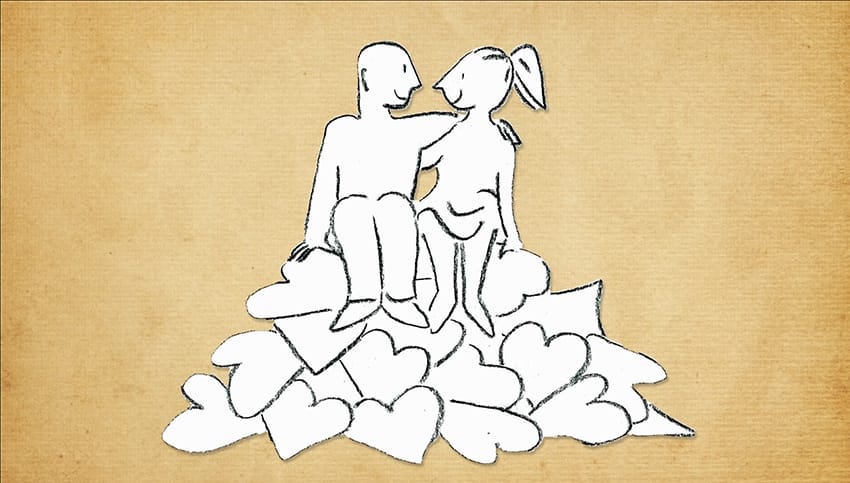
Ideally, the initial infatuation gradually gives way to familiarity and a sense of reliability and predictability, which are essential for a long-term partnership. While this may not be quite as exciting, it is all the more valuable for our inner stability and well-being.
We get to know each other more deeply, overcome challenges as a team, shape our everyday lives together, and gain a companion with whom we want to spend our lives.
So where does the problem lie?
The "Nothing happens by itself anymore" phase
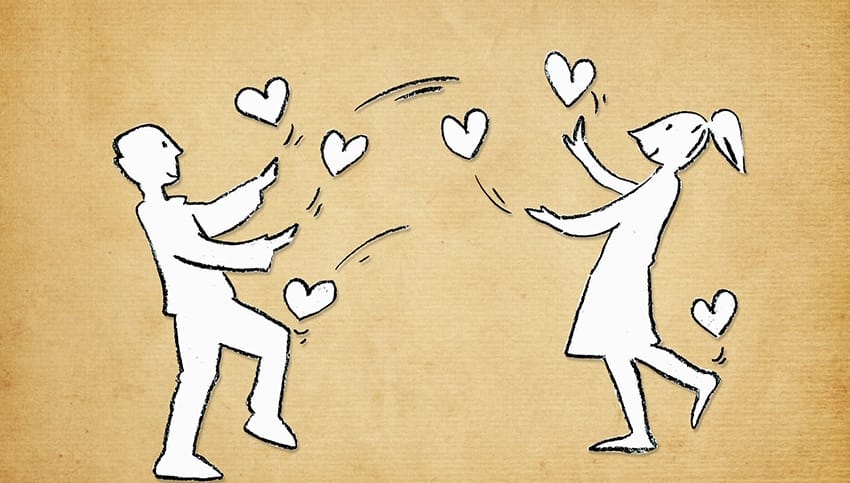
As I said: Whether it's about tenderness, sex, communication or time spent together - in the beginning everything happens quite naturally.
In the daily grind of to-do lists, space must later be actively created for beautiful moments. Consciously making time for togetherness also means:
- Putting other things aside
- Be careful what priorities we set.
- Regularly and consciously saying NO when the commitment we put into, for example, our job or our hobby leaves no time for our relationship.
Because, as already described: The hormones that put us in a veritable state of euphoria at the beginning of a new love inevitably decrease.
Other things in our lives regain importance; we no longer mindlessly throw away our duties or other appointments to jump into bed with our partner right now.
And, quite honestly, that's a good thing. Otherwise, we'd hardly be able to manage our daily lives successfully in the long run. However, it also means that the relationship is no longer a given and that we have to consciously keep the "we" in mind.
Does a relationship require hard work? - No! But it does require attention. And time.
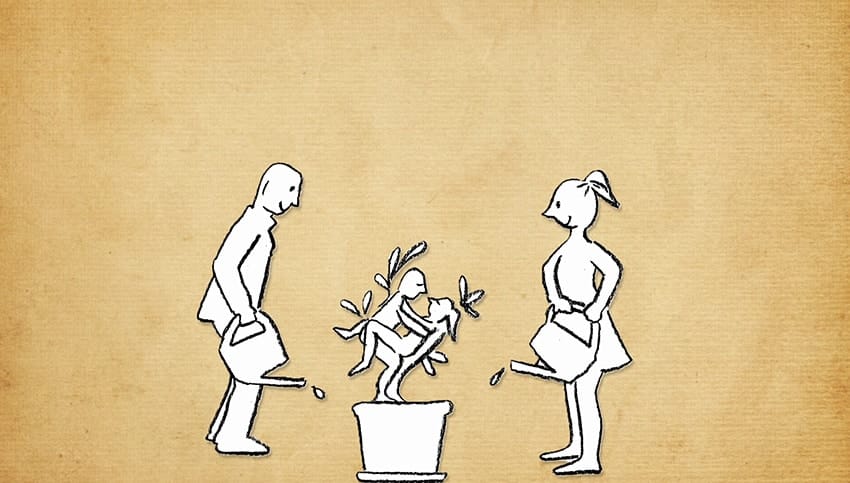
Fortunately, no strenuous, unpleasant work is required to maintain a happy partnership after the initial honeymoon phase. However, active effort is necessary. Relationships need to be nurtured and cared for to remain vibrant and continue to flourish.
Like a plant that withers if it is not watered regularly, love can also fade - and couples then feel that they are less and less connected and growing further and further apart.
How about dates – like in the old days? We've compiled a list of different ideas for a cozy or exciting evening at home. Here you'll find the article with date ideas for home.
Attention in the relationship
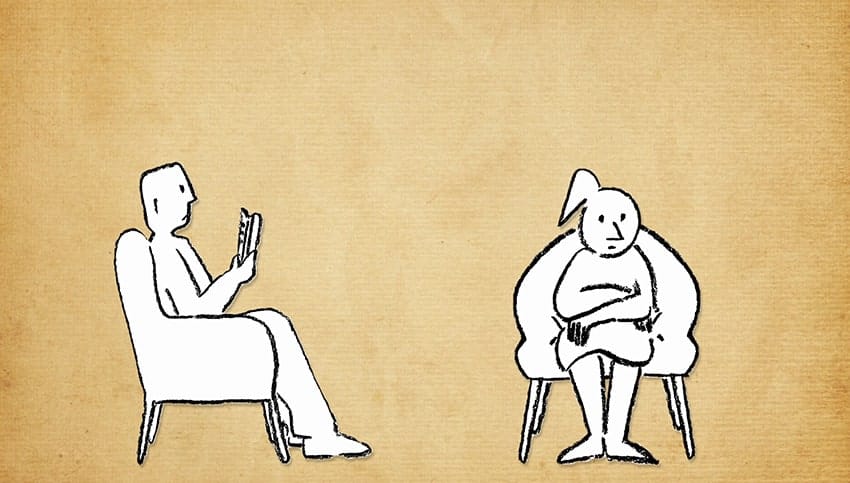
As someone newly in love, we try to fulfill our beloved's wishes and needs even before they've been expressed. It's important to us that the other person is happy and feels like they've 'hit the jackpot' with us – because life by our side is truly wonderful... 😉
However, the exchange of signals of appreciation and care can decrease or even come to a standstill over time – for example, when one of the two withdraws more and more (à la "No criticism is praise enough") and only tells the other when something is not to their liking.
Every time we make an effort to do something good for someone else and bring them joy, we are simultaneously investing in our own happiness. Our sense of community is strengthened, and we automatically prepare ourselves for 'more difficult times'.
No expert in the world knows as well as you what makes your partner feel 'seen' and what they need to relax - so: Stay attentive and kind, or become so again!
Time for the partnership

When togetherness is neglected in everyday life and worries, duties, problems - but also beautiful things like personal interests, hobbies or time for the children - increasingly gain the upper hand, even initially very loving and passionate relationships can falter.
Making conscious time slots for each other is one of the most important conditions for a couple's relationship to remain stable and happy.
If your problem is specifically that you simply don't find enough time for each other – be it due to a demanding job, family obligations (worries about children or parents...) or other challenges – I would like to recommend the articles "Too Little Time in the Relationship " and " Stop the Mental Load" .
Grown apart: These are the consequences

Which came first, the chicken or the egg? The fact is that almost always, when a couple has become estranged, various distressing developments accompany this experience.
We have summarized the most common of these potential problems for you here.
Constant conflict
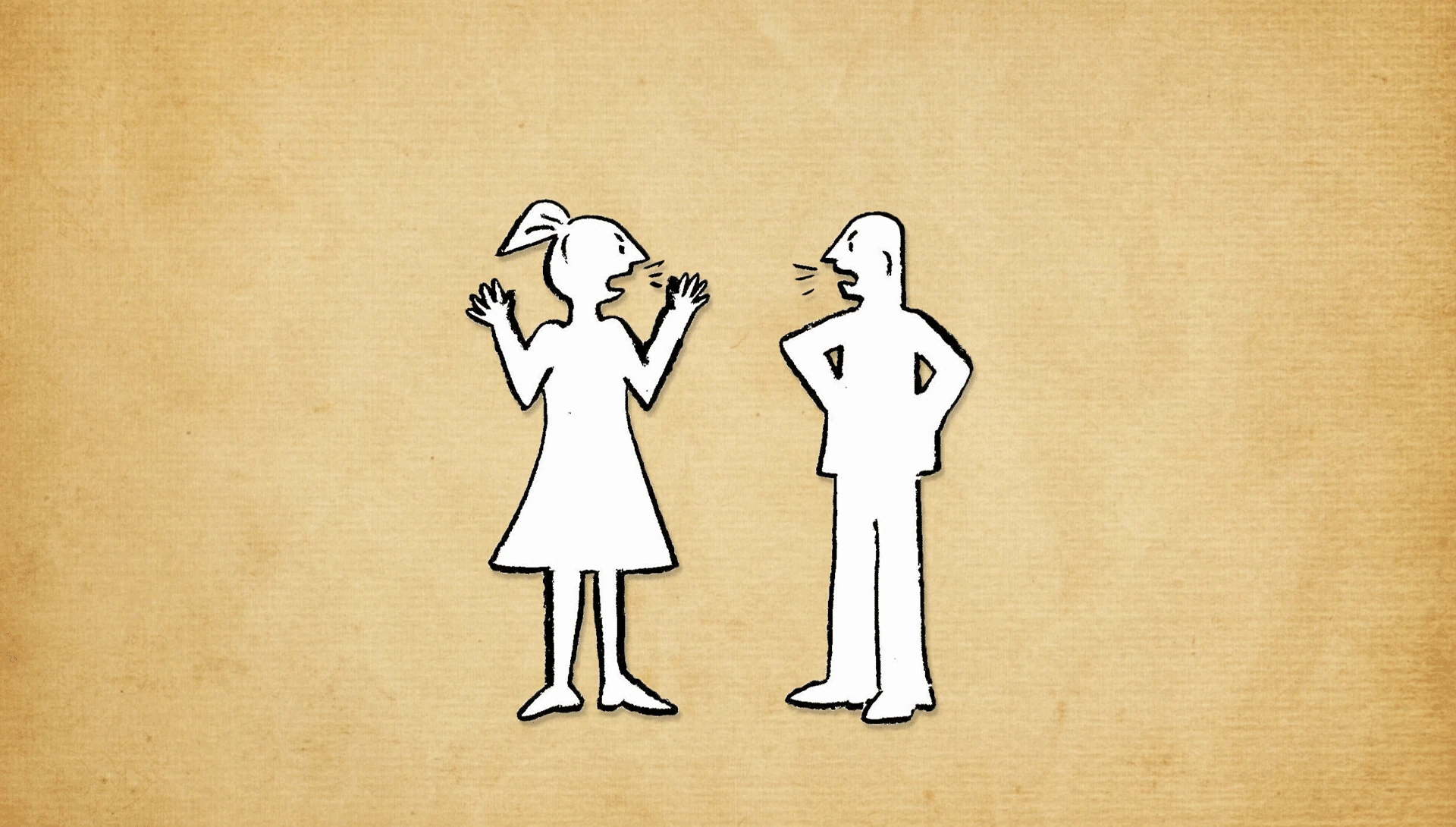
When a couple feels disconnected, conflicts arise more quickly. At least one partner no longer feels sufficiently seen and supported.
Disputes about unmet needs almost always lead to the exact opposite of what is desired – namely, an even greater distance between the parties. A suitable framework for discussion can help facilitate finding a compromise .
To prevent growing further apart, it's important to avoid arguments whenever possible and find more constructive ways to communicate together. You can learn how to do this in our article: "Constant Arguments in Your Relationship? Here's What You Should Know!"
loneliness
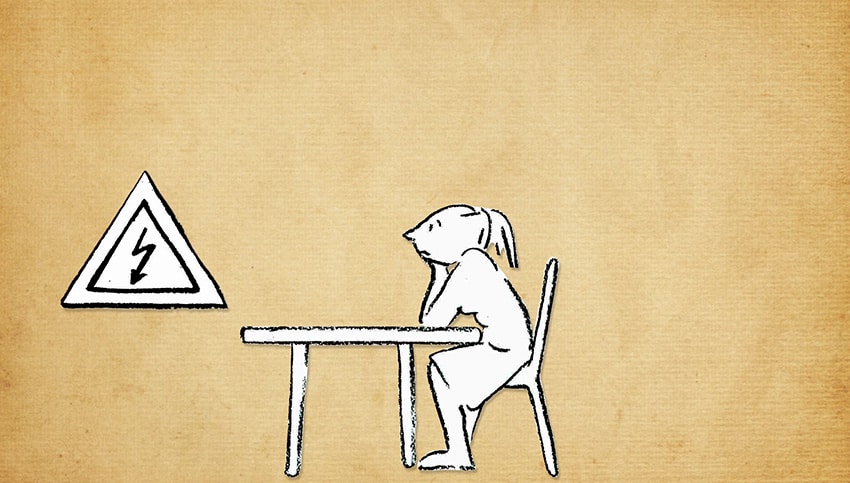
It's obvious: when the distance to your partner grows ever greater, you eventually start to feel lonely. After all, your partner is the person you want to feel the closest to.
The mental and physical consequences of prolonged loneliness are serious. Therefore, if you find yourself at this point, it is crucial to make a determined effort to reconnect and open up to others as soon as possible.
extramarital affair
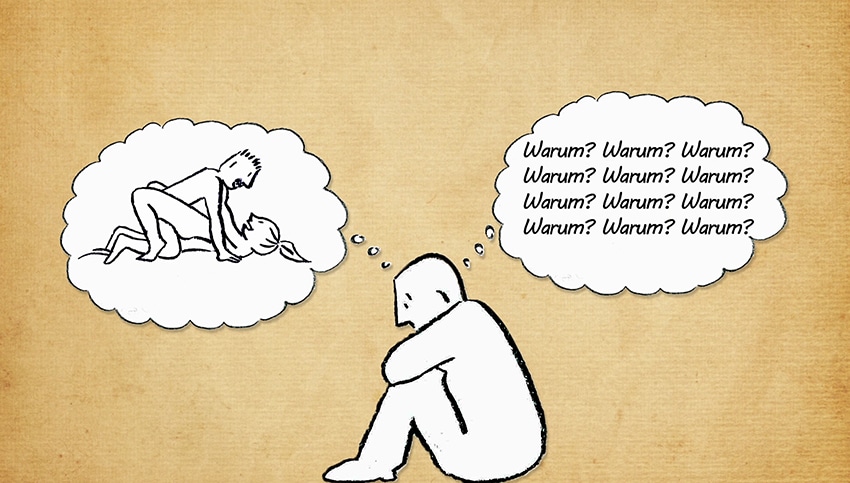
One of the most frequently cited reasons given by cheaters for having an affair is that their sexual or emotional needs had remained unfulfilled for a long time.
Reasons given for why an affair or extramarital relationship occurred include, for example:
- " There was almost nothing going on between us anymore - neither erotic nor emotional."
- "I longed so much to feel desired again."
- "It felt incredibly good that someone was so interested in me."
- "Everyone was just doing their own thing. We had completely grown apart."
Of course, this does not mean that your partner or you yourself will necessarily start an affair because you have grown apart - but the probability of this is significantly increased.
The idea that a new partner could be the solution to all problems is compelling when things aren't going well in the relationship:
- "With a partner who is getting to know you in a new way, you can finally experience passion again."
- "You certainly won't be bored in your everyday life anymore."
- "You can feel desired again, laugh, be yourself."
- "You and your new love interest: You will certainly have deep, endless conversations. You have the urge to get to know each other better and better. You are eager to reinvent yourselves together."
etc.
Attention, attention! This isn't the police speaking – but representatives of the couples therapy profession. And the more couples we've had the privilege of working with over the decades, the more we advocate for this motto:
"It's better to experience something new with your old partner than to experience the same old things with a new partner."
Two further thoughts are important to me at this point:
- Even if you ultimately decide to end your current relationship, we strongly urge you: If you haven't already, avoid having an affair or a fling. Going through an emotional breakup is challenging and stressful enough. The last thing you need during this time is guilt and self-recrimination.
- If the damage is already done and you or your partner have had an affair, it doesn't necessarily mean the end of your relationship. However, your relationship will likely be like an emotional minefield that now needs to be navigated with the utmost care. You can find out how to do this in our article " Forgiving an Affair ".
In our article "Typical behavior after infidelity" you can learn more about how to uncover infidelity in your partner.
Worst case scenario: separation
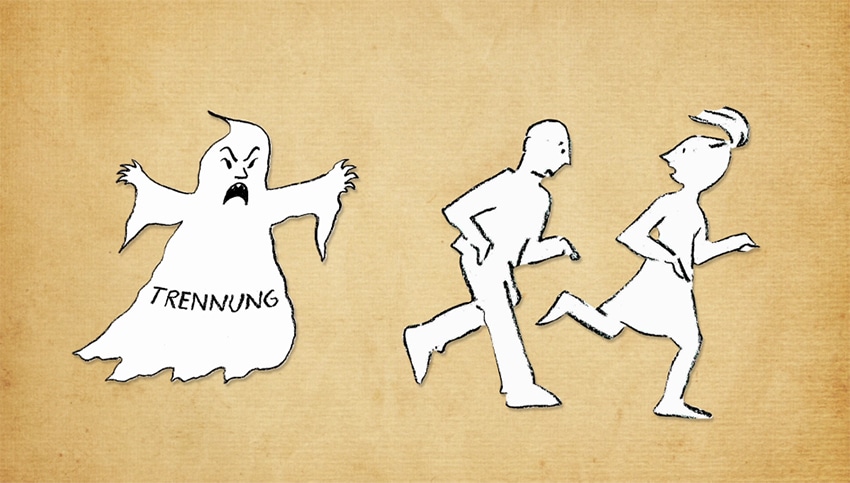
When a couple has completely grown apart, it's often only a matter of time before the word " separation " is mentioned. This state of feeling alone together is almost unbearable for most people in the long run.
Often, out of sheer desperation, one partner signals that they want to separate – hoping that the other might then turn towards them more.
From our experience in couples therapy, we know that separating is an immensely stressful step that comes with serious consequences (especially when children are involved) and therefore needs to be very well considered.
A highly emotional situation (anger, disappointment, sadness, etc.) is a particularly bad time to bring up such a topic. If you are seriously considering separation and want to inform your partner, don't do so when you are acutely upset.
Breakup? - Not before you've given your love another fair chance!
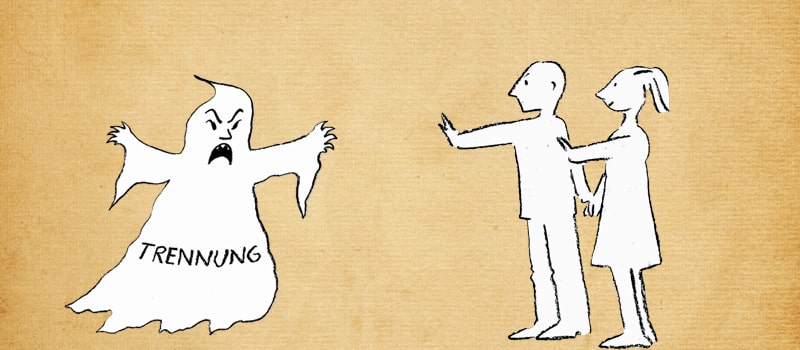
The basic principle is: anyone who hasn't truly tried everything in their power to save the relationship before a breakup will struggle with doubts and self-reproach afterwards.
It is always better to make a serious attempt to put the relationship back on a stable foundation before deciding on a final end to the shared path.
- But how exactly can both partners manage to find their way back to each other – even though they have noticeably grown apart?
- How can hurt feelings be healed and goodwill and love regained?
- What is needed to resolve conflict and suspicion and allow the positive aspects to come to the fore again?
The most important requirement is that both partners still have a genuine interest in continuing the relationship (this is probably the case for you at least - otherwise you wouldn't be reading this article).
It is within your power to make a difference!

Start your self-test now
We wish you all the best for yourself and your relationship!
Yours sincerely, Dr. Judith Gastner & the PaarBalance team
☝🏻 Related articles on the topic of "Drifting apart"
Frequently Asked Questions
Why do couples drift apart?
There are many reasons why people in a relationship can drift apart, such as when communication breaks down, shared interests are lacking, or eroticism and intimacy are lacking. Differing life goals or mutual hurt can also lead to a loss of emotional connection.
How can you tell that you and your partner are growing apart?
Signs of estrangement can include both partners spending less and less time together (or wanting to), a decrease in intimacy, or an increase in misunderstandings over minor matters. Often, there is also a lack of mutual support, understanding, and willingness to meet each other's needs.
What to do when you and your partner are growing apart?
If there's a risk of you drifting apart as a couple, you should take action as soon as possible. Make a conscious effort to set aside time for each other. Talk openly about what's on your mind, what you hope for, and what you wish were different. Do things together that you both used to enjoy and that made you feel good.
How much closeness and distance does a good partnership need?
The need for togetherness and individuality varies from person to person. Therefore, there's no one-size-fits-all solution for couples. Furthermore, personal needs can change. It always requires a collaborative search for the right balance between individual interests and shared experiences, a balance that makes both partners feel comfortable.
How can you revive a dormant relationship?
The most important prerequisite is that both partners want to stay in the relationship. Then it's crucial to find out: When and why did the partnership lose its momentum? What's missing? What's needed? Seek honest communication about each other's needs and desires! Because when we know what's lacking, we can specifically look for solutions.