







"People who love each other and are a good match almost always have similar needs."
Is there any truth to that or not?!
Looking at couples on social media or Getty Images, you might actually think that true relationship happiness means absolute harmony. And that conflicts, going it alone, and compromises are only for second-rate couples who simply can't do any better...
Of course, it's pleasant when two people want the same thing at the same moment.
But anyone who seriously believes that having the same needs (or the same opinion or the same plans...) is a prerequisite for things to feel right with the other person is making life incredibly difficult for themselves.
Disagreements, conflicting expectations, or differing desires exist wherever people meet.
They are therefore completely 'normal' - and of course can be found every day in happy and healthy partnerships.
But what does that mean for everyday life and shared life as a couple?
How do I deal with it when my partner "ticks differently" than I do?
In which areas can I make compromises? Where not?
What prevents a constructive conversation? What are the prerequisites for it?
When are compromises fair and when are they lazy?
We answer these and other questions in this article.

☝🏻 Quick start guide to the topic of "Compromises in relationships"
🚀 Already 65,511 people have gained clarity through the test.
"My partner is once again thinking differently than I do!" - And now what?
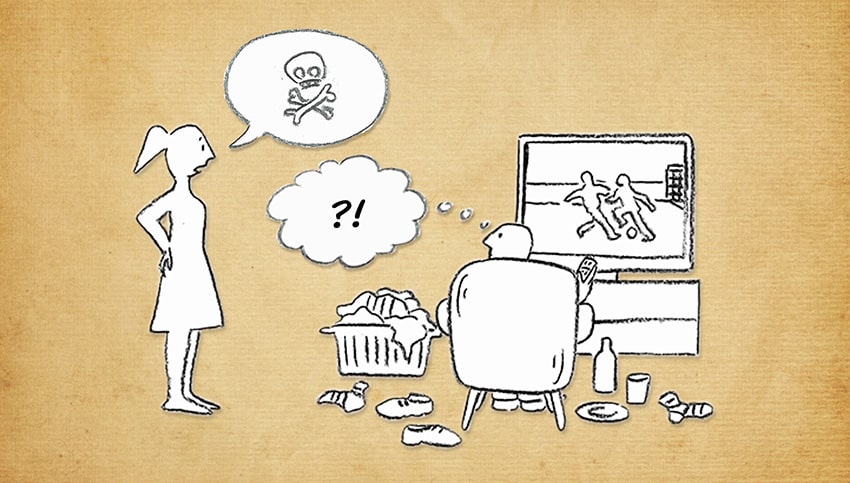
Your partner has (yet again...) different priorities (views, behavior patterns, plans, wishes...) than you do. - That's annoying! Now what?!
First, stay calm and (once again...) become aware of the simple fact:
"The other person is different at this moment because they are different."
Period.
"Everything that goes on inside him, or that he spontaneously does or expresses, is therefore not initially against me , but for him ."
That is to say: His stance currently appears to him to be the most plausible, the most obvious, and fits his current state of mind, his level of information, his current understanding of "good" or "not good", "pleasant" or "unpleasant"...
Therefore, the first step is to...
to accept that you both disagree at this point.
to accept that there is probably no clear "right" or "wrong".
Remember: You are not transparent – therefore, your partner cannot automatically know what motivates you in a specific situation and what your reasons are for wanting or not wanting this or that.
Consider this : What relevance does this current "different way of thinking" have for you?
The next steps that make sense depend on this.
Where am I willing to compromise, and where am I not?
Beziehungen, die als entspannt und liebevoll erlebt werden, haben fast immer eine Gemeinsamkeit: Die Paare machen nicht "aus Mücken Elefanten" und arbeiten sich nicht an unveränderbaren Unterschieden ab. Bevor "ein Fass aufgemacht wird", lohnt sich also ein gedanklicher Kurz-Check.
Um welche Art von Thema handelt es sich gerade? Ist es...
ein eher 'kleines' Thema (z.B. "Frühstücken wir jetzt oder in einer halben Stunde?" "Kümmerst Du Dich morgen um die kaputte Waschmaschine oder ich?" etc.),
ein 'mittelgroßes' Thema (z.B. Fahren wir in den Urlaub oder nicht? Kaufen wir uns ein Auto oder nicht? etc.) oder
ein 'großes' Thema (z.B. Wollen wir Kinder oder nicht? Ziehen wir in eine andere Stadt oder bleiben wir hier? etc.)
Und geht es um ein Thema, für das sich...
A) prinzipiell gemeinsame Lösungen und Kompromisse finden lassen (z.B. Wochenend-Gestaltung, Einrichtung, Ordnung, Zuständigkeiten, Kindererziehung...) oder
B) eher keine Kompromisse finden lassen (z.B. Temperament, Geschmack, Persönlichkeit, Fähigkeiten, Träume...)?
Generell gilt:
Je 'kleiner' das Thema, desto leichter fällt es den meisten Menschen, "dem anderen zuliebe" auf dessen Wünsche einzugehen. Es macht Sinn, sich immer wieder bewusst zu machen: Regelmäßige kleine Zugeständnisse haben große Auswirkungen auf das Wohlbefinden beider Partner.
Schwierig wird es allerdings, wenn einer von beiden Partnern das Gefühl hat, dass es sich um ein konstantes Muster handelt und er bei zahllosen vermeintlichen Kleinigkeiten durchgehend "den Kürzeren gezogen" hat.
Mittelgroße oder große Themen sollten nie "zwischen Tür und Angel" auf den Tisch kommen oder dann, wenn die Stimmung ohnehin bereits angespannt ist. Je 'größer' das Thema, desto ruhiger sollte der Rahmen sein, in dem es angefasst wird.
Möchte ein Partner den anderen gegen dessen Willen oder Möglichkeiten verändern, handelt es sich mit großer Wahrscheinlichkeit um ein Thema aus der Category B, d.h. einem von beiden Partnern geht es um eine Art "Umerziehungsprogramm". Das ist von vornherein zum Scheitern verurteilt - denn niemand möchte sich gegen seinen eigenen Willen verändern lassen.
Wichtig zu wissen:
Ein Großteil der Paare stresst sich, weil immer und immer wieder aufgrund von unveränderlichen Category B-Themen gestritten wird oder beim Start einer wichtigen Diskussion der Gesprächsrahmen nicht stimmt.
Das bedeutet:
Category B issues require acceptance , tolerance , and a relaxed setting – not assertiveness, negotiating skills, or a quick solution.
For Category A issues, both partners should engage in an open, constructive exchange to find a fair, joint solution.
These 5 settings prevent good compromises
The following attitudes are compromise killers and should be banished from your interactions as quickly as possible:
"This is about principle!"
Anyone who, in a "moment of clarity," realizes before or during a conversation that they are driven by "principle" or "being right" should immediately end the debate. A rigid, principled stance will never lead to a solution that feels right for both parties."A good compromise always lies in the middle."
That might sound sensible – but it isn't. Not every compromise can necessarily be "in the middle"; above all, it must suit both partners in the given situation ."Last time you got your way, this time it's my turn."
Far more important than a precise tally of who got their way when is the subjective experience of both partners that they were heard and understood. Anyone who feels that their partner doesn't care about their feelings will remain dissatisfied, even if they were able to be "in charge" at times."Once we've made a decision, it stays that way!"
The more rigid and inflexible the stance during or after a compromise-finding process, the less development and learning will occur. Compromises should never be set in stone, but rather constantly reviewed for their continued relevance."My friends (your parents, the children, our neighbors...) also think I'm right!"
A lack of discretion and the inclusion of supposed supporters in one's "being right" automatically pushes the partner into a defensive posture and leads to reactions of defiance, shame, or annoyance. The partner will either avoid future disagreements or approach them with irritation and on high alert—neither of which are conducive to finding sustainable solutions together.
These 6 strategies will help you achieve the best compromises
If you heed the following 6 aspects, you and your partner will become a power team and can strengthen your love and connection to each other.
Polish your attitude.
Remind yourself – as often as possible – that your relationship already has a common denominator:They both like each other.
They both want to have a good time together.
They both want to be happy.
Neither of them brought the other into their lives to finally have someone they could bully, ignore, and hurt at will.Discern wisely:
Is a compromise even necessary at this point? Can there truly be an agreement here? If the honest (or realistic) answer is "No!", then save your energy for other challenges where a "roll-up-your-sleeves" approach actually makes sense. Right now, what's perhaps far more urgently needed is an extra dose of acceptance, tolerance, and composure...Create a relaxed atmosphere
for conversation . The more important the occasion, the calmer and more pleasant the atmosphere should be. Just arrived home stressed? Have other appointments coming up? Nosy onlookers nearby? Music too loud? Hungry, thirsty, tired? None of these are ideal conditions for an open and constructive conversation about important matters.Use smart communication techniques.
During a conversation, each participant must take on both roles: that of speaker and that of listener. Only in a constructive exchange, where both parties can openly express their wishes and needs, can solutions be expected that satisfy both partners.
Speaker role:Ask the other person to "lend you their ear" for a few minutes and simply listen.
Use "I-messages" to tell him your most important current wish (need, thought, consideration...).
Be as open as possible.
Remain respectful and calm.
Listener role:
Listen attentively and with your body facing you.
Signal your interest in understanding your partner's perspective.
In the meantime, briefly summarize what you have heard and make sure you have understood everything correctly.
Please ask politely if anything is unclear.
Compromises are only possible if both sides are willing to engage with their partner, explain their own point of view, and then allow the other to question it.
Be creative!
When seeking compromises, don't be afraid to get creative and give even seemingly "crazy" ideas a chance. Unusual thought experiments, in particular, are enriching and can open up new perspectives.Stay flexible.
Once a compromise has been reached, it's a good idea to re-evaluate it after some time. Review together whether it works for you and whether you're both satisfied with it. Don't be afraid to openly discuss if the initial solution wasn't practical for your daily life. Take the opportunity to make improvements together until you find a solution that is satisfactory in the long term.
When are compromises in a relationship fair, and when are they lazy?
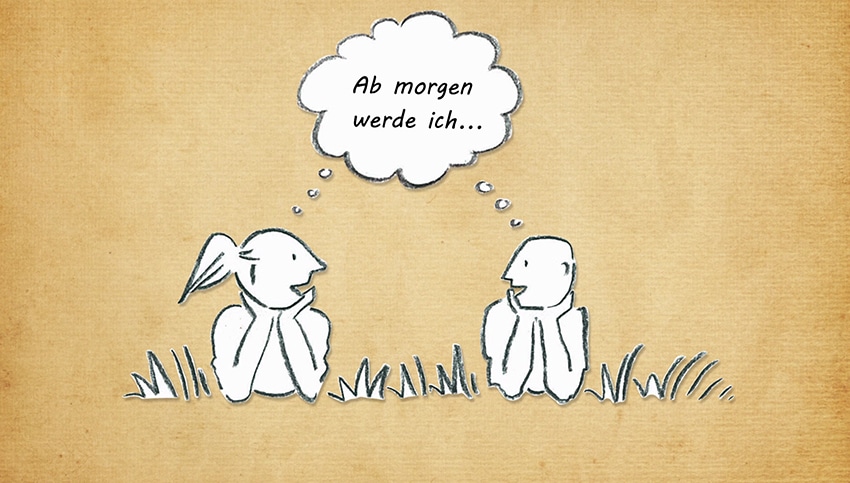
Of course, it would be wonderful to find "the perfect solution" for both partners in every conflict . In reality, however, this is not possible, for example, when one partner wants children while the other wants to remain childless.
If the underlying need is essential for both partners, there is no middle ground.
No matter what the decision was, one person would most likely suffer permanently.
Over time, this will not only lead to decreased personal well-being but also put a massive strain on the relationship. If one partner regrets not having pursued a major life dream in the long run, this will eventually be held against the other – and will most likely be thrown back at them harshly during an argument.
This can ultimately lead to the entire relationship being called into question. If two people have diametrically opposed attitudes towards central areas of life or relevant values, which simply cannot be reconciled, separation may be the most sensible course of action – even if both people are very emotionally close.
However, this path should not be taken hastily before all avenues for potential compromise have been exhausted. If you and your partner are at an impasse regarding a conflict issue, with no way forward or backward, couples counseling or marriage counseling with a qualified therapist is recommended before making any far-reaching decisions.
If a compromise is not possible even with his support, he can accompany a separation and help to achieve a low-conflict resolution of the relationship, in which the friendly bond is ideally preserved.
The most explosive areas of conflict where good compromises are needed
Those who understand their strengths and weaknesses in relationship building can deliberately create a positive atmosphere and avoid misunderstandings and arguments.
Take the test! (10 min., scientifically based)
The PaarBalance relationship test provides you with well-founded answers to the following questions:
How do I experience my relationship?
How do I shape my relationship?
What degree of similarity and difference exists between us?
Take your relationship test now! (free)
How is your relationship?
What are your strengths and weaknesses?
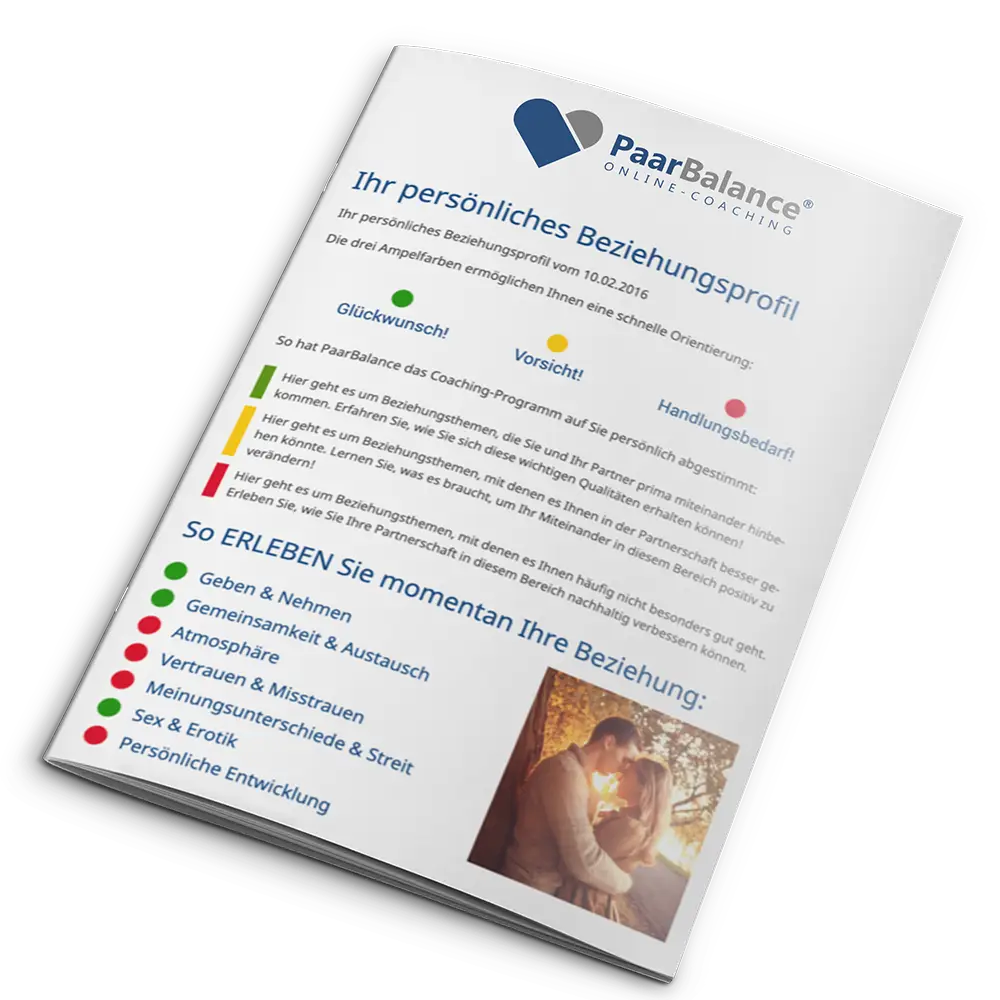
You will find out immediately afterwards in your personal PaarBalance relationship profile (free).
Start your relationship test now!
✓ Scientifically sound
✓ Includes detailed analysis
✓ Your data will not be shared
✓ 100% free & non-binding
100% secure. We comply with data protection regulations. Registration for the relationship test is free .
Please read this important information beforehand:
Data Protection ᐧ Terms and Conditions ᐧ General Information Agreement Terms and Conditions . Transparency Statement
Immediately after completing the questionnaire, you will receive your personal relationship profile with your individual strengths and weaknesses overview. This is essential for a constructive compromise-finding process.
Summary
To achieve good compromises, the following aspects are important:
Ensure a stress-free setting for the conversation.
Communicate your point of view calmly and respectfully.
Listen attentively to your partner's wishes.
Signal your understanding of their perspective.
Prevent arguments (postpone the conversation if necessary).
Clarify whether the goal is to find a compromise or to accept the differences.
Consider where you cannot or do not want to compromise.
Avoid classic conversation killers (e.g., "It's a matter of principle!").
Use proven speaker and listener skills (e.g., I-messages, summarizing).
Related articles on the topic of "Compromises in relationships"