





☝🏻 Quick start: Unhappy in your relationship: Reasons, tips & self-test
Do you no longer feel truly connected to your partner? Have you even become genuinely unhappy in your relationship lately? And yet, it all started so beautifully...
"At first, we were constantly on cloud nine. We couldn't keep our hands off each other. I was sooooo in love. For me, it could have gone on like that forever. But then..."
As couple therapists, we have heard countless relationship stories – about the very special beginnings of love relationships and about the changes over the years.
About the rose-tinted glasses that have slowly lost their color... About the intense sexual attraction that has diminished over time or even died away completely... About the flood of love messages that have now given way to terse shopping orders...
In this article, we will discuss the most common reasons for negative developments in relationships and summarize what can be done from a couples therapy perspective to feel happier and more secure in your partnership.
🚀 Already 65,511 people have gained clarity through the test.
Relationships change
The fact that a relationship is not static and changes over time is a good thing – and perfectly normal. Every couple experiences such changes in their own way. The partnership evolves.
Where at the beginning there were many exciting "first times" (first touching, first kiss, first intimacy, first weekend together, first meeting each other's friends, etc.), couples gradually experience countless second, third and fourth times - and thus increasing familiarity and predictability.
How and when the initial butterflies and fixation on the other person change varies. For some couples, these signs of new love last for several weeks or months, perhaps even a year. For others, they disappear after a short time.
But does this necessarily mean – sooner or later – that the relationship will automatically switch from "happy as a couple" to "unhappy in a relationship"? As already mentioned, changes in the dynamic between partners are not necessarily a bad sign. Change doesn't automatically mean the relationship is heading in a negative direction. It can also be a sign that the partnership is becoming more stable, reliable, and intimate. A casual infatuation is evolving into a serious, long-term relationship.
However, for some couples, this expected change can be accompanied by a deterioration in the perceived quality of the relationship and lead to both becoming increasingly dissatisfied.
Which changes are positive? Which are not?
Actually, the answer is quite simple: If you are mostly relaxed and content – regardless of what other people think about what a 'happy relationship' should look like – then the changes are good.
If you no longer experience the atmosphere in your partnership as pleasant and respectful, and are dissatisfied with various developments, then action is needed.
Imagine a good friend is visiting you and confides in you that he is currently unsure how to assess the changes in his relationship.
You would probably ask him questions along these lines:
- "What do you feel when you think about your wife (or husband)?"
- "Do you still enjoy living together overall?"
- "Can you spontaneously say what you like about your partner?"
- "Do you still do nice things together, or has that diminished?"
- "Do you still have any common interests? Which ones?"
- "Do you feel you can rely on each other?"
- "Are there any signs that she (or he) doesn't like you as much as before?"
- "When you're together: Do you feel comfortable overall?"
- "Do you have any rituals that you both enjoy?"
- "Have you ever caught yourself thinking: ' Everything would definitely be much easier with someone else... '?"
- "Have you or have you both ever seriously considered a separation?"
- "Can you imagine a life without the other person - with all the consequences?"
Now, take your time to answer these questions for yourself. Find out if your relationship has truly changed for the worse – or if it's perhaps just your own (possibly unrealistic) expectations of what a (long-term) relationship should be like .
The most common reasons for an unhappy relationship
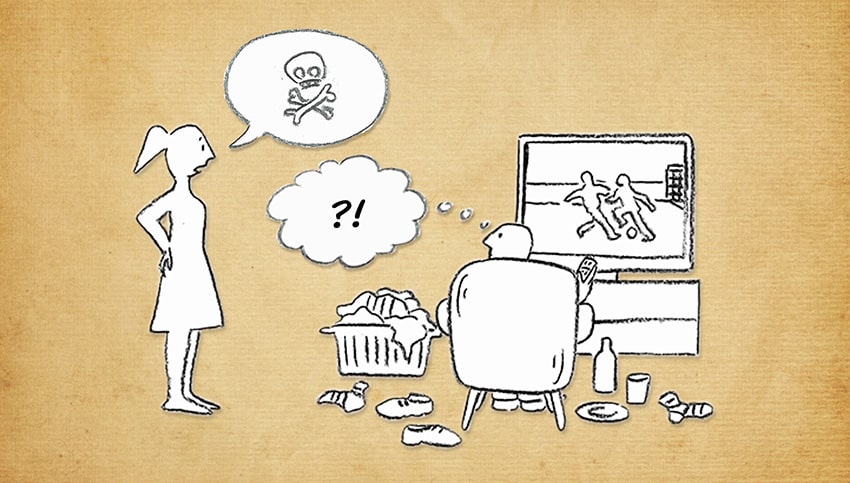
There are many reasons why formerly happy relationships can take a turn that is perceived as bad, or why one's own assessments can change over time.
We have compiled the most common causes for you below. Each section contains links to further articles that may help you to examine your specific situation in more detail.
Love that has faded: What to do when feelings dwindle?
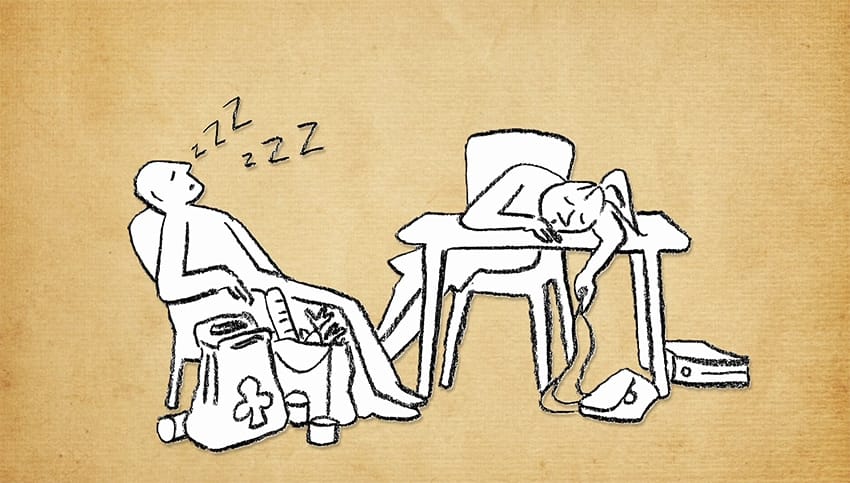
Where once there were butterflies in our stomach, we now feel: nothing.
Where once passionate moans could be heard, at best one hears: snoring.
What is it now: mere habit? Or another form of love? The feeling that the relationship has somehow become stagnant isn't particularly pleasant. It's primarily the memory of better times that makes us dissatisfied and unhappy – after all, we still remember quite clearly how wonderful things used to be.
And then, more and more often, that nagging voice in the back of your mind starts to speak up:
- "How much sense does it even make to try to save an unhappy and boring relationship?"
- "Aren't recurring doubts a clear sign that one should end a relationship that's on the rocks?"
- "Wouldn't a clear separation be the most consistent step?"
- "And to be quite honest: Do you really still care that much about him/her? And does your partner care about you?"
If such thoughts sound familiar, we have good news for you:
In the vast majority of cases, it is indeed possible to "revive" a stagnant relationship so that the partners feel truly happy together again. You can find out how this can be achieved in the article: "Help! My relationship has gone stale."
Constant arguments in a relationship: 5 strategies for de-escalation

Perhaps the exact opposite is true for you: your relationship has not "fallen asleep", but is the cause of constant stress in your life - because you two are constantly arguing.
Your relationship is littered with landmines, just waiting for one of you to step on the next. You and/or your partner suspect disrespect or personal attacks everywhere – and your daily life together is characterized by mistrust and arguments.
Breaking such a vicious cycle requires a good strategy. You can find out what this might look like in the article "Constant Arguments in Your Relationship? Here's What You Should Know!"
jealousy
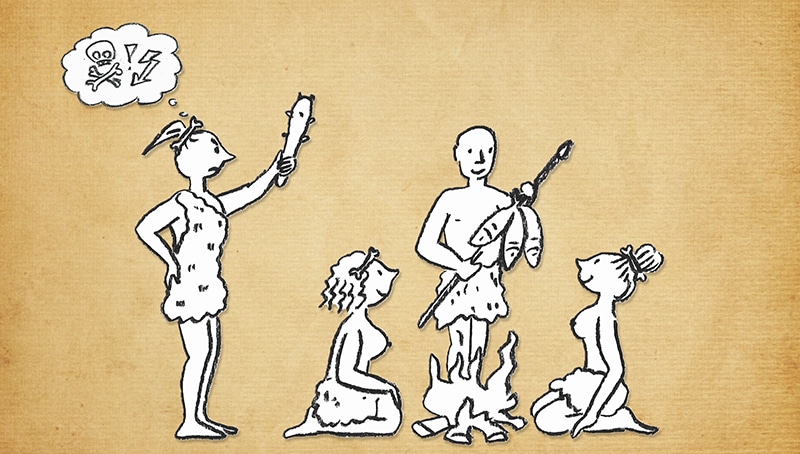
Jealousy is perfectly natural, but if excessive, it can severely strain a relationship and ultimately even lead to couples separating.
Perhaps you are unhappy because your partner constantly tries to control you. You feel burdened by what you perceive as unnecessary jealousy dramas.
Perhaps you yourself are the one suffering from intense jealousy and are therefore unhappy. Those who frequently live in fear of being cheated on by their partner usually find it difficult to allow true intimacy and experience deep happiness. Because the more feelings we allow ourselves to feel, the more vulnerable we become.
The prevailing credo is: "Love is a child of freedom." - Anyone who feels constantly controlled and restricted by their partner will sooner or later distance themselves.
Anyone who values a happy relationship should take steps to manage excessive jealousy. You can find out how to do this in the article "Combating Jealousy" .
Too little time together
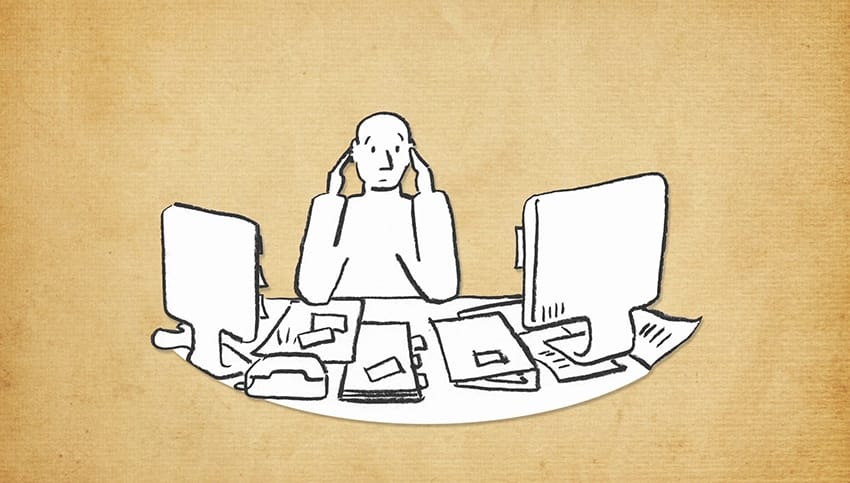
One of the most common reasons why at least one partner becomes unhappy in a relationship is quite simply: too little time for each other.
Perhaps your partner has to work constantly, leaving fewer and fewer opportunities in everyday life to experience beautiful moments as a couple. Or perhaps you feel that there is theoretically enough time alongside work, but the relationship isn't given the necessary priority.
In any case, you probably often feel alone - and are increasingly frustrated and dissatisfied.
In our article " Too little time in the relationship " you will find some suggestions on how to tackle the specific challenge of an unhappy relationship that is due to a lack of time spent together and how to create more space for togetherness.
Emotional dependency

Emotional dependency doesn't automatically and always mean that one or both partners are unhappy in the relationship. As long as everything is going well, the feeling of dependency sometimes only manifests itself in one partner seeking a lot of closeness.
However, problems arise when issues arise in the relationship. If things aren't running smoothly, the dependent partner becomes painfully aware of their dependency patterns. They may then feel that only their partner can help (or even "save") them, and that without the support of the relationship, they would be completely alone and lost.
This insecurity often leads emotionally dependent people to unconsciously behave in ways that restrict their partner or otherwise sabotage the happiness in the relationship. This increases the risk that the other person will one day actually want to end the partnership.
Do you want to know if you have a tendency towards emotional dependency? You can find a (free) test in our article " Recognizing, Resolving & Overcoming Emotional Dependency ".
No more sex

We've already discussed the "stagnant relationship" above. However, since in many cases the problem lies specifically with sex, we'd like to address it in more detail here.
The importance of sex in a relationship varies for each man and woman. Some can be perfectly content in a completely sexless marriage , while others are so unhappy that they consider separation after only a short time.
It's important to address this issue, because fighting against your most fundamental needs is rarely a winnable battle in the long run. In the article " No More Sex in Your Marriage, " we delve deeper into this topic. If you'd like, you can take a short self-test there to assess the state of sexuality in your relationship.
Mental Load

Having to juggle children, household, work, leisure and family simultaneously can be quite a complicated mix for a relationship.
Having to jointly manage the countless small and large problems and logistical challenges of complex professional and family life can lead to conflicts - especially if one of them feels that the tasks are not fairly distributed.
What can be helpful in making life together harmonious and fair is explained in our article " No More Mental Load! How to Achieve a Fair Division of Labor in a Partnership."
Affair or extramarital affair
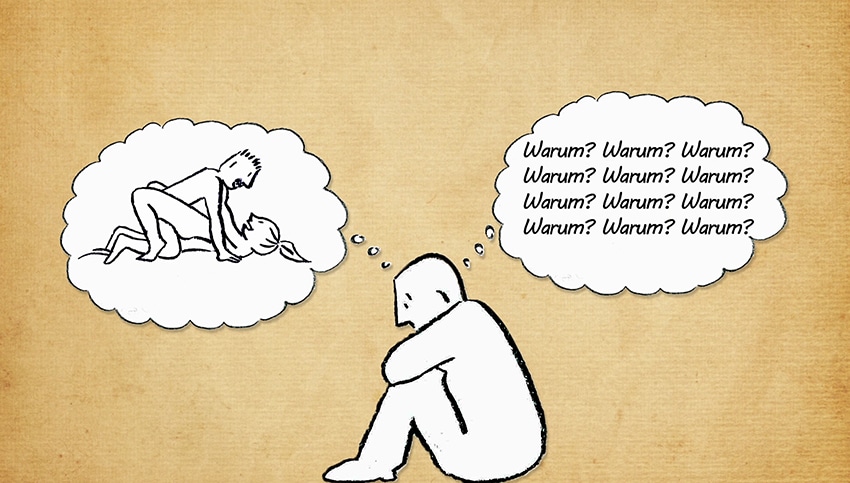
Few events put more strain on a relationship than an affair. Extramarital affairs are among the most common reasons for separation and plunge at least the betrayed partner, but often also the cheater and any third party, into deep unhappiness.
We have dedicated one of our most detailed blog articles, " Forgiving an Affair, " to this complex and difficult topic, as well as creating a kind of "first aid SOS audio program," which you can find here: " Taboo Topic: Affair ."
Do you feel that you or your partner have fallen in love again despite being in a relationship? Then our blog article "In Love Despite Being in a Relationship" is just right for you.
'Toxic relationship'

- "Your partner is always only concerned with their own advantage!"
- "How your partner treats you, or what things you allow them to do to you – that's totally toxic!"
- "Your partner is absolutely not good for you!"
Perhaps you've heard such statements before. And perhaps you're worried that the people around you are right and that your relationship may indeed have become toxic.
The term "toxic relationship" is used excessively in popular psychology these days – but it's worthwhile for everyone to examine more closely what "toxic" can mean in the context of "relationship dynamics"... How do we recognize if we're caught in a harmful entanglement? How can we protect ourselves? And how can we free ourselves from it, if necessary?
We answer these and other questions in the article " Toxic Relationship - How to recognize it and what to do? "
How happy or unhappy is your relationship?
Relationship problems are often very difficult for us to solve because strong emotions prevent us from clearly recognizing the underlying challenges and helpful solutions. We would like to support you in this.
The free relationship test
Based on all scientific criteria, we have developed a meaningful relationship test that allows you to closely examine the most important aspects of your partnership. You answer questions about your experiences and behavior in the relationship on a point scale. This takes about 10 minutes.
Immediately afterwards you will receive a detailed analysis of your current partnership situation in the form of a 'relationship profile'.
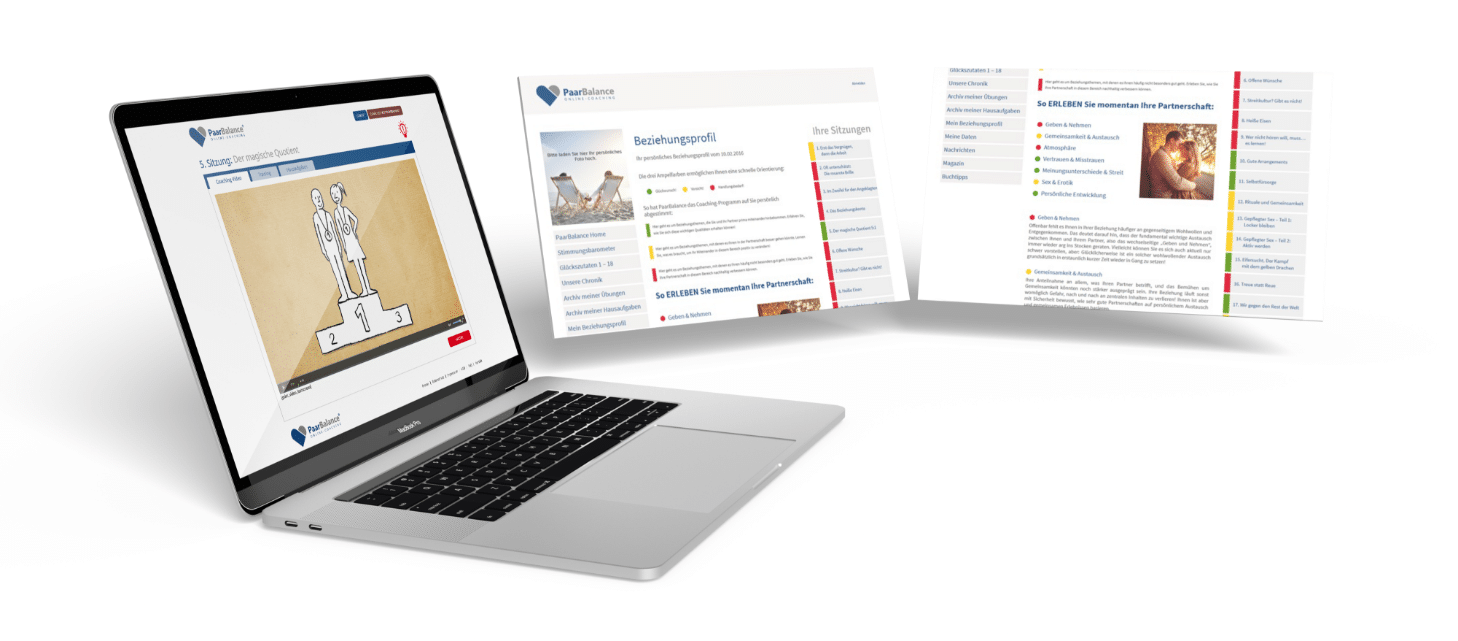
Using traffic light colors, you can see exactly where the strengths and weaknesses of your partnership currently lie. This makes the reasons why you are currently unhappy in the relationship transparent and shows you what you can do in which areas to feel better as quickly as possible.
Take your relationship test now! (free)
How is your relationship?
What are your strengths and weaknesses?
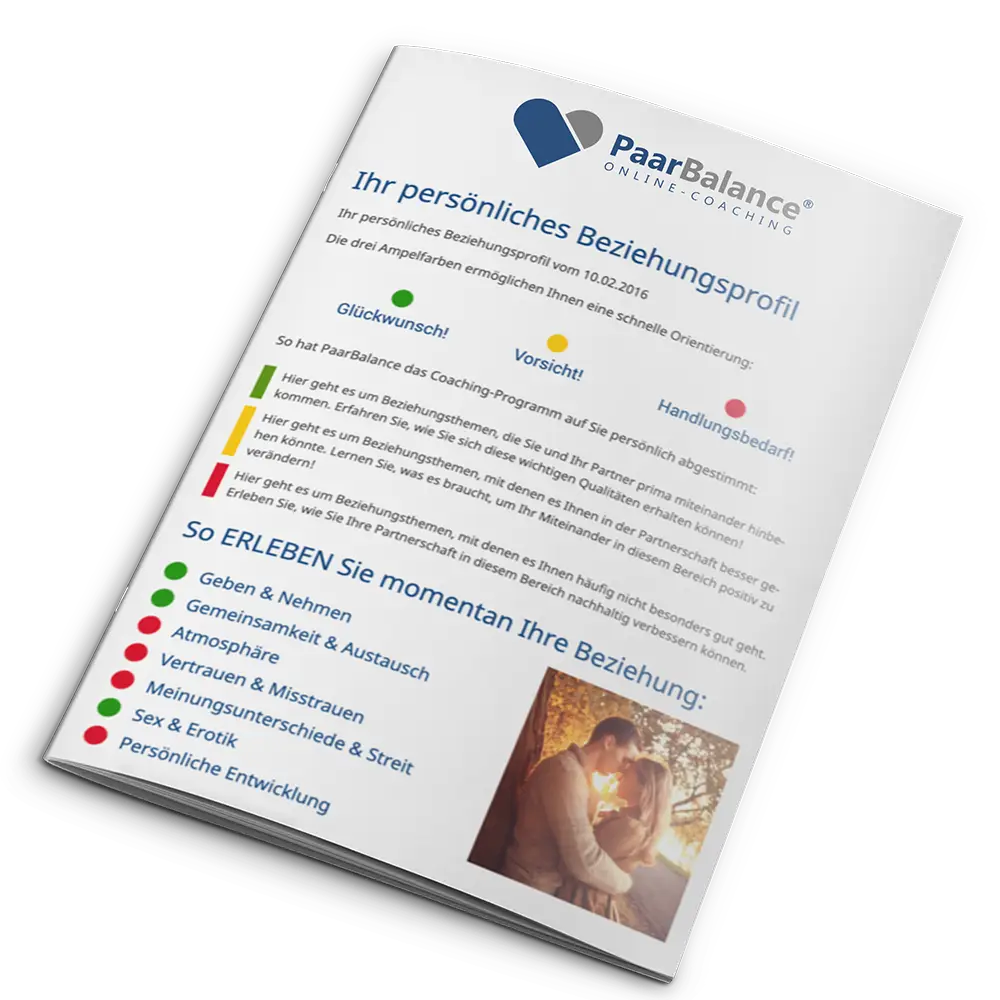
You will find out immediately afterwards in your personal PaarBalance relationship profile (free).
Start your relationship test now!
✓ Scientifically sound
✓ Includes detailed analysis
✓ Your data will not be shared
✓ 100% free & non-binding
100% secure. We comply with data protection regulations. Registration for the relationship test is free .
Please read this important information beforehand:
Data Protection ᐧ Terms and Conditions ᐧ General Information Agreement Terms and Conditions . Transparency Statement
Unhappy in a relationship: What to do?
What you should do specifically to improve your relationship depends primarily on the cause of your dissatisfaction. If you suspect that your dissatisfaction is related to one of the possible causes mentioned above, you will find further advice in the linked articles.
Below, we would like to give you some additional general suggestions that can help in many ways to improve an unhappy relationship.
First ' pleasure ', then ' work '
From a young age, we were taught that we should fulfill our obligations before indulging in pleasure. This advice may be helpful in many situations in life – but it isn't when it comes to doing something good for your loved one (and thus 'working' on your relationship).
The reason for this is obvious: It is much easier to successfully tackle smaller and larger challenges together when you feel happy and connected to each other, rather than when both have previously been distrustful and with 'uncharged batteries' constantly circling the same problems.
The worst thing you can do during a period of distance or conflict is to keep bringing up new problems.
Instead, try to put all the negativity aside for a while and – at least for brief moments – create or allow yourself to experience a situation where you are truly happy and carefree again. Afterward, even difficult topics will be much easier to discuss. And that brings us to the next tip...
How to solve communication problems in a relationship: Here's how
It might sound a bit cliché, but good communication is truly the be-all and end-all in interpersonal relationships. The fact that you're still together is the clearest indication that neither you nor your partner have wanted to give up on the relationship so far. This already provides the most important prerequisite for constructively working on your relationship and doing something positive for your "us."
From now on, be very careful not to hurt your partner through poor or careless communication. Even simply stating that you are currently unhappy in the relationship can be upsetting. Communicate as sensitively and kindly as possible.
No accusations
During your discussions, be sure to remain respectful. Avoid accusations as much as possible. Accusations automatically put the other person on the defensive or provoke a counterattack, causing even the best arguments to bounce off. The goal is not to win the argument, but to find a solution together that makes you both happy again.
Aggression breeds aggression.
For example, if you hurl a "You never have time for me! You don't appreciate me at all!" at your partner, the response will likely go in a direction that doesn't do you any good and doesn't bring you closer together, such as: "You're so ungrateful! I work myself to the bone here day after day to provide for our future!"
If you choose a phrase like this instead: "I admire how much you work. But to be perfectly honest, I really miss you right now. What do you think: Could we somehow manage to spend more time together in our daily lives without making you feel even more stressed? Is there anything I can do to support you?"... - then your partner's answer will probably be quite different.
The problem is the same; in one case, the outcome will likely lead to an argument or a frustrated feeling of being unseen, while in the other – in the best case – it will lead to a constructive joint search for a solution.
Reflecting on beautiful moments
If you are currently finding it difficult to restore harmony and happiness to your relationship, it may help to heed the following small piece of advice:
Take some time to relive shared memories.
Even if your relationship is currently going through a rather unhappy phase, there have certainly been many positive moments you've shared in your lives.
Remember the last time you were happy, cheerful, supportive, or carefree together. Relive that moment and the feeling associated with it.
Our brains aren't particularly good at distinguishing between vivid imagination and reality. If you can manage to be "happy in the relationship" again in your thoughts and memories, it's only a matter of time before you gradually find yourself feeling better in the here and now as well.
The power of curiosity
If you're still not quite sure how best to convince your partner to participate in such a reminder campaign, here's a little tip:
Make him curious. For example, you could say something like: "Do you have a moment soon? I'd like to share some things from my treasure trove of memories that I'm sure you'll enjoy. You find a cozy place and a quiet moment – then I'll tell you about them."
We humans are curious creatures. Hardly any of us will be able to resist hearing what you have to say. 😉
Take action!
If you're currently caught in an unhappy relationship filled with frustration and dissatisfaction, the most important thing by far is to take action. At the beginning of a relationship, happiness, love, and passion seem to come easily—but over time, we have to consciously work to keep those wonderful feelings alive.
You know best what makes you and your partner happy. Talk to each other about it again and make a conscious effort to do good things for each other and to see them happy.
Actively create space for togetherness and closeness, instead of completely letting everyday life take over.
Long, happy relationships are among the most beautiful things in life. And like almost everything valuable in life, they require active effort and conscious care.
Unhappy in your relationship? - Become your own relationship expert!
Do something for your happiness! Don't put up with your unhappy relationship any longer! Finally become a happy couple (again)!
What do happy couples do right?
We asked ourselves this very question and ultimately developed the scientifically proven CoupleBalance coaching program with great dedication and passion.
The PaarBalance coaching program was developed by Prof. Dr. Ludwig Schindler, Dr. Judith Gastner & the dedicated PaarBalance team to summarize all the "ingredients for happy relationships" from 50 years of couple therapy and relationship research.
The special feature: It can be carried out by a single partner .
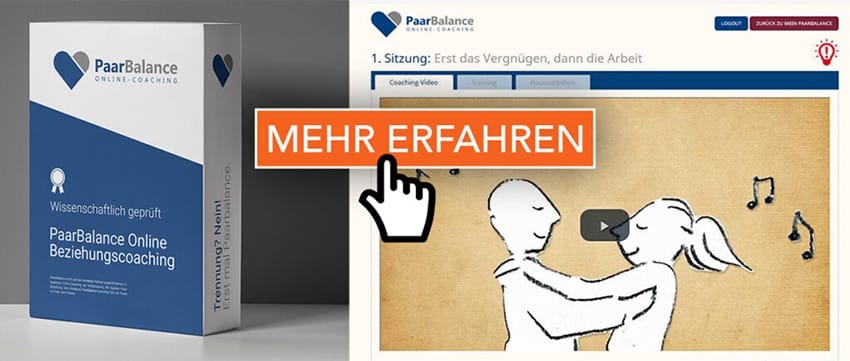
In 18 online sessions, which you can complete entirely on your own and regardless of time and place, you will receive all the relationship knowledge you need to create a partnership characterized by joy, trust and ease.
Before the coaching begins, you can (free of charge) take the PaarBalance relationship test to receive well-founded feedback on the state of your current relationship situation.
Trust your gut feeling: you know best what kind of support suits you.
But whatever it is: Do something good for your relationship! Make sure that today was the last time you followed the buzzword "unhappy relationship"... 😉
We wish you all the best!
Yours sincerely, Dr. Judith Gastner & Prof. Dr. Ludwig Schindler & the PaarBalance team
☝🏻 Related to the topic of being unhappy in a relationship
Frequently Asked Questions
How can I tell if I'm unhappy in my relationship?
Very few people are consistently happy in their relationships. Every relationship has its ups and downs. What matters is which feelings predominate for you: Does your partnership, overall, give you more energy or drain it? Are your core relationship desires and needs largely met – or are there persistent pain points?
What are the most common reasons for dissatisfaction in a relationship?
Unmet needs, insufficient communication, a lack of shared interests, an unsatisfying sex life, or the feeling of not being treated with respect and kindness can lead to frustration and dissatisfaction. What exactly are your personal pain points? Only when you know them can you look for suitable solutions.
How can you successfully communicate your own needs in a relationship?
The most important thing: Create a calm and supportive atmosphere for the conversation. Approach the discussion openly and with a willingness to compromise. Emphasize what you feel comfortable with and what's going well. Stay in the present moment. Use classic "I" statements: avoid accusations; talk about yourself and your own feelings; and formulate specific requests.
How can I improve my relationship?
It depends on what areas you're dissatisfied with. Find out what your and your partner's personal "love languages" are (see Gary Chapman's "The 5 Love Languages"). Do you each speak and understand each other's language? Talk about what would make you feel good. Then the quality of your relationship will improve.
When should you consider a breakup?
If fundamental problems cannot be solved despite sincere and intensive efforts, if life plans and personal goals are no longer compatible, if dissatisfaction or conflict in the relationship becomes overwhelming and one or both partners suffer greatly as a result - then it may be time to think about a separation.
Frequently Asked Questions 2025
There's no set timeframe – what matters is whether both partners are willing to make changes . Every relationship goes through phases of dissatisfaction. However, if the feeling of being stuck persists for weeks or months, you should take action.
Before considering separation, it's worth understanding the underlying causes more closely: Are they due to external pressures, unresolved conflicts, or a lack of intimacy?
Yes, this happens more often than many people think . Love alone is often not enough for lasting happiness. Stress, routine, communication problems, or old hurts can overshadow relationship happiness.
The good news is: when love is present, there is usually a stable foundation.
This is a stressful situation, but you can still make a difference . Change in a relationship often starts with one person. When you consciously begin to shape your behavior, communication, and reactions, it usually has a positive effect on the dynamic.
In the online program CoupleBalance, you can start independently of your partner and learn how to de-escalate conflicts, foster intimacy, and strengthen self-care . This often leads to your partner later becoming more open to taking steps together.
Yes – many unhappy relationships can be sustainably improved if both partners (or at least one) are willing to take responsibility. The crucial thing is to recognize old patterns and find new ways of interacting.