







☝🏻 Quick start: Should I break up?
Ending a relationship should be carefully considered and never done on impulse – because a separation (or divorce) is one of the most painful life events.
The longer couples are together, the more intertwined their respective biographies become, and the more intertwined their shared daily lives are. A separation (or divorce) therefore almost always involves profound and far-reaching changes.
After the end of a relationship, it often takes years for the separated people to truly 'digest' the separation and consciously find their footing again in their 'new' lives.
And yet: Staying together solely out of habit and fear of uncertainty – even though there are no more loving feelings, even though neither is happy anymore, even though there hasn't been a deep conversation in ages, even though almost nothing but problems are discussed and everyday stress is taking over – understandably, that no longer feels right.
So what do you do when the initially quiet question “Should I separate?” gradually becomes louder and louder, stubbornly burrows into your thoughts and no longer lets you find peace?
In this article, our partnership experts address all the important aspects surrounding the topic: Stay or Go?
Take your relationship test now! (free)
How is your relationship?
What are your strengths and weaknesses?
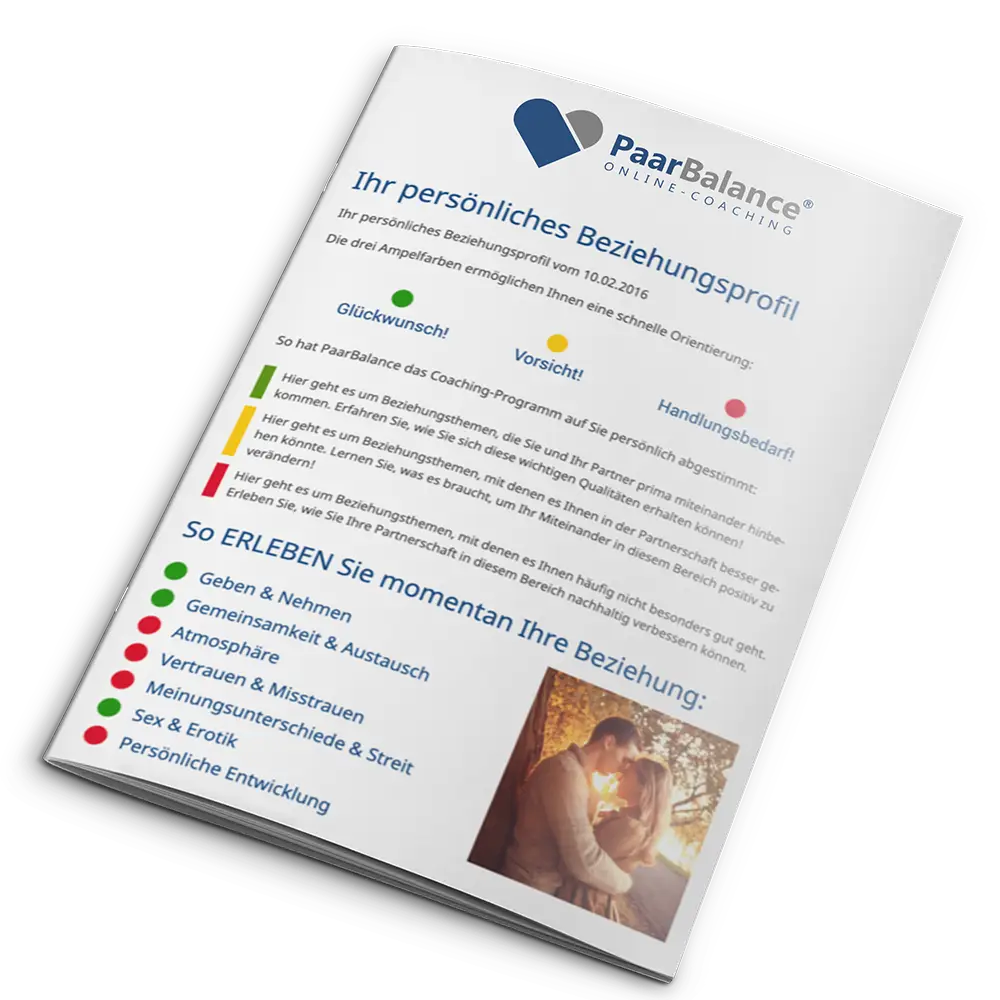
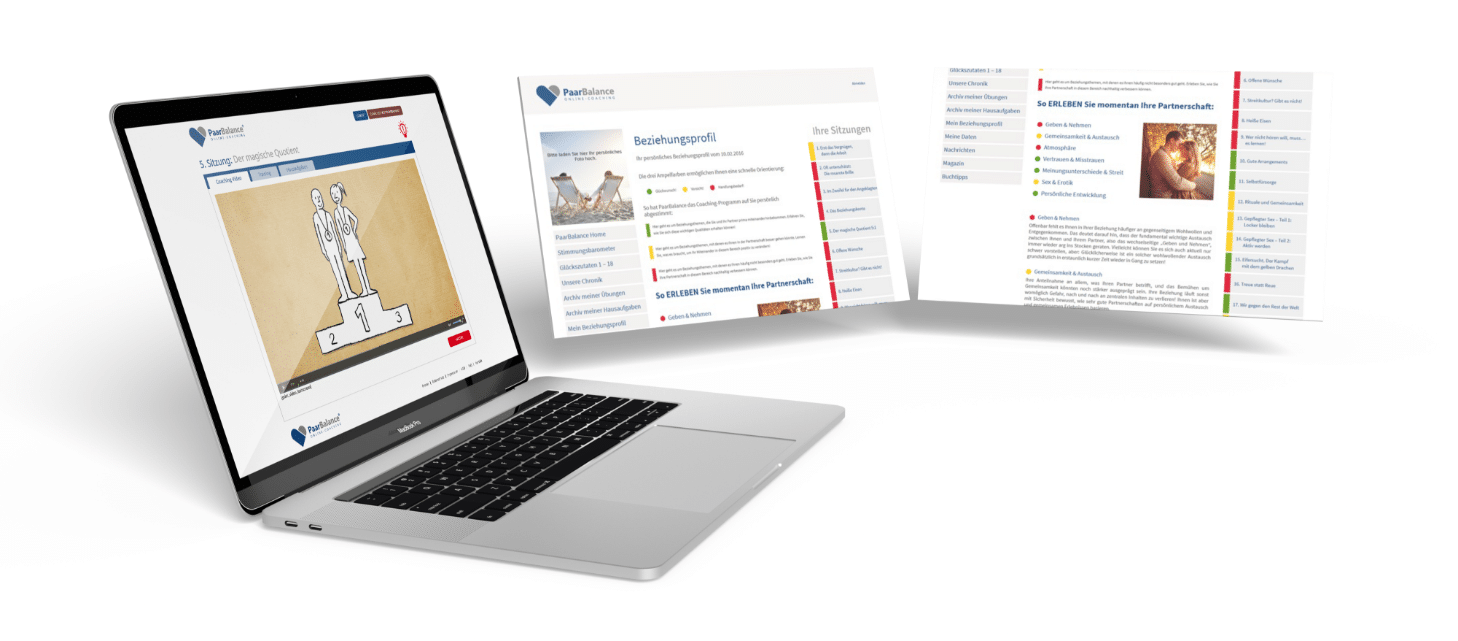
You will find out immediately afterwards in your personal PaarBalance relationship profile (free).
Start your relationship test now!
✓ Scientifically sound
✓ Includes detailed analysis
✓ Your data will not be shared
✓ 100% free & non-binding
100% secure. We comply with data protection regulations. Registration for the relationship test is free .
Please read this important information beforehand:
Data Protection ᐧ Terms and Conditions ᐧ General Information Agreement Terms and Conditions . Transparency Statement
Why am I considering breaking up?
If you're wondering whether you should separate, there are often many reasons that lead to this thought. Perhaps you feel unhappy , dissatisfied, or unloved in your relationship. Perhaps there are problems with communication, daily life, or intimacy. Or perhaps you feel that your relationship is no longer right for you.
It's important that you examine your feelings and thoughts to understand why you want to separate. Ask yourself:
What are the main reasons for my dissatisfaction in the relationship?
Are there specific events or situations that led to my decision?
How do I feel in my relationship? Am I happy, unhappy, or neutral?
By addressing these questions, you can better understand why you want to separate and whether it is truly the best decision for you.
🚀 Already 65,511 people have gained clarity through the test.
Disappointment. Doubt. Sadness. - And now what?
You've been unsure for some time whether you should stay with your partner (husband/wife) or separate. There are various signs that can indicate a relationship might be coming to an end.
They are saddened that their relationship has changed - and unfortunately not for the better.
They doubt whether their love and partnership even have a future and secretly wonder whether they would be better off alone or with someone else by their side.
You are finding it incredibly difficult to make the right decision – for yourself and possibly also for your children.
They want to finally have the question answered: “Should we stay together and seriously try to make a fresh start?” or “Should I separate and put an end to the unpleasant developments of recent times as quickly as possible?”
And clarified in such a way that the chosen direction feels appropriate and consistent, and you don't later have second thoughts about possibly having made the wrong decision.
We want to help you gain clarity about which path is the right one for you in the long term. Therefore, your first step is:
Sort out your thoughts
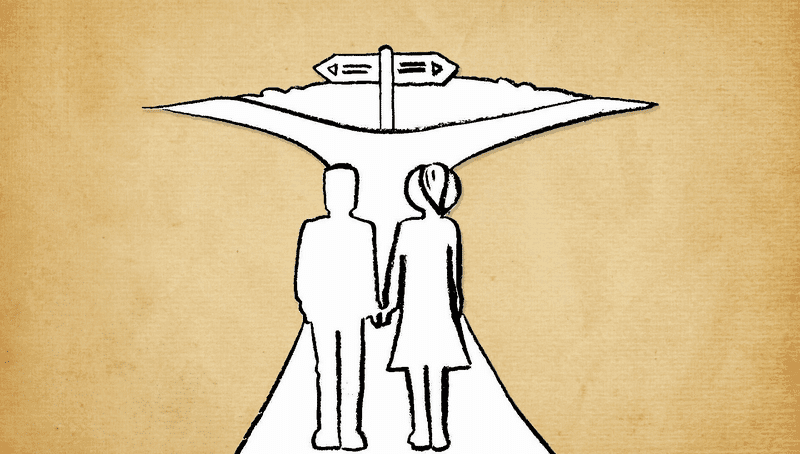
First, make sure you have some peace and quiet and won't be distracted. Consciously set aside time for reading and reflection.
Try to notice what feelings arise within you. It's best to write down your most important thoughts and memories.
First of all, we will examine the most common reasons that lead many couples to doubt their love one day.
We then examine which changes and fluctuations in the course of longer relationships are generally ' normal ' (and therefore 'expected') and which are not (or should not be).
You will then receive concrete suggestions on how to better assess the quality of your partnership (over the years you've spent together and right now) as well as the likely consequences of a separation : How has your relationship developed over time ? What were (and are) your strengths and positive moments as a couple? What are the biggest problems and challenges in your partnership? How would life change after a separation?
We continue to explore the question: Does the current crisis perhaps also offer entirely new opportunities ? -> Because you have already decided for yourself, "Not at any cost anymore," and can therefore think more freely. -> Because you can consciously engage in conversation with one another. -> Because you want to honestly examine yourself, your partner, your relationship, and your love. -> Because you will truly take your fears, your feelings, and your desires seriously. -> Because you can enter into a new kind of exchange, one you may never have had before (or haven't had in a long time, or not often).
We want to support you in feeling so clear and 'sorted' internally as soon as possible that you can make the right decision about how to proceed with a calm feeling.
The relationship in focus
Before making a decision, you should take another look at your relationship. Ask yourself:
What were the positive aspects of our relationship?
What have we achieved together?
Is there still hope for our relationship?
It's important to look at your relationship objectively and not just focus on the negative aspects. Perhaps there are still ways to save or improve your relationship. Sometimes it helps to remember the good times and consider whether they can be rekindled.
The most common reasons that lead to intentions to separate
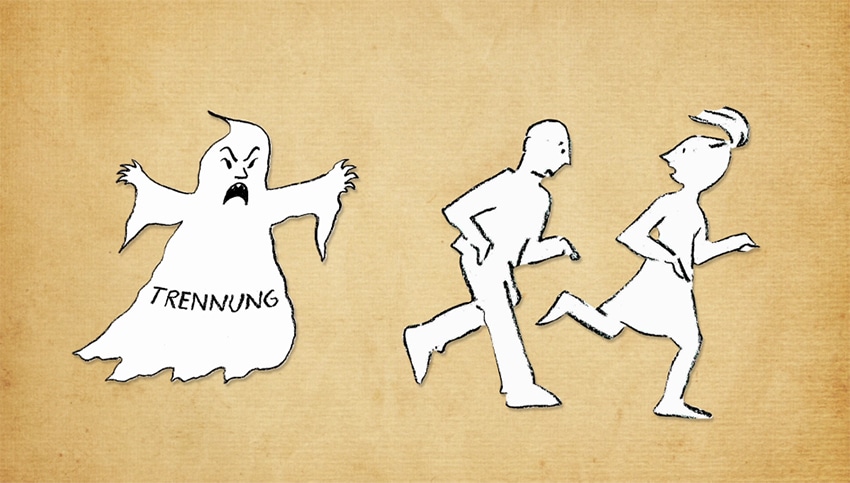
Perhaps you, like many other people whose relationships are currently experiencing difficulties, are suffering particularly from the fact that…
Have problems, arguments , and disagreements between the two of you become overwhelming?
Has the initial infatuation faded and you haven't felt carefree and happy in a long time? (On this topic, we recommend our article: "Relationship without initial infatuation" .)
Has your relationship become increasingly ' boring ' and you only talk about trivial things?
They no longer treat each other respectfully and lack sensitivity and empathy for one another?
Do you barely have any time for each other anymore ? (You can find more on this specific case in our blog post "Too little time in the relationship" .)
Does your partner no longer seem interested in how you are doing and what is really on your mind at the moment?
Do you feel that your partner no longer wants to know how to support you, what they can do for you, and how they can help you?
Have sex and eroticism become increasingly unsatisfying in your relationship ? (Click here for the blog article "Hardly any sex in the relationship" .)
Have you or your partner fallen in love with someone else , or has nothing been the same since an affair ? (Then you should definitely read our most-read article ever: "Forgiving an Affair" .)
It is becoming increasingly clear that you both have different ideas about partnership, living together, and the future?
Do you feel like you have to make too many compromises ?
These are some of the most frequently cited reasons why many people become unsure during a long-term relationship whether they should 'still' stick with their partnership and 'stay' or not - and eventually begin to seriously consider separating from their partner.
What changes are 'normal' in a long-term relationship? Which are not?
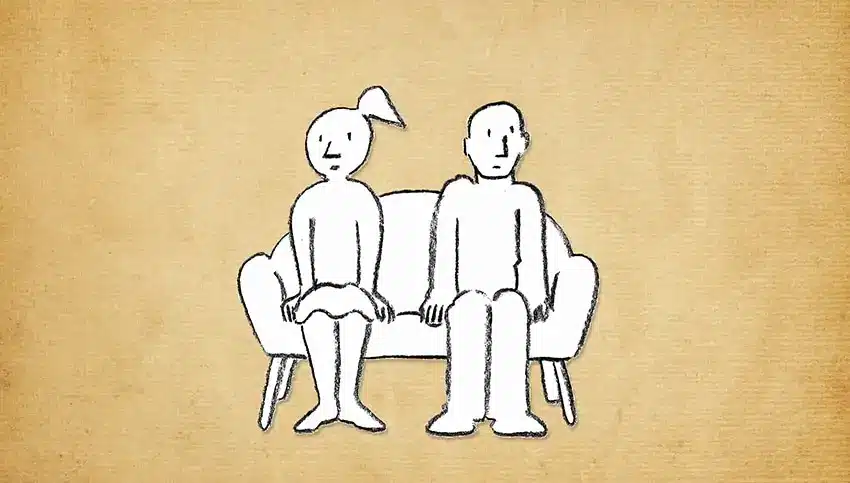
In all kinds of relationships, disagreements and sometimes even conflicts can arise. Wherever we spend a long time in close proximity to others, periods of greater closeness will alternate with periods of greater distance. This, too, is perfectly 'normal'.
However, if the connection and beauty between two partners is permanently pushed into the background and the relationship is increasingly characterized by misunderstandings, disinterest, irritability or arguments, then this is no longer 'normal' - but in the medium and long term, it is enormously stressful for one's own quality of life: Experience shows that persistent relationship stress massively affects our mental and physical well-being.
Even without statistics and scientific evidence, most of us have probably already had this experience: If things are going well in the relationship, then that is the best basis for confidently mastering the challenges of everyday life and professional life.
When we feel that our partner has our back, supports us, stands by us, and believes in us, it repeatedly releases new energy, courage, and confidence. A good relationship therefore usually has a very positive effect on other areas of life.
However, the other side of the coin is:
Stress in a relationship robs us of our vitality and joy of life like almost nothing else. Our energy reserves quickly run out when there's constant friction at home.
If relationship conflicts become chronic, then not only our mental but also our physical health is at risk.
You probably can't remember exactly when and with what wording the unsettling questions first crept in:
Is there any real chance that things will get better between us?
Aren't things already far too complicated ?
Shouldn't we separate as soon as possible ?
Is there still love between us ? Do we really still have feelings for each other?
What are the arguments for and against pulling the emergency brake ?
Does it make sense for us to try again 'really' with each other , or is it already too late for that ?
If we feel over a longer period of time that our relationship is no longer a secure base on which we feel safe and secure, this weakens our entire psychosomatic 'system' sooner or later.
The only thing that's clear right now is that things can't continue the way they are.
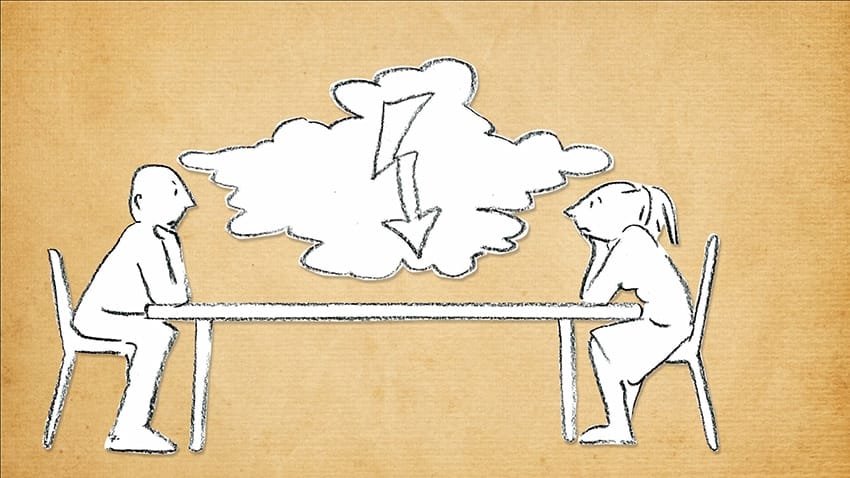
A decision is needed. Because you've probably been in this exhausting process of going back and forth for quite some time now, and the nagging question of separation keeps cropping up in various situations.
They torment themselves, repeatedly weighing the pros and cons of staying together versus breaking up, and are unable to calmly discuss this inner struggle with the person they have trusted most over a long period of time, as they did in previous decision-making processes.
Since the decision to separate has drastic and far-reaching consequences, and no one takes such a step lightly, most people affected seek advice from close relatives sooner or later:
Best friends, dear family members, or long-time colleagues are often confided in or actively intervene themselves when they realize that things aren't going well in the relationship.
And each of them then has their own unique perspective on what they perceive and now consider right or wrong – depending on what we've revealed about our relationship, what values and fears the other person holds, or how they feel about us and our partner. Everyone supposedly knows what's best for us. Your best friend might advise: “You can't put up with this any longer. Take control of your own happiness – you absolutely should break up if you want to be happier! After everything that's happened, talking won't help anymore. And he's not the only man out there, after all.” Your mother, on the other hand, insists: “No, no, no! You've already accomplished so much together. You absolutely have to stay together. You know that relationships take work!”
This way, we are presented with a wide variety of perspectives on things and usually receive a colorful array of tips and recommendations on what we should definitely do or not do.
But what advice is truly helpful for us and our unique circumstances and emotional state? And which (however well-intentioned) suggestions might reflect the personal moral and emotional compass of our conversation partner more than our own? Sometimes it's necessary to draw a line in the sand to break free from unhappy and inadequate partnerships and make room for a fresh start.
Weighing costs and benefits: These factors influence the separation decision!
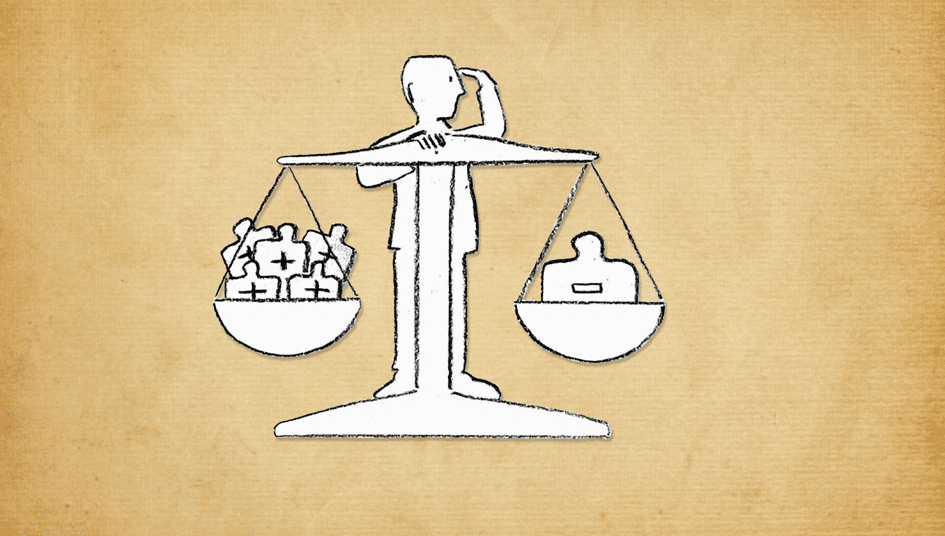
The thought "Should I break up?" usually arises when the perceived 'costs' and 'benefits' in the relationship are no longer in a favorable proportion to each other.
This concerns not only the most important emotional aspects, but also the major existential issues and the consequences a separation would have on those around the couple. All of this is factored into the decision-making process, sometimes more consciously, sometimes less, when thoughts of separation arise.
What are some very personal aspects that influence my thoughts about separating?
Security:
How secure do I currently feel in the relationship? How would I probably feel if my partner were no longer in my life?
Has the relationship as a whole predominantly increased my joy of life
and strengthened me? Or has our relationship, all things considered, robbed me of more energy and ease than it has given me relaxation and pleasure?
Meaning in life:
Do my partner and I have similar ideas and share the same values on important life issues, or do I feel like I've been compromising myself for a long time? Do I believe I would find much more common ground with other potential partners?
Desire:
How important is it to me to be desired and to desire others? How do I experience our relationship in terms of eroticism and sexuality? Is there still passion and pleasurable feelings? Has this area of my life always been rather 'difficult'? Do I believe that 'everything would probably be better' in a different partnership? Why? Why not?
What consequences would a separation have for my own livelihood and for my surroundings?
Children:
What consequences would a separation have for children from a shared (or blended) family? Would the children likely be mostly relieved by a split (perhaps because they are already constantly burdened by heated arguments or an atmosphere of anger and fear), or would their world collapse and they would most likely be insecure or even uprooted in the long term?
Pets:
Are there any shared pets for which a fair and sensible arrangement can be found?
Living situation:
Who would stay in the shared apartment? Who would have to move out? Would a mutually agreeable solution be conceivable in this regard, or would it potentially lead to a bitter 'turf war'?
Circle of friends/family environment:
What impact would a separation have on shared friends and family members (such as parents, in-laws)? Would a functioning social network still exist in the event of a separation, or could long-lasting conflicts within the personal sphere be imminent?
Finances:
What would the short-, medium-, and long-term financial impacts on all parties involved? What limitations would each partner face? Is the entire financial security of one partner potentially at risk in the event of a separation or divorce? Who could provide assistance in a worst-case financial scenario?
Work:
How would you and your partner deal with each other if you continued to see each other regularly at work? Could you avoid each other for the time being, or perhaps work together on a project? Could you manage to maintain healthy boundaries despite the physical proximity? Would one of you potentially have to find (or be forced to find) a different job?
Separating from a long-term partner brings about more far-reaching changes than almost any other life decision.
Almost every area of life changes in one way or another, and getting used to the new circumstances usually takes a long time.
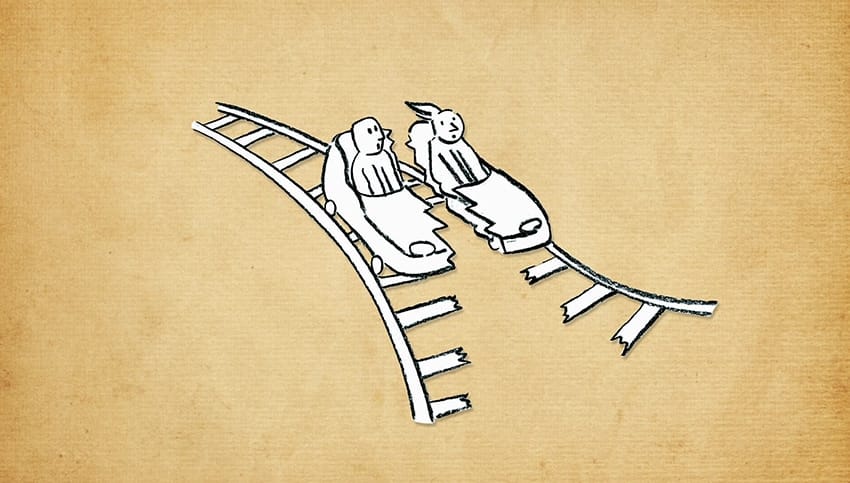
If your head is spinning: Focus on the essentials!
With all these difficult considerations, it's easy to lose track and orientation.
Ultimately, however, personal quality of life – and, if applicable, the well-being of any children involved – should be the decisive factors in the decision to separate.
You are the most important person in your life. If you are constantly unhappy due to a strained relationship, you shouldn't endure it in the long run.
Humans are primarily social beings who need conversation and regular contact with close confidants. Strong interpersonal relationships are therefore considered the most important factor in mitigating the effects of stress and negative life events. Furthermore, one's partner is usually the person with whom the vast majority of time is spent. Therefore, feeling comfortable with one another is absolutely essential in a romantic relationship .
Crisis as an opportunity!
Because: Dissatisfaction is the biggest driver of change.
We would like to invite you to make a serious attempt to turn the current crisis into an opportunity, because: dissatisfaction is the greatest driver of change!
As already emphasized: Separations from a long-term partner represent a massive disruption in personal life and are considered one of the most painful experiences of all.
Therefore, before a final decision can be made on such a serious step, one should take as much time as possible.
There are several considerations and questions that can be very helpful in advancing your decision-making process. We will present the most important of these questions below.
Ask yourself these specific questions
To your past, to your future, to yourself, to your partner, to your partnership

After many years of living side by side or arguing, the shock of the discovery and the ultimately massive fear of loss finally made them realize what life was 'really' about for them.
After often painful processes, it finally became possible to speak to each other more openly and honestly than ever before and to see each other (again) in a different light. In some cases, things came to light that had previously been kept secret or swept under the rug for several years.
Solutions were finally found for long-standing problems - and so, all things considered, it was absolutely the right decision not to separate, but to fight for the partnership.
Against this background, and with the knowledge that for all people considering separation it is important for their inner peace to have given the relationship another serious chance, it is essential to confront one's own core feelings and personal behavioral patterns:
- What are my attitudes towards the topics of love and being loved, giving and receiving, communicating, engaging in controversies, etc.?
- What are my values ?
- What are my typical behavioral patterns ?
- What do I constantly worry about (perhaps too much) - what have I perhaps given little (perhaps too little) thought about so far?
Below you will find a series of questions that you should answer as spontaneously and honestly as possible. Engage in an open conversation with yourself – as if you were discussing topics like love, relationships, quality of life, and responsibility with a dear friend.
Understanding myself better & desired changes in myself
- Does my partner really know the most important things about me in order to understand me and my needs well?
- Why haven't I confided in him/her about certain things in my life yet?
- What can I learn from the current situation?
- What would I like to do differently in the future? How can I help myself?
- What could I do differently in the future for the sake of my partner?
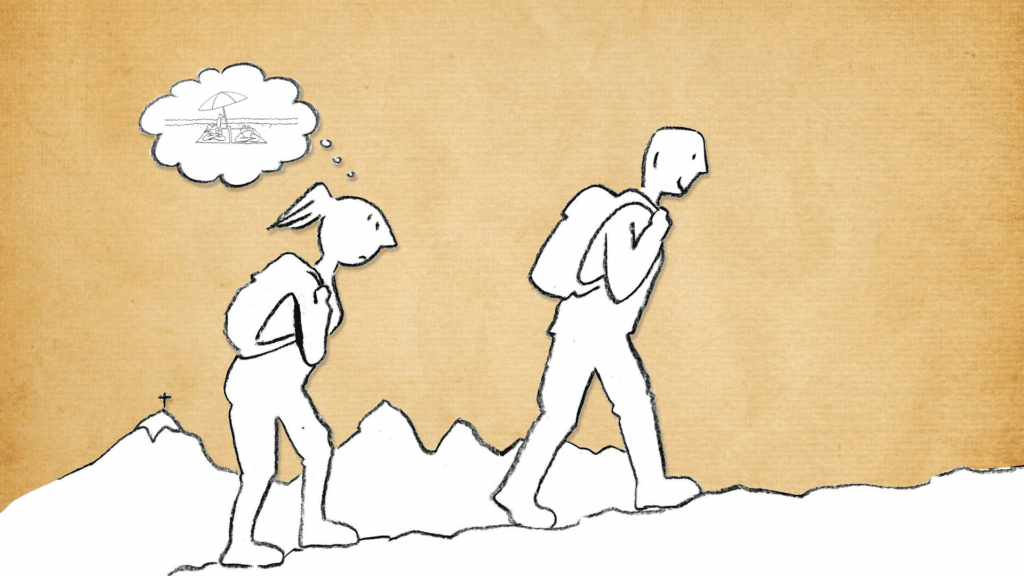
Understanding my partner better & desired changes in my partner
- What do you feel is missing here?
- How does it feel for you to come home?
- What have you been wanting to tell me for a long time?
- What haven't you been able to confide in me yet, even though it was important to you – because you don't know how I'll react to it?
- In your opinion, what was the reason we haven't been able to talk openly about everything yet?
- What are my wishes for you?
- What do I need from you?

Understanding our lives better & desired changes for our future
- What have we wanted to do together again for a long time? Why haven't we done it (yet)?
- Do we have any mental images of what we will both be like in 10, 20, or 30 years? Where and how we will live? What we will do together, when, and where?
- What plans do we have together?
- What have we been looking forward to lately?
- What worries us?
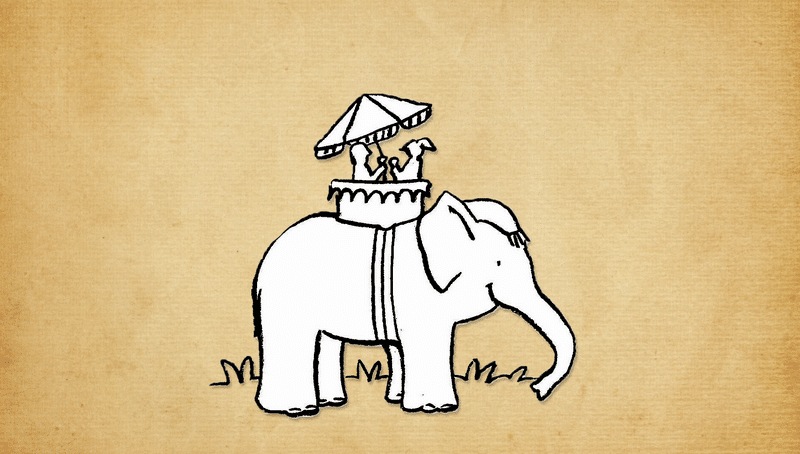
What brought you two together? What has defined you as a couple so far?
Remember what originally brought you together and what has kept you together so far:
- What did you like about each other?
- What made your relationship special?
- What did you find attractive about each other?
- What fond memories do you share?
You and your partner (husband or wife) have probably already successfully overcome many challenges together. Even if it certainly wasn't always easy during your relationship, you and your partner have likely often communicated constructively and found good solutions together.
Perhaps you as a couple have managed a move, overcome an illness, made an important decision, supported each other during a job change, and conquered professional uncertainties.
Perhaps you have experienced difficult situations in the family together, including deaths, or overcome financial difficulties.
There are probably areas of life that are of utmost importance to both of you: shared children, your circle of friends, a beloved pet, or your familiar home. And you have probably also mastered many of the daily challenges of everyday life – such as raising children, managing the household, etc. – as a couple.
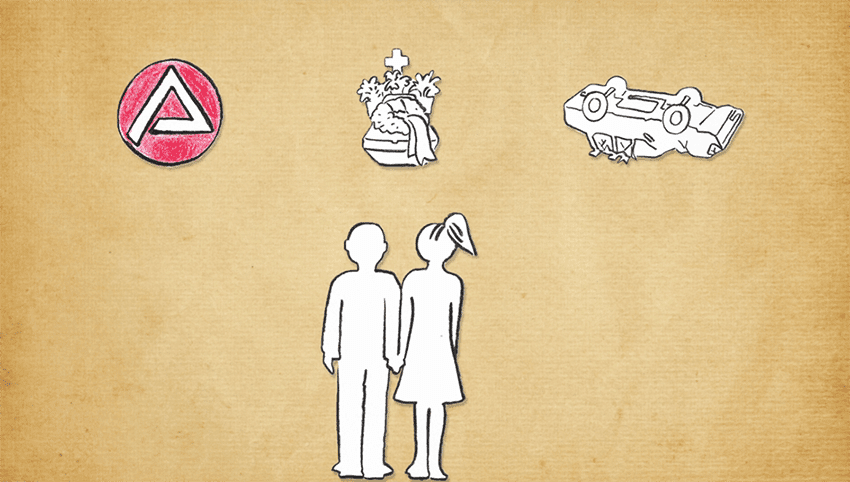
If you are currently having doubts about your partnership, your attention has probably been increasingly focused for some time on the difficult moments of your relationship: the arguments, accusations, carelessness and conflicts.
Positive shared moments have most likely faded into the background.
Regardless of what difficulties have arisen in your relationship, it's important, especially during these times, to consciously recall how you experienced your partner and your relationship in the past. What went well, or perhaps even very well? What did you have good conversations about?
The positive aspects of my partner
- What did I like and appreciate about her/him?
- What are his/her particular strengths?
- Where do we complement and support each other well?
- What does he/she always help me with?
Challenges overcome
- What have we accomplished well together so far?
- What can we all be proud of?
- Why did we achieve that?
Wonderful experiences
- What wonderful experiences do we share? What do I fondly remember?
- What did we used to enjoy doing together?
- Which of these could we actually do again in the near future?
Crisis as an opportunity: We can emerge stronger from difficult times!
If we allow ourselves to feel uncomfortable in a situation/constellation, we have the chance to honestly think about what changes are actually needed – what would feel better, what we ourselves could do differently.
We strongly advise you: Don't rush into anything!
Try not to act impulsively. Don't put pressure on yourself and don't let those around you pressure you (not even your best friend or oldest friend! ;-)) to make a far-reaching, fundamental decision immediately after an emotionally significant event.
External or internal pressure, as well as acute anger, fear and despair, are not the best guides when it comes to love - and we should be aware that a separation may not be easily reversed.
How a second chance in a relationship can succeed is explained in this article. ↗
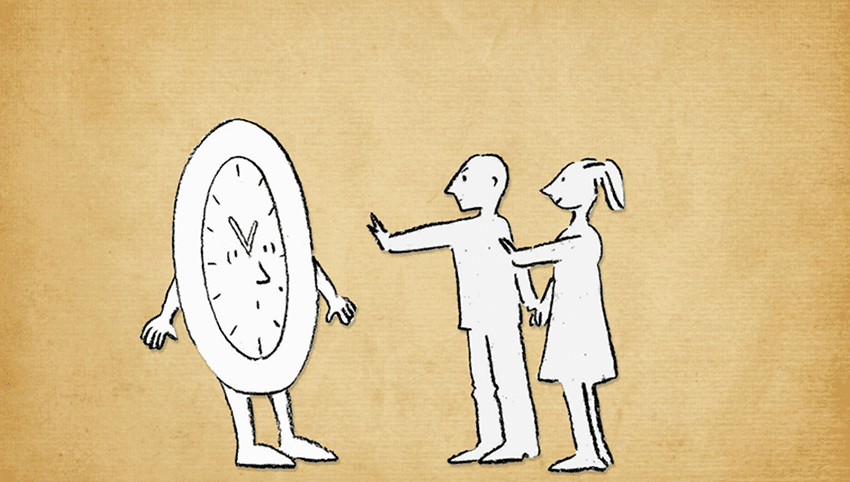
Emotional experiment: Break up or stay together?
The following method is experienced as helpful by many people who feel torn, because it can structure and make the inner weighing process more tangible:
Write the terms "separation" and "staying together" on two DIN A4 sheets of paper and place them on the floor in different locations in the largest possible room – at least 3 meters apart.
Now, place both feet firmly on the first card, " Separate, " and then on " Stay ." Focus on your feelings and vividly imagine how each scenario feels.
For the separation scenario
I imagine that I've made a final decision to end our relationship. How do I feel shortly after the decision? How do I feel a month later? How do I feel a year later? How does my life change after the breakup? Do I enjoy being single? Do I find someone else? Do I feel lonely? How and with whom do I spend my vacations? Who helps me when I need support? etc.
For the staying-together scenario
I imagine that I've decided to stay in our relationship. How do I feel shortly after making the decision? How do I feel a month later? How do I feel a year later? What has changed in our relationship? How do I know that the love has returned and our relationship has improved? What do we do together? What kind of conversations do we have? How do we treat each other? etc.
You can repeat these steps as often as you like. This method can be very helpful in sorting out your thoughts and feelings. Often, over time, a strong sense of hope or a clear preference for one of the scenarios emerges, and the decision becomes clear.
If, even after prolonged reflection, you do not find either alternative to be convincing, the two options can be supplemented by further cards with alternative ideas for the future.
Is separation an option despite love ?
When should you break up?
If your relationship is causing health problems for you or your partner, for example, it could be a toxic relationship . It's also crucial to seek help immediately if there is violence in a relationship. Experience shows that staying in an unhappy and harmful relationship doesn't lead to improvement. In such cases, you should consider separation! To separate or to stay? Perhaps a trial separation is an option.
Mini-separations as an alternative to a 'real' separation?
If you are very unhappy in your relationship, separation may currently seem like the only way to end the stressful situation: all or nothing. All or nothing. Together or apart.
Fortunately, it is often not necessary to make a major change when a situation no longer feels 'right'; even smaller changes in attitude and behavior can often bring noticeable relief and clarity.
Unfortunately, in long-term relationships, the healthy balance between closeness and distance is often lost. If the distance becomes too great, there is a risk of increasing estrangement and feelings of loneliness. As each partner's personal space diminishes over time, communication usually decreases drastically, and exciting impulses and attraction are lacking.
Therefore, before a final decision is made about a complete separation, it is almost always worthwhile to consider 'gentler' alternatives for change.
Short breaks
Conscious breaks in a relationship are very helpful for many people to gain some distance from confusing thoughts and emotions and to (re)develop a better sense of what is important for their own life satisfaction and what is less relevant. Perhaps it would be good to take a short trip or visit friends or family for a few days. Or, with some advance notice, to move your "housemates" (husband or wife, child or children, dog or cat... ;-)) out for a weekend so that you truly have your home to yourself and don't have to worry about anything or anyone else. Not being constantly on call or on high alert, or having to think about care and organization for others, can greatly help to clear your head and find inner peace.
Separate bedrooms
Even though it doesn't quite fit the romantic image of blissfully smiling and sighing contentedly as you drift off to sleep together in the spooning position, many people find it comforting to sleep in their own room. If you're longing for more personal space in your relationship, separate bedrooms might be a good first step towards regaining a sense of independence (and it's not out of the question that after a while you might long to have your partner next to you at night again ;-)).
"Temporary separation"
Anyone considering a "trial separation" should keep several very important aspects in mind to ensure that the temporary break in the relationship doesn't unintentionally turn into a "permanent separation." We've written a separate blog post on this complex topic: [Link to blog post "Trial Separation"]
Pay attention to your own wishes and interests
Many people tend to tie their life satisfaction (too) closely to their romantic relationship. However, it is extremely worthwhile to regularly ask oneself, independently of the relationship, what truly recharges one's batteries, what was beneficial even before the relationship, and what can still enhance one's well-being today.
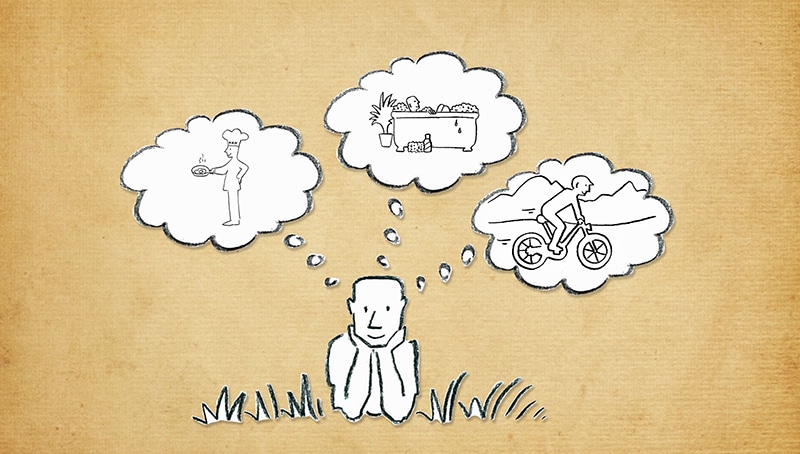
What makes me feel good? What did I enjoy doing and appreciate in the past (even as a child and teenager)? What would I most likely enjoy (again)?
What have I always wanted to treat myself to or try? Which of my ideas would I like to do together with people around me? Who is interested in what?
The more personally responsible each individual is for creating regular beautiful moments in their life, the more satisfied they are with themselves, and the less their partner is given the 'mission' to make them happy, the greater the likelihood that both can meet each other in a relaxed and equal way.
Many couples feel more drawn to each other (again) when they experience themselves as independent individuals – with interest in each other and the familiar common ground, but at the same time the ability to also 'take care' of themselves.
If you can no longer proceed on your own:
Preparing for the separation
If you've decided that separation is the best decision for you, you should prepare for the next steps. Ask yourself:
How will I tell my partner about my decision?
How will I take care of my financial situation?
How will I take care of my emotional health?
It's important to prepare for the practical aspects of a separation to make the transition as smooth as possible. Consider how you will communicate your decision and what support you will need to navigate this difficult time.
Take advantage of professional support services!
In times of emotional distress, we often lose our ability to think clearly. Our thoughts keep circling back to the same issues. We're mentally stuck in a rut.
To regain orientation amidst the emotional chaos, it is often helpful to talk to an outside and neutral person about the inner turmoil.
Whether in the context of couples therapy, couples counseling or relationship coaching: Psychologists have an open ear for your fears and worries and show you ways to find your way out of your crisis and make a good decision for yourself and your future life.
If you do not wish to seek personal advice, there are also ways to deal with your relationship independently and within a structured professional framework.
PaarBalance offers such a possibility .
Scientifically sound help - conveniently from home:
The Couple Balance Online Coaching
The CoupleBalance coaching program can provide you with valuable insights and a structure for conversations (both pleasant and sensitive topics), thereby revitalizing your relationship. Sometimes, what helps isn't the hundredth conversation with your best friend, mother, or closest colleague, but rather a structured exploration of what you yourself want and what you can change and effect.
PaarBalance is the only scientifically verified, interactive online coaching program for improving couple relationships in German-speaking countries that can be carried out by the individual partner.
Over 18 sessions, you will receive practical recommendations and concrete instructions on how to improve the quality of your relationship and rediscover ease and joy in life. Before the coaching begins, you can take the (free) CoupleBalance Relationship Test to receive in-depth feedback on your resources as a couple and where there is specific potential for improvement.
Trust your gut feeling: You know best what kind of support is right for you to finally get a step closer to a decision on the big question "Should I separate or stay and try again seriously?"
Free test: How good is your relationship right now?
To bring some order to your chaotic thoughts and feelings, our scientifically based relationship test can help. You'll spend about 10 minutes answering questions about how you experience and shape your relationship , and then receive a detailed evaluation of your shared strengths and potential problem areas.
This analysis of your relationship quality can also help you decide whether it would be better to leave or fight for the relationship, and shows you very specifically which issues you could address to noticeably improve the atmosphere.
Take your relationship test now! (free)
How is your relationship?
What are your strengths and weaknesses?
You will find out immediately afterwards in your personal PaarBalance relationship profile (free).
Start your relationship test now!
✓ Scientifically sound
✓ Includes detailed analysis
✓ Your data will not be shared
✓ 100% free & non-binding
100% secure. We comply with data protection regulations. Registration for the relationship test is free .
Please read this important information beforehand:
Data Protection ᐧ Terms and Conditions ᐧ General Information Agreement Terms and Conditions . Transparency Statement
Our final recommendation for you
"It's better to experience something new with your old partner (at first) than to (prematurely) revert to the old ways with a new partner."
We wish you all the best for all your upcoming decisions!
☝🏻 Related to the topic: Should I break up?
Frequently Asked Questions
Break up or accept that a relationship changes over time?
It's normal for periods of greater closeness to alternate with periods of greater distance in long-term relationships. However, if pleasant moments are consistently replaced by misunderstandings and conflicts, then action is needed. Ideally, every effort should be made to improve the existing relationship before considering separation.
What needs to be considered when deciding on a separation?
The decision for or against separation should be carefully considered. Do we still feel secure and joyful in the relationship? Do we share similar values? Is there intimacy and closeness? How would a separation affect children, pets, our entire social circle, as well as our financial and professional situations?
What are the consequences of a breakup?
A separation affects almost every area of life and has far-reaching consequences like few other life decisions. These consequences include the family environment (especially one's own children), the circle of friends, the financial situation, and potentially one's job. It often takes a very long time for ex-partners to adjust to the new life situation.
Can thoughts of separation be an opportunity?
If both partners take the thoughts of separation seriously, communicate openly, and honestly examine the reasons, they can be understood as a clear warning signal and initiate positive and profound changes. Partners who overcome a serious relationship crisis together usually emerge from it feeling proud and stronger.
When should I break up?
If a relationship involves violence (physical or psychological) or if one partner is otherwise harmed, separation is the only option. Otherwise, short breaks, separate bedrooms, or a trial separation can bring more clarity. Does being alone feel better than being together? That could be a reason for a permanent separation.