







☝🏻 Quick start: Long-distance relationships - how to make love work despite the distance
Maintaining a long-distance relationship – especially over an extended period – can be a real test for many couples. That's why it's so helpful to know the 'rules of the game' for long-distance relationships, so that even difficult moments and stressful phases can be managed successfully.
In this article, we would like to share with you the most important insights and tips on the topic of "long-distance relationships & love at a distance".
🚀 Already 65,511 people have gained clarity through the test.
Long-distance relationships: A modern phenomenon?
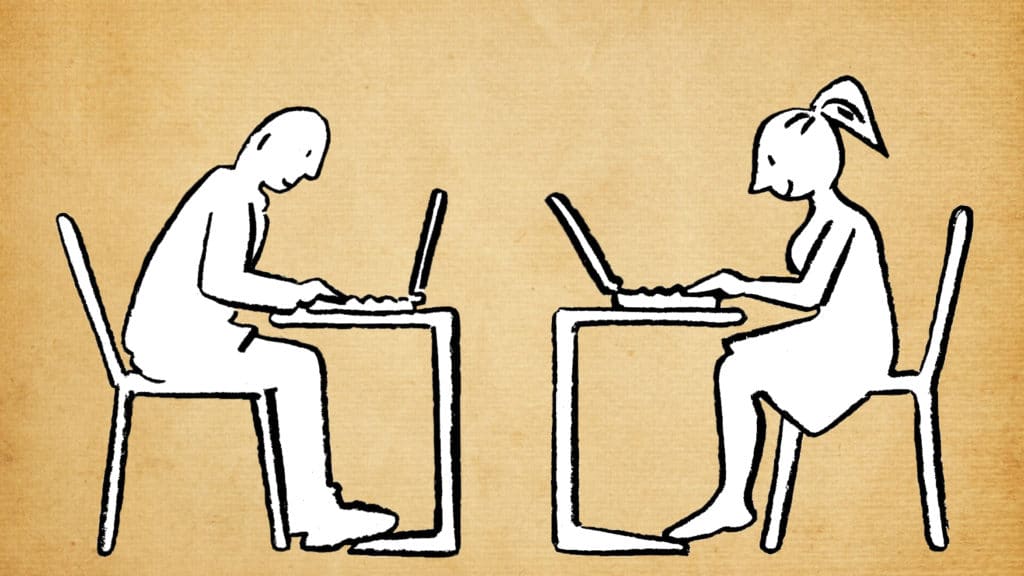
Long-distance relationships have existed for a long time. However, nowadays, due to globalization, technological developments, etc., far more people than ever before are affected by them (and the trend is still rising) – be it because of a semester abroad, an exciting job offer, a family obligation, or for other (private or professional) reasons.
Of course, there are also relationships where the newly in-love couple starts out as a 'long-distance relationship'. This happens, for example, when two people meet and fall in love while traveling or have become aware of each other through online dating – and cannot or do not want to live in the same city or country in the medium or long term.
Modern communication technologies – chatting, phone calls, video calls – have made it possible to maintain close contact despite large geographical distances.
It is therefore no wonder that, according to surveys, more than half of all German adults now say they have already had a long-distance relationship, and about one in eight is currently living in a long-distance relationship.
What is meant by a long-distance relationship?

Before we delve into the specifics of long-distance relationships, we would like to clarify what is actually meant by a long-distance relationship or a relationship at a distance.
When is a relationship considered a long-distance relationship?
The boring answer is: A relationship is considered a long-distance relationship whenever the partners cannot meet regularly in person due to the distance.
It makes no sense to specify an exact number of kilometers or to keep track of how many kilometers a couple has to travel to be considered in a "long-distance relationship." Even a relatively short distance can be experienced as significant if time or transportation options (for example, if there's no car available or public transport connections are poor) allow only infrequent meetings in everyday life (whereas many hundreds of kilometers might not matter much if you could fly back and forth every day in a private jet... 😉).
Is a distance of one hour already considered a long-distance relationship?
A travel time of 1 to 2 hours is usually not considered a long-distance relationship - provided you are able to travel this distance regularly and are not prevented from doing so (for example by the costs to be managed or poor transport connections).
Last but not least, the definition that suits you best also depends on your personal need for closeness.
Would you like to live together but can only visit each other on weekends (so-called "weekend relationships")? Then your situation can certainly be described as a long-distance relationship. Another couple, however, might be perfectly happy pursuing their respective jobs and interests during the week—without compromises or coordination—and "only" spending the weekends together. This type of relationship isn't experienced as a "long-distance relationship" at all, but rather as a healthy form of liberal couple living in different locations.
How many long-distance relationships last?

Let's look at some figures regarding the durability and duration of long-distance relationships:
What percentage of long-distance relationships last?
Different surveys yield varying results. On average, around 60% of couples seem to stay together despite the distance, while about 40% of all long-distance couples separate.
How long did the long-distance relationship last before it ended?
If a long-distance relationship ends in separation, it typically happens after about 4.5 months. However, as mentioned, this is just an average ; many couples separate much earlier, others much later.
When does a long-distance relationship make sense?

When does it 'make sense' to enter into a long-distance relationship?
The unspectacular answer is: whenever it feels good and right for both partners overall, and neither suffers disproportionately from the situation.
For many couples, a long-distance relationship is significantly easier to manage if there's the prospect of eventually moving in together. But even that isn't necessarily a prerequisite for remaining a couple and experiencing closeness and connection across vast distances. I once followed a married couple who ultimately opted for an unusual lifestyle: The husband wanted to spend his retirement in his native Ethiopia, while his wife pursued her dream in Canada. With good communication and skillful organization, they managed to maintain their marriage across thousands of kilometers. They spent a few weeks each year with him, some with her, and the rest of the time apart.
While such a constellation may only work for a few couples, the motto is: if both really want it and can cope emotionally, suitable arrangements can be found for almost any situation.
The prerequisite for this is to approach the topic intelligently, i.e., to avoid typical pitfalls, to heed proven recommendations, to remain open and benevolent overall, and to react flexibly to changes.
Long-distance relationship test: Can your partnership withstand it?
You have probably asked yourself the same question time and again: "Can my relationship withstand such a distance over a longer period of time?"
This question can only be answered with certainty when the time comes. However, there are some indicators that can help you better assess your situation.
For this purpose, you can take the (free) CoupleBalance relationship test (10 minutes, scientifically based).
Your personal relationship profile, which you will receive immediately afterwards, not only provides an overall assessment of how stable your relationship is, but also highlights potential danger zones.
Take your relationship test now! (free)
How is your relationship?
What are your strengths and weaknesses?
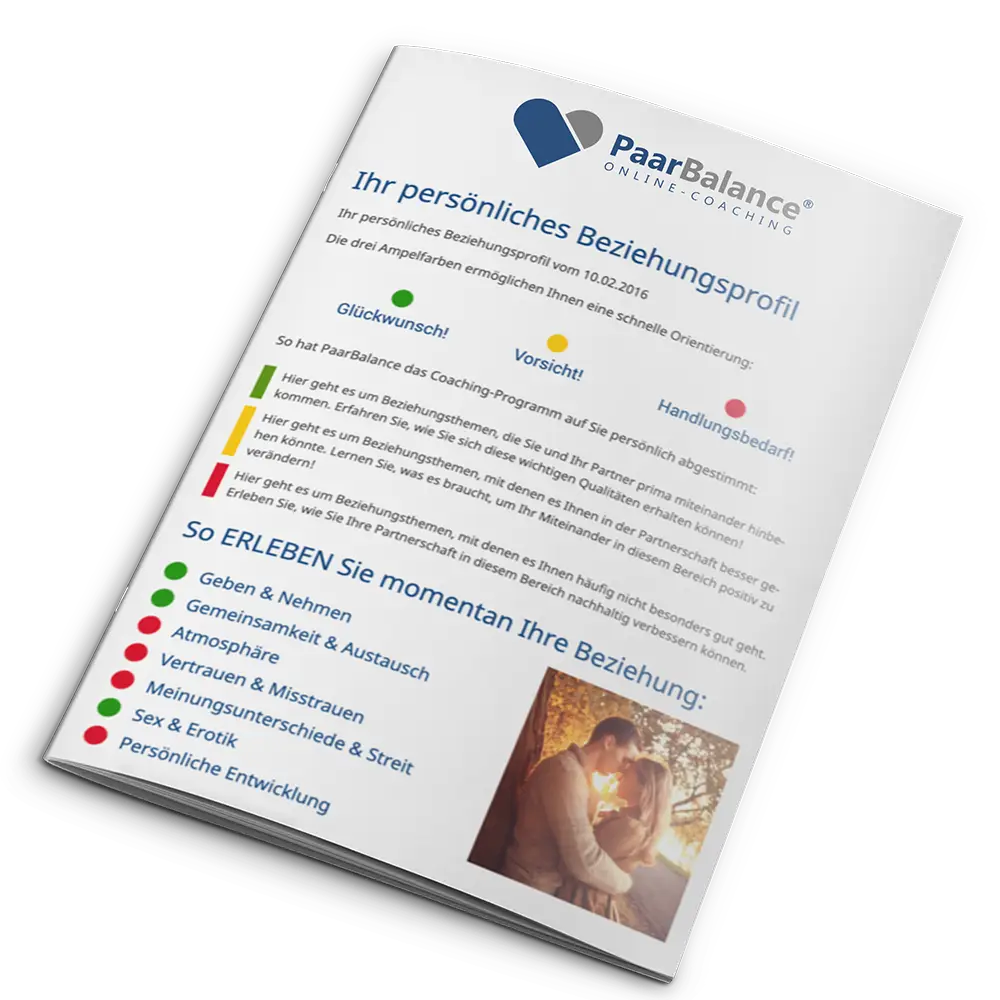
You will find out immediately afterwards in your personal PaarBalance relationship profile (free).
Start your relationship test now!
✓ Scientifically sound
✓ Includes detailed analysis
✓ Your data will not be shared
✓ 100% free & non-binding
100% secure. We comply with data protection regulations. Registration for the relationship test is free .
Please read this important information beforehand:
Data Protection ᐧ Terms and Conditions ᐧ General Information Agreement Terms and Conditions . Transparency Statement
You should definitely address the specific problem areas in your relationship. Long-distance relationships often have the tendency to bring dormant relationship problems to the surface or exacerbate them.
Whether you are about to enter a long-distance relationship or are already in one: Regularly analyze the strengths and weaknesses of your relationship.
Make a conscious effort to strengthen your resources and to continually distinguish between problems that can be solved and those that require composure in order to accept unchangeable circumstances or personal differences.
This gives you the best chance of emerging from a long-distance relationship satisfied (and possibly even strengthened) as a couple.
Typical problems and challenges in long-distance relationships

As we've already mentioned, around 40% of couples break up during a long-distance relationship. Why is this? Why is it apparently so difficult for some couples to maintain a long-distance relationship that they perceive as 'good'? There are several reasons for this. We've compiled the most common ones for you below.
What are you personally affected by? What is the best way to deal with the respective challenges?
Longing and heartbreak
Even if you do everything right from a couples therapy perspective when structuring your long-distance relationship , no one can truly avoid the issue of longing. It's perfectly natural for people who love each other to crave closeness. Therefore, virtually all couples in long-distance relationships repeatedly struggle with feelings of longing, painful missing each other, and heartbreak.
What to do?
It is important not to succumb to fear and overreaction in such a situation, but first to acknowledge that such a reaction is completely normal and speaks to a 'healthy' feeling and the quality of the relationship.
However, if the desire for connection is so strong that individual interests completely fade into the background and all thoughts revolve solely around the loved one, then emotional dependency could also play a significant role. Learn more about this in this article and take a test to find out if you have developed emotional dependency.
loneliness
People in long-distance relationships often make the mistake of equating longing with loneliness . While longing is an inevitable part of being separated from loved ones, it's crucial to avoid sinking into isolation. We humans are social beings. Without meaningful personal contact with others, without closeness and security, our mental (and in the medium and long term, our physical) health deteriorates.
What to do?
Use the time during your long-distance relationship to strengthen friendships and/or family ties, or even to make new acquaintances. Make a conscious effort to socialize. Focus on breaking free from an exclusive social dependence on your partner and becoming emotionally independent. This is the best foundation for a lasting and vibrant love relationship based on equality.
Travel expenses
This point might sound trivial or negligible to some, but depending on the financial situation, the duration of the long-distance relationship, and the distance between them, it can be a significant burden for couples in long-distance relationships. Several long car journeys or expensive train trips each month can quickly strain a tight household budget, not to mention short- or even long-haul flights.
What to do?
It's best not to conceal anything that concerns you in this context, but rather to lay everything important on the table regarding finances – and also not to fall into the trap of declaring related worries or limitations taboo or taking them personally, such as: "Aha. So our reunion isn't even worth the €90 for the train ticket to you?"
Instead, talk openly about financial constraints and calculate monthly costs together. Discuss transparently who can cover which fees. Research cost-saving options.
Rejection and violation
When a relationship becomes long-distance because one partner pursues a personal dream (study abroad, job offer, world trip, etc.) without truly including the other in their considerations and plans, it's understandable that the other partner may feel rejected and like they don't mean much to them. "So your career is more important to you than our relationship?" This comparison should be avoided if possible. It may well be that the relationship is the most important thing in life for the partner. At the same time, they also know that they would never be completely satisfied with themselves if they had put their own dreams on the back burner for too long.
In the long run, it can put a serious strain on a relationship if one partner forgoes a great opportunity for the sake of the other. One's own dissatisfaction can become a significant burden on the partnership: the other person is "to blame for the mess" and the reason why a vision couldn't be realized or a lifelong dream shattered. Therefore, it is often in the best interest of both partners to grant each other a (significant) degree of freedom so that each can pursue their own personally important goals and find lasting satisfaction in their life.
What to do?
In any case, be aware that your partner's decision most likely has nothing to do with how much he/she still loves you.
Conversely: If your loved one is offended or hurt, repeatedly explain to them why you made or want to make your decision – and how much you love them. Reassure them that your love is not affected by which city or place in the world you happen to be, but that you are just as capable of love in Munich, Hamburg, or Berlin as you are in Hinterdupfelfingen, St. Gallen, or Milwaukee.
Long-distance relationships and "The 5 Love Languages"
American pastor, couples therapist, and author Gary Chapman has termed the most common ways in which affection is conveyed between people, according to his observations, "The Five Love Languages." In short, this concept is about how everyone intuitively shows and receives love and affection in different ways. This has a significant impact on how closeness and connection between two people develop and are maintained in everyday life, or how they can be destroyed and lost.
If you are not yet familiar with the concept of the 5 Love Languages, you can read more about it here: The '5 Love Languages' - Explained by Couples Therapists . On this page, you can also take a (free) test to find out which love language is your "primary language." Each "language" has its own advantages, but also challenges—especially when large geographical distances are involved.
Therefore, it is highly recommended for every couple to understand the advantages and potential difficulties of their own love language and that of their partner. This makes it much easier, even in the hustle and bustle of everyday life – between jobs, household chores, childcare, hobbies, etc. – to keep in mind what's needed to maintain a sense of closeness and connection as a couple.
What are the five love languages spoken between couples (or between people in general)? Which one resonates most with you?
Kind words : Congratulations! You have it easiest to show and receive love, even across a distance. Of course, compliments in person are even more wonderful, but expressions of love can work wonders even when chatting or talking on the phone.
Time together : If spending quality time together is paramount in your relationship, a long-distance relationship presents a real challenge. Concepts like digital date nights or similar activities can offer a solution and should ideally be firmly integrated into your daily routine.
Gifts : With a little ingenuity, you can also give each other wonderful gifts in a long-distance relationship (to name just one now classic example: there are, for example, excellent online providers for flower deliveries).
Willingness to help : In everyday life or household chores, partners in a long-distance relationship often find it difficult to support each other. However, they can plan and organize upcoming meetings as a couple, proofread or correct each other's texts or complex emails, and lend a hand with digital tasks, tedious phone calls, and the like.
Physical intimacy : As you can imagine, this is where things get tricky. No other love language is more challenging in long-distance relationships than this one. Try to see each other as often as possible. Furthermore, you can use bed-to-bed video calls, in particular, to at least describe how you feel affectionate. For example: "How I wish I could brush your hair out of your face right now and kiss you so gently...", "Just imagine how tightly I'll hug you the next time you're near me," or "Tell me, honey, do you really know what I'd love to do with you right now...?"
Such descriptions might intensify the longing in the moment, but they show that tenderness and passion are still alive in your relationship... 🙂
They grew apart
Over the course of a long-distance relationship, it can, of course, happen that couples drift further and further apart despite all their good intentions. It's not without reason that almost all couples who deal with a great distance for an extended period worry that they will one day become among those couples worn down by daily life apart.
Fortunately, there are plenty of tips and recommendations on how to prevent things from getting to that point. If you already feel that you and your partner have grown apart, the following blog article might be helpful: Grown Apart: 11 Typical Signs & Phases and Proven Tips for Love .
Jealousy and trust
According to surveys, more than half of couples in long-distance relationships worry that their partner might meet and fall in love with someone else. This fear is not unfounded. If our need for closeness or sex is not met in the long term, the risk of infidelity increases. In this situation, only one thing can help: clear communication and trust.
If you are (or will be) in a long-distance relationship, trust is essential. Nothing can strain our nerves more than constantly worrying that the person we love most might find a new partner in their current location.
If you are struggling with persistent jealousy and want to better manage your feelings, you will find support in this article: Fighting jealousy: These tips from relationship experts will help .
Affairs and infidelity
If an affair actually occurs, it often leads to separation. But does an affair necessarily mean the end? Is the relationship beyond saving if infidelity has taken place? As couples therapists, we have already helped countless couples find their way back to each other despite such a fundamental breach of trust.
It is worthwhile to delve deeper into this topic. Therefore, I would like to refer you to our article " Forgiving an Affair: Our Relationship Experts Help You Out of the Crisis ".
The 7 best long-distance relationship tips from couples research
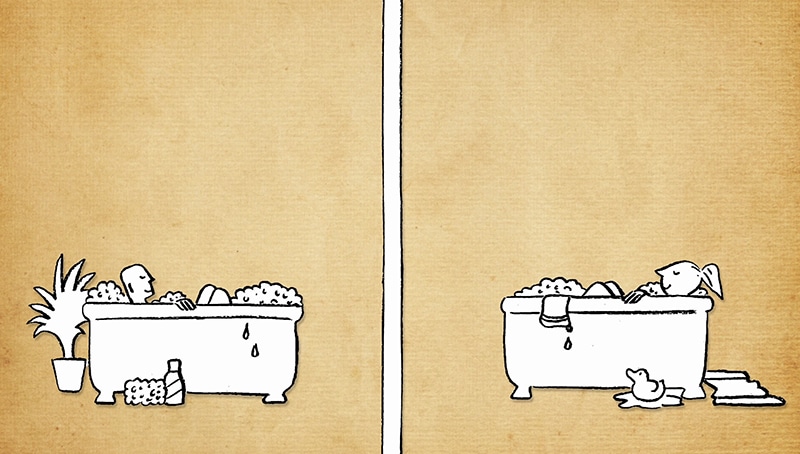
Having addressed the most common problems, we would like to give you 7 practical tips from our experience in couples therapy.
- Nurture your communication. To the question "What is the most important thing in a long-distance relationship?" the answer is quite simply: communication. Talk to each other, stay in touch, open up to one another, and share your feelings with your partner.
- Align your expectations. Unclear and differing expectations are among the most frequent causes of conflict in any relationship. In a long-distance relationship, this effect can be dramatically amplified. Get your expectations on the same page. Discuss openly when and how often you plan to talk on the phone, when and for how long you will see each other (again), and how you generally want to behave at your respective residences (e.g., is going to a club alone okay?).
- Schedule digital dates. The more often you can have "real dates," the better. For many couples, however, this is rarely possible—it's simply the nature of long-distance relationships. Since WhatsApp chats, phone calls, or video calls often happen spontaneously when both of you have time, they unfortunately tend to get neglected in everyday life. Therefore, plan digital dates—times when you can get comfortable and dedicate exclusive time to each other. Whether you then share stories about your recent days during the (ideally video) call or take things a little further is entirely up to you. 😉
- Werden Sie kreativ. Sie können der schleichenden Entwöhnung wunderbar entgegentreten, indem Sie sich immer wieder kleine Überraschungen und Dinge überlegen, um die Beziehung auch über die Distanz hinweg spannend zu halten. Schicken Sie Ihrem/Ihrer Liebsten ganz altmodisch einen Liebesbrief, senden Sie ein aufreizendes Foto von sich (vorausgesetzt, Ihr Partner bzw. Ihre Partnerin geht damit vertrauensvoll um) oder überraschen Sie den anderen zwischendurch evtl. sogar mit einem persönlichen Besuch (Tipp: Das sollte idealerweise mit jemandem aus dem direkten Umfeld des Partners geplant werden).
- Schmieden Sie Pläne. Wenn Sie in Ihrer Fernbeziehung gemeinsame Pläne schmieden, bestätigen Sie damit Ihrem Unterbewusstsein, dass Ihre Partnerschaft auch weiterhin eine lebendige Zukunft hat.
- Genießen Sie die Gefühle. Ein Moment starker Sehnsucht mag sich schmerzhaft anfühlen. Machen Sie sich aber gemeinsam bewusst, wie dankbar Sie sein können, einen Menschen zu haben, den Sie so innig vermissen. Sagen Sie einander, wie groß Ihre Vorfreude auf das Wiedersehen ist - dass Sie es kaum erwarten können, einander wieder in den Armen zu halten.
- Stärken Sie Ihr Profil. Eine Fernbeziehung ist eine hervorragende Gelegenheit, sich darauf zu besinnen, was Ihnen wirklich guttut. Sie haben vermutlich eine ganze Menge an zusätzlicher Zeit. Nutzen Sie diese, um Hobbys nachzugehen, sich fortzubilden oder Ihre Freundschaften zu pflegen. Wenn Sie es richtig angehen, treffen Sie sich beide als selbstbewusstere und insgesamt womöglich sogar zufriedenere Menschen wieder.
Wann sollten Sie die Fernbeziehung beenden?
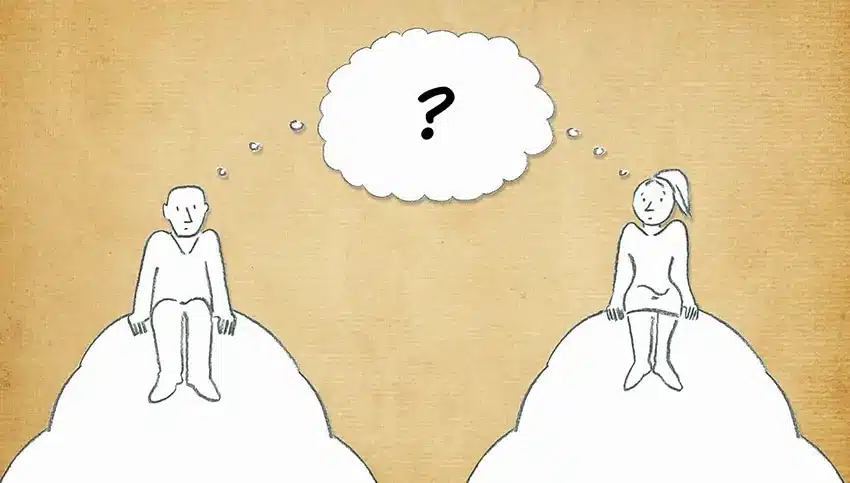
Allen guten Vorsätzen zum Trotz kann sich im Laufe einer Fernbeziehung herausstellen, dass Sie einfach nicht mehr so richtig zueinander passen oder anderweitige Gründe für das Aus einer Beziehung sprechen.
Eine Fernbeziehung ohne Perspektive kann sich anfühlen wie eine Trennung auf Raten.
Sie sollten allerdings nicht vorschnell Abschied nehmen oder Ihren Partner mit Trennungsplänen überrumpeln. Denn oft ist nicht die Partnerschaft selbst das Problem, sondern lediglich die Distanz. Sie haben vielleicht das Gefühl, Ihre Bedürfnisse würden mit dem bzw. aktuellen Partner(in) nicht erfüllt - in Wahrheit fühlen Sie ganz anders, sobald Sie einander wiedersehen.
Bevor Sie einen Schritt gehen, der Sie nicht mehr rückgängig machen können, lassen Sie sich Ihre Gedanken noch einmal ganz in Ruhe durch den Kopf gehen und holen sich idealerweise die Meinung von Außenstehenden (am besten: eines emotional nicht persönlich involvierten Experten) ein.
Sollten Sie nach reiflichen Überlegungen zum Entschluss kommen, dass eine Trennung die beste Entscheidung ist, kann die Phase der Fernbeziehung tatsächlich ein 'guter' Zeitpunkt für ein Beziehungsende sein - da die Entwöhnung voneinander in vielen Fällen den Trennungsschmerz ein wenig lindert.
Trennung? Erst einmal PaarBalance

Our tip: Only break up when you have truly tried everything .
Only in this way can you prevent nagging doubts and "what if?" questions should things not work out, and be optimally prepared for a future relationship. Furthermore, our experience as couples therapists has shown:
In most cases, relationships can be restored to a harmonious and stable foundation by adjusting the right parameters.
Even if you're not currently considering a breakup, but a longer period of long-distance relationship is likely ahead, now is the perfect time to strengthen your relationship and make it future-proof. We'd be happy to support you in this.
The innovative online coaching program from PaarBalance , which my colleague, the couple therapist and author Prof. Dr. Ludwig Schindler and I ( Dr. Judith Gastner ) significantly developed and scientifically supported, shows you step by step how you can put your relationship on a new foundation .
The program
- represents the ideal complement to couples counseling and couples therapy or
- can be used purely as a self-help program .
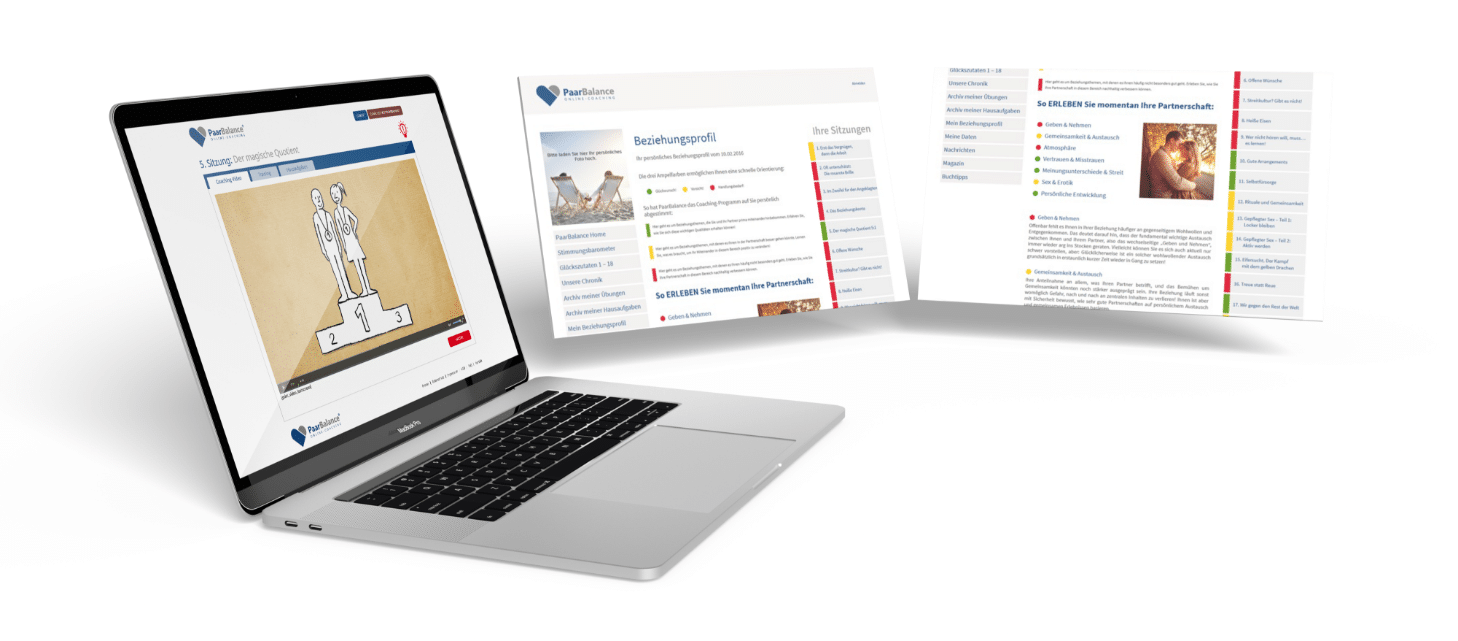
You can use CoupleBalance both during a trial separation (alone) and while in an ongoing relationship (both partners simultaneously or one partner individually). Engaging coaching videos and concrete support, aligned with current standards in cognitive behavioral therapy, provide couples with a wealth of proven recommendations and specific tips to help them...
- to relax the atmosphere.
- to improve communication.
- to see the positive sides of the other person again.
- to solve even persistent problems.
- to be able to enjoy life as a couple again.

Developed by couples therapists. No waiting lists. Self-determined. Affordable.
We wish you all the best and send our warmest regards,
Dr. Judith Gastner & the PaarBalance team
☝🏻 Related articles on the topic of "Long-distance relationships: How to make love work at a distance"
Frequently Asked Questions
When is a relationship considered long-distance?
As the name suggests, a long-distance relationship involves a couple living far apart, meaning the two partners cannot meet in person without significant logistical effort. However, there is no universally accepted definition of the term. A general rule of thumb is that a long-distance relationship is considered to exist if the travel time to meet exceeds two hours.
Are long-distance relationships unstable?
Surveys show that about 60% of long-distance relationships last, while approximately 40% end. This means that more couples in long-distance relationships stay together than break up. If a relationship does end, it typically lasts after 4.5 months. Crucial for successful long-distance relationships is that both partners can cope emotionally with the distance and genuinely want to maintain the relationship.
What challenges arise in a long-distance relationship?
Long-distance relationships present unique challenges. Feelings like longing and heartbreak must be managed, and fair solutions are needed for financial burdens (travel expenses, maintaining two residences, etc.). If the long-distance relationship exists because one partner is fulfilling a dream (e.g., a job abroad), the other may feel rejected.
What can you do to improve a long-distance relationship?
Communication is the most important foundation for a successful long-distance relationship. Regular "digital dates," where partners spend time together despite the distance, often work wonders. Both partners should align their expectations (frequency of contact, availability, etc.) and make future plans together. Small gifts or love letters sent by post strengthen the bond.
When should you end a long-distance relationship?
A breakup should never be taken lightly. Are there truly irreconcilable differences in the relationship the problem, or is it the distance itself? Are each partner's wishes and needs met when they see each other in person and are in the same place – or are there still tensions? An outside expert's assessment can be very helpful.