








☝🏻 Quick start: Do I still love him? Tips from couples therapists
We all enjoy the feeling of being in the right place at the right time - with the right person or people .
Our partner is one of the most important people in our lives. We want to feel completely safe and secure with them – without any ifs, ands, or buts. We want to be loved by them . We want to love them with all our hearts .
So what does it mean when questions suddenly arise within us such as:
- "Do you still love him at all?"
- "Do you still feel loved?"
- "Do you really want to grow old by his side?"
- "Can you imagine staying with him for the rest of your life?"
- "Is this how you imagined a 'long-term relationship'?"
- "Don't you want to experience much more?"
- "Do you really still think you two are a good match?"
- "Does your sex life (or what's left of it) make you happy?"
- "Do you still have enough to say to each other?"
- "Don't you want to feel truly in love again?"
etc. etc.
It's probably been quite some time since you and your partner first met. The intense infatuation phase is over, and the initial passion has largely faded. So what's left of that former love and connection? Have all those positive feelings simply vanished without a trace?
The big question about love is probably one of the most difficult in our lives. And ultimately, it can only be answered by each person for themselves.
The reassuring news first:
A relationship is far from over just because the butterflies in your stomach are no longer felt, because many things have become routine, or because there are some problems to solve.
Feelings towards one's partner change over time for all couples. And by all couples, we mean all couples... 😉
With this article, we would like to help you find out for yourself,
- how you can recognize ' love ' (even if it has changed its form over time)
- What signs indicate that there is truly no love left?
- which could be the next steps that are most suitable for you .
For all those who decide to give their relationship another real chance, we will share proven tips from couple therapy practice and couple therapy research:
- What is needed for being together to feel enriching again?
- How can a relationship that is already 'on the rocks' be saved?
🚀 Already 65,511 people have gained clarity through the test.
The most important question: Why are you feeling uncertain right now?

Almost all couples reach a point over time where they question their feelings for their partner. This is nothing unusual – and can even have a very positive effect on the entire relationship – but only if the doubts are consciously acknowledged and ultimately resolved.
If the question "Do I still love him?" pops into your head either suddenly or very frequently, it could be a sign that something has changed , e.g.
- in your relationship itself or
- in the evaluation of your relationship or
- in your fantasies or
- in your environment or
- in your life planning
What exactly that is remains to be seen. There are many reasons that – depending on personal temperament and individual circumstances – can lead to a mild sense of unease or even to a major emotional turmoil.
Important:
It is not necessarily a lack of love that is the decisive factor for temporary insecurity regarding one's own partnership - even if it may initially feel that way.
Possible reasons for your uncertainty
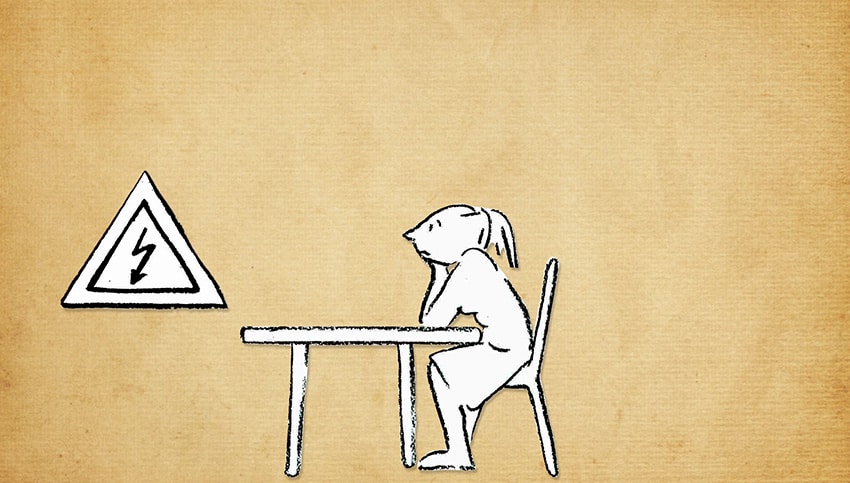
There are many reasons why we might one day find ourselves in emotional turmoil and no longer know if we are (still) doing 'the right thing'.
Do we really (still) have the 'right' partner by our side? At what price are we willing to cling to the relationship? Don't we need to change something fundamental – and if so, what?!
Some of the most frequently cited reasons why people no longer feel comfortable in their partnership (temporarily or permanently) and question their feelings are:
- "I no longer feel seen / understood / supported by the other person."
- "I was deeply hurt/disappointed by my partner."
(-> if an affair is the cause, you can find specific help > here <)
- "I myself have hurt/disappointed my partner very badly."
- " Sex and eroticism has become a difficult topic for us."
- "Somehow, the spark has gone out between us."
- "I have fallen in love with someone else ."
- "We no longer make time for each other ."
Do you recognize yourself in one (or more) of these statements? Then approach the respective topic with as much calm and openness as possible. Feel free to also read our specific blog articles. Take your time to organize your thoughts. Don't rush into anything.
Better understand your own insecurity
Analysis of the strengths and weaknesses in your partnership (scientifically based relationship test, duration approx. 10 minutes, free of charge)
- In how many and in which areas am I currently dissatisfied?
- What are our strengths as a couple? Was I (still) aware of that?
For example, the scientifically based CoupleBalance test by Prof. Dr. Ludwig Schindler & colleagues offers such a comprehensive relationship check:
Take your relationship test now! (free)
How is your relationship?
What are your strengths and weaknesses?
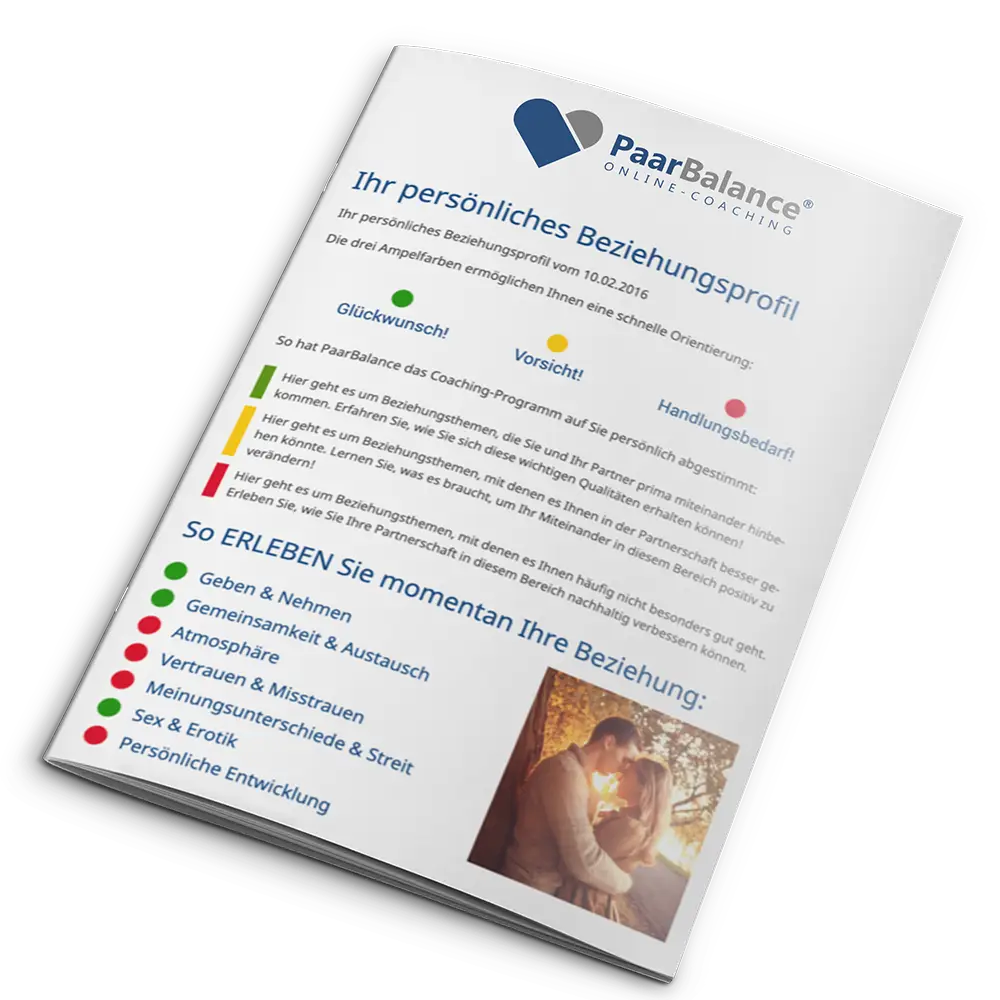
You will find out immediately afterwards in your personal PaarBalance relationship profile (free).
Start your relationship test now!
✓ Scientifically sound
✓ Includes detailed analysis
✓ Your data will not be shared
✓ 100% free & non-binding
100% secure. We comply with data protection regulations. Registration for the relationship test is free .
Please read this important information beforehand:
Data Protection ᐧ Terms and Conditions ᐧ General Information Agreement Terms and Conditions . Transparency Statement
How do I know if I still love him?
Big questions like "Do I still love him?" or "Does he still love me?" or "Do I want to stay with him?" can never be answered quickly. Where emotions are involved, things become more complex. There is no clear black or white , yes or no .
We want to help you to look at your relationship with as nuanced a perspective as possible.
It's best to find a place where you won't be disturbed.
Make yourself comfortable.
Take a few deep breaths.
Briefly consider each of the following questions.
What's going through your mind? What are you feeling? Listen to your heart.
These signs can help you tell if you still love your partner.
First, try to bring your thoughts and feelings together and feel what specific memories of your shared relationship history and your past and present interactions trigger within you.
(1) The beautiful moments
Remember the beginning of your relationship. What was the day you first met like? What exactly did you fall in love with? How did it feel: the first conversations, the first glances, the first caresses, the first kiss, the first time having sex, the first "I love you," the first day spent together, the first weekend together, making plans for a vacation together for the first time, the first thoughts of a future together, the feeling: This is him! - My husband .
Are there many positive memories from that early time as a couple? What are you feeling at that moment? If a good friend were to ask you now : "Do you still love your husband? Do you think you made a good choice with him?" – What would your spontaneous answer be?
(2) The difficult moments
Now, think back to some less pleasant moments. Did something make you feel insecure or bother you from the very beginning? How did you feel back then: The first misunderstanding. The first annoyance. The first hurt. The first argument. The first doubts. The first major problems. The first time you had the feeling: "Maybe it's not as good a fit as I thought."
What moments come to mind spontaneously? What do you feel when you think back on them? How would you answer the question "Do I still love him?" for yourself in that exact moment ?
(3) Their interaction with each other
How did you interact with each other when you were newly in love? What characterized your communication back then, and what characterizes it today? Do you perhaps treat each other differently now than you did before?
If we notice that the tone is becoming harsher, that we are speaking to our partner more harshly and carelessly than we would to friends and colleagues - then action is needed!
(4) Tolerance, respect, appreciation
What do you understand by tolerance , respect , and appreciation ? What about love and togetherness ? In which areas were you different from the beginning, and in which were you similar?
Unfortunately, it happens relatively often that we embark on a "major re-education program" in a relationship, trying to change the very person we love. We increasingly criticize and reprimand them. Perhaps we even perceive this as relatively normal because we sometimes witness similar behavior in other couples. But this should by no means remain normal . Because: Frequent criticism "does something" to both the person being criticized and the critic. Daily criticism creates emotional distance .
Cause and effect: Where do I stand? How do I contribute to our relationship?
If you are still asking yourself "Do I still love him?" and "Is it worth giving our love another chance?", then now is the right time to focus on all the causes that you yourself – consciously or unconsciously – are creating in your relationship , because:
Our own behavior, attitudes, and experiences greatly influence the behavior, feelings, and experiences of our partner—and thus also the dynamics and atmosphere of our relationship.
Therefore, it is extremely important to regularly focus on the signals you yourself are sending out.
Take the test for yourself and find out more precisely what your personal contribution is to the quality of your relationship .
(1) How willing am I to compromise ?
Disagreements can occur in any partnership . We can't agree with each other on every point – and that's precisely what makes relationships interesting. But how do we deal with it when different needs and perceptions clash?
- Do you sometimes (mis)interpret personal differences as a sign of discord or even a lack of 'being loved' or 'loving'?
- Do you address such things or do you swallow your displeasure?
- And honestly: Is it primarily important to you to implement your own plans – regardless of where your partner is at – or are you generally willing to compromise in your relationship?
If you (still) want to have an open exchange with your partner and find fair compromises, you can interpret this as the first positive sign in your search for the answer to "Do I still love him/her?"... 🙂
(2) How respectful am I?
What are your (completely honest!) answers when you think about your partner and ask yourself:
- Have you really treated him respectfully lately?
- Do you think he feels that you see and appreciate his contributions to the relationship?
- When was the last time you told/texted him that you were thinking of him or that you loved him?
- Do you really want him to feel comfortable in your presence?
- Are you still listening to him attentively? Do you want to know what's on his mind?
- Have you hurt him recently? Can you say with certainty that you haven't accidentally offended him, or even intentionally hurt him at times?
Treating other people with respect is not just an aspect of the question "Do I love or do I not love?", but has a lot to do with a fundamental personal attitude.
(3) How unconditionally do I love?
The more we are accepted with all our quirks and peculiarities, the more comfortable and secure we feel. Nobody wants to be 'twisted' or molded according to someone else's ideas.
When we love someone, we want them to be relaxed around us. However, our partner's differences can sometimes feel like a major test of tolerance.
- How well do you manage to accept your partner with all their quirks and flaws?
- Are you happy for him – even if he's having a good time without you?
- Are you happy when he is happy – even if you can't be there yourself?
- Do you happily give him what is good for him – without expecting anything in return?
Being able to do good things for your partner without waiting for them to 'reciprocate' is a sign of love.
(4) How willing am I to change?
What is your answer here: Is it still important to you – or are you willing to – 'work' on yourself so that your partner feels as comfortable as possible in your relationship?
- Do you do certain everyday things differently 'for his sake' than you would for yourself? (For example, do you put your glasses away after using them because you know that it would otherwise bother your partner?)
- Or do you (now) not care – and are you even consciously accepting his displeasure?
If you continue to strive to ensure that your boyfriend or husband is happy in your relationship – even if this sometimes involves restrictions on your 'comfort zone' – then this is a clear sign that your relationship is still important to you.
If you are careless with regard to such supposed 'little things' or are no longer willing to make an effort for the other person, this can signal a growing disinterest in your partnership as a whole.
(5) How flirty am I?
"Do I still love him?" "Do I long for other men?" How much do these two things have to do with each other? Were and are there (still) clear boundaries for you, such as: "You would never do that – even if you might want to at a certain moment or find it very exciting..."?
- Do you often think longingly about other men?
- How open are you to flirting?
- Do you sometimes catch yourself imagining what your future would be like with another man?
It's not a problem to let your mind wander and your imagination run wild from time to time. However, if this becomes excessive, it should give you serious cause for concern.
That's a clear sign that something is missing in your relationship, something you really want. What is it?
(6) How future-oriented am I?
The question "Do I still love him?" is not only about our present, but also has a lot to do with our future plans. Where do you see yourself when you mentally 'beam' yourself into the future?
- Does your partner still play a central role?
- Do you have any idea that you could grow old happily with your partner by your side?
- Do you generally pull together and often implement plans and goals jointly?
If you can answer most of these questions with "yes", then love is still in the game and it's worth working on the aspects you would like to be different.
What you can do to revive your relationship
Do you think that in recent years it hasn't been your love as a whole that has suffered, but rather that – caught in the daily grind – 'only' the way you treat each other has changed? Would you like to rediscover a loving "we"?
(1) Treat your partner with respect
Love is always about respect. Treating each other with respect is one of the foundations upon which a happy relationship can flourish. As already mentioned, mutual respect is an indicator that love is present – without it, the relationship is in trouble.
If respect hasn't been completely lost, we can consciously cultivate it again. Don't take your partner for granted, but show them your appreciation and the value they have for you. Loving manners such as a friendly greeting and farewell should (once again) be as natural as expressions of goodwill and gratitude.
(2) Address needs and desires
Is your relationship important to you, but are there recurring disagreements? Do you feel uncomfortable or as if your boundaries aren't being respected? Talk to your partner – because if you don't share your feelings with them , they have no chance of truly connecting with you. If they also care about the relationship, they will most likely reach out to you.
Does it bother you, for example, that he's constantly late and doesn't think it's necessary to at least send you a short message? Tell him this – perhaps repeatedly – and say what you would like to change . Make sure to maintain a consistently respectful tone.
Be honest with your partner about your desires. Even if they've known you for a long time, they can't read your mind. Listen to your needs and communicate them directly. Closeness, love, security, peace, and much more want to be seen and heard. Take responsibility for your emotional well-being and maintain self-care within the relationship.
(3) Strengthen your communication
It's not just important that you talk about needs – but above all, how you do it . Over the years, almost all couples develop a certain " communication routine ." Certain patterns become habitual. Unfortunately, this often includes generalizations and "you-messages." It might sound something like this:
- "You're always late..."
- "Why do you always have to..."
- "Why can't you finally..."
- "Why do you feel attacked immediately..."
- "Can't you just once..."
- "You've never been particularly good at talking about problems..."
It's far better to calmly address specific examples. Refer to the concrete situation and focus on your feelings, not the (utterly impossible ;-)) behavior of the other person. Then give your partner time to reflect and describe their perspective. So-called "I-messages" are always a good choice. In our first example, a better formulation would be: "It hurt me earlier that I had to wait for you for half an hour without knowing why you weren't coming."
Stay focused on the present moment during an argument . Don't dwell on your partner's past mistakes or potential future ones. Of course, making concrete suggestions about how you envision your life together is perfectly acceptable.
(4) Stay in touch with your partner
In long-term relationships, text messages or even phone calls during the day become increasingly rare. Often, texts are only exchanged when something urgent arises – whether to let someone know they'll be late from work or to ask the other person to do some shopping.
Try to strengthen your connection by consciously sending your partner thoughtful gestures again – regardless of your daily routine. Small messages are a sign that you're thinking of each other, even in the midst of a stressful day.
While grand gestures are nice for our memory box, it's the small gestures that make up our quality of life.
(5) Make sure to schedule regular time for togetherness
For your relationship to flourish, you need sufficient time together: time as a couple where you consciously leave everyday life and household chores behind. Thoughts of "You still have to..." have no place in this quality time. Rekindle intimacy and closeness, do something together that makes you both feel good. Consciously create space to be physically close again. Perhaps you could even break with routine and try something new together, erotically speaking.
This increases the chances of rekindling passion in your love life, even in a familiar relationship: New places, new times of day, new positions create a new spark. This not only strengthens your sex life, but also your love as a whole.
(6) Take time for yourself
Although it may sound paradoxical, closeness can also grow through distance . Love is a child of freedom. Regularly do things alone or with your friends, continue to pursue your interests and hobbies, keep your everyday life vibrant. After all, those who are always glued to each other can't miss each other.
Do I still love him, or is it just habit?
You might ask yourself, "Do I still love him, or is it just habit?" This is a common question that people in long-term relationships often ask themselves. It's important to recognize that love and habit are two different things.
Love is an intense feeling of affection and tenderness towards another person.
Habit, on the other hand, is an action that is repeated so often that it becomes automatic.
If you're wondering whether your feelings for your partner are based on love or habit, you should pay attention to certain signs. Is the passion missing in your relationship? Do you feel emotionally distant from your partner? Are you happier when you spend time without them?
If you answer yes to these questions, it could be that your relationship is based more on habit than on love.
It's important to recognize and address these feelings in order to have a healthy and fulfilling relationship. Online couples therapy can help clarify these issues and find ways to rekindle the love in your relationship.
Conclusion: The big "Do I still love him?" question
Is it still love? Many relationships reach a point sooner or later where both partners ask themselves this question. That's perfectly normal. Other areas of life also have their ups and downs . However, if the question "Do I still really love him?" or "Does he still love me?" is a recurring theme over a longer period, it's time to take a closer look.
In diesem Artikel haben wir Ihnen Hinweise genannt, wie Sie überprüfen können, ob noch Liebe vorhanden ist. Ist das der Fall, gibt es bewährte Maßnahmen, um der Beziehung wieder auf die Sprünge zu helfen.
Unsere Partnerschaft ist ein essentieller Teil unserer Lebensgeschichte und es gibt einen großen gemeinsamen Erfahrungsschatz. Daher lohnt es sich fast immer, um die Liebe zu kämpfen.
Der erste Schritt ist zugleich der Wichtigste:
Sprechen Sie mit Ihrem Partner. Vergewissern Sie sich, ob Sie beide noch dasselbe Ziel verfolgen. Kämpfen Sie gemeinsam für Ihre Liebe und werden Sie wieder ein Team.
Wir wünsche Ihnen alles Liebe für sich und Ihre Beziehung!
Ihre Dr. Judith Gastner & das PaarBalance-Team
☝🏻 Passende Artikel zum Thema "Liebe ich ihn noch?"
Frequently Asked Questions
Why am I unsure whether I still love my partner?
It's normal for feelings for your partner to change over time. However, if these changing emotions are accompanied by arguments, sexual dissatisfaction , or a lack of time together, it can be very unsettling. Recommendation: For one week, treat your partner with the same loving and attentive care you showed at the beginning of your relationship. What happens?
How can you tell if you still love your partner?
Those who consciously pay attention to the feelings triggered by memories of their shared relationship history can usually identify which emotions predominate. Particularly revealing are the emotions that arise when thinking about the beginning of the relationship, early difficult moments, or the thought of ultimately losing the other person.
Is it my fault if I'm unsure whether I still love my partner?
In a relationship, the experiences and behavior of both partners always influence each other – and thus also the dynamics of the partnership. Therefore, it's important to understand your own contribution to the atmosphere of the relationship as comprehensively as possible. How willing to compromise, respectful, loving, open to change, loyal, flirtatious, and future-oriented am I myself?
How can you rekindle the loving feeling for your partner?
If the foundation of love is intact, small changes can bring back those warm and positive feelings. What happens if you try to act as loving and interested as you did at the beginning of your relationship? And what if you rediscover your own unique personality, giving each other even more to talk about?
How do I know if it's love or habit?
Many people in long-term relationships wonder whether they still love their partner or are only together out of habit. If passion is lacking in the partnership, if one feels distant and is happier spending time apart, these can be clear signs that a couple is no longer together out of love.