






☝🏻 Quick Start: Overcoming Emotional Dependency Without Separation

There's so much love and affection there – and yet the relationship is under immense strain. This is true for far more couples than one might initially suspect.
A frequently underestimated reason: emotional dependency. One partner is clingy and has intense fears of abandonment.
The clingy partner lives in constant, vague fear that the other person might leave – even if there are no signs of this. At the same time, they feel they cannot (or can no longer) exist without their loved one by their side.
Such a cocktail of emotions is naturally stressful – for the person affected, but also for the entire relationship dynamic.
The interaction between both partners is constantly influenced by this fear of loss – sometimes more overtly (e.g., through words demanding reassurance or accusatory remarks), sometimes more subtly (e.g., through worried glances or hurt withdrawal).
This is especially experienced as grueling by the partner who feels more "free" in the long run - and the initial ease gradually disappears.
Against this background, the exciting question is:
- Must a long-standing, entangled relationship be ended so that the dependent partner can first learn to develop a loving relationship with themselves ? To gain a large dose of self-confidence, self-esteem, and independence, while simultaneously reducing excessive fears and insecurities, so that an equal partnership even becomes possible in the first place?
- Or can an "affected" person break free from their emotional dependence on their current partner – even without separation ? And learn, almost "at a gallop," to change their restrictive "mindset" along with all the associated emotional entanglements ?
The short answer is (Warning, spoiler alert! ;-)):
If...
- Both partners "in principle" want to continue sharing their lives together and holding on to each other,
- the " independent " partner derives no satisfaction from the other being "dependent",
- the " dependent " partner has understood that their attachment does not secure love, but rather endangers it,
- both embark on a deep transformation process,
YES!! - then emotional dependency can be resolved even without separation.
The path to achieving this, however, requires courage (especially from the dependent partner), confidence (from both), patience (especially from the non-dependent partner) – and often professional support from an outside person.
But then, the worthwhile positive transformation towards a relationship of equals becomes possible.
And anyone who has ever experienced that "love is a child of freedom" and what an appreciative, benevolent relationship feels like, one that is no longer characterized by fear of loss, neediness, and an imbalance – will never want to experience it any other way again...
In the following, we outline the most important background information on the topic of "emotional dependency" and then address our initial question:
What is needed and how can excessive neediness be managed and the gnawing feeling of fear of loss and entanglement be resolved – without separating from the beloved partner?
🚀 2,886 people have gained clarity through this free test.
"Overcoming emotional dependency without separation" – sounds good. But what exactly is emotional dependency ?
Emotional dependency is a dysfunctional attachment pattern characterized by an excessive fixation on the partner and extreme fear of abandonment. Those affected are often almost incapable of regulating their own emotions. They constantly need the reassurance and closeness of their partner to feel secure.
How can I know if I am emotionally dependent?

Option 1: Take the self-test
If you're unsure whether you're emotionally dependent, our free self-test can help : In just 2–5 minutes , you answer 12 short questions – spontaneously and honestly. Immediately afterward, you'll receive your personal evaluation via email and gain more clarity about your attachment patterns.
Start your free self-test now!
✓ Only 2-5 minutes of your time
✓ Instant assessment of your relationship dynamics
✓ 100% free & no obligation
As someone "affected," it's often difficult to recognize your own interaction patterns. You only have a vague feeling of repeatedly getting caught in an unhealthy dynamic – without being able to pinpoint the reasons for it. A self-test can provide a first, more objective assessment.
Option 2: Pay attention to signals from your environment
While those affected often only recognize and name their emotional dependency as such much later (if at all...), those around them usually recognize the patterns much earlier: friends, family members, and others point out that the relationship has become unbalanced. Or the partner themselves is annoyed that their entire life now revolves solely around the relationship.
This external perspective can be extremely valuable because it reveals blind spots. Certain behavioral patterns – such as neglecting one's own friendships and interests – are also often first noticed by others.
Ultimately, however, personal insight is crucial:
Only when you realize that your happiness and well-being should not depend solely on your partner is real change possible.
Symptoms of emotional dependency
Emotional dependency manifests in relationships through a variety of symptoms that can significantly impact daily life, the partnership, and personal well-being. Typical signs include:
a constant need for closeness, attention and validation from the partner
extreme fear of rejection or separation
Self-sacrifice for the sake of the other's needs
Difficulties spending time alone or maintaining one's own friendships
controlling behavior motivated by fear of loss
a strong dependency in which one's own happiness and self-esteem are completely projected onto the partner.
These symptoms often lead to a noticeable imbalance in the relationship. Those affected suppress their own wishes and needs in order to stabilize the partnership – and this is precisely what intensifies the dependency.
From a psychological perspective, these patterns are closely linked to John Bowlby's attachment theory. People with an insecure attachment style often develop a distorted sense of identity: they experience their worth almost exclusively through the love and affection of their partner. This often stems from deeper underlying causes – such as traumatic childhood experiences, negative beliefs ("I am worthless without him/her"), or unresolved emotional wounds.
The result is a love relationship in which closeness and freedom are out of balance. Criticism or distance from the partner is quickly perceived as an existential threat.
Without a conscious change, the emotional dependency persists – and prevents a healthy partnership on equal terms.
How does emotional dependency develop?
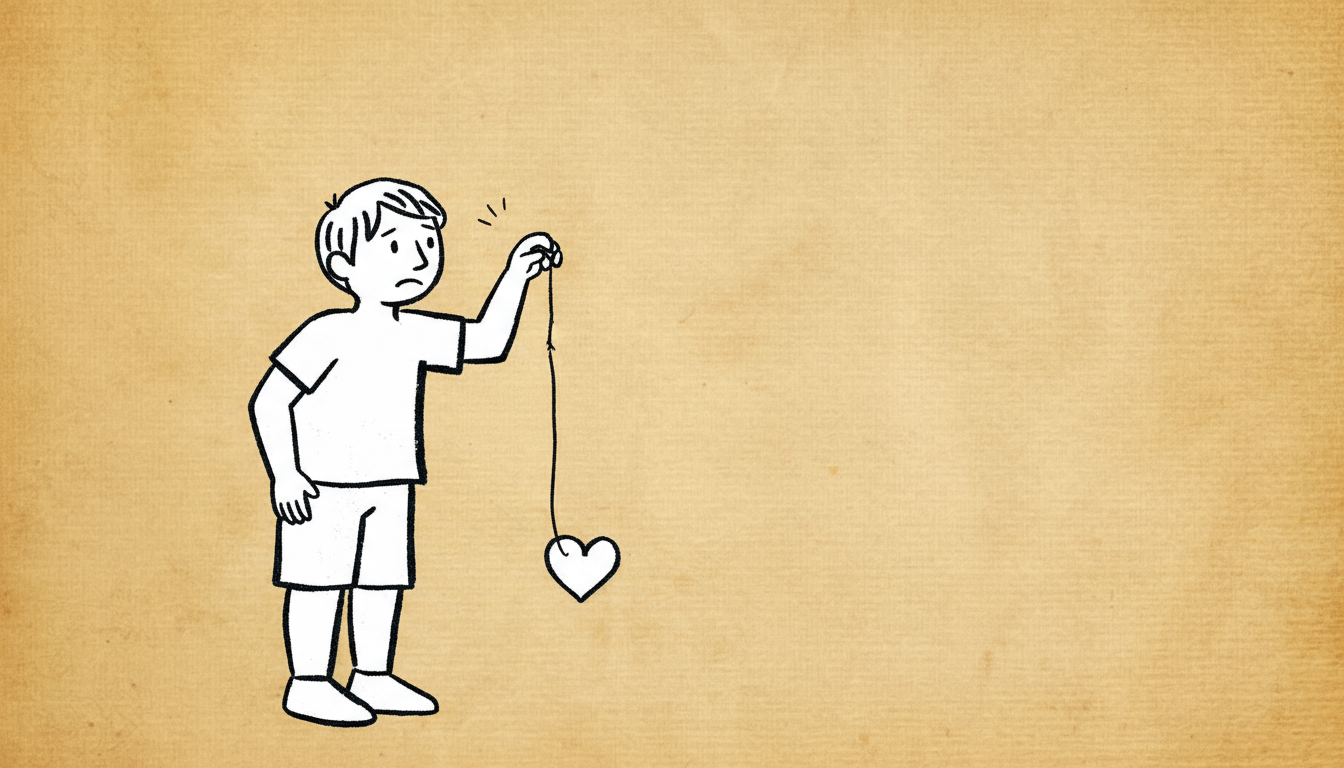
The roots of emotional dependency often lie in early childhood. Developmental psychological factors such as inconsistent affection, emotional neglect, or attachment trauma have a lasting impact on later relationship behavior.
Traumatic relationship experiences in adulthood – such as emotional abuse, betrayal, or repeated injuries – can also lead to dependent attachment patterns.
From a neurobiological perspective, the body's memory stores these experiences as implicit memories. Stress hormones like cortisol and adrenaline are automatically activated in similar situations. Stephen Porges' polyvagal theory describes how our nervous system reacts to threats and puts us into survival mode – even without actual danger.
Why is emotional dependency not purely a matter of the mind?

Many people believe that rational insight is sufficient to overcome emotional dependency. But this assumption falls short.
Emotional dependency is deeply rooted in our subconscious and body memory.
A crucial step in overcoming emotional dependency is to consciously perceive and accept one's own feelings in order to promote emotional independence.
Fear of commitment or the threat of separation automatically triggers "fight-flight-freeze" responses. The body reacts as if it were a matter of life or death – an evolutionary protective function that, however, becomes dysfunctional in modern relationships.
These physical reactions occur because traumatic experiences are stored not only in the brain, but also in the nervous system and the body. Bodily signals such as a racing heart, sweating, or the proverbial "lump in the throat" are therefore not imaginary, but real physical reactions to emotional triggers.
Steps to resolving emotional dependency without separation

Liberation from emotional dependency without separation from the partner begins with clear steps that involve the head, heart, and body.
1. Awareness work and self-reflection
The first step is to recognize and understand your own patterns.
Keep an emotions journal . Observe the situations in which fear of loss or controlling behaviors arise. Note these emotionally challenging moments (as soon as possible and uncensored) in a few keywords.
Reflect on your childhood experiences . What was the relationship like between you and your primary caregivers ? Were there people who made you feel seen, safe, and loved? Were you afraid of not being "good enough"?
What was the division of roles in previous relationships? Was there an imbalance? Did one partner "need" the other more? In which areas was there a partnership of equals?
2. Development of autonomy
Consciously cultivate your own interests, hobbies, and friendships. Define your personal values and goals independently of your partner. Emotional autonomy is essential for healthy relationships. Make your own decisions. Even consciously choosing small things in everyday life strengthens your sense of self-determination.
3. Setting boundaries and communicating needs
Learn to recognize your own needs and communicate them clearly. Practice setting boundaries without being manipulative or accusatory. This requires practice and often therapeutic support.
4. Emotional and somatic regulation
Since emotional dependency is physically rooted, regulation techniques are indispensable:
Breathing exercises: Conscious breathing activates the parasympathetic nervous system and calms the nervous system.
Embodiment practices: Body awareness and mindful movement
Progressive muscle relaxation: Reduces physical tension and stress
Meditation and mindfulness: They train awareness of the present moment.
5. Learning and practicing self-care
A key step in resolving emotional dependency (without separation) is the conscious practice of self-care. Many affected individuals lose sight of their own needs within the relationship and make their entire happiness dependent on their partner.
Therefore, ask yourself regularly: What do I need to feel good? Pay attention to exercise, sleep, nutrition, and small rituals that don't make your happiness dependent on others. Self-care means taking care not only of your body, but also of your self-esteem and inner balance.
The more you integrate self-care into your life, the stronger your sense of self-determination can grow. This creates balance in your relationship and helps you overcome emotional dependency step by step.
Limitations of purely conversation-based approaches

Although talk therapy and cognitive approaches are important building blocks, they are often insufficient for deep-seated trauma or attachment patterns.
This is because emotional dependency is anchored not only in the rational mind, but above all in the limbic system and body.
Body-oriented methods have proven to be particularly effective as a complementary approach:
Somatic Experiencing (SE): Releases frozen survival energy in the nervous system
Emotional Freedom Techniques (EFT): Combines acupressure with emotional processing
EMDR: Processes traumatic memories through bilateral stimulation
Body psychotherapy: Integrates body awareness into the therapeutic process
These methods help to change the body's reaction patterns and create new neural pathways.
The combination of talk therapy and body-oriented approaches often shows the best results.
When is a solution to emotional dependency possible without separation – and when is it not?

It's not always possible to successfully resolve emotional dependency without separation – because no one can heal in an environment that makes them ill (in our case, that means: one that fosters emotional dependency). The quality of the relationship plays a crucial role.
Positive conditions for change:
The partner shows understanding and willingness to provide support.
Both are open to personal development
The relationship is fundamentally loving and respectful.
There is an atmosphere of trust and security.
Conflicts are resolved constructively.
In such supportive relationships, patterns of dependency can be transformed together. The partner can assume an important role as a "secure base" while the affected person learns to develop emotional independence.
When separation becomes necessary:
Unfortunately, there are relationship situations in which overcoming emotional dependency within the partnership is not possible:
Narcissistic abuse: manipulation, gaslighting, and systematic devaluation
Physical or emotional violence: Any form of abuse
Addiction problems: When the partner is unwilling to seek help
Toxic dynamics: Constant power struggles and destructive patterns
Fundamental incompatibility: Incompatible life goals and values
In these situations, consistent separation is usually the only option for self-protection in order to develop emotional freedom.
Conclusion
Resolving emotional dependency without separation is possible, but it is a path that requires time, patience, and often professional support.
The most important insight: Change doesn't just happen in the mind, but must also involve the body. Body-oriented approaches, in particular, can help to sustainably resolve deep-seated patterns.
At the same time, it's important to recognize that not every relationship provides the necessary foundation for resolving emotional dependency. In toxic or abusive partnerships, only the courage to separate can pave the way to emotional freedom.
If you suspect you are suffering from emotional dependency, don't hesitate to seek professional help. An experienced (couples) therapist or psychologist can help you assess your individual situation and develop a tailored path to recovery.
The journey to emotional freedom is challenging, but it leads to a more fulfilling partnership – or to the clarity that you need to take a new direction. Both paths are courageous and valuable and deserve respect.
Related articles on the topic of "Resolving emotional dependency without separation"
Frequently Asked Questions
What are the causes of emotional dependency?
The causes of emotional dependency are manifold. They often begin in early childhood with insecure attachment experiences or the belief that love can only be earned through achievement. Later, stressful relationships or traumatic experiences can be added to the mix. Unrealistic expectations of oneself or one's partner also reinforce the pattern. The truth is: there is never just one single cause – almost always, several factors are at play simultaneously.
What are some typical signs of emotional dependency?
Typical signs include a constant need for closeness, attention, and validation; fear of separation; self-sacrifice for the sake of the other person's needs; or the loss of one's own friendships. Someone who is emotionally dependent often feels worthless without their partner. This condition makes it difficult to independently manage one's own well-being.
Are there differences between men and women regarding emotional dependency?
Both men and women can be affected. Women are more likely to put their own needs aside, while men tend to exhibit controlling behavior. But at its core, it remains the same: those who focus their inner attention entirely on their partner lose sight of and sense of independence and self-determination. In the long run, this leads to an imbalance in the relationship – regardless of gender.
What role does self-esteem play in emotional dependency?
A stable sense of self-worth is crucial for overcoming emotional dependency. Without it, the relationship can become the sole source of happiness and security. Then, one's sense of well-being depends entirely on the partner's behavior. That's why it's so important to strengthen one's self-esteem step by step – through self-care, questioning old beliefs, and consciously experiencing one's own worth even without the other person.
Can a personality disorder increase emotional dependency?
Yes. Certain personality disorders, such as borderline personality disorder or dependent personality traits, can exacerbate emotional dependency. In such cases, it is particularly difficult to set boundaries or to manage one's own well-being independently of others. The truth is: no one consciously chooses this path, and no one is solely to blame. Professional support is especially important here.
What types of emotional dependency are there?
Psychology distinguishes between different personality types. Some people are anxiously dependent and constantly seek closeness and validation, while others fluctuate between closeness and withdrawal. Still others are strongly guided by the expectations of those around them. Recognizing which of these most closely applies to you is an important step in developing concrete strategies and overcoming emotional dependency.