



☝🏻 Quick start: Low sexual desire in men
"A man is always in the mood for sex!" - A widespread cliché or 'the truth'? - "But why doesn't he want to sleep with me then?"
This prejudice about the 'always ready man' actually has a kernel of truth: On average, men have a higher and significantly 'more direct' sex drive than women.
But why does my husband no longer desire me? What does it mean if my husband no longer has any desire for me?
- Is there something wrong with the man himself (anymore)?
- Could it be due to a change in his partner's/wife's behavior?
- Are there perhaps any undetected psychological problems or a physical disorder?
- Do stress and pressure play a role?
- Do the partners each know too little about the other's wishes?
If the issue of lack of sexual desire is not temporary but becomes a persistent problem, it can put a great strain on the couple's relationship in the medium and long term.
The good news
In most cases, the sexual desire of the partner who has become less interested can be regained, so that both feel more comfortable again with the type and frequency of physical intimacy.
So stay relaxed and confident! - You're doing perhaps the most important thing of all right now anyway:
- They are actively addressing the issue of 'lack of sexual desire'.
- You want to know more and learn more.
- They are open to suggestions and changes.
That's already 'half the battle'.
Although the topic of ' loss of libido ' may be associated with shame and insecurity for the individual, it is a 'mass phenomenon' and has now been thoroughly researched.
This article explains the most common causes of low libido in men and what you can do to overcome it. The average reading time is approximately 10 minutes.
Are you currently experiencing an erotic lull, are you simply sailing in calmer waters, or are you perhaps even more sexually active than other couples?
Take the self-test now!
🚀 2,891 couples experienced a new level of closeness through this test.
When it comes to eroticism and libido, there are many similarities between men and women, as well as some differences. We will examine both in more detail below.
First, we would like to shine a spotlight on how sexuality changes over time for the majority of couples.
Sexuality in a new partnership

Most couples experience a significant increase in physical desire during the initial phase of their relationship.
They can hardly keep their hands off each other, their bodies constantly talk to each other - and with every hand-holding, every caress, every kiss, every hug, they show how precious their new love is.
Is sexual activity decreasing in all couples?
At some point, libido isn't constantly running at full throttle anymore. This happens to most couples after a few months, at the latest after one or two years: Reading the newspaper in peace on Saturday, watching an exciting movie at 8:15 pm, or simply going to bed early again – suddenly, even these things have a considerable element of pleasure again... 😉
Over the years, the vast majority of couples have less sex. A decrease in sexual desire is a completely 'normal' development and no cause for concern.
However, younger couples in particular usually have relatively little experience with long-term relationships and therefore cannot draw on their own experience. Those who lack knowledge about what is 'normal' and what role eroticism plays in the lives of most long-term couples can understandably become insecure when their partner suddenly experiences a lack of desire. The unsettling situation can escalate – and then the cycle of worrying starts:
- "Could it be that she/he doesn't find me as attractive as before?"
- "Isn't that the beginning of the end for most couples, when one of them no longer desires sexual contact?"
- Will the spark ever return once the sex life has faded? - Can you even believe that yourself?!"
These and other questions are now being pondered at length.
Lack of motivation equals lack of love?
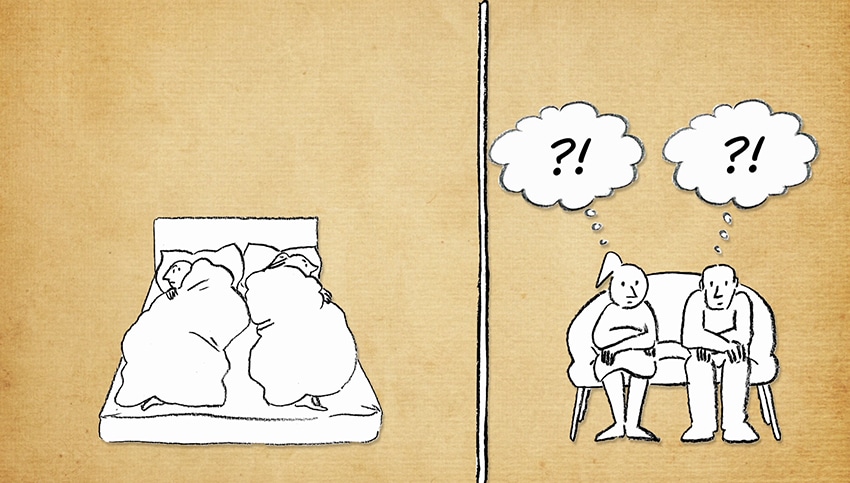
When libido declines, we often (mistakenly!) interpret this as a decrease in love. A lack of physical interest from a partner can trigger anxiety. In such a situation, women quickly find themselves racking their brains with questions like: "Does he not love me anymore?" "Am I no longer attractive to him?" "Does he find someone else more desirable?"
Don't fall into the self-destruction trap! Keep a cool head! The fact that libido decreases in both partners in a long-term relationship at some point (and most likely faster in one than the other) is – as has been said many times before – a natural phenomenon that you should definitely be aware of (you can find more on this topic in this article ).
A distorted image of love
One reason why so many couples perceive a decline in libido as threatening is a media-distorted image of love. The kind of love we know from childhood through television and film (be it Disney cartoons or Hollywood blockbusters) almost always depicts the phase of thrilling, initial infatuation.
Butterflies in the stomach, unbridled longing, and headlong desire are what many people subconsciously associate with the concept of love . However, this initial infatuation is only a very small part of what constitutes a happy love relationship over the years.
In reality, the initial passion gradually gives way to a feeling of familiarity and connection. And that's a good thing. Because the support that a long-term, stable relationship can provide is the most important prerequisite for happiness in life and for mental and physical health.
Of course, that doesn't mean that eroticism isn't important and beneficial in long-term relationships. Regularly bringing a little of that initial passion back into everyday life is extremely worthwhile... 🙂
If one partner has less desire
If both partners experience a similarly significant decline in libido, the situation is usually straightforward. To prevent less (or very little) eroticism from becoming a complete slump, couples in long-term relationships are advised to schedule regular time for intimacy, following the motto: anything goes, nothing is obligatory. This might sound unromantic, but it's far more romantic than if the diminished eroticism were to one day cease entirely (see also our article on sex myths) .
Conflicts arise primarily when one partner experiences a significantly earlier and/or more pronounced decline in libido than the other. The partner with the higher libido feels rejected and usually takes their partner's lack of desire personally.
In the following, we will examine the following situation: Sexual disinterest in men occurs earlier or more intensely than in women (for the reverse situation, see the article " Sexual Disinterest in Women " ).
Differences in the sexuality of men and women
As mentioned above, there are differences between male and female sexuality. A lack of desire in men can have different underlying causes than in women.
- Sexual disinterest in men tends to have more frequent physical causes, while in women psychological circumstances play a somewhat greater role.
- Male libido reacts much more strongly to medication or hormone supplementation (such as testosterone). Testosterone deficiency is a significant factor affecting men's health and libido.
- Male partners often experience sex (possibly even a 'quickie' in between) as a stress catalyst during stressful times, so that some of their tension is released through sexual satisfaction, while chronic stress in female partners almost always leads to a dramatic decrease in libido.
The topic of 'sexual preferences and gender differences' is complex and cannot be exhaustively addressed here. However, we would like to emphasize that, especially in this sensitive area of life, it is crucial not to assume that one's own sexuality reflects on one's partner's.
There are not only numerous individual differences, but also gender-specific ones - and it takes curiosity, openness, composure from both sides - and ideally also a good dose of humor.
Causes of low libido in men and suitable solutions
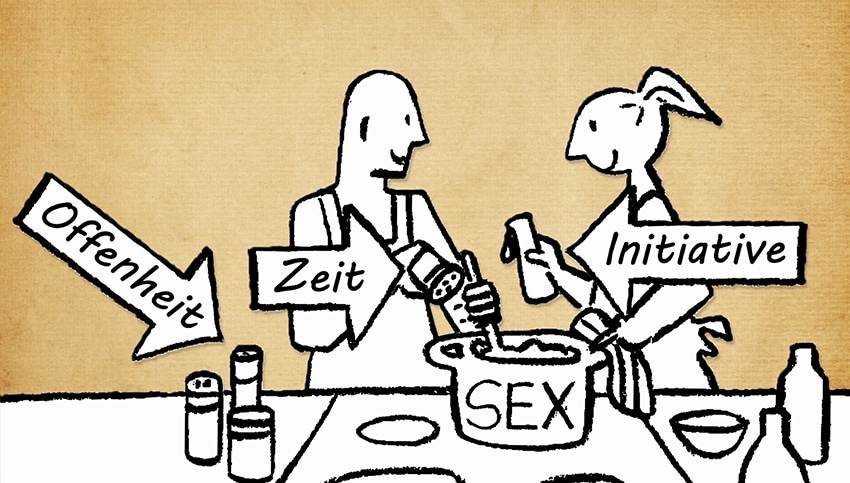
It cannot be stressed enough: A decrease in sexual drive is perfectly natural in a long-term partnership. If this is a 'moderate' decline in desire (i.e., the frequency of erotic contact has decreased; it takes longer for the other person to become 'seduced' – but when sex does occur, it is experienced as fulfilling), often only small changes in the way you interact are needed to create a more regular erotic atmosphere again ( our article on the topic of "No More Sex in Marriage" can provide helpful suggestions here).
However, if the man experiences a very strong or complete loss of libido - meaning that all desire has disappeared and he does not respond to sexual advances from his partner - it is important to find out the cause of the lack of appetite and to remedy it as soon as possible.
Loss of libido in men - an overview of possible causes:
(A) Testosteron
Possible reasons
One of the most common causes of low libido in men is a deficiency of the sex hormone testosterone. This primarily affects men from the second half of their lives onward, but can also occur at a younger age. In a study by the New England Research Institute, 24 percent of the men over 30 years of age examined suffered from a testosterone deficiency.
That helps!
If testosterone deficiency is suspected, it is advisable to consult a doctor (urologist or andrologist). They can determine the testosterone level through a blood test and identify other hormonal or other deficiencies (such as vitamin D deficiency) that may be responsible for loss of libido.
If necessary, the doctor can prescribe testosterone-boosting medication and possibly solve the problem of low libido with that alone.
(B) Other physical causes
Our body is a highly complex system. There are a multitude of physical factors that can lead to sexual dysfunction in men.
Alter
As we age, our libido declines. This phenomenon is deeply rooted in our biology and affects everyone eventually. Even from the age of 30 onwards, testosterone levels in men drop by about one percent each year.
Next step:
Changes in lifestyle (healthy diet, plenty of exercise, interaction with others) and engagement with new topics usually result in a continued (or renewed) sense of vitality - and consequently, the enjoyment of eroticism is often maintained (or can return).
Diseases
Diabetes, hypothyroidism, heart failure, high blood pressure, kidney failure, and numerous other illnesses can impair sexual desire in men. Sexual dysfunction (loss of libido) can also play a significant role in a loss of libido in men.
Next step:
If you suspect you have one of these conditions, you should seek professional medical help. Even if it may feel strange to discuss changes in your sexual desire with a stranger, ask specifically whether the loss of libido could be directly or indirectly related to a physical illness and consult a qualified doctor about possible remedies.
Medications and hormones
Effective medications unfortunately often come with a range of side effects. Many medications have been proven to lower libido in men.
Hormonal changes that negatively affect libido also fall into this category. Hormones and sexual desire are directly related.
Next step:
It's best to discuss potential hormonal side effects with your doctor. A thorough hormonal assessment should be conducted before determining the causes of low libido and suggesting possible solutions. Treating testosterone deficiency and low libido can be helpful in increasing libido in men.
(C) Performance pressure and fear of failure
Possible reasons
Even though the topic is rarely discussed openly, many men suffer from performance anxiety and fear of failure in bed. These sexual insecurities arise particularly in the initial stages of getting to know someone, when there is no certainty yet about how the other person 'really' feels about them.
However, even in long-term relationships, such anxieties can be triggered again and become entrenched. We'll take a closer look at the two most common triggers (erectile dysfunction and premature ejaculation) shortly.
That helps!
If performance anxiety is the cause of your lack of sexual desire, you should focus on communication. Talk to each other as openly as possible. Share your concerns. Have there been any comments that unintentionally increased your fear of failure? What are the cornerstones of your relationship? What connects you? Simply feeling like you're in the same boat and rowing in the same direction can significantly reduce the pressure.
In our blog articles on the topic of communication you will find helpful answers and concrete recommendations for a more loving coexistence.
(D) Erectile dysfunction
Possible reasons
Few things cause more sexual insecurity in men than erectile dysfunction. Clinically speaking, erectile dysfunction is present when a man is unable to achieve or maintain an erection in more than two-thirds of his attempts.
In younger men, erectile problems are usually caused by psychological factors. Excessive nervousness often leads to impaired sexual function. The inability to get or maintain an erection then triggers further insecurities, quickly setting a vicious cycle in motion.
The diagnosis of 'erectile dysfunction' becomes more common with age (affecting about one in three men between 60 and 70) and usually has a physical rather than a psychological cause.
That helps!
Men suffering from erectile dysfunction should try to stop spiraling into catastrophic thought patterns and ideally avoid further dramatizing their "problem." Perhaps the issue could even be presented to their partner in a charming way: "You probably can't imagine how you still make my heart race. Sometimes I'm as nervous as I was the first time we were together."
Often, open communication and a loving response from the partner are enough to reduce the pressure of expectations and increase the joy of shared sensuality.
(E) Premature ejaculation
Possible reasons
Premature ejaculation is one of the most common causes of sexual performance anxiety in men. Depending on the study, premature ejaculation affects 20 to 30 percent of all men.
However, "too early" is purely a matter of definition. Some speak of no more than one to two minutes after the start of intercourse, while others define "too early" vaguely as the inability to delay orgasm.
What is characteristic of premature ejaculation in every case is the distress it causes the affected man. The inability to satisfy his partner often triggers anxiety, frustration, and feelings of inferiority. And this frequently leads to sexual interactions being largely avoided.
The primary cause of the lull in the bedroom is then not a lack of desire, but rather fear of failure.
That helps!
Here again we can only emphasize: Understanding communication is the be-all and end-all in a partnership, just as it is in all other areas of life, when it comes to sex.
A few more thoughts for 'the man':
Does it even make sense to label premature ejaculation as a disorder and even feel ashamed of it? Wouldn't you find it incredibly flattering if your partner, overcome with arousal and excitement, lost control and reached climax effortlessly after just a minute? 😉
Besides, there are many roads to Rome. And many roads lead to orgasm. Are you absolutely certain that your partner might not enjoy orgasms even more if she's satisfied through practices other than intercourse? Would it perhaps benefit both of you if you initially focused solely on your partner's body – with all your senses? If you sense or know that your partner has experienced a sexual climax, it will very likely not only boost your self-confidence – but it will probably also make the need to "increase" the duration of (subsequent) intercourse less important.
(F) Stress-related loss of libido in men
Possible reasons
People on the verge of burnout have no energy for sex. Stress and lack of sexual desire are directly linked.
As already mentioned: Sex is only something that 'happens naturally' at the beginning of a relationship. When couples have been together longer, it often requires a conscious effort to 'engage' in it.
This is of course very difficult when conflicts at work, financial uncertainties or family disputes dominate the atmosphere and persistently occupy both of their minds.
That helps!
Stress and sex don't mix well at all. If things have become stagnant in the bedroom because one partner is constantly stressed, both need to find ways to relax together. Instead of adding to the stress of their already strained partner by complaining about their own dissatisfaction with their current sex life, they should specifically ask for support and look for ways to reduce stressors.
G) Different preferences
Possible reasons
When it comes to sexual preferences, one partner often knows only a fraction of what would be helpful to know about the other, even after years. Literally "dropping one's pants" regarding one's erotic desires is extremely shameful for many people. Furthermore, the person who remains silent doesn't want to give the other the feeling that they haven't been a good lover (so far). The vast majority of couples have to gradually find and develop a shared language regarding love and eroticism. The idea that both bodies speak the same language from the beginning and that no verbal revelations are necessary may be a wonderful one (and some may have already experienced this in a previous relationship) – but it cannot be taken for granted.
Since the other person can't read minds, there's a risk of a disruption in desire. Problems increase, and attraction fades. This is all the more regrettable because the partner would most likely fulfill intimate desires—if only they were aware of them.

Naturally boost desire: Home remedies for low sexual desire in men
There is no magic cure for low libido. However, various home remedies and some lifestyle changes can help to increase libido in a completely natural way.
Herbal remedies like maca, ginseng, or ashwagandha can boost libido. Trace elements such as zinc support testosterone production. Vitamin D stabilizes hormonal balance. Exercise, fresh air, and a mindful diet promote blood circulation and can release new energy. And don't forget: sometimes a moment of peace or a good conversation is all it takes to create space for intimacy and passion again.
That helps!
Even if it feels strange at first: Share some of your previously 'secret desires' with each other! What feels and sounds exciting to whom, and what doesn't? Who wants to be looked at, undressed, or touched, where, how, and when? If it's (still) too difficult for someone to talk about sexual preferences and fantasies, they could, for example, use a book about erotica and highlight everything that turns them on – and then let the other person read it... 😉
Always helpful: Strengthen the relationship

The surest way to regain desire is to strengthen your partnership overall and noticeably improve the quality of your relationship.
A sense of connection as a shared foundation not only increases desire for one another, but also makes it much easier to talk openly about problems and desires. When the other person better understands the reasons for sexual difficulties, that's often half the battle.
How can you do something good for your partnership as quickly and effectively as possible?
Start your self-test now!
We wish you all the best for your partnership!
Yours sincerely, Dr. Judith Gastner & Prof. Dr. Ludwig Schindler
☝🏻 Related articles on the topic of "Male sexual disinterest"
Loss of libido can strain relationships and has various causes, such as physical illness, stress, and relationship problems. To counteract this, open communication, stress reduction, and, if necessary, professional help are important steps. Improved relationship quality and openness to new ideas can help restore intimacy and sexual desire.
Frequently Asked Questions
What are the reasons for low sexual desire in men?
Possible causes of low libido in men include physical changes, hormonal fluctuations, psychological factors such as stress, anxiety, depression or relationship problems, side effects of medication or - in some cases - physical illnesses that can be directly associated with a loss of libido.
What to do if men experience a lack of sexual desire?
It's important to talk openly with your partner about possible causes (too little time? Too much stress? Lack of erotic stimulation? Generally poor body image? etc.). Only then can you look for suitable ways to improve well-being and revive sexual desire. Joint sex therapy should also be considered.
How do you increase libido in men?
To boost libido in men, "natural" measures can help. A balanced diet with foods containing zinc, vitamin D, and healthy fats promotes testosterone production. Regular exercise, especially strength training and endurance sports, increases testosterone levels and overall well-being. It is also advisable to ensure sufficient sleep and reduce alcohol and nicotine consumption. If the problems persist, it is recommended to consult a doctor to rule out any underlying physical or psychological causes.
What effect does stress have on sexual desire in men?
Stress can negatively impact sexual desire in men. It affects hormone levels and reduces libido. Stress often leads to fatigue and emotional exhaustion, which also impair sexual desire. Therefore, it's important to identify sources of stress and find suitable ways to reduce it.
Can a doctor or therapist help with low sexual desire?
If a lack of sexual desire persists over a longer period, significantly impacts personal well-being, or is accompanied by other physical or psychological symptoms, professional advice should be sought. Together, underlying causes can be identified and individual solutions developed.
What are the most common symptoms of testosterone deficiency in men?
A testosterone deficiency can cause a variety of symptoms, including loss of libido, persistent fatigue, weight gain, hair loss, and muscle weakness. Psychological effects such as difficulty concentrating, lack of motivation, mood swings, and depression are also common in men with low testosterone. These symptoms become more frequent with age, but younger men can also be affected. A blood test is necessary for an accurate diagnosis, as similar symptoms can be caused by other factors.
How can you keep the sex alive in a relationship?
Sex doesn't begin in the bedroom. When couples treat each other with love and affection in everyday life and remain emotionally connected, it increases the chances of maintaining sexual attraction. Even if it sounds unromantic: In the hustle and bustle of daily life, it often takes scheduling erotic time together – and the courage to try new things!