




☝🏻 Quick Start: Emotionally Focused Couple Therapy (EFT)
What is Emotionally Focused Couple Therapy?
Emotionally Focused Therapy (EFT), developed by Dr. Sue Johnson, is based on attachment theory and combines systemic and experiential approaches. This method is used in couples, individual, and family therapy and aims to transform suffering and relationship stress into trust and intimacy. EFT helps individuals feel safe and accepted in their relationships. Specialized programs and seminars, such as "Hold Me Tight," offer couples the opportunity to reflect deeply on and strengthen their relationship.
🚀 Already 65,511 people have gained clarity through the test.
"What do you wish for in your life?"
Ask this question, and you'll get a similar answer from people all over the world: a happy relationship! In most surveys, a happy partnership is indeed the most frequently mentioned priority, even ahead of career, money, and health. Apparently, almost everyone dreams of a lifelong, loving relationship full of support, closeness, and security.
Even though most relationships begin very harmoniously, everyday life inevitably gets in the way for many couples, leading to arguments : about overtime at work, household chores, the division of labor in childcare, how to spend leisure time, contact with their respective families of origin, and so on. These daily disagreements are often joined by the " big questions ":
Do we even still share the same ideas about life?
Do we still find each other attractive?
Where and how does each of us want to live in the long term?
Do we want (more) children?
What is important to us in raising children?
etc.
When the arguments become more frequent and the tone harsher, everyone involved senses: Something has to change quickly!
Has our relationship failed?
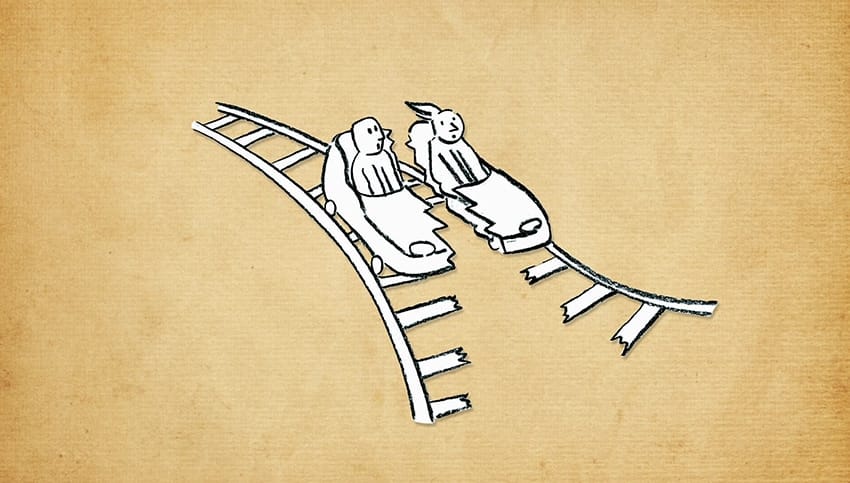
Perhaps all of this sounds familiar – and you might even be thinking, "Would it be better if we separated...?" But: A separation is a radical step . It ends everything you have built together (possibly over years or decades). What a loss!
Therefore, exhaust all possibilities to repair your relationship before seriously considering separation or divorce.
How is our partnership doing?
To be able to make the right adjustments, you first need a clear understanding of the current state of your relationship. Because the here and now is always the starting point from which meaningful goals for change can be set.
Identify all the areas where you can start to take the next steps as quickly as possible. Most importantly: (re)focus on your strengths as a couple. With this awareness, you are much more likely to successfully resolve existing problems and build a new foundation for your relationship.
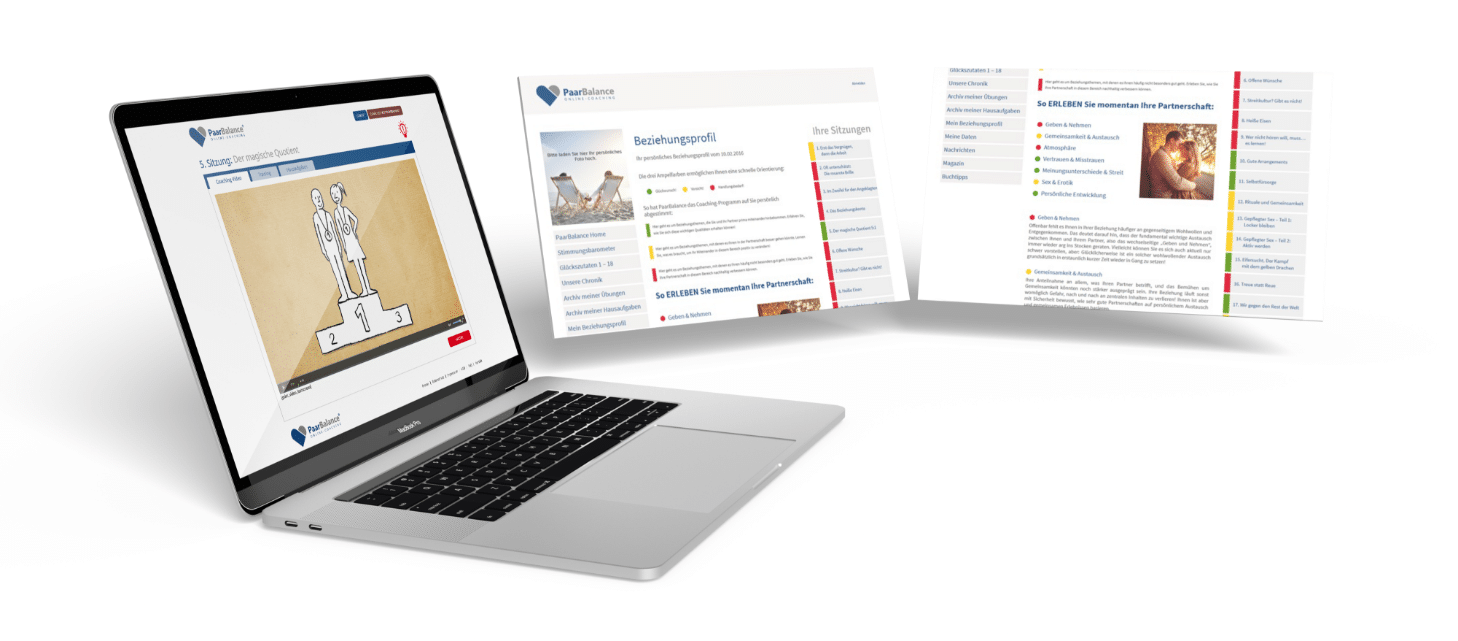
With the (free & scientifically based) CoupleBalance relationship test, you can gain a helpful overview of the current challenges and resources in your partnership.
Immediately after answering the questions, you will receive a personal relationship profile with an individual strengths and weaknesses analysis of your partnership (non-binding & free of charge).
Take your relationship test now! (free)
How is your relationship?
What are your strengths and weaknesses?
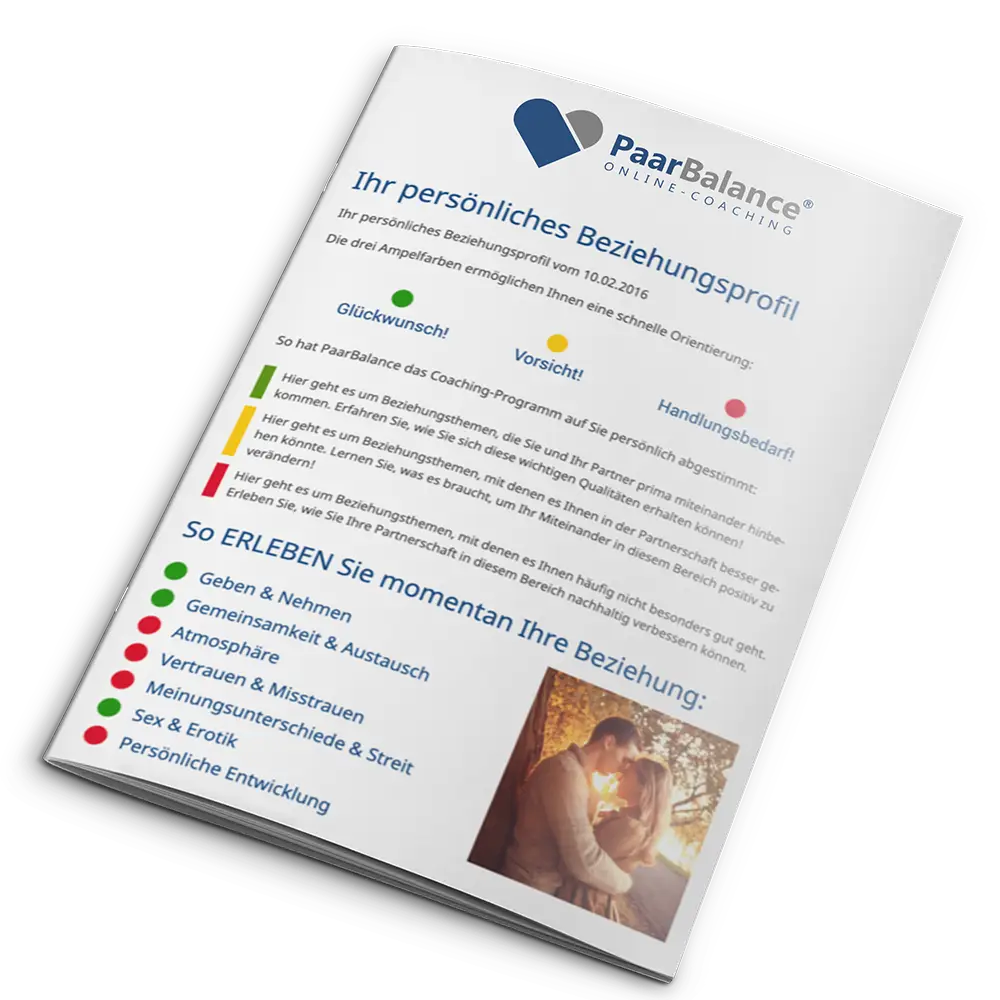
You will find out immediately afterwards in your personal PaarBalance relationship profile (free).
Start your relationship test now!
✓ Scientifically sound
✓ Includes detailed analysis
✓ Your data will not be shared
✓ 100% free & non-binding
100% secure. We comply with data protection regulations. Registration for the relationship test is free .
Please read this important information beforehand:
Data Protection ᐧ Terms and Conditions ᐧ General Information Agreement Terms and Conditions . Transparency Statement
How can our relationship be saved?
The relationship test has probably given you a good overview of the areas where you urgently need to make changes. But what is needed now to turn the "red" (attention!) and "yellow" (watch out!) areas back into "green" (congratulations!) territory?
The fact that you've taken concrete action is already the most important step of all! Keep at it! Waiting for "the other person to finally change" is understandable, but not helpful. Make "acting, not reacting" your motto for the next few weeks. After all, it's about your quality of life. And that will improve significantly when you feel secure and supported in your relationship again.
When is couples therapy advisable?
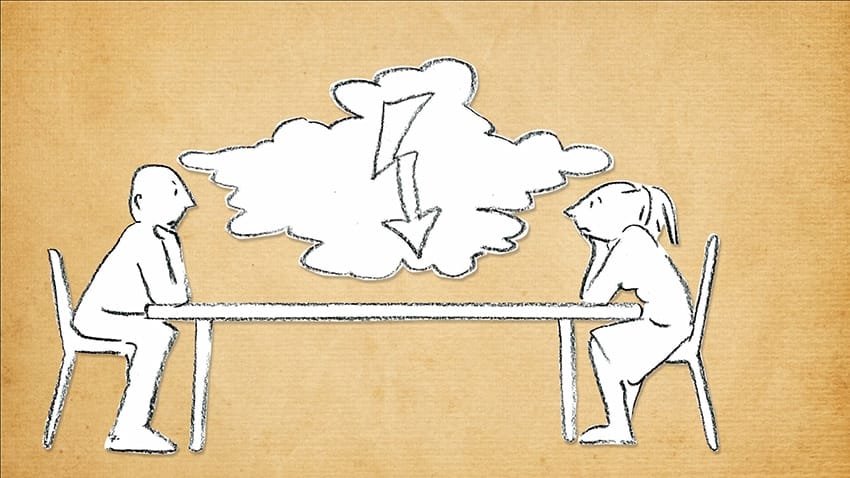
You've undoubtedly already tried many things to improve your relationship. If your efforts haven't yet had a lasting effect, input from experienced relationship experts can be an effective way to foster greater intimacy, communication, and a stronger sense of togetherness.
Generally speaking, professional support is always advisable when
- The beautiful moments and good feelings are clearly overshadowed by the problems.
- the challenges have been ongoing for some time.
- Sie nicht mehr wissen, wie Sie die Situation selbst spürbar verbessern können.
Sie finden sich hier wieder und möchten gerne mehr über Paartherapie erfahren? Dann entnehmen Sie unseren Überblicksartikel „Paartherapie: Wann sinnvoll? Ablauf, Methoden & Kosten“ alle wichtigen Informationen über die Anwendungsgebiete und den Ablauf von Paartherapien. In unserem Artikel "Ehetherapie: Ja oder nein?" finden Sie zudem Entscheidungshilfe für (und gegen) eine Paartherapie.
Wenn die grundsätzliche Entscheidung für die Inanspruchnahme einer Paartherapie gefallen ist, stellt sich die nächste Frage: "Welches Therapieverfahren könnte gut zu uns passen?" Da Sie bereits auf unserem Artikel "Emotionsfokussierte Paartherapie" gelandet sind, wissen Sie bereits, dass es unterschiedliche Therapieformen gibt.
Da die Emotionsfokussierte Paartherapie eines der am häufigsten angebotenen Behandlungsmethoden ist, möchten wir dieses Verfahren im Folgenden etwas genauer vorstellen.
Was ist das Besondere an einer "Emotionsfokussierten Paartherapie (EFT)"?
Die EFT ist eine strukturierte Behandlungsmethode für Paare, deren Wirksamkeit wissenschaftlich geprüft ist*. Bevor ein Therapeut dieses Verfahren anbieten darf, muss er zunächst einige standardisierte Fortbildungen absolvieren. Die Behandlungsmethode wurde in den 1980er Jahren von Dr. Sue Johnson und Leslie Greenberg unter dem Namen "Emotionally focused couples therapy" entwickelt und seitdem kontinuierlich weiterentwickelt. Sie wird in vielen Ländern auf der ganzen Welt eingesetzt, besonders häufig in den USA und den Niederlanden. In Deutschland gewinnt sie zunehmend an Beliebtheit.
Welche Annahmen liegen der EFT zugrunde?
Der Begriff „emotionsfokussiert“ deutet bereits auf die erste Grundannahme hin: Die Arbeit mit den Gefühlen beider Partner ist nach Sue Johnson das zentrale Behandlungselement. Denn laut der Theorie sind es erst die mit ihnen einhergehenden Emotionen, die bestimmte Erlebnisse und Erfahrungen für uns Menschen bedeutsam machen. Ob oder welche Bedeutung etwas für eine Person hat, hängt demnach davon ab, welche Gefühle ausgelöst werden.
Entsprechend geht ein emotionsfokussierter Paartherapeut bzw. eine emotionsfokussierte Paartherapeutin davon aus, dass Gefühle das Verhalten eines Menschen maßgeblich steuern: Wachstum entsteht aus emotionalen Begegnungen und Situationen in Beziehungen. Daher fokussiert diese Therapieform in erster Linie auf Emotionen.
Der emotionsfokussierten Paartherapie liegt eine weitere zentrale Annahme zugrunde: Es wird davon ausgegangen, dass das Verhalten, das ein Partner in der Beziehung an den Tag legt, nicht böswillig ist – auch dann nicht, wenn es der Partnerschaft objektiv schadet. Emotionsfokussierte Therapeuten begreifen jedes Verhalten stattdessen als die aufrichtige und bestmögliche Bemühung des Partners, Nähe und Sicherheit in der Liebesbeziehung herzustellen. Laut dieser Perspektive von Sue Johnson geben also beide Partner ihr Bestes – das ist nur nicht immer tatsächlich geeignet, um die Partnerschaft positiv zu gestalten.
Diese Grundhaltung der EFT begründet die Annahme, dass beide Partner grundsätzlich die Fähigkeit haben, sich zu verändern und zu wachsen. Dabei möchte die EFT konkret unterstützen.
Das Ziel der emotionsfokussierten Paartherapie ist es, wieder eine emotional-sichere, liebevolle Bindung zwischen den Beziehungspartnern aufzubauen. Hierzu sollen Offenheit und Verständnis füreinander gestärkt werden, sodass Verletzungen heilen können. Die EFT baut auf Erkenntnissen der psychologischen Bindungstheorie auf.
Was besagt die Bindungstheorie?
Die Bindungstheorie ist eine klassische psychologische Theorie. Ihre Vertreter gehen davon aus, dass Menschen ein biologisch angelegtes Bedürfnis nach Nähe und emotionaler Unterstützung haben. Demnach entwickelt jeder Mensch aufgrund seiner Lebenserfahrungen mit engen Bezugspersonen einen bestimmten Bindungsstil. Das ist die typische Art, wie er sich in zwischenmenschlichen Beziehungen verhält, sozusagen sein automatisiertes Muster.
In der Bindungswissenschaft werden 4 Bindungsstile unterschieden:
Ein sicherer Bindungsstil
Dieser Bindungsstil kann sich ausbilden, wenn Bezugspersonen angemessen und feinfühlig auf Bedürfnisse reagieren. Erwachsene mit einer sicheren Bindung können Nähe und Distanz gut regulieren und Emotionen in Beziehungen ausbalancieren.Ein unsicher-ambivalenter Bindungsstil
Wenn Bezugspersonen zwar manchmal verfügbar sind, in anderen Situationen jedoch nicht, prägt sich oftmals ein unsicher-ambivalenter Bindungsstil aus. Als Erwachsene suchen Menschen mit diesem Stil einerseits Nähe, haben aber andererseits Angst davor, verletzt zu werden. Sie versuchen dann, sehr große Intimität zum Partner aufzubauen und reagieren verzweifelt oder wütend, wenn diese nicht im selben Maße erwidert wird.An insecure-avoidant attachment style:
If attachment figures do not respond, or only rarely respond, to a child's needs, the affected children often develop an insecure-avoidant attachment style. As adults, these individuals often do not show their emotions. They frequently find it difficult to recognize or name them. Out of fear of being hurt, they keep their partner at a distance and avoid conflict. However, when conflicts do arise, they suffer particularly intensely.A disorganized attachment style
often develops when people have experienced trauma with their caregivers. Their behavior then frequently fluctuates between different attachment styles, making them difficult for their partners to predict.
However, a person's attachment style is not fixed, but can change over the course of their life – and can also differ to some extent between different caregivers.
Accordingly, the goal of emotion-focused couple therapy is to (re)establish a secure bond between the partners .
Who is EFT suitable for?
EFT is generally suitable for all couples who are open to introspection and want to change something about their relationship. There are no exclusion criteria that would preclude the use of this method.
However, EFT is particularly recommended for two groups of couples:
For (married) couples who feel that their inner connection to each other is damaged or almost completely broken - and who want to restore this connection.
For couples who find it difficult to show, name, or recognize their own emotions and who therefore repeatedly experience a similar pattern of emotional misunderstandings.
The basic requirement is that both are willing to speak openly about their emotions and life experiences , thereby also showing vulnerability to the other person.
How does EFT work?
EFT can be imagined as a "moderated" conversation between partners, taking place in the office of a couples therapist. The therapist guides the conversation empathetically and openly, thus promoting the development and growth of both partners.
As the name emotion-focused therapy suggests, the primary focus is on the feelings of both partners in the relationship. The core of this approach lies in empowering both partners to recognize and express their own emotions and to act constructively in response. The therapist's most important task is to amplify and reflect back the emotions of both partners, thereby making them more accessible.
This approach aims to restore a secure emotional bond between the partners, enabling positive changes (such as improved communication and conflict resolution). Unlike other forms of therapy, no skills (such as communication rules) are directly trained .
How does Emotionally Focused Therapy (EFT) for couples work?
An EFT consists of three phases:
Understanding and breaking free from negative patterns
In this first phase, couples should become aware of the “vicious cycles” and negative patterns in their partnership that repeatedly lead to conflicts, and how they can break them.
Renewal of the emotional bond
In the second phase, both partners are guided to better understand and communicate their emotions, needs, and life experiences to each other. Because they reveal vulnerability during this phase, many find it particularly challenging. They often initially fear it. At the same time, however, this is the most important period for therapeutic change, as the partners can connect on a deep, personal level and reconnect emotionally.
Promoting sustainability
The goal of the third phase is to consolidate the changes achieved and maintain them in the long term. To this end, the partners should develop positive relationship rituals.
These three phases are not always clearly distinguishable, and the steps often merge into one another during therapy.
How long do the sessions last and how often do they take place?
Emotionally focused couples therapy sessions typically last 90 minutes , though the duration can vary depending on the therapist's approach. Sessions usually take place every two weeks . However, depending on a couple's individual situation, an emotionally focused therapist may offer more frequent sessions. The total number of sessions a couple will require cannot be stated definitively. This is always determined by the therapist in consultation with each couple individually. As a guideline, approximately 8 to 20 sessions are possible.
What costs will couples incur?
Unfortunately, the costs for EFT are not covered by health insurance . Therefore, they must be borne by the couple themselves.
For a 90-minute session, the cost typically ranges between 150 and 200 euros, depending on the couples therapist. Therefore, the total cost for EFT can range from approximately one thousand to several thousand euros.
Alternatives? - Self-help instead of couples therapy!
You suspect that your relationship could benefit from external support – but currently consider couples therapy with a private colleague in a practice to be not feasible?
Then self-help formats could also be the right tool to improve yourself at your own pace. Look online for good guides (in book or audiobook form) on your personal "topic," listen to various podcasts, and try out the recommendations from different expert videos.
It may take some time to discover one or two authors you find interesting - but you will certainly come across some relationship experts whose suggestions can be particularly helpful for you.
The scientifically based self-help program PaarBalance
A complement to, or possibly an alternative to, one-to-one couples therapy or "bibliotherapy" (i.e., the use of high-quality literature) is the internet-based online program PaarBalance. This tool is the only scientifically validated, interactive online coaching program in German-speaking countries that can also be used by individual partners to improve the relationship overall .
The program can be carried out flexibly and independently, regardless of time and place – without having to adhere to the opening hours of a couples therapy practice.
PaarBalance summarizes the core knowledge from 50 years of couple therapy research, along with a wealth of practical recommendations, with the goal of improving relationship quality and restoring more joy and ease in life.
Strengthen your relationship: with PaarBalance,
the online couples therapy for individuals.
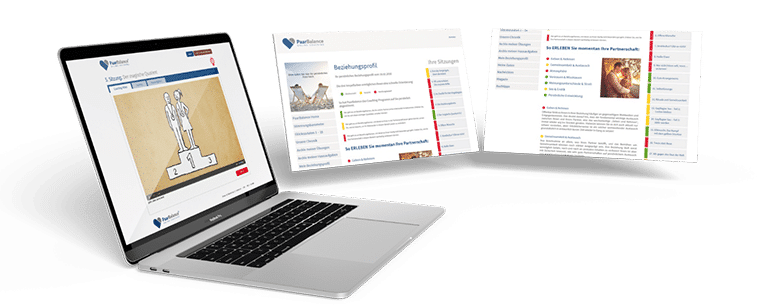
Developed by couples therapists. No waiting lists. Self-determined. Affordable.
Whether you choose (emotionally focused) couples therapy in a practice, working with a textbook, or online coaching: the most important thing is that you actively engage in your partnership! In most cases, this will help avoid a painful breakup and find a way to make the relationship happier in the long term.
Sources:
* Emotionsfokussierte Paartherapie: Paarbeziehung zur emotionalen Sicherheit
PP 19, Ausgabe Januar 2020, Seite 39 --> Link
*(Forschungsergebnisse zur Wirksamkeit der EFT sind beispielsweise nachzulesen im Artikel The Efficacy of Emotionally Focused Couples Therapy and Behavioral Couples Therapy: A Meta-Analysis von Rathgeber, Bürkner, Schiller & Holling, 2018)
☝🏻 Passende Artikel zum Thema "Emotionsfokussierte Paartherapie (ETF)"