




☝🏻 Quick start: Relationship break - beginning of the end or opportunity?
If you take some time to search for suggestions related to "relationship" and "partnership" on Google, Getty Images, and similar sites, you'll find countless photos of newly in-love couples embracing, gazing deeply into each other's eyes, holding hands, and beaming with happiness. You probably remember such moments from the beginning of your own relationship.
Every relationship changes. Opportunity or risk?
However, a partnership changes over time and is subject to fluctuations. This is perfectly normal. What is crucial is the fundamental direction it takes in the medium and long term.
This article aims to provide you with guidance in making your decision. Benefit from key findings in couples therapy research on the topic of relationship breaks, as well as the three most important rules to consider when taking a break.
🚀 Already 65,511 people have gained clarity through the test.
Almost every couples counselor and relationship coach wishes that a newly in-love couple's initial infatuation will transform into deep love and connection, and that they will succeed in this over time:
- to bring their positive feelings to the forefront again and again, even amidst the hustle and bustle of everyday life.
- to continue perceiving the relationship as an enrichment , even after the initial hormonal rush .
- to treat your partner, despite their likely increasingly apparent quirks, as often as possible like a precious treasure (and not like an annoying roommate...).
- to hold on to a shared future - even if everything is no longer perfect from morning till night.
Unfortunately, romantic relationships don't always have happy endings.
Unfortunately, not every partnership takes a positive turn. And you may well be one of the couples whose relationship has taken a rocky turn.
Perhaps more and more problems became apparent. Perhaps arguments escalated. Perhaps the challenges seemed more and more insurmountable each day. Perhaps one day you realized with dismay that the good feelings were "somehow gone" and that there was little trace left of that great love.
Relationship dissatisfaction: What are the reasons?
The reasons for increasing dissatisfaction can be manifold: stress at work, being overwhelmed in everyday life, worries about the children or financial difficulties can contribute to a general tension and a poorer quality of partnership, as can increasingly divergent value systems , different needs and diverging interests of both partners.
Frustration about how intimacy and sex have developed, and the experience that appreciation and respect in dealing with each other have significantly decreased, can also put a great strain on a partnership - especially if neither partner feels heard and taken seriously by the other in the areas that are troubling them .
The "big questions" in the crisis
Whatever the trigger for your current experience may have been in your specific situation: If you are currently dealing with the topic of 'relationship break', you have probably already arrived at the 'big questions'...
- "Have we perhaps already grown irreconcilably apart ?"
- "Is it perhaps quite 'normal' for a couple to need a longer break from each other every now and then?"
- "After everything that has already happened between us and how we treat each other, is there even a shared future for us that we can feel comfortable with?"
- "Perhaps we are simply among those people who would generally benefit from a little more distance ?"
- "Overall, what are the chances that a temporary separation can actually prevent a long-term separation ?"
- "Does our relationship need a professional relationship coach , or are there other forms of support? Can we find the right path for us without external help?"
etc. etc.
Breaks in relationships are almost always a desperate attempt to somehow save a struggling partnership.
Many couples hope to gain clarity about their feelings during a " trial separation ." During this time, they then decide whether to continue the relationship or whether a permanent separation will follow.
Whether taking a break in a relationship is really a good idea is also controversial among experts.
To help you decide for or against a "temporary separation", we have summarized everything you need to know about "relationship breaks" including proven tips in this article.
Taking a break in your relationship? First, do a comprehensive relationship check!
(scientific test - 10 min - free of charge)
The most common reason for a break or temporary separation in a relationship is the desire to thoroughly reflect on one's own thoughts, wishes, needs, and the relationship as a whole. This can work better with some distance than during daily interaction – however, it also carries certain risks, which we will discuss in more detail below.
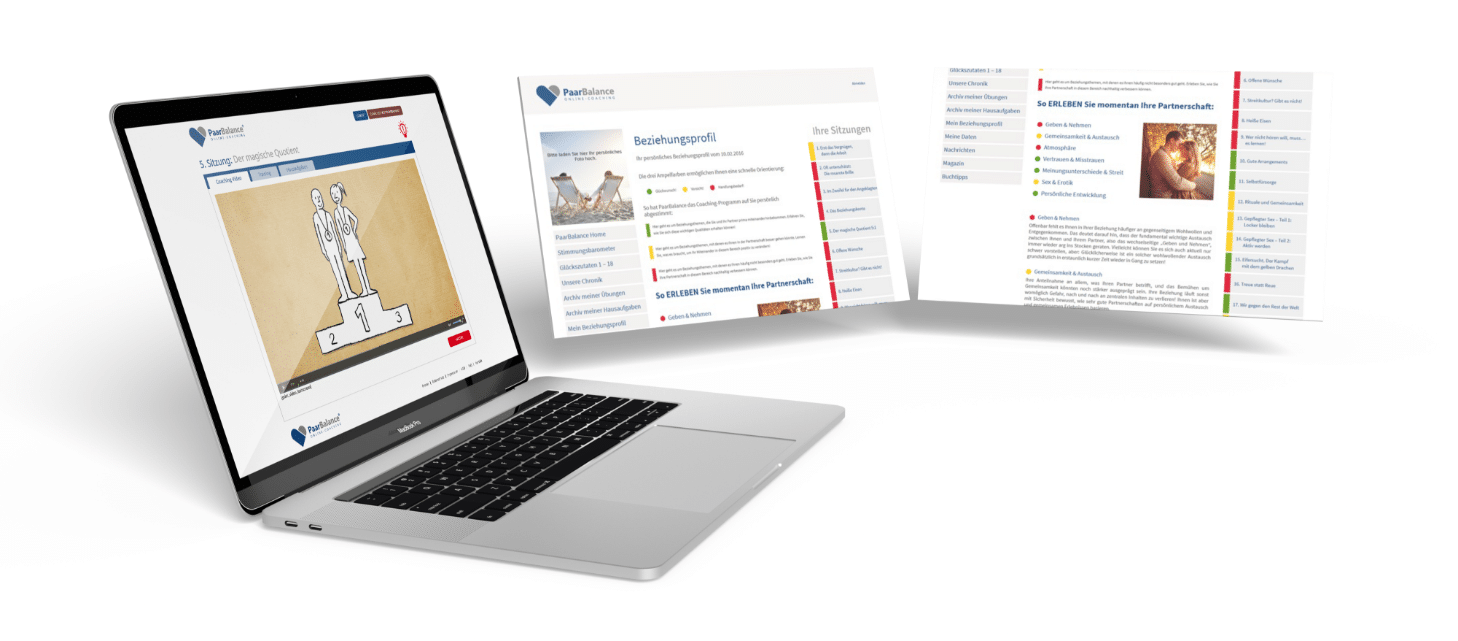
Before taking the big step of a break in your relationship, you should first explore all the less risky options for taking stock of your situation. The comprehensive PaarBalance relationship test (free of charge) offers just such an opportunity to gain more clarity amidst the whirlwind of thoughts and feelings.
In this test (developed according to all scientific criteria), you answer (lasting approximately 10 minutes) exciting questions about the most important aspects of your relationship (giving & taking, conflict behavior, sense of togetherness, goodwill, sexuality, etc.) and immediately afterwards receive a detailed evaluation ("relationship profile") about where the biggest problems, but also the most important strengths and opportunities currently lie in your relationship:
How do you experience your relationship?
How do you shape your relationship?
Relationship break: A real chance for a new beginning or just a drawn-out separation?
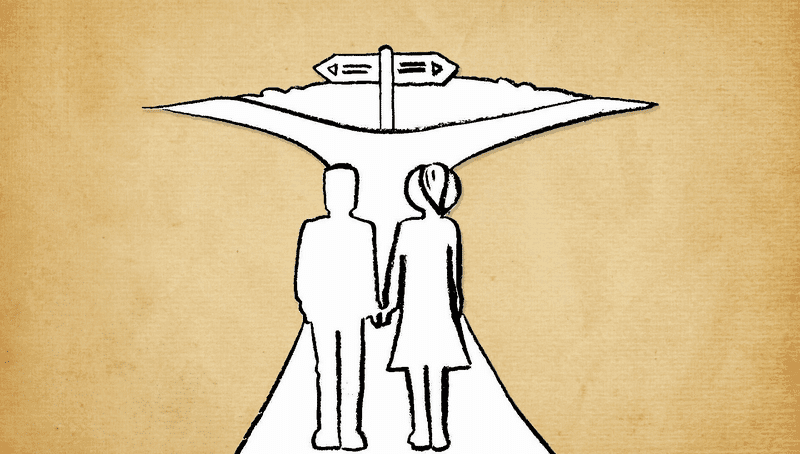
Is a break in a relationship a good idea or not? How likely is it that the path back (or ideally not back , but towards a continued journey together) to permanently happier relationship territory will be successful?
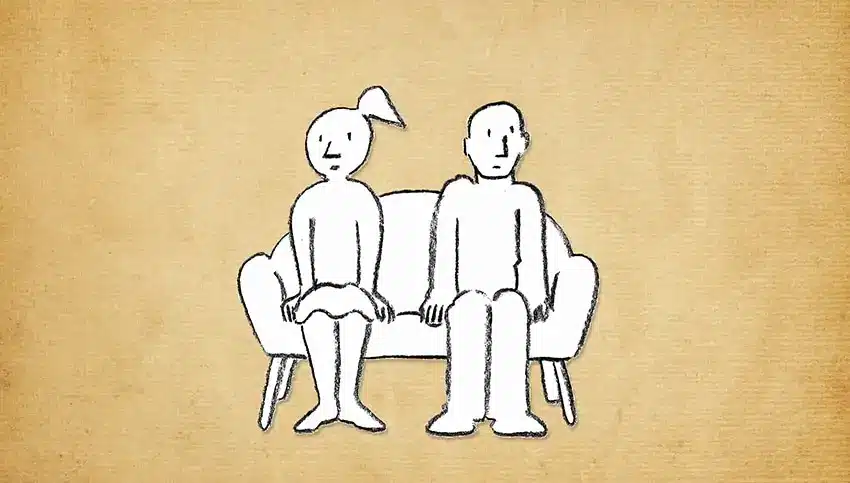
In many cases, a break in a relationship is nothing more than a gradual separation. Therefore, a "temporary separation" generally has the reputation of being the "beginning of the end" rather than an effective step towards relationship satisfaction.
Although it does not lead to an abrupt end to the relationship like a 'real' breakup, it usually prolongs the uncertainty and heartache (for at least one of the two partners).
If there's a calculated reason behind the relationship break...
This can certainly happen deliberately, namely when one partner knows that they do not want to return to the relationship after the break, but does not dare to tell the other person openly.
He avoids drawing a final line and hopes that the relationship will simply "fade away" on its own due to the distance between them and the passage of time, or that his partner will no longer want to be strung along and will announce the end of the partnership himself.
Oh dear! That's not what we wanted...
Of course, a break in a relationship is not always driven by a desire for a final separation – namely, when both partners really only want to try a temporary break, for example to stop an unhealthy dynamic they have gotten caught up in and to understand with some distance why they keep getting so tangled up and their feelings get the better of them.
But even then, things can turn out very differently than planned, for example, if one of them unexpectedly falls in love again - and in the end there is no going back.
The potential 'dangers' can be reduced.
These examples admittedly sound rather bleak. You're probably rightly asking yourself: "Can a trial separation actually offer any advantages, or does it – if we're being completely honest – almost always just signal the end of the relationship?" The answer is:
A temporary separation is highly likely to lead to additional problems if it is not well prepared. However, it can certainly facilitate inner clarification processes and bring advantages if it is consciously planned and initiated and carried out by mutual agreement.
If a break initially planned as temporary goes wrong, it's usually due to events that occurred during the relationship break. This risk can be significantly reduced with a few specific agreements.
The key to successful relationship breaks is therefore: Set a shared goal. Agree on concrete rules. Follow proven advice.
Without rules, a break in a relationship becomes a minefield.

If you decide to take a break in your relationship, it's essential that you and your partner establish ground rules beforehand. This will help you avoid misunderstandings about the status of your relationship and ensure you both understand what you hope to achieve during this time apart.
It's best if you discuss (or even write down) the parameters of your break as a couple in as much detail as possible. In particular, the following points should be clarified.
Agree on rules - No. 1: Duration of the relationship break

Of course, you're not a clairvoyant and you don't have a crystal ball. Nevertheless, you should try to bring as much transparency and clarity as possible to this new phase, which is unfamiliar to both partners. Even if the main purpose of a break in a relationship is often to find answers you don't yet have:
Set a timeframe or date and a place where you will definitely reflect on the situation together and discuss it again – regardless of where you are emotionally at that time.
This creates a calming environment, provides clarity, and removes the uncertainty for one or both partners about whether, when, and where a reunion will take place.
Agreeing on rules - No. 2: Communication during a relationship break

Communication during a break can cause a lot of problems if there are no good prior arrangements or agreements.
If one partner desires the greatest possible distance, while the other uses every opportunity to get in touch as often as possible, it is frustrating for both.
Generally, it's advisable to maintain at least a minimum of contact. The right amount depends on the circumstances of your relationship break. For those who have children together, good communication is essential even during the break.
Remember: A compromise is only good if all parties involved make roughly the same degree of movement.
Agree on rules - No. 3: Dealing with other "interested parties"
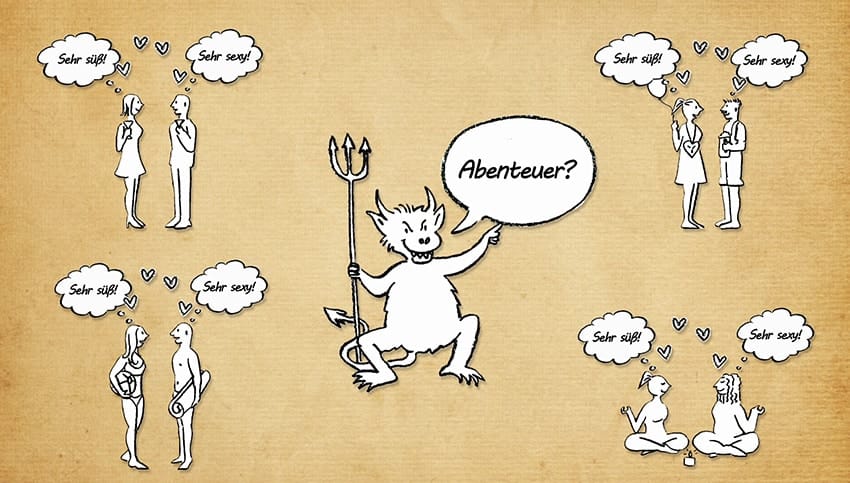
As couples therapists, we repeatedly see that a lack of communication can lead to great distress and conflict: " I did n't cheat on you, we weren't even together during that time... " - followed by the statement: " Yes, you were. It was just a break in the relationship ! "
Therefore, a particularly important tip is: Define the word "break" as precisely as possible beforehand. Above all, make a joint decision about what stance you and your partner want to take on the topic of "fidelity".
"Will we give each other some space during the break?" "Do we both want to 'try things out'?" "Are flirting allowed?" "Where does flirting end and an affair begin?" etc.
It is often not easy to reconcile the needs of both partners and ultimately find agreements that both can accept. For example, if one partner has a "relaxed attitude" towards fidelity and wants to enforce it against the other's wishes, the latter can quickly get the feeling that the relationship has already failed.
Our recommendation: Don't act like you're single (at this time) . Don't enter the dating market.
Experience shows that otherwise, a break in a relationship almost always leads to the end of the relationship - and an end with a lot of jealousy, disappointment and anger.
The primary purpose of a break in a relationship for most couples is to allow each partner to sort things out in peace and quiet , without major distractions , and to clarify for themselves what contribution they can and want to make to improving the relationship.
In this context, fear and time pressure, the possibility that the other person might seek and find someone else during such a process, would be of little help.
It would be equally unhelpful to focus on another potential partner during this period of reflection. When you meet someone new, you have so much on your mind that distracts you from reflecting on your existing relationship and sensing where you truly stand within it. This prevents you from discovering anything new about your current "us" and your own desires for a shared future – even though that was precisely the reason for the temporary separation.
When does a break in a relationship make sense?

People, their relationships, and their problems are all different. While in some cases it can be beneficial to take some time apart, in others it leads to even more problems. Here are three examples:
- Mental Health Issues:
If one partner is struggling with mental health issues that are not primarily related to the relationship, it can be a relief and helpful for the couple's development if each partner first seeks appropriate support at their own pace to (re)stabilize themselves. When both feel more grounded, an equal exchange and an enriching relationship – beyond suffering and worry about the other – may only become possible again.
- Unhealthy role patterns:
If the partners involved have the impression that they have fallen into undesirable role patterns (e.g., "helper & needy" or "critical parent & child who does everything wrong" or "bad-tempered, grumpy teen & insecure mom" etc.), it can be quite beneficial for the partnership to take some time away from each other and the associated entrenched role constellations.
- Too little time together
: If a relationship has suffered because a major problem is " too little time in the relationship ," an additional "temporary separation" would only worsen the situation. A break in the relationship would be contraindicated in this case. Instead, ways should be sought as quickly as possible to integrate enjoyable shared moments (more frequently, regularly, and with high priority) into the daily grind.
When deciding whether a break in your relationship might be the right step for you in your current situation, there is one important point to consider: problems almost never solve themselves through distance alone.
Taking a break from a relationship only makes sense if you actively use the time to reflect on your feelings, calmly examine different aspects of your relationship, and gain more clarity about where you stand and where you want to go.
Anyone who expects that a break in a relationship will automatically make everything difficult better will wake up to a rude awakening and realize that, in retrospect, the break may have been the beginning of the end instead of the hoped-for salvation.
Therefore, speak openly and transparently with your partner about what insights you hope to gain from the planned break.
Temporary separation - Where do you stand at this moment?

Question 1:
Have you already taken the PaarBalance relationship test (see further up the page for more information)?
Question 2:
What does your relationship profile look like? What is the current red-yellow-green distribution in your partnership life?
Question 3:
Do you consider a break in the relationship a promising measure in the current situation?
A) "I want a break in the relationship!"
-> Then prepare yourself well.
After your strengths and weaknesses assessment, do you feel that a break in the relationship currently offers the best opportunity for inner clarity? Then you have probably already made the decision for a trial separation internally. In this case, the following applies:
Prepare well for this break in your relationship. This will help prevent avoidable conflicts. Heed the suggestions above to make the upcoming transition as beneficial and risk-free as possible.
Agree on clear rules. Consider how important it can be during a trial separation to actively say "No!" to temptations and instead focus on finding a satisfying solution to the existing challenges in your relationship. Otherwise, the break could unintentionally turn into a separation or divorce.
Our article " Temporary Separation" contains further food for thought that can help you make the right decisions for your specific situation.
B) "I would prefer conscious relationship maintenance rather than a temporary separation !"
-> That's lovely to hear. 🙂
After careful consideration, have you concluded that a trial separation is not the right solution to your relationship problems? Would you like to try to improve your partnership, feel more love again, and prevent a separation if at all possible?
Congratulations! We are very happy for you... 🙂 Because in our many years of experience as couples therapists, it is almost always worthwhile to invest all your energy in improving the existing relationship - regardless of whether love can ultimately be strengthened again or not.
Even if the relationship ultimately cannot be saved, it is invaluable to be able to look in the mirror and know: "For my part, I didn't throw our relationship away prematurely. I did everything I could (again) to give us a real chance!"
Now it is important to actively do as much good as possible for the relationship, to strengthen the positive aspects again, and at the same time to find a way to carefully put the existing problems aside for a while.
It is invaluable that a benevolent atmosphere can develop first, before the "hot topics" can be addressed (carefully!) and conflicts resolved (sustainably!).
If the challenges between you and your partner are currently very significant, it will likely be extremely difficult to find the right adjustments and implement them in a sensible order without external guidance. Ideally, seek support to navigate this currently bumpy terrain with as few detours and risks as possible.
A couples counselor or couples therapist can be a great help if you would like a personal contact person on site within a predetermined spatial and temporal setting.
Online coaching can be the right support if you would like to progress independently of time and place and at your own pace, and improve your relationship quality in a self-determined way.
The PaarBalance program is the only interactive, scientifically verified online partnership coaching program in German-speaking countries that can be carried out by the individual partner.
Through 18 sessions, you will receive practical recommendations and concrete instructions that will improve the quality of your relationships in a short time and help you to rediscover ease and joy in life.
Take control of the situation yourself.
All the best & warmest regards
, Prof. Dr. Ludwig Schindler & the PaarBalance team
☝🏻 Related articles on the topic "Relationship break: Beginning or opportunity?"
Frequently Asked Questions
Can a break in a relationship save the partnership?
Taking a break in a relationship can help both partners refocus on what's truly important to them. Gaining greater clarity about their own priorities and needs can contribute to saving or preserving the relationship. However, transparent ground rules and openly communicated expectations for the duration of the break are essential.
Is one considered single during a break in a relationship?
There are no official rules for relationship breaks. Each couple must establish their own guidelines beforehand, outlining the most important "dos and don'ts" during the break. For example, both partners can agree to temporarily behave like singles. However, this increases the risk of further hurt and complications.
How should you behave during a break in a relationship?
How to behave during a break in a relationship depends on the individual agreements the couple has made. In any case, it's important not to let the time slip away unnecessarily, but to actively use it to gain more clarity about one's own needs, desires, goals, and life priorities.
What is the difference between a break in a relationship and breaking up ?
A break in a relationship is not a breakup. During a break, there is the possibility (and usually the intention) for the couple to ultimately reach a positive agreement and continue the relationship amicably after some time. A breakup, on the other hand, is the final termination of the partnership – often by one partner against the will of the other.
When does a relationship deserve a second chance?
It's almost always better to give a struggling relationship another fair chance than to later regret a hasty breakup. The most important prerequisite: Both partners must be willing to approach each other openly, learn from past mistakes, and grow. Then nothing stands in the way of a successful second chance.