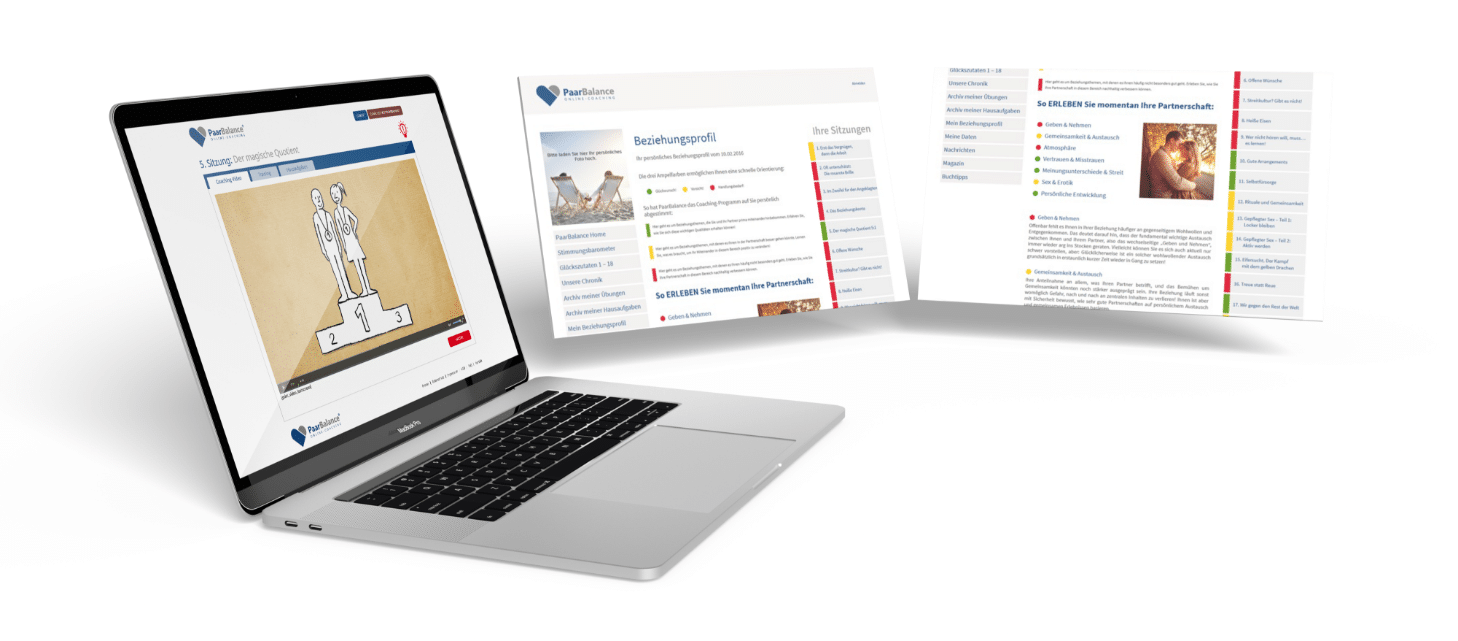






☝🏻 Quick Start: How Relationships Work
As couple therapists ( more about us here ) we are confronted daily with the fact that many people are quite wrong in several of their assumptions about what constitutes a happy partnership and a fulfilling relationship - with sometimes fatal consequences.
We want you to become your own relationship expert for your existing partnership and to (re)discover how to revive the good feelings from the beginning of your love in everyday life.
Therefore, in this article we share our practical experience and the knowledge gained from over 50 decades of couple research with you.
In the following, we will take a closer look at some of the most common relationship myths and explain what is needed – from a couples therapy perspective – for a happy relationship, and conversely, what is not needed for fulfilling relationships. 😉
🚀 Already 65,511 people have gained clarity through the test.
Relationship myth 1: Arguments are like a cleansing thunderstorm!
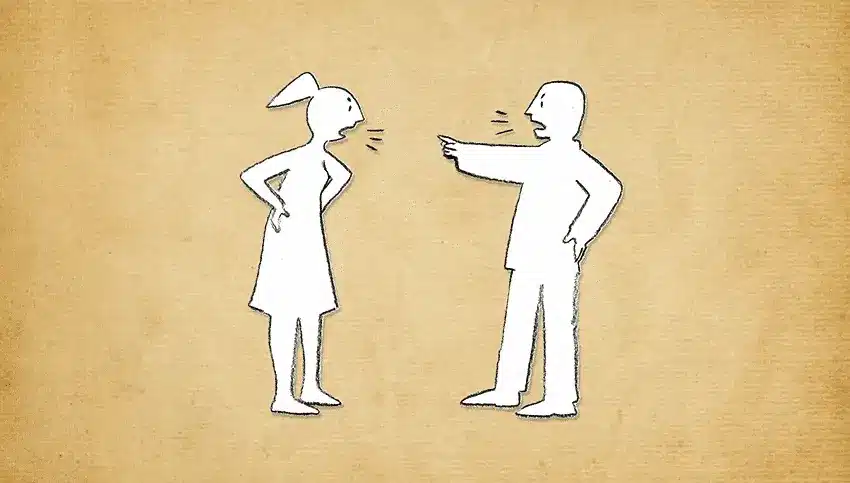
Every argument carries the risk of "fine cracks" appearing, which can grow larger with each subsequent argument and ultimately lead to the breakdown of the relationship - because words spoken in anger often hurt deeply and cannot be easily forgotten.
If you were given a precious vase as a gift (and isn't your partner, your love, your own relationship among the most precious things in your life?), you wouldn't just casually hit it in passing, even in a bad mood – and then sooner or later wonder why the beautiful vase broke, needed to be glued, and would never be undamaged again...
IMPORTANT! This does NOT mean that happy relationships cannot and should not contain controversies, differing needs, differing opinions, heated discussions, honesty (even if it is uncomfortable for both partners), etc.
BUT:
- Conflict is not the solution.
- Conflict should not be considered "normal".
- There is no such thing as a culture of conflict .
Relationships need other forms of joint conflict resolution, which should be used as early as possible – namely when couples still have trust in each other and respect for one another – and not only when anger and resentment are so great that conflict can no longer be avoided.
Relationship myth 2: The partner as a lightning rod
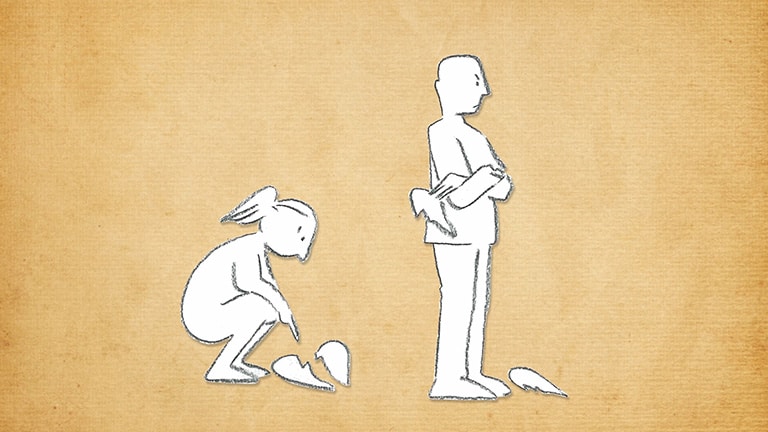
"You have to pull yourself together everywhere – in a long-term relationship, it's simply unavoidable that sooner or later your partner will become a lightning rod..."
The convention of not regularly "letting loose" in social interactions, striving for respect, and initially "holding oneself back" has its good reason :
- In a work context, one would be dismissed as quickly as possible or no longer "booked".
- In a friendship context, one would have had friends for the longest time.
Why shouldn't that also apply to couples? Can behaving like a madman towards your partner really have no consequences? It's not set in stone that the other person has to love you forever and retain their positive feelings – no matter how you behave or what you do.
A relationship is precious and needs to be treated with care!
It is the responsibility of each individual to consider where and how they can get rid of excess negative energies before turning to their partner.
But how can we – whether man or woman, older or younger, recently or long together – learn not to freak out towards our partner, even when we are very upset?
What does it take to control strong emotions like anger and frustration, to remain respectful to one another, not to use the other as a lightning rod – and to do so over years and decades?
- Perhaps a classic punching bag, relentlessly pounded for a quarter of an hour, might help in between? A sweaty jog in the park? A cold shower?
- Or a phone call with your best friend, who for years has instantly understood what's getting to you: whether it's worries about the kids, complaining about your own weaknesses, whether you need to vent about your boss's unfairness again, or just generally grumble about being stuck in a terribly exhausting phase with an incredibly annoying daily routine.
- Perhaps it's nice to see our most relaxed friend enjoying an after-work beer: the one who doesn't need anything explained to him and yet always has a fitting remark. The one who's immediately ready to philosophize about life together and chat all night long.
After that, the partner will certainly no longer receive the whole negative "packet" unfiltered.
When dealing with sensitive issues in a relationship, the rule is: only strike when they're no longer extremely hot! In other words: cool down instead of stirring things up!
Relationship myth 3: Problems must always be discussed.

Talking a lot doesn't automatically lead to solving problems! Often, people keep circling back to the same issues for a very long time – and as a result, the problems are either cemented or even made disproportionately large instead of being softened and resolved.
Important when a couple talks to each other about their different needs:
- Remain open to truly new and unconventional solutions, or a good compromise – otherwise, there's a risk that everyone already thinks they know what the best possible solution looks like. Instead of listening attentively to the other person, you'll be mentally gathering your own counterarguments (while your partner is speaking).
- A compromise is only good if it hurts both sides (a little).
- If a 'problem' arises from a personality trait of one partner (e.g., "Why are you always so quiet (and not bubbly and extroverted)?!" or "Your slowness is driving me crazy! Please, for goodness' sake, talk a little faster..." or similar), the likelihood of resolving this problem together is extremely low. Blaming your partner's quirks or weaknesses helps no one and certainly won't lead to renewed feelings of closeness or happiness after this harsh confrontation.
To all those who want to have a long, happy relationship: Put more energy into accepting your partner's quirks or small weaknesses instead of trying to change them by force (because that won't work anyway!).
Most couples report that both partners immediately felt closer to each other again and had the feeling – sometimes after years! – that they could finally have open conversations again as soon as it was clarified that they no longer wanted to 're-educate' each other, but would instead address the question together in an empathetic way of what might be good for their relationship.
Relationship myth 4: Solve the problems first!
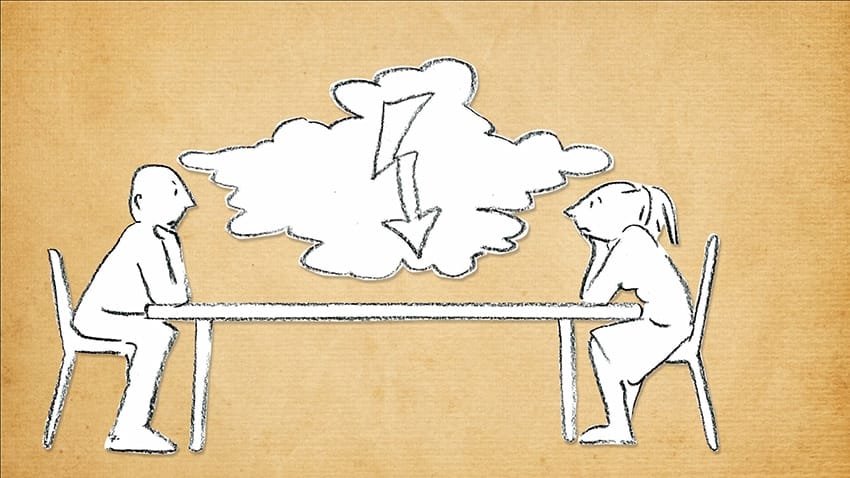
"First we have to solve our problems – then we can (maybe) have a better time together again – and one day have what is understood as a happy relationship ."
A very common misconception! Because it's exactly the opposite:
Only when the atmosphere in the relationship is (again) somewhat relaxed and both partners can experience untroubled togetherness, is each partner willing to listen to what could make the other happy and satisfied - and does not automatically tune out when the partner expresses concrete wishes for change.
Then there is also no risk that both partners in the relationship will defend themselves and come up with their own points of criticism as soon as they feel criticized themselves.
The archaic mechanism of flight or defense is at work in all kinds of relationships:
Anyone who feels cornered by their partner will either flee or strike back. And that's exactly what a sentence like "We need to talk!" immediately triggers.
Relationship myth 5: The past must be dealt with!
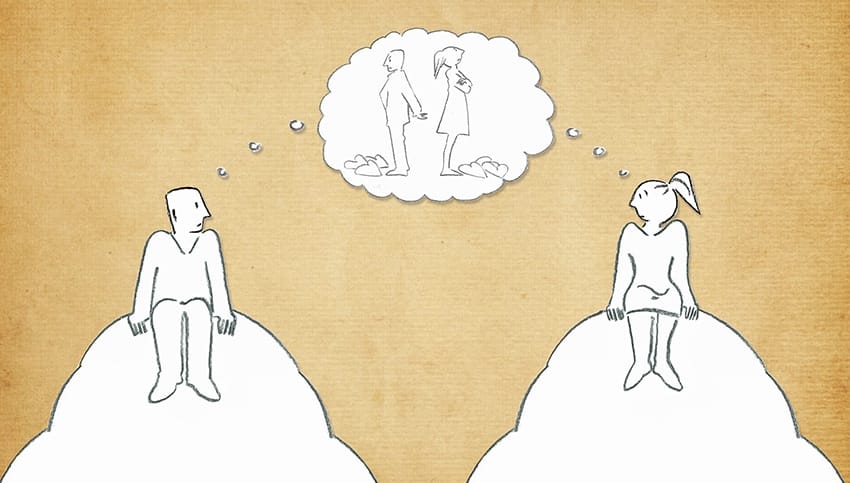
Life happens every day !
Those who constantly cling to the past and continually focus their attention on negative past experiences in the relationship lose sight of the present and fail to create positive opportunities day after day.
But positive experiences are the stuff that every happy relationship is made of: They need to counterbalance unpleasant experiences from the past.
In most cases, the far better strategy is to repeatedly strive to let unpleasant situations that lie in the past and can no longer be changed remain in the past, to sort them into a kind of imaginary "past box" and actively close them.
Relationship myth 6: My criticism is only well-intentioned!
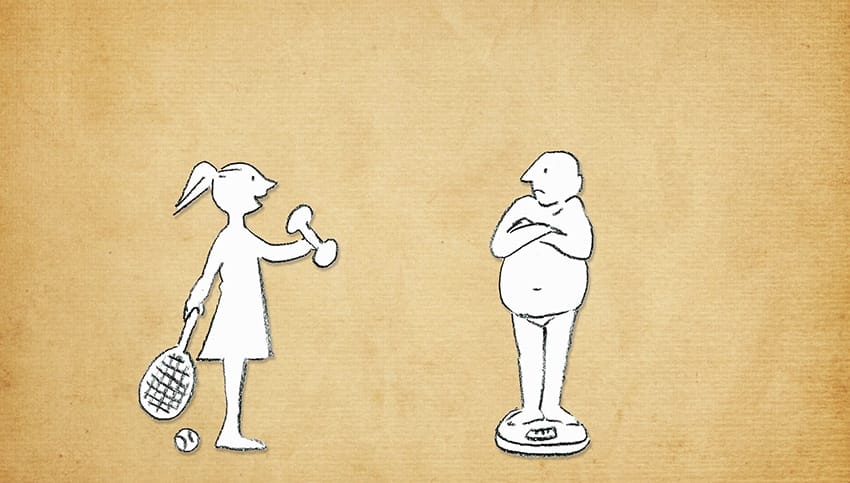
I only mean well when I occasionally remind my husband/wife that he/she should lose weight/stop smoking/do more exercise/dress differently/present themselves better (...).
First of all, you can of course wish for ANYTHING:
- That your partner, who has become chubby, loses 15 kilos and will be standing in front of you with a six-pack in a few weeks.
- That the unathletic partner goes to the gym 3 times a week so that a joint mountain tour can finally work out.
- That the partner, exhausted over the weekend, goes out on the town with someone on Saturday Night until dawn – and what else…
BUT: It is nowhere written that all our wishes must be fulfilled. And certainly not when they primarily concern the transformation of another person.
Everyone must complete their own personal development – at their own pace, ideally without too much external pressure, trusting that they will be liked as a "complete package" – including their own weaknesses.
Otherwise, so-called "reactance" is created, i.e., even if the partner knows that our suggestions/wishes are generally good, important and correct (losing weight, quitting smoking, drinking less alcohol, doing more exercise, becoming more sociable, etc.):
If he is repeatedly confronted by US with these requests for change in the relationship (with labels like: "I'm just worried," "I just want honesty between us!"), the likelihood increases rapidly that he will not change in the direction we hope for - because he experiences our requests and reminders (even if they were intended by us as support) as pressure and not (anymore) as primarily his own concern.
All those who make their subjectively perceived relationship quality ("we have an overall happy relationship" versus "things aren't going well in our relationship") dependent on whether or at what pace the partner's supposed weaknesses change, will most likely never be able to enjoy their relationship unclouded.
Relationship myth 7: Control is better than trust.
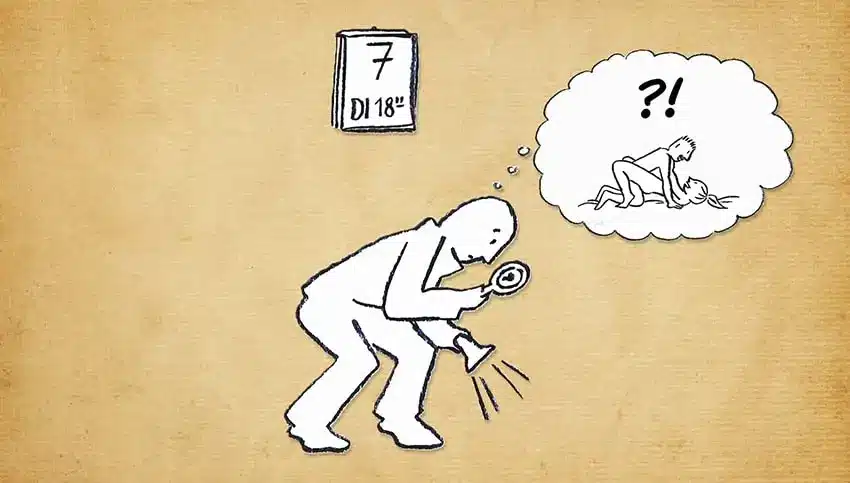
If we spy on our loved one (checking their phone, eavesdropping on phone calls, secretly reading emails, subtly questioning their friends, etc.) and they somehow find out, a potentially deep rift in the relationship can quickly develop, because:
Love is a child of freedom.
We all wish that the other person is "voluntarily" and happily loyal to us and of their own volition, and therefore does nothing that could seriously endanger the relationship.
If our partner feels monitored and perceives our default setting as "distrust and suspicion" instead of " trust and, in case of doubt, for the accused," then exactly what we wanted to avoid happens in our relationship:
The other person is annoyed. Feels misunderstood. Becomes emotionally distant from us.
Eventually, he will seek recognition elsewhere. And perhaps – if he is already constantly suspected of infidelity – he will embark on an affair ( see also the article "Forgiving infidelity" ).
Therefore, when we are plagued by jealousy and fear of loss , it is a misguided belief to think:
In this relationship, we simply need to make the enclosure nice and small and easy to navigate, and secure the exit well – then we will have lifelong control over the creature we love and it will never be lost to us!
That might work with a guinea pig. But with our partner? Never ever!
The tighter we draw the fence around the person we love, the more likely it becomes that they will one day break free from the relationship. Completely. And then forever. Because they have been deprived of space to move around and the air to breathe.
Holding on to what we love at all costs – that doesn't work in a relationship.
Relationship myth 8: It's better to be sparing with compliments and praise.
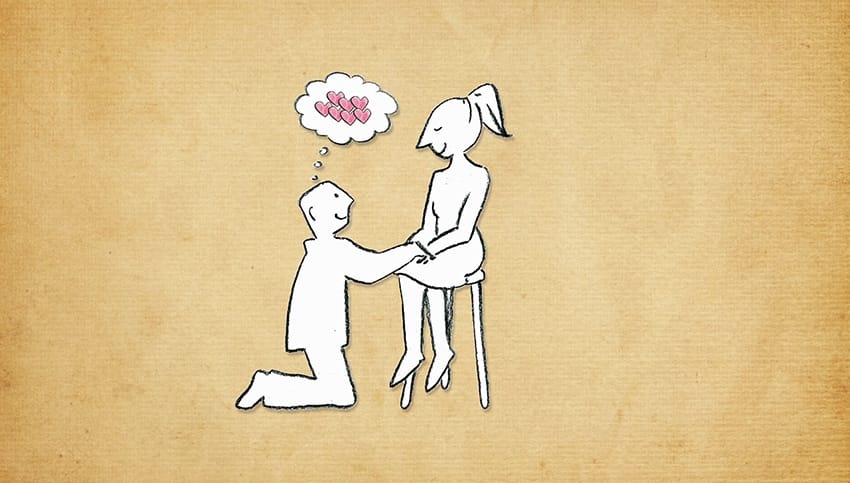
"One should be sparing with compliments and praise – otherwise the other person will become desensitized."
Everyone benefits from recognition and appreciation. And everyone is happy when they hear and feel that the other person sees, appreciates, and puts into words their own efforts and good qualities.
So, there is no reason NOT to be generous with compliments and praise.
Aside from the fact that it does us good and lifts our mood when we focus our attention on the positive aspects of the other person instead of waiting for what is NOT perfect about them, the other person is involuntarily and constantly reinforced in maintaining and perhaps even expanding their good qualities…
If appreciation for the other person is lacking, there is a high risk that our partner will gradually cease making efforts ("She/He doesn't see it anyway...") – so that the relationship threatens to become increasingly loveless. This increases the risk of seeking validation elsewhere.
Relationship myth 9: My partner needs to sense what I need.

What an amazingly persistent misconception!
"The other person should know me well enough to instinctively sense what I want, what makes me happy, what I need in any given situation – especially since I already told him so explicitly 23 years ago. After all, he claims to love me. If I have to give him a subtle hint, I can't truly appreciate anything my partner does. Other couples understand each other perfectly well without words."
However, when two individuals come together in a relationship, they each already carry their own specific baggage in their respective "biographical" backpacks.
- Experiences from one's own childhood,
- Memories of the parents' relationship,
- various personal relationship experiences
- Assumptions about how much of what is needed for a happy relationship (sex, trust, being together, brutal honesty, shared events, meeting other couples, etc.)
As a result, there are often very different ideas about how to show someone you like them.
Example: Declarations of love
- the one: in words
- the other: through gifts
- Yet another: by taking work off the other person's hands.
Example: One of them is troubled
- One person: to take their partner in their arms and comfort them.
- The other: consciously leaving the partner alone
- A third option: Trying to distract the partner
Example: Support during stress
- One: Asking questions and listening.
- The other: to come up with concrete solutions.
- A third option: offer relaxation opportunities for in-between moments
Even if a couple supposedly knows each other very well:
It is always astonishing to see in which areas significant differences still exist between partners even after many years of relationship, and how surprised both are when these differences are finally explicitly addressed .
"Yes, that's actually true... now that you mention it... I've never thought of it that way before, that it's really also a kind of declaration of love that you've been fishing my long hair out of the drain every day for years without complaint, because I never do that myself... ahem..." or:
"Okay. From now on, I won't try to pressure you to regularly TELL me you love me, but I'll try to see other signs (like hugging me or entertaining the kids early on weekend mornings so I can sleep in) as expressions of love... I'm just not used to that from before. In my family, everyone always TOLD each other how they felt. That's why I was always waiting to HEAR more from you..."
Relationship myth 10: Why always me?
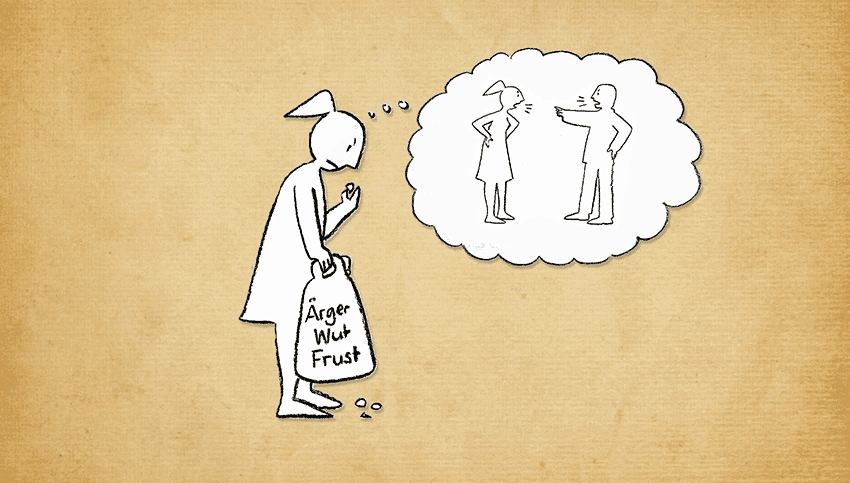
"If I always have to make the first effort, the relationship can't be good."
YOU are the only person you can change. So why wait for the other person to make the first move and get annoyed in the meantime? Why not repeatedly model the way you want to be treated?
The – often defiant – attitude: “Why me again? It’s the other person’s turn now!” is frequently the reason why an unfavorable status quo persists unnecessarily long (sometimes for years) and both remain in a bad atmosphere.
However, if ONE of them starts to (again) take the initiative and approaches the other in a benevolent and loving manner, the other will most likely follow suit a short time later.
This is the principle of so-called "reciprocity." And surprisingly, it works even when the partnership has been plagued by problems for a long time…
The only important condition, however, is that you must consistently and consistently switch to "positive interaction" for - ideally - SEVERAL days in a row - and not be friendly and loving for a few hours, then complain or snipe in between, then be a little nice again and then badmouth the other person again...
Otherwise, the partner – quite rightly – does not truly believe that a lasting and genuinely positive development has begun, but remains suspicious, stays "on guard" and does not enter the new positive spiral himself.
Erich Fromm summed up this principle in the following words: The richer person can give more.
In other words: Whenever you are the "richer" one (i.e., you realized more quickly that something needed to be changed, etc.) -> you should give! (i.e., do something without waiting too long...)
Relationship myth 11: Affection is either there – or it isn't.
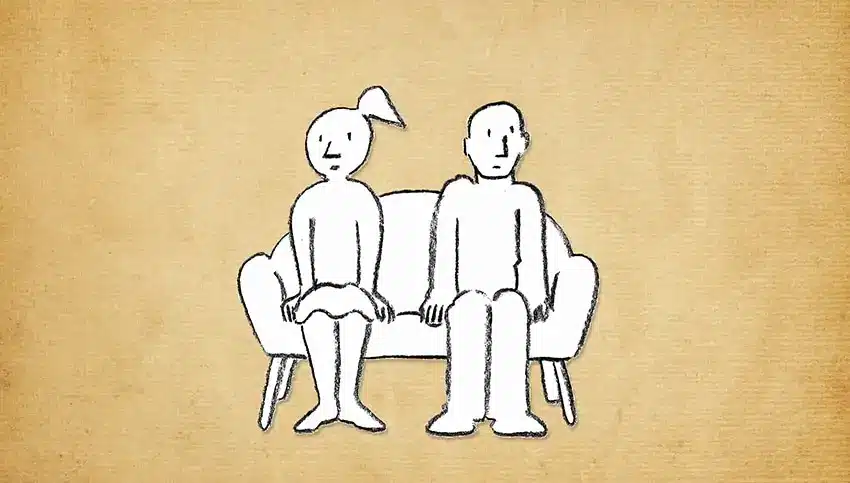
A common misconception among many couples is that once love is gone, it's lost forever. There's really nothing you can do about it.
HALT!
If one consciously and deliberately strives to create a loving atmosphere and a supportive approach, the seemingly lost affection can very well return ( see also the article "Overcoming a Relationship Crisis" ).
Humans are creatures of attachment – that is, shared history makes people feel bound to their partners.
And once a bond has formed, it doesn't disappear completely so easily. Shared experiences forge a strong connection – and the accompanying feeling of belonging and affection can usually be rekindled by most couples if they manage to approach each other with more friendliness and interest, listen to one another, consciously remember challenges overcome together, and/or make an effort to create beautiful shared experiences in the here and now.
Test: Wie gut funktioniert Ihre Beziehung wirklich?
Mehr zum Thema Wir-Gefühl, Positiva und Herausforderungen in Ihrer Beziehung erfahren Sie in unserem wissenschaftlich entwickelten Partnerschaftstest (kostenfrei), der bereits von vielen tausend Paaren genutzt wurde.
Falls Sie den Test noch nicht gemacht haben sollten und wir noch kein (gratis) Beziehungsprofil für Sie erstellen konnten:
Gewinnen Sie jetzt Klarheit darüber, wie gut Ihre Beziehung tatsächlich "funktioniert".
Treten Sie einen Schritt zurück und analysieren Sie Ihre Liebe aus der Vogelperspektive.
Sobald Sie einen konkreten Überblick darüber haben, wie Sie Ihre Partnerschaft erleben und wie Sie sie selbst gestalten, werden Sie einen viel schärferen Blick auf Ihre gemeinsamen Ressourcen und Herausforderungen gewinnen.
Es wird Sie etwa 10 Minuten Zeit kosten, die Fragen auszufüllen.
Machen Sie jetzt Ihren Beziehungstest! (kostenfrei)
Wie steht es um Ihre Beziehung?
Was sind Ihre Stärken & Schwächen?
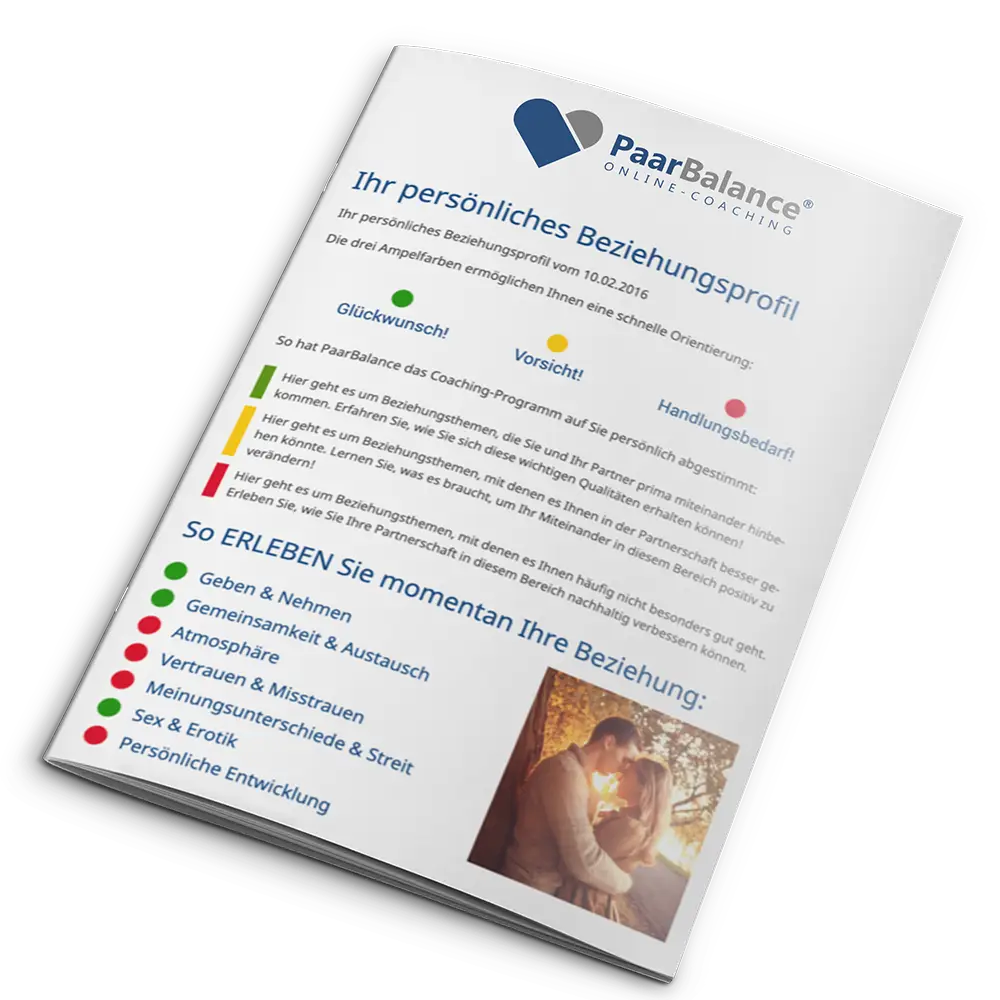
Das erfahren Sie sofort im Anschluss in Ihrem persönlichen PaarBalance-Beziehungsprofil (gratis).
Starten Sie jetzt mit dem Beziehungstest!
✓ Wissenschaftlich fundiert
✓ Inklusive detaillierter Auswertung
✓ Keine Weitergabe Ihrer Daten
✓ 100% gratis & unverbindlich
100% sicher. Wir halten uns an den Datenschutz. Die Anmeldung für den Beziehungstest ist kostenlos.
Bitte lesen Sie zuvor diese wichtigen Informationen:
Datenschutz ᐧ AGB ᐧ Allgemeine Informationsvertragsbedingungen . Transparenzerklärung
Alles Gute für Sie und Ihre Beziehung!
Ihre Dr. Judith Gastner
Passende Artikel zum Thema "Wie Beziehungen funktionieren"
Frequently Asked Questions
How do I find the right partner?
What constitutes a fulfilling relationship for you: shared interests, a similar sense of humor, tenderness and sex, the same values, a sense of family, or a thirst for adventure? Those who know themselves and understand where they could readily accept personal differences and where they probably couldn't have a good chance of finding the 'right' partner... and keeping them.
How important is communication in a relationship?
Communication is a fundamental building block of happy relationships. Open exchange and the desire to get to know and understand each other better form the basis for establishing a deep connection and overcoming challenges together. In addition to verbal communication, nonverbal communication also plays a significant role.
What does it take to overcome relationship conflicts?
The key usually lies in approaching areas of conflict with an open mind: What does each person want? Could the solution lie in a "both-and" rather than an "either-or"? Is this about principle or about a constructive compromise? If a couple treats each other with respect, then successfully resolved conflicts contribute to strengthening their relationship.
What are the secrets to a happy relationship?
Unfortunately, there's no magic formula for relationship happiness. However, research on couples has identified variables that form the basis for partnership satisfaction. These include: respect and openness; the ability to take responsibility for one's own happiness, to apologize, forgive, and let go; a willingness to compromise; and goodwill.
What harms a relationship?
Lack of honesty, frequent arguments, or a loveless tone can severely damage a relationship in the long run. However, if both partners are genuinely interested in improving their relationship, even a partnership perceived as unhappy can quickly change for the better. Often, only a few adjustments are needed.