





☝🏻 Quick start: Narcissist - Am I in a relationship with a narcissist?
Have you recently watched a really cheesy Hollywood romance? And spent two hours witnessing the misunderstandings and turmoil surrounding the approach of two people who just couldn't grasp that they were meant for each other? Until, finally, they could hardly believe their happiness. And that happiness lasts forever...
Ah, how wonderful it must be to be so happy and content and in love and respectful and warm-hearted and attractive and sexy (and everything else...) with one's one true love - until the very end of one's blissful life!
🚀 Already 65,511 people have gained clarity through the test.
Ouch! - When wishful thinking and reality are far apart...
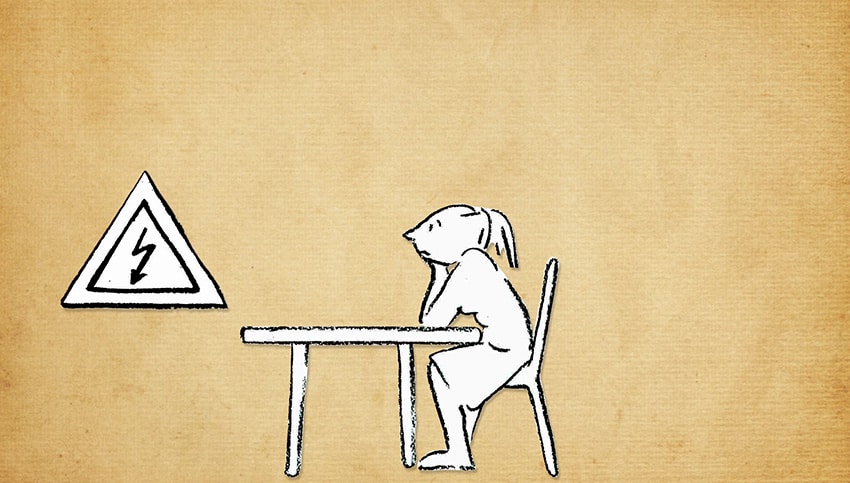
Let's be honest: at the end of such sentimental movies, almost everyone feels a tiny bit wistful and longs for that one, truly great love in which all imaginable wishes are fulfilled.
And it makes you realize once again: unfortunately, relationships only play out like that in Hollywood movies (okay – sometimes in German romantic comedies too). The fact is, in real life, things aren't always rosy for decades. You have to come to terms with that. Otherwise, unrealistic expectations can undermine even the most promising relationships.
Perhaps you've also developed a really uneasy feeling because you have the impression that your relationship is not just significantly different – but the exact opposite . For example, because...
your partner no longer seems interested in you,
he hasn't really listened to you for a long time and doesn't give you any real attention,
he becomes angry or doesn't have time for you when you need his help,
at the same time demanding your unconditional and unrestricted support,
Your partner will automatically prioritize your own wishes and needs.
he always blames you when something goes wrong,
He demands that you change – while he himself is unwilling to make any concessions.
his tone is often hurtful and disrespectful, etc., etc.
Do these descriptions sound familiar? Does your relationship have little to do with 'romance'? Is there no equality between you? Do you look tense in almost every photo you take together?
Then it's possible that your partner is what is known as a narcissist or a person with narcissistic personality traits or disorder .
Scientific test: How balanced is your relationship?
How is the quality of your relationship? (10 min, free of charge)
The scientifically based CoupleBalance relationship test was developed by renowned couples therapist Prof. Dr. Ludwig Schindler and colleagues with the aim of reflecting the current state of a partnership to people in committed relationships. Honestly addressing the issues of respect and reciprocity within one's own partnership is one of the most important steps on the path to a better quality of life.
In your personal relationship profile, you can see at a glance (using the traffic light colors red, yellow and green) how the central areas of your partnership (conflict behavior, communication, self-care, sense of togetherness, finding compromises, eroticism, etc.) are doing.
Take your relationship test now! (free)
How is your relationship?
What are your strengths and weaknesses?
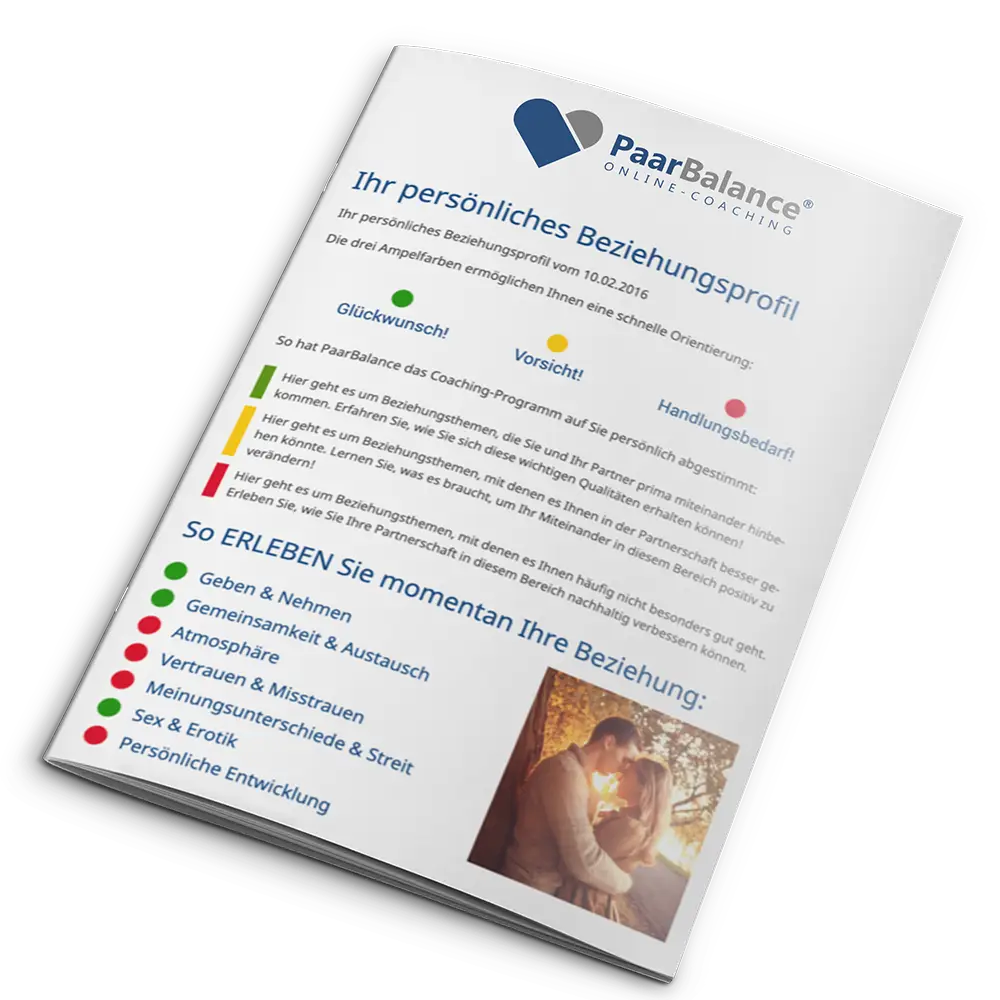
You will find out immediately afterwards in your personal PaarBalance relationship profile (free).
Start your relationship test now!
✓ Scientifically sound
✓ Includes detailed analysis
✓ Your data will not be shared
✓ 100% free & non-binding
100% secure. We comply with data protection regulations. Registration for the relationship test is free .
Please read this important information beforehand:
Data Protection ᐧ Terms and Conditions ᐧ General Information Agreement Terms and Conditions . Transparency Statement
What does the term "narcissism" mean?
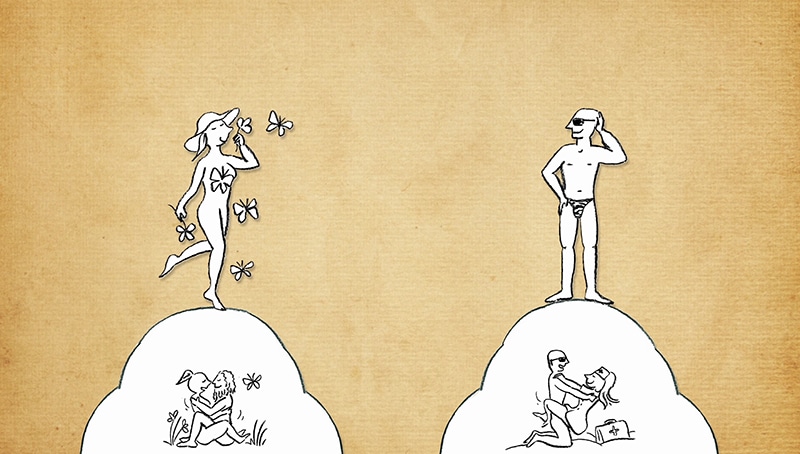
The term "narcissism" originates from Greek mythology: According to legend, the beautiful Narcissus rejected all those who desired him. As punishment, he was to suffer the torments of unrequited love. Therefore, the gods condemned him to fall in love with his own reflection in the water. In trying to embrace it, he ultimately drowned – or so the myth goes.
Narcissism describes the display of one's own grandeur and exceptionality. Narcissists exude a high degree of self-confidence and a sense of mission. They often behave condescendingly towards others. Like Narcissus in the myth, however, they also suffer themselves. Psychologists assume that behind the outward grandiosity lies an unstable, fragile sense of self-worth.
If the typical characteristics are very pronounced and manifest themselves permanently in various areas of life, a diagnosis of "narcissistic personality disorder" can be made - after a detailed medical history and clarification by a psychologist, psychiatrist or psychosomatic specialist.
However, even if not all criteria for a personality disorder are met, the typical characteristics described can strongly influence and burden the affected person and their environment.
How can I recognize a narcissist?
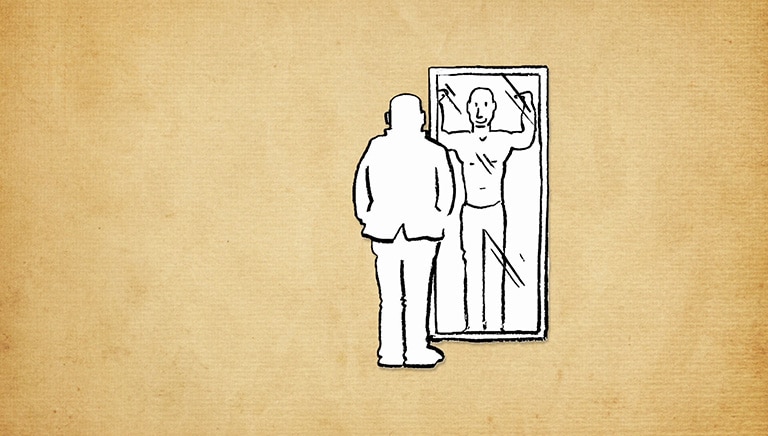
Not everyone who is very self-assured or considers themselves special is a narcissist. And of course, not every narcissist is the same. Therefore, it's not always easy to recognize narcissism. However, there are characteristic traits that occur frequently or are sometimes quite pronounced when narcissism is involved. For example:
- Overestimation of oneself.
Narcissists overestimate their own importance. They often exaggerate their achievements or talents and expect to be seen as special without having to prove that they actually are. - Grandiose fantasies.
Narcissists often preoccupied themselves with fantasies of unlimited success, power, beauty, or ideal love. - Status.
Because narcissists are convinced they are exceptional, they believe they can only be understood by equally exceptional people or those with high status. They usually only want to be with them, or primarily with them. - To be admired.
Narcissists typically have a need for excessive admiration and recognition. - Entitlement.
Narcissists almost always have high expectations. They expect special treatment and take it for granted that all their needs will be automatically met. - Exploitation.
Narcissists often exploit interpersonal relationships to achieve their own goals – this applies to partnerships in particular. - No empathy.
Narcissists usually lack empathy. They often fail to recognize and identify with the feelings and desires of others. - Them.
Narcissists are often envious of other people or convinced that these people are envious of them. - Arrogance.
Narcissists often behave haughtily and arrogantly.
As a rule, the partner suffers greatly when the husband or wife has narcissistic personality traits or a pronounced narcissistic personality disorder. Such structures almost always have a massive impact on the relationship.
How does a narcissist behave in a relationship?

Because narcissists are very self-centered , they expect to be the center of attention in their relationships. They demand that their partner attends to their wishes and fulfills their expectations. If the other person doesn't, or expresses their own needs, a narcissist can quickly become enraged. Harsh reprimands and humiliations are then commonplace. Narcissists pay little or no attention to their partner's wishes.
In everyday life, people with narcissistic personality disorder or narcissistic traits often exhibit strong mood swings . Particularly when criticized by their partner, a narcissist reacts with extreme hurt and intense anger . This leads to the other person constantly walking on eggshells to avoid upsetting the narcissistic partner. Their own needs usually have to be completely suppressed.
Thus, the partners never meet on equal footing. The narcissist's partner feels they must constantly submit and flawlessly fulfill all of the other's expectations to avoid devaluation . As a result, partners of narcissists sooner or later feel worthless and helpless. They are plagued by guilt . Their self-confidence suffers. Furthermore, they cannot let their guard down in the relationship because they constantly fear that the mood will turn sour.
The term "toxic relationship" is often used when a partnership suffers from the narcissistic traits of one partner.
Recognizing narcissists: What warning signs should I look out for in my relationship?

Even though the specific manifestations vary: Perhaps you will find yourself largely reflected in the above description and have been wondering for some time whether you too are in a relationship with a narcissist.
In this article, we aim to help you answer this question as clearly as possible for yourself. To this end, we have compiled the typical warning signs and indicators that point to narcissism.
The partner always wants to be the center of attention.
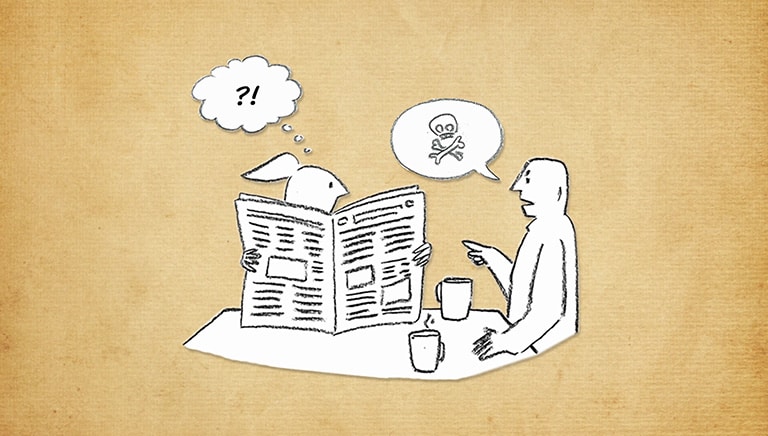
As mentioned earlier, it's important for narcissists to be the center of attention , even in a relationship . This can manifest in many different situations. For example, if their partner achieves something special, such as a promotion, narcissists often belittle it instead of sharing in their joy or expressing their own admiration – because the other person must never be "better" or remain in the spotlight for too long. This also applies to friends or family members: narcissists tend to gossip excessively, especially when they are envious of other people's successes or possessions.
Narcissists can also be identified by this: they try to demonstrate their perceived superiority even in their leisure time . For example, if they share a hobby with people in their social circle, they often buy expensive equipment and then display it openly. This sends messages along the lines of: "I pursue this hobby more conscientiously and better than you ."
Furthermore, narcissistic individuals often want to maintain control at all costs and determine what is done in their free time and what is not.
The narcissist does not keep his promises.
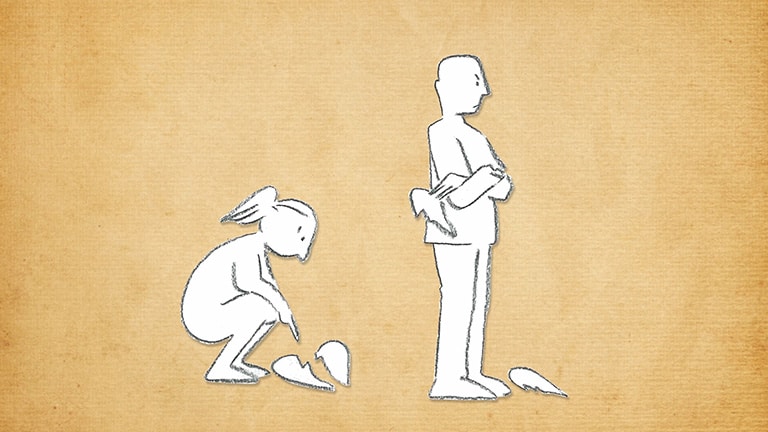
Because narcissists exaggerate their self-presentation and self-love , and portray their qualities in an especially positive light, they sometimes promise things they cannot keep. For example, they agree to take on certain tasks or solve problems they are actually not equipped to handle. Instead of admitting this, they blame external circumstances or another person .
The narcissistic partner fluctuates between demeaning and loving behavior.
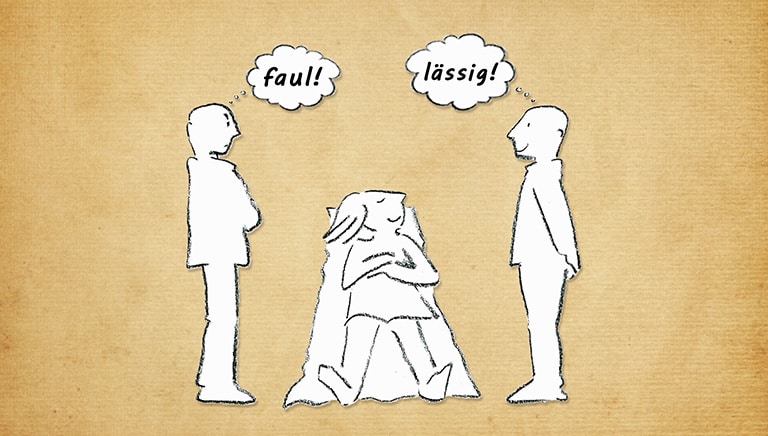
Narcissists often fluctuate wildly in how they treat their partners: while they might be loving and generous one day , on other days they are indifferent, cold, and lack empathy . This prevents their partner from leaving, as they constantly cling to the hope of those good days. At the same time, the other person usually believes they will only receive love and affection if they make a special effort – and therefore goes to great lengths to please the narcissist.
Another form of ambiguous behavior: Narcissists often give compliments that are "poisoned" —that is, they only appear to be compliments at first glance, but actually contain insults. This might sound something like this:
- "You finally put on makeup today. You should do it more often. You look so much better that way." or
- "That jacket suits you. It conceals your drooping, narrow shoulders." or
- "Hey, congratulations on your new boots. It's the first time your shoes don't look like something an old lady would wear."
Such statements unsettle partners and damage their self-esteem . This gives the narcissist more and more control in the relationship.
The partner is sensitive to criticism
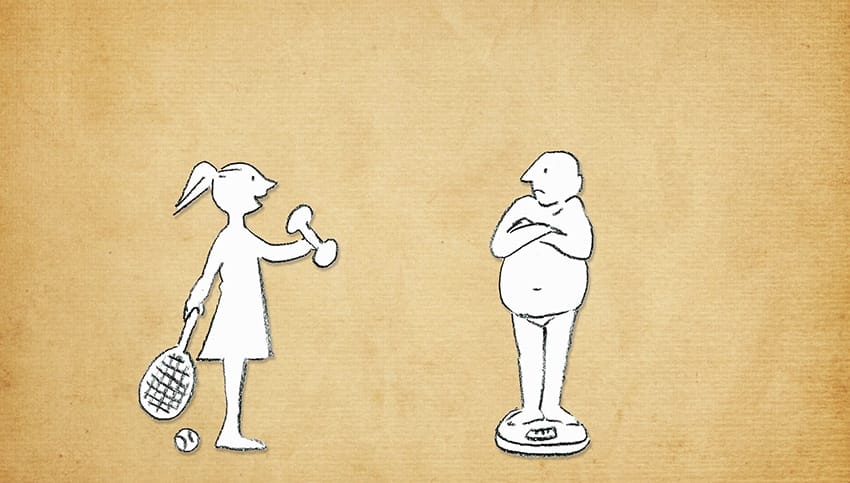
Because people with a narcissistic personality structure find it extremely difficult to admit their own mistakes, they react very sensitively to criticism, because criticism threatens their self-esteem . As already indicated above, a narcissist's self-esteem is actually unstable. Their displayed self-love, self-assurance, and admiration for their own flashes of brilliance serve as self-protection . Therefore, it frightens narcissistic people when someone else questions this defense mechanism – and they often react aggressively. Thus, seemingly minor issues frequently escalate into major arguments.
A narcissist usually twists reality so skillfully that they blame the other person and end up portrayed as "the victim ." In doing so, they often even receive support from those around them.
"But my partner was completely different at the beginning."
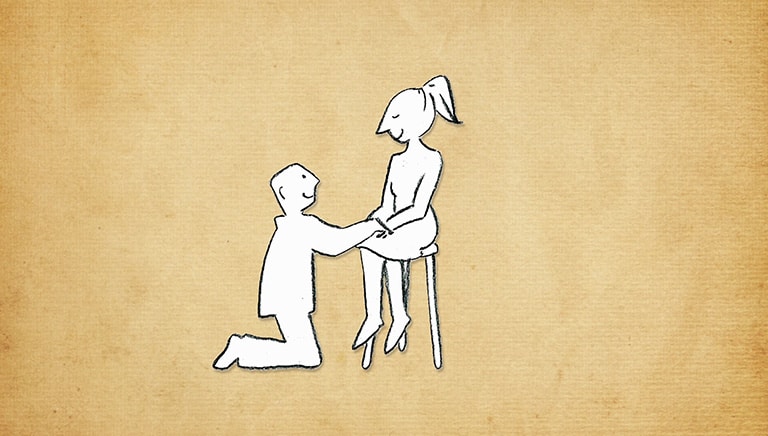
Wenn die oben genannten Verhaltensmuster häufig in Ihrer Partnerschaft auftreten, ist das ein starker Hinweis darauf, dass Ihr Mann oder Ihre Frau ein Narzisst sein könnte. Vermutlich denken Sie immer wieder darüber nach, wie Sie in diese Konstellation geraten konnten und warum Sie zugelassen haben, dass sich ihr Leben derart verändert hat.
„Warum bin ich diese Beziehung überhaupt eingegangen? Hätte ich nicht schon viel früher checken müssen, dass hier narzisstische Persönlichkeitsmerkmale oder sogar eine Persönlichkeitsstörung vorliegen?“
Nicht unbedingt, wie die Psychologie zeigt. Denken Sie an den Anfang Ihrer Partnerschaft zurück. Vielleicht fällt Ihnen dabei mit Verwunderung auf, dass diese damals fast so perfekt war wie die eingangs erwähnte Hollywood-Romanze. Das ist nicht untypisch. Da Narzissten sehr von sich überzeugt sind, können sie andere Menschen oft ebenfalls schnell von sich überzeugen. Sie wissen, wie sie andere dazu bringen, sie zu mögen - und das nutzen sie oft zu ihrem Vorteil aus, etwa dann, wenn sie einen attraktiven Menschen kennenlernen. Dann verhält sich ein Narzisst meist erst einmal "perfekt" und tut all das, was sich der andere nur wünschen kann. Er schenkt ihm scheinbar seine ungeteilte Aufmerksamkeit.
Das Ziel: Eine Partnerschaft aufzubauen, in der der Narzisst umsorgt und unterstützt wird. Narzissten verhalten sich also nicht aus Liebe so oder um dem Partner etwas Gutes zu tun, sondern weil sie wissen, dass sie den anderen so an sich binden können.
Ist ihnen das gelungen – sind sie also eine feste Beziehung eingegangen – lässt das positive Verhalten meist schlagartig nach. Es ist schließlich nicht mehr „nutzbringend“ für den Narzissten.
Das klingt sehr berechnend, als wäre es Ausdruck von reinem Egoismus oder Selbstsüchtigkeit. Nicht ohne Grund werden Narzissten immer wieder als Egomanen bezeichnet. Doch behalten Sie immer im Hinterkopf: Ein Narzisst handelt nicht aus Boshaftigkeit so. Narzissmus ist eine Persönlichkeitsstörung, die vielfältige Ursachen hat und deren Entstehung in der Kindheit liegt. In der Psychologie wird davon ausgegangen, dass ein Narzisst in seiner eigenen Kindheit und Jugend nicht genügend konstruktive Verhaltensmuster und sozial angemessene Einstellungen erlernen konnte. Daher nutzt er (unbewusst) die Strategien, die ihm früher einmal in schwierigen Lebenssituationen geholfen haben – auch dann, wenn sie mittlerweile eigentlich nicht mehr angemessen sind. Wie schon erwähnt, leiden Narzissten in der Regel unbewusst selbst darunter, dass sie nicht in der Lage sind, ihr Verhalten flexibel und angemessen an verschiedene Situationen anzupassen.
Hat die Beziehung mit einem Narzissten eine Zukunft...?

If, after reading this article, your suspicion has been reinforced that your boyfriend/husband or partner/wife is a narcissist—like an estimated 2 percent of the population—you are probably unsure whether your relationship has a future at all. This question cannot be answered generally.
The answer depends on various factors, especially the question: Does the narcissist want to change something about themselves and their behavior patterns, i.e., 'work' on themselves and the partnership?
If you are convinced that your husband or wife might have narcissistic traits, narcissism as a personality characteristic, or even a narcissistic personality disorder, talk to him or her about it in as calm a setting as possible. Perhaps show him or her this article – he or she might recognize themselves in at least some of the points.
…if the narcissist himself wants to change something?
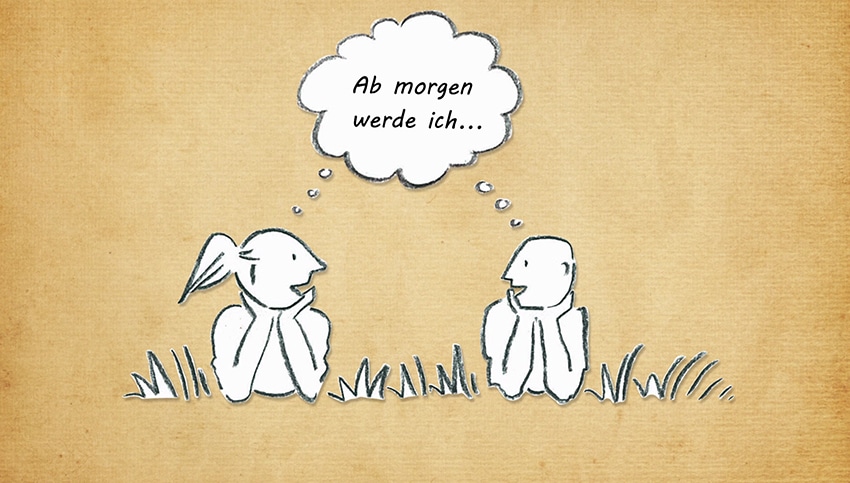
If your partner recognizes themselves in the described behaviors, they have already taken the first huge step: they have begun to reflect on themselves and their behavior. This could be an indication that they themselves are experiencing distress and will begin to look for ways to change.
If this is the case, meaning he wants to change something about himself and the relationship, the chances for your love are initially relatively good. The unfavorable strategies a narcissist uses are, after all, learned behaviors and attitudes. This means he can also learn to become a 'better' partner . To do this, it's important to first get to the root of the problem and then find out which behaviors are helpful for shaping a positive romantic relationship and keeping the other person's needs in mind. These new patterns then need to be actively practiced in everyday life until they become automatic.
While this doesn't directly change the personality of those affected, it can help them acquire skills such as empathy and the ability to communicate and show appreciation. This allows them to overcome difficulties in their everyday behavior and, through an authentic and loving partnership, ultimately boost their self-esteem.
This works best when those affected have a concrete aid at their side that summarizes the relevant information, gives tips and encourages regular practice.
The PaarBalance online training is ideally suited for this purpose: Through 18 sessions, it imparts essential relationship knowledge and provides concrete instructions for everyday life. It is the only scientifically validated, interactive online coaching program for improving couples' relationships in German-speaking countries that can be completed by each partner individually.
This allows him to flexibly and independently of his life partner engage in a well-founded way with the most important relationship skills at any time and to integrate the new strategies more and more into their everyday relationship life.
Strengthen your relationship: with PaarBalance,
the online couples therapy for individuals.
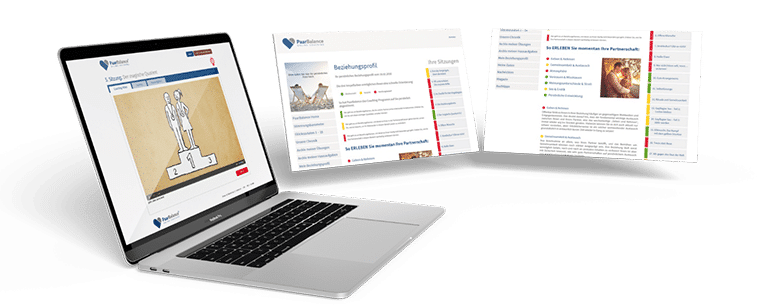
Developed by couples therapists. No waiting lists. Self-determined. Affordable.
This process requires a lot of patience from both partners . However, if they decide to walk this path together, they can build a strong, healthy partnership . If, despite their joint efforts, this doesn't work, couples counseling or couples therapy with a specialized psychotherapist can be helpful.
…if the narcissist doesn't want to work on themselves?
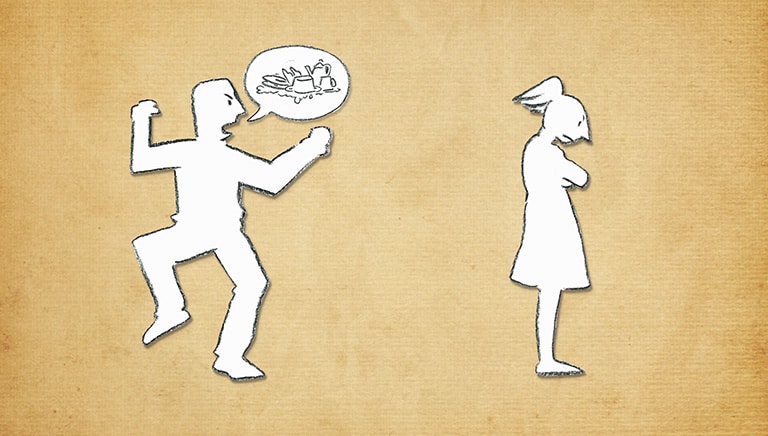
How do you deal with it when your partner cannot admit that they have narcissistic traits (or a narcissistic personality disorder) – and does not want to change themselves or their behavior?
In this case, it's difficult to continue the partnership or marriage in a loving and respectful way, because your husband or wife will most likely be unwilling to ever truly address your personal needs. Therefore, you will have to continue making one-sided concessions if you want to maintain the relationship. In the long run, this will probably make you unhappy. If your partner is unwilling to contribute to improving the relationship, separation may be the only remaining option .
You might notice something that frightens you:
If you have been in a long-term relationship with a narcissistic person, you may have forgotten how a healthy, equal partnership works. Your self-confidence is likely severely damaged, and you may find it difficult to trust other people.
Before entering into a new relationship, it can therefore be very helpful to first learn to search for your own needs again, to recognize and express your own desires , and to stand up for personal boundaries – otherwise, there is a high risk that you will end up in similarly unhealthy relationships again.
The PaarBalance online coaching can help you regain the skills that were lost in a toxic, narcissistic relationship. This will enable you to ensure that you are treated in the future the way you want to be: with respect, recognition, attention, and as an equal.
We wish you strength and keep our fingers crossed that things develop in the direction you want.
Warm greetings from
Dr. Judith Gastner & the PaarBalance team
☝🏻 Related articles on the topic of "Narcissist"