





☝🏻 Quick start: Love or habit - what's the state of your relationship?
Butterflies in your stomach, intense longing, exciting sex, sleepless nights, the feeling of having found the greatest love of all time? Long gone... - or rather: Never really existed! Perhaps you've been asking yourself the sobering question for quite some time now: "Are we even (still) a couple, or more like roommates or close friends?"
And what does it mean to have such thoughts? Is habit in a partnership the "beginning of the end"? Or a natural and necessary component to avoid becoming incapable of coping with life from being intoxicated by love? Would we even be able to manage the many challenges of life if we were in a state of perpetual infatuation?
When it comes to love and habit, is it simply an "either-or" situation? Or is it also a "both-and" situation? We would like to explore these and other questions in more detail in the following article.
🚀 Already 65,511 people have gained clarity through the test.
Phases of a relationship

First of all, we should realize that the hormonal cocktail that turns most people's heads at the beginning of a new relationship changes over time. And it always does. Every long-term relationship goes through different phases – and that's perfectly fine. Because during each phase, certain "issues" take center stage.
Dating & Fateful Encounters
Before feelings can even develop, two compatible (or rather, open-minded) people first need to find each other. Therefore, most relationships begin with actively searching for a partner, for example, on dating platforms or during an evening out at a bar or club. But the workplace, the dentist's waiting room, or the supermarket checkout can also become memorable places when two strangers first meet there and later become a couple. It's also not uncommon for two "good friends" to one day sense that something is changing between them—and that their (platonic) friendship is turning into a (non-platonic) romantic relationship... 🙂 The comments from their friends are usually along the lines of: "Finally! We always knew it!"
The "newly in love" phase
After finding a partner or getting together, a phase of infatuation almost always follows. Most couples retrospectively describe this as the most exciting time in their relationship. Feelings are overwhelming, and the lovers want to be together as often as possible. Everything revolves around their new love. Being together is experienced as fulfilling and intense, characterized by deep conversations, sex, passion, and intimacy. Those newly in love often find it hard to imagine ever having lived without each other... They want to share as many thoughts, feelings, experiences, and memories as possible.
This phase can last from a few weeks to several months, depending on factors such as how often the couple spends time together. However, there are also couples who essentially "skip" this infatuation phase. This often raises questions and uncertainties – especially when a best friend makes comments like, "If you don't have butterflies in your stomach now, your love doesn't have a future anyway!"
Initial infatuation should not be the deciding factor in whether two people embark on a relationship or not. Therefore, we have addressed this topic in detail in our article " Relationship without Initial Infatuation ".
The "Can this-work-out-between-us-in-the-long-term" phase
When people are getting to know each other better and considering whether their new boyfriend or girlfriend should have a place in their lives in the medium and long term, a constant comparison of personal characteristics, preferences, and needs takes place – partly consciously, partly unconsciously – between themselves and the other person. At the same time, all new information about the new partner is rapidly weighed and compared, e.g.
"Wow - that's great, how enthusiastic he is." vs. "Damn. He snores like a bear."
"Cool - her family is really super nice." vs. "The way she's decorated her apartment... pretty kitschy!"
"He smells absolutely amazing." vs. "I don't find it particularly appealing that he was gossiping about his colleagues again."
"When she looks into my eyes like that, my knees go weak." vs. "It's a shame she doesn't do any sports. I would have liked it if we could go jogging together..."
"Wow, he's an amazing cook..." vs. "His quick temper when driving really gets on my nerves."
etc. etc.
When positive impressions, feelings, and expectations outweigh concerns or perceived weaknesses, or when a particular quality of the other person is perceived as exceptionally beautiful (e.g., humor, tenderness), such that less attractive traits are considered less significant in comparison (e.g., lack of athleticism, impatience), a serious attempt at a relationship usually occurs. Then the signs are green.
The familiarity phase
The initial rush of emotions is replaced in most couples by qualities like predictability, reliability, and security. Both partners gradually build trust in each other and function better and better as a team. They have both come to terms with perceived "weaknesses." They continue to grow together. Ideally, the partnership is experienced as a safe haven, a place of comfort and connection. Infatuation transforms into love. The foundation for a stable, long-term relationship is laid. - And then...? Then comes...
The "nothing-works-by-itself anymore" phase
Now we come to a major misunderstanding that is often the reason why long-term partnerships eventually fail: We subconsciously expect everything to automatically continue as it did at the beginning.
Shared time, sex, tenderness, or deep, hours-long conversations – none of it required any effort at first. The desire for closeness and togetherness was simply there. At the beginning of the relationship, everything happened naturally. Every time they saw each other, still head over heels in love, they could hardly keep their hands off each other. Fascinating, seemingly endless conversations turned many a night into day. They wanted to be in contact with each other every free minute.
This automatic response, however, doesn't last. One day, these wonderful moments become more and more of a memory. The time spent together becomes more mundane and less emotional. Those who have reached this stage in a relationship realize that the earlier obsession with one another is gone. Much of what was initially taken for granted no longer comes automatically. And that can be unsettling.
If you and your partner don't actively and consciously make an effort for each other, the relationship will increasingly fade into the background. The daily grind, everyday stress, or simply being comfortable will leave less and less room for the former love – and instead of exciting feelings, inattentiveness will take hold.
However, this process of change does not have to herald the beginning of the end of the relationship - but it should be understood and 'acted' as a new phase.
How you can continue to navigate your shared relationship life in a satisfied and connected way after the initial infatuation is explained (a little further down) in this article.
Perhaps you're wondering at this point how your own relationship is currently doing. You can find out (it takes about 10 minutes) with the scientifically based CoupleBalance relationship test. Your personal relationship profile will give you a comprehensive overview of the most important resources and challenges in your relationship.
How is your relationship doing? Take the free test!
Immediately following the PaarBalance relationship test, you will receive your personal relationship profile with an individual strengths and weaknesses profile (free of charge and without obligation).
Take your relationship test now! (free)
How is your relationship?
What are your strengths and weaknesses?
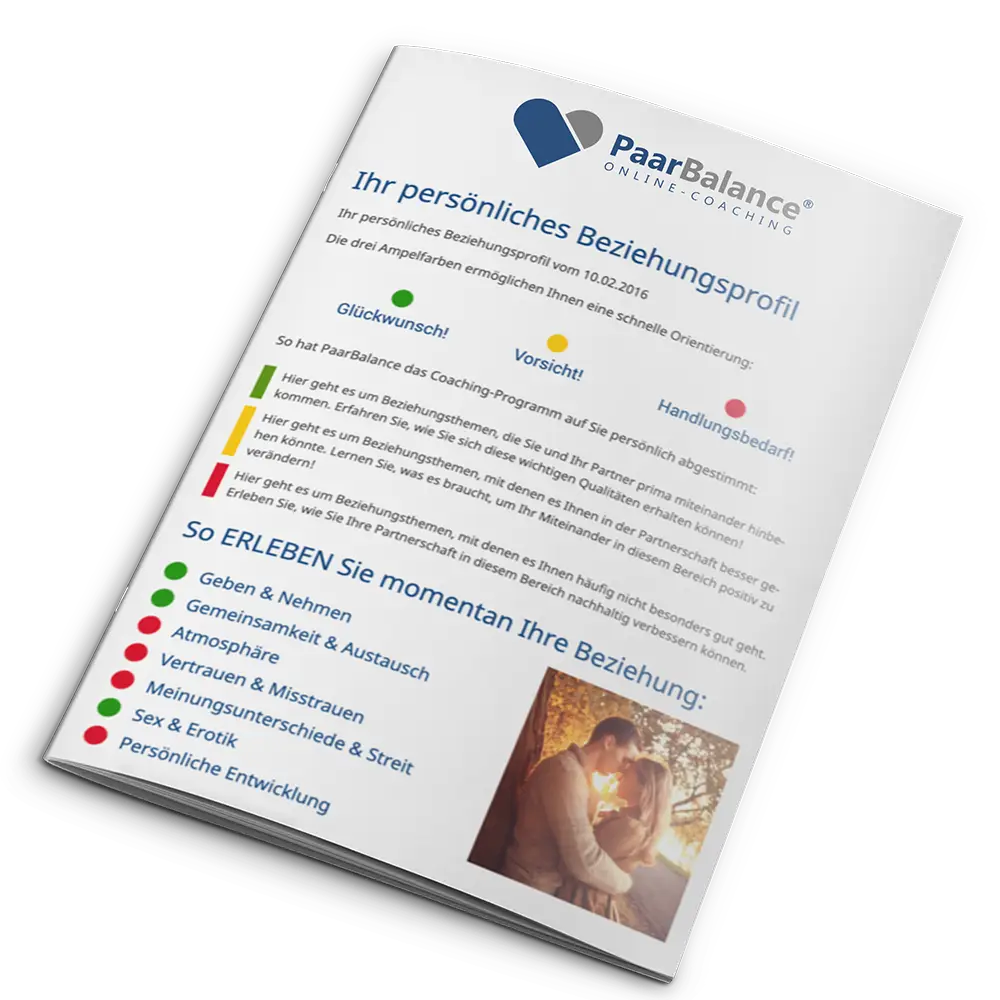
You will find out immediately afterwards in your personal PaarBalance relationship profile (free).
Start your relationship test now!
✓ Scientifically sound
✓ Includes detailed analysis
✓ Your data will not be shared
✓ 100% free & non-binding
100% secure. We comply with data protection regulations. Registration for the relationship test is free .
Please read this important information beforehand:
Data Protection ᐧ Terms and Conditions ᐧ General Information Agreement Terms and Conditions . Transparency Statement
After the test, you will have more clarity about the resources and challenges in individual relationship areas such as "sense of togetherness", "giving and receiving", "coping with stress", "conflict behavior", "caring", "eroticism", and much more.
The Love Lie of Hollywood
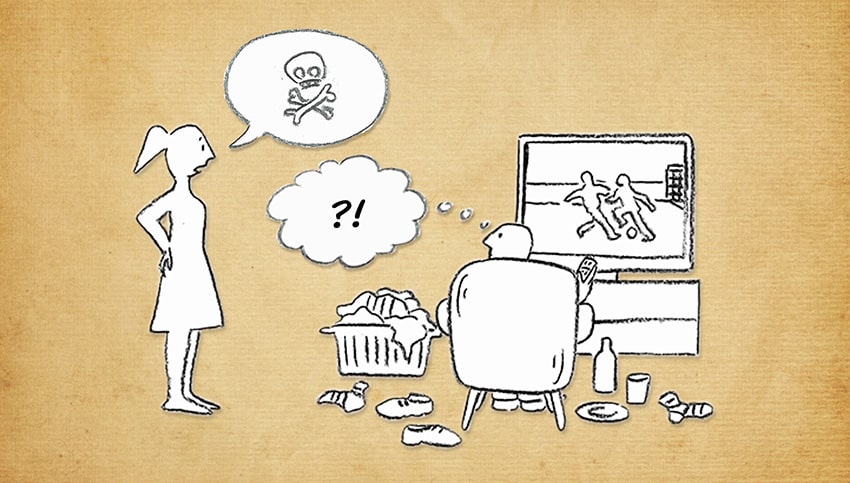
What have shaped many of our expectations of true love? The image most people have of love, dating, and relationships is... wrong! This misunderstanding is the root cause of many relationship problems and sometimes even breakups. Therefore, we would like to address this phenomenon in more detail here.
Film, television, books, and pop culture instill in our minds an idea of "love and passion" that no long-term relationship can match. Admittedly, a happily married couple of decades offers relatively little entertainment value for the viewer. Therefore, almost every editorial team chooses (yet again) to depict the beginning of an exciting young love.
Let's look at one of the most successful films in history as an example: Titanic. Besides the tragic sinking of the ship, this world-famous drama revolves primarily around the theme of love. But over what period of time does this world-famous love story actually unfold? The answer: 2 (!) days.
No one expects a film like Titanic to offer a realistic portrayal of a long-term relationship. And yet, this "time-lapse" is characteristic of a trend we've long seen in so many books and films. "Young love" is, after all, one of the most popular themes—in literature, radio, and television.
The most successful love stories almost always revolve around a very short period between finding a partner (or the initial spark of infatuation) and the start of the relationship. Of course, we are fully aware of all this. However, it doesn't prevent our subconscious from generating an idealized image of "love" that is completely at odds with the course of a long-term, harmonious relationship.
Infatuation, love, habit... - What words do to us.
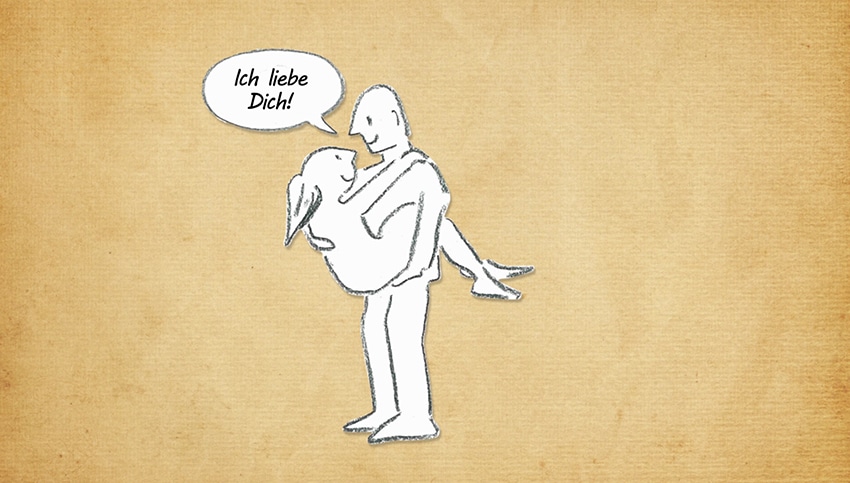
Taking a brief pause can help to continually reconnect language and reality, or to use certain terms more nuancedly. Because our language use has a greater influence on our experiences (and thus on our satisfaction) than we sometimes realize.
The use of different terms
What difference does it make when we use different words – both in conversations with other people and in our own thoughts? What vocabulary do we use when we think about "partnership"? Do words like infatuation , sex, and passion first come to mind, or love, togetherness, and connection ? What do we associate with habit : boredom and dullness ? Or familiarity and relaxation ?
Habit? Not necessarily a bad thing.
It's also worth examining another societal myth, or rather, subjecting it to a reality check: the frequent demonization of "habit." Whether we like it or not, we humans are creatures of habit. We can get used to almost anything—from a new boss to the strange high-rise across the street to a Franconian roommate. 😉
Our brains need fixed patterns and actively create them to conserve resources. Having to go through the same considerations from scratch with every single daily decision in all areas of life would simply overtax our brain's processing power.
You can probably imagine what we're getting at: We humans need predictability and calculability in our social relationships. Otherwise, we would eventually collapse. The problem, therefore, isn't that more and more habits have crept into our romantic relationships, but rather what those habits are.
Erinnern Sie sich an die oben beschriebene "Nichts-geht-mehr-von-allein"-Phase. Wenn wir den Umgang miteinander nicht aktiv steuern, können sich Muster verfestigen, die wenig Raum lassen für Zärtlichkeit, Zweisamkeit, Anteilnahme, Leidenschaft und Sex. Gemeinsame Verpflichtungen (Kinder, Wohnung, Haus...) können diese Entwicklung noch weiter verschärfen.
Liebe & Gewohnheit sind gute Freunde
Gemeinsame Gewohnheiten können wunderbar dafür sorgen, die Beziehung und die Liebe lebendig zu halten. Denn es gilt: "Es gibt nichts Gutes, außer man tut es." (Erich Kästner). Und um sicherzustellen, dass Sie auch wirklich regelmäßig genug Gutes für sich selbst und gemeinsam als Paar tun, lohnt es sich, den eigenen Alltag samt aktueller Gewohnheiten zwischendurch immer wieder ein bisschen genauer zu betrachten
Tipps für mehr Liebe im Alltag
Wie können wir durch Gewohnheit für mehr Liebe sorgen? Mit welchen Gewohnheiten kann das gelingen? Ein paar mögliche Anregungen haben wir hier für Sie zusammengestellt. Testen Sie die Tipps am besten selbst. Wir können Ihnen versichern: Alle Beispiele für gute "Gewohnheiten" haben dem Realitäts-Test standgehalten... 🙂
Eine Reihe von verschiedenen Date-Ideen für mehr Abwechslung im Alltag finden Sie in dem Artikel "Date-Ideen für Zuhause: 25+ kreative Wege, Ihre Beziehung zu stärken".
Gewohnheit 1: Medienfreie Phase am Abend
Noch eben einen interessanten Artikel lesen, online schnell ein Foto teilen oder die neuesten Kommentare in den sozialen Medien überfliegen... Wir wissen alle, dass es nicht gut ist, auch noch kurz vor dem Zu-Bett-gehen vor dem Laptop, Handy oder Fernseher abzuhängen - und doch: Es fällt vielen Menschen schwer, sich von ihren geliebten technischen Geräten zu trennen, sei es aus Langeweile oder aus Angst, etwas zu verpassen. Gemeinsam mit Ihrem Partner können Sie zwei Fliegen mit einer Klappe schlagen: 1-2 Stunden vor dem Einschlafen schalten Sie jeden Abend alle Geräte aus. Damit verbessern Sie nicht nur Ihren Schlaf und Ihre mentale Erholung, sondern verbringen mehr bewusste Zeit miteinander.
Gewohnheit 2: Date-Night
Idealerweise verabreden Sie sich einmal in der Woche an einem festen Tag (z.B. Samstagabend oder Sonntagvormittag) für ein gemeinsames Paar-Date. Sollten Sie kein wöchentliches Zeitfenster hinbekommen, sind natürlich auch etwas seltenere Zweisamkeitszeiten in Ordnung. Wichtig ist nur, dass Sie die Dates regelmäßig einplanen und niemals leichtfertig verschieben oder ganz ausfallen lassen - sonst kann sich keine neue Gewohnheit entwickeln.
Während Ihrer Zeit zu zweit müssen Sie natürlich nicht immer aus dem Haus gehen. Sie können es sich auch mit einem Glas Wein oder einer Tasse Tee auf dem Sofa gemütlich machen. Dringend zu empfehlen ist, die Alltagslogistik und problematische Themen während dieser besonderen Paarzeit außen vor zu lassen. Vielleicht holen Sie mal wieder die alte Foto-Kiste heraus und schwelgen gemeinsam in Erinnerungen. Oder überlegen, welche Orte Sie gerne zusammen bereisen würden. Oder erzählen einander, wie es war, als Sie sich zum ersten Mal gesehen haben. Bei solchen Date-Nights darf es übrigens auch zu Kuscheleinheiten und mehr kommen... 😉
Gewohnheit 3: Tanzkurs
Ihr erster Gedanke ist vielleicht: "Oh nein! Bitte kein Tanzkurs...!" Keine Sorge, das ist nur ein Beispiel für viele mögliche Aktivitäten, die Sie gemeinsam ausüben könnten. Ein Kurs mit festen Zeiten hat den Vorteil, dass Sie nicht so schnell Gefahr laufen, "es schnell wieder schleifen zu lassen", sondern erhöht die Wahrscheinlichkeit, dass Sie zusammen "dran bleiben". Das macht es leichter, die neue geteilte Gewohnheit dauerhaft zu etablieren. Sie beide lernen etwas Neues - und haben einen festen Rahmen für eine bereichernde Aktivität. Mit Sicherheit gibt es eine ganze Menge an Ideen, die zu Ihnen beiden passen und Ihnen Freude machen könnten. Lassen Sie Ihrer Phantasie freien Lauf und seien Sie offen.
Das Grundprinzip ist entscheidend: Gewohnheit in der Beziehung ist nichts Schlechtes. Gemeinsame Gewohnheiten können die Liebe und Zuneigung zwischen Ihnen beiden stärken.
Anzeichen, dass Ihre Liebe in Gefahr ist
Gefühle von Liebe und Zugehörigkeit lassen sich oft erstaunlich schnell wieder reaktivieren. Damit Sie den richtigen Zeitpunkt nicht verpassen, möchten wir kurz darauf eingehen, an welchen Zeichen Sie erkennen können, dass Ihre Liebe in Gefahr ist.
Sie verbringen kaum noch bewusst Zeit miteinander.
Vielleicht schlafen Sie noch in einem Bett oder sitzen nebeneinander am Esstisch, aber Sie sind eher "allein zu zweit" als "innig zusammen".Es gibt kaum noch körperlich intime Momente zwischen Ihnen beiden.
Dabei ist nicht in erster Linie Sex gemeint, sondern auch eine längere Umarmung, ein zärtlicher Kuss oder Händchenhalten.Sie zeigen kaum noch Interesse aneinander.
Vielleicht haben Sie Zweifel daran, ob Ihr Partner überhaupt noch wirklich wissen möchte, wie es Ihnen geht. Seine Kommentare auf Ihre Erzählungen werden immer oberflächlicher. Ihre Interessen entfernen Sich immer weiter voneinander.Sie fühlen sich oft nicht unterstützt.
Ihr Partner bietet Ihnen seine Hilfe nicht mehr von selbst an. Wenn Sie ihn um etwas bitten, haben Sie den Eindruck, er fühlt sich gestört und ist nur widerwillig zu aktivieren. Vielleicht fehlt es Ihnen auch insgesamt an Bestätigung.
Sollten einer oder mehrere der genannten Punkte auf Ihre Beziehung zutreffen, ist das ein eindeutiger Warnhinweis. Kommen Sie dringend ins Handeln. Sonst besteht die Gefahr, dass es einen Bruch zwischen Ihnen beiden gibt und die Liebesgefühle unwiederbringlich "weg" sind.
Falls Sie gerade unsicher sich, wo genau Sie zuerst ansetzen könnten, möchten wir Ihnen unseren ausführlichen Artikel zum Thema "Hilfe: Meine Beziehung ist eingeschlafen" empfehlen. Dort finden Sie weitere Strategien, wie Sie Ihre Liebe aus dem Dornröschenschlaf erwecken und neue Gefühle entfachen können.
Professionelle Unterstützung für Ihre Beziehung
Sie wünschen sich intensivere Begleitung und Unterstützung? Dann kann eine Paarberaterin, ein Paartherapeut oder ein Online-Coaching eine gute Wahl sein. Letzteres hat den Vorteil, dass Sie Ihrer Beziehung jederzeit und überall etwas Gutes tun können. Ein solches Selbsthilfe-Programm ist PaarBalance: www.paarbalance.de/online-coaching.

PaarBalance ist das einzige wissenschaftlich überprüfte, interaktive Online-Coaching zur Verbesserung der eigenen Paarbeziehung im deutschsprachigen Raum, das vom einzelnen Partner mit Gewinn für beide durchgeführt werden kann.
Anhand von humorvollen Online-Sitzungen erhalten Sie in kleinen Häppchen praktische Empfehlungen und konkrete Handlungsanweisungen, wie Sie Ihre Beziehungsqualität verbessern und wieder zu mehr Leichtigkeit und Lebensfreude finden können.
☝🏻 Passende Artikel zum Thema "Liebe oder Gewohnheit?"
Frequently Asked Questions
Does love in a relationship always stay the same?
No. Love in long-term relationships is constantly changing – that's normal. After the infatuation phase comes the "can this last?" phase . In the familiarity phase , the initial rush of emotions is replaced by qualities like reliability. From the "nothing works on its own anymore" phase onward , active engagement from both partners is necessary.
Is habit inherently bad?
Humans are creatures of habit. The human brain needs habits and actively creates them because they save us time and energy. If we had to completely rethink every single everyday decision each time, we would simply be overwhelmed. That's why it's good for our social relationships to also have predictability and familiarity.
Are love and habit mutually exclusive?
No, quite the opposite: In a long-term relationship, love and routine go hand in hand. Both strong, intimate feelings and reliability and predictability are necessary to feel secure and relaxed in a partnership. Only when both come together will the relationship be perceived as enriching in the long run and have a future.
Can habits be beneficial to love?
Habits can provide security and ensure that both partners regularly do things that are good for each other, which are also appreciated. Shared screen-free time, regular dates, and shared hobbies, for example, can become helpful habits. Such "quality time" strengthens closeness and connection.
How can you tell when the daily grind is endangering a relationship?
The daily grind with all its demands can put a relationship to a severe test. When partners spend little time together, intimate moments become increasingly rare, both show little interest in each other, and/or one feels frequently criticized rather than supported by the other, their love is at risk.